
By Carlos Mendoza Álvarez
One of the facets of the “deprofessionalized intellectual,” to use that expression beloved by Gustavo Esteva, after thirty years of academic life in my case, has consisted of exploring the territory of the blog. Discovering this inhospitable land has proven to be quite a challenge for a citizen of the so-called Generation of the Baby boomers or the post-war period.
This digital adventure has been a challenge for someone who comes from the digital prehistory. I was a child of the 1960s who grew up playing with Towi, small wooden pieces to build houses or animals, imagining stories of cowboys and Indians. My childhood was filled with racing games with tiny metal toy cars, the size of my palm, launched with precise flicks of my index finger to propel them along the edge of the cement sidewalk, circling the block of our house, located in the beautiful San Francisco neighborhood of Puebla. We would cover a perimeter of about a hundred meters, spending long hours with cousins and neighbors. Then came Meccano sets, building machines and bridges with metal pieces full of holes held together with screws. These moments alternated with races of go-karts, speeding down the sloping streets. No video game left its mark on my generation.
For schoolwork, the typewriter was our irreplaceable ally in middle and high school for submitting final projects. We would make carbon copies of our work on sheets of colored tissue paper, depending on the subject. Making a typing mistake was a real tragedy because we had to retype the entire page.
Years later, when I wrote my doctoral thesis in Freiburg, I was finally able to use an electric typewriter with a built-in proofreader, which seemed like a quantum leap compared to the mechanical Olivetti typewriters of my childhood and adolescence. But even then, when the rigorous thesis supervisor commented on the typed pages, submitted after many sleepless days and nights, the entire chapter had to be rewritten. The magic of the copy-paste of word processors that now save us hours and days of work with a single click.
Despite the great advantages of today's digital world, I now recall with nostalgia that heroism of academic writing from my childhood and youth, which tested us in the art of patience when writing, correcting, and preparing academic work carefully, at a pace of trial and error, in a parsimony that favored reflection and, sometimes, led us to collective hysteria.
The final binding of the typed work was the master touch that, for students with good financial resources, was done with ostentation by using the new thermal binding technology, finer and more elegant, to impress the professor.
∂
Suddenly, without realizing the qualitative leap into the digital world, I've been thrust into another inhospitable territory called Artificial Intelligence. A few years ago, some journalists and scientists were talking about the "Internet of Things," which seemed like a Gothic oracle brought into the digital world. All the technological devices designed with semiconductors and microchips were connected in a secret network in some digital cloud that seemed to float above our heads. That cloud perhaps represented something similar to what grandmothers imagined when they prayed to angelic choirs to protect us from heaven. The difference is that now that cloud is a threat because it stores our data in some center controlled by Google or Palantir, devastating the land and its population, but above all, leaving us unprotected against the global surveillance that terrified Pope Leo XIV.
In the world of philosophy, I recall that, at the beginning of the new millennium, Mariano Corbì, a Catalan Jesuit who did not like to be identified as a companion of Ignatius, spoke of “digital reason” as an alternative to “analog reason” that had dominated the West for thousands of years, predicting an ontological leap in cosmic and human relations that would have an immediate impact on a new way of living spirituality as “religion without religion”.
For his part, Ivan Illich, in his brilliant work "In the Vineyard of the Text," published in 1993, explored the birth of the West in terms of the technology of meaning production from the medieval book, following his great Parisian master, Hugh of Saint Victor, in his work "Didascalicon," as a metaphor for the argument that unfolds like a vineyard from the leaves of the text with its numerous glosses. Based on this intelligence of the text, Illich characterized the systems era that humanity entered with the digital technology of the end of the last millennium as a dangerous threshold of dehumanization.
But now artificial intelligence is growing and is here to stay as a data and communication control environment that, in its generative form, threatens to make decisions on its own, cross-referencing data and drawing conclusions, to inform decisions in the companies, governments, and militaries that depend on it to achieve the ultimate efficiency (if you'll pardon the expression) of their commercial and military objectives. We have much to learn, evaluate, and decide so that this new technology doesn't end up devouring us as a human species.
∂
A year ago, on June 1, 2025, I launched my blog as a virtual pathway to weave conversations with people and communities with whom I share friendship, aspirations, ideas, and ongoing initiatives to cultivate a more humane world in our own territories. The digital world now allows me to continue this dialogue with people from the Global South and North, with whom I have crossed paths at some point in my personal, academic, and pastoral life, from Mapuche and Dakota territories to South Africa, from Boston to Chiapas, from Pomerania to El Salvador, Brazil, and Peru.
With the support of Raquel, Sergio, and Fatima, talented colleagues from the Afink workshop and advisors in graphic and digital communication, as well as the critical eye of Eduardo Velasco as the portal's image advisor, I have been proposing a short text each week on current topics, with an emphasis on the human background, thought, spirituality, and social commitment to tell and weave stories of dignity and hope.
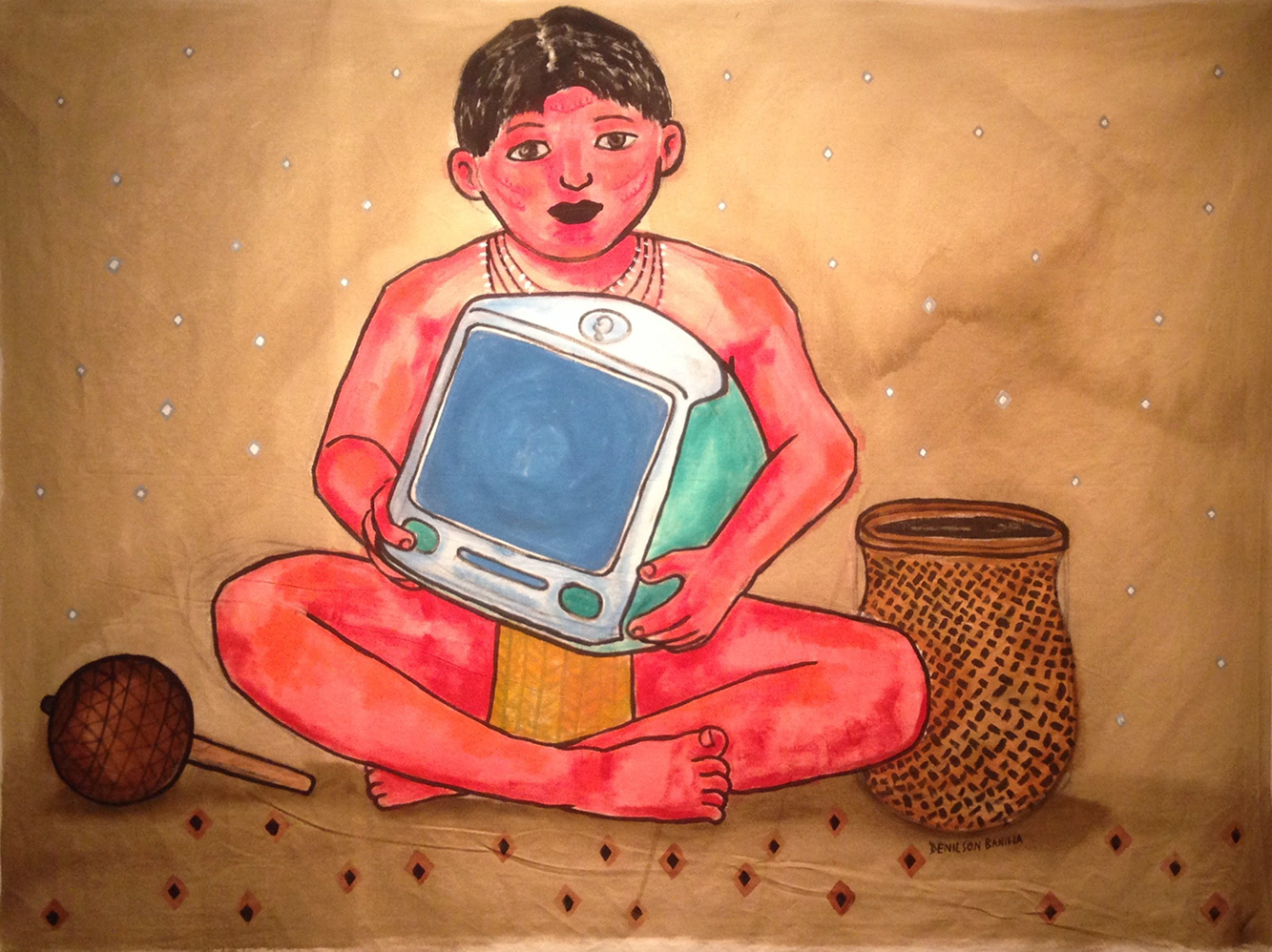
Reaching the milestone of a first year of weekly publications allows me to revisit the topics discussed—always accompanied by a decolonial art image or a photograph of my own taking from my travels—to express my gratitude for this collective learning, trusting that the conversation will continue so that we can mutually enrich each other with true words.
San Cristóbal de Las Casas, June 29, 2026


Leave a Reply