Tag: Pope Leo XIV

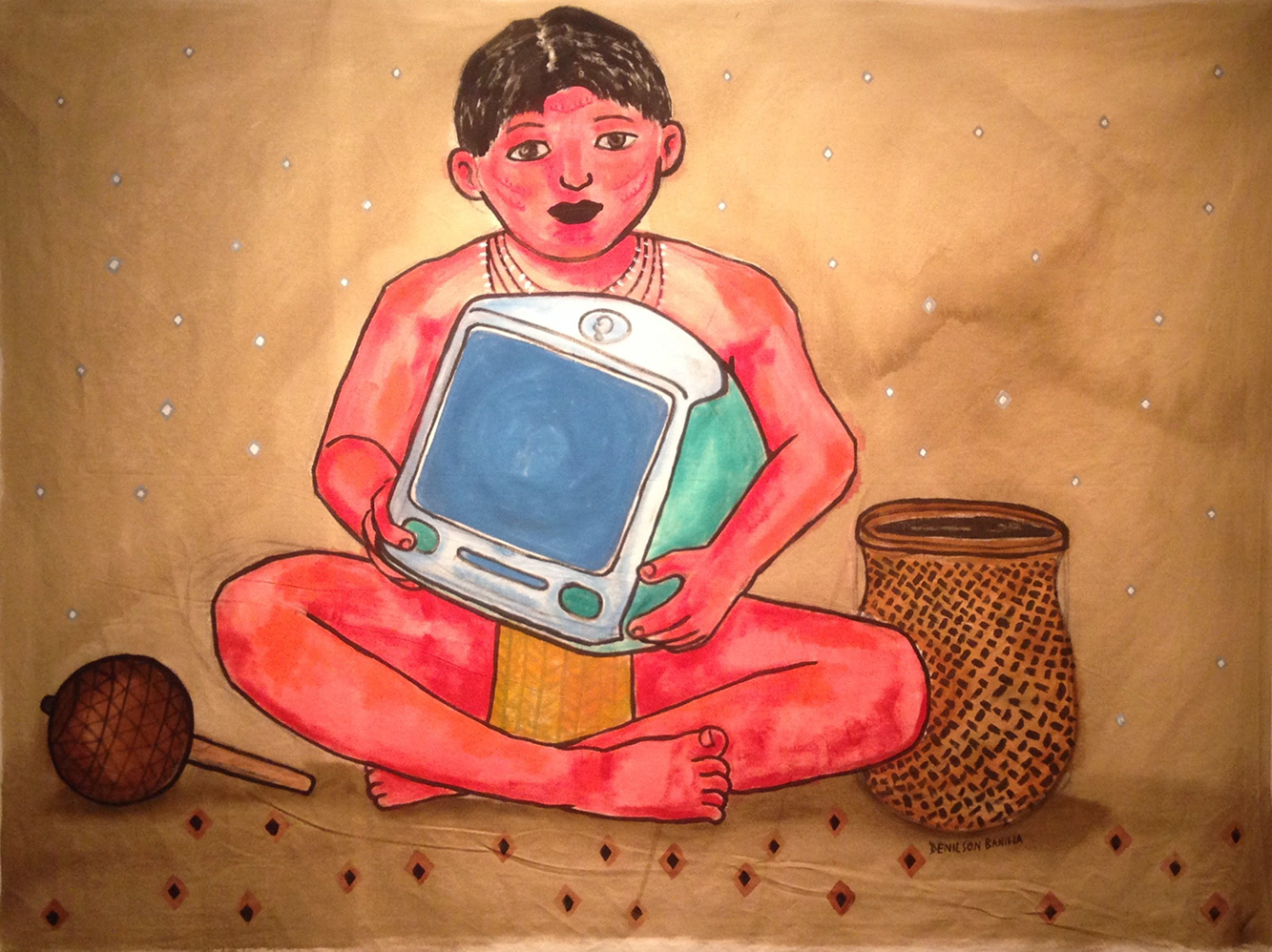
  • El primer cumpleaños de mi blogDenilson Baniwa | Curumim, keeper of memories | Brazil, 2018

    My blog's first birthday

    By Carlos Mendoza Álvarez

    One of the facets of the “deprofessionalized intellectual,” to use that expression beloved by Gustavo Esteva, after thirty years of academic life in my case, has consisted of exploring the territory of the blog. Discovering this inhospitable land has proven to be quite a challenge for a citizen of the so-called Generation of the Baby boomers or the post-war period.

    This digital adventure has been a challenge for someone who comes from the digital prehistory. I was a child of the 1960s who grew up playing with Towi, small wooden pieces to build houses or animals, imagining stories of cowboys and Indians. My childhood was filled with racing games with tiny metal toy cars, the size of my palm, launched with precise flicks of my index finger to propel them along the edge of the cement sidewalk, circling the block of our house, located in the beautiful San Francisco neighborhood of Puebla. We would cover a perimeter of about a hundred meters, spending long hours with cousins and neighbors. Then came Meccano sets, building machines and bridges with metal pieces full of holes held together with screws. These moments alternated with races of go-karts, speeding down the sloping streets. No video game left its mark on my generation.

    For schoolwork, the typewriter was our irreplaceable ally in middle and high school for submitting final projects. We would make carbon copies of our work on sheets of colored tissue paper, depending on the subject. Making a typing mistake was a real tragedy because we had to retype the entire page.

    Years later, when I wrote my doctoral thesis in Freiburg, I was finally able to use an electric typewriter with a built-in proofreader, which seemed like a quantum leap compared to the mechanical Olivetti typewriters of my childhood and adolescence. But even then, when the rigorous thesis supervisor commented on the typed pages, submitted after many sleepless days and nights, the entire chapter had to be rewritten. The magic of the copy-paste of word processors that now save us hours and days of work with a single click.

    Despite the great advantages of today's digital world, I now recall with nostalgia that heroism of academic writing from my childhood and youth, which tested us in the art of patience when writing, correcting, and preparing academic work carefully, at a pace of trial and error, in a parsimony that favored reflection and, sometimes, led us to collective hysteria.

    The final binding of the typed work was the master touch that, for students with good financial resources, was done with ostentation by using the new thermal binding technology, finer and more elegant, to impress the professor.

    Suddenly, without realizing the qualitative leap into the digital world, I've been thrust into another inhospitable territory called Artificial Intelligence. A few years ago, some journalists and scientists were talking about the "Internet of Things," which seemed like a Gothic oracle brought into the digital world. All the technological devices designed with semiconductors and microchips were connected in a secret network in some digital cloud that seemed to float above our heads. That cloud perhaps represented something similar to what grandmothers imagined when they prayed to angelic choirs to protect us from heaven. The difference is that now that cloud is a threat because it stores our data in some center controlled by Google or Palantir, devastating the land and its population, but above all, leaving us unprotected against the global surveillance that terrified Pope Leo XIV.

    In the world of philosophy, I recall that, at the beginning of the new millennium, Mariano Corbì, a Catalan Jesuit who did not like to be identified as a companion of Ignatius, spoke of “digital reason” as an alternative to “analog reason” that had dominated the West for thousands of years, predicting an ontological leap in cosmic and human relations that would have an immediate impact on a new way of living spirituality as “religion without religion”.

    For his part, Ivan Illich, in his brilliant work "In the Vineyard of the Text," published in 1993, explored the birth of the West in terms of the technology of meaning production from the medieval book, following his great Parisian master, Hugh of Saint Victor, in his work "Didascalicon," as a metaphor for the argument that unfolds like a vineyard from the leaves of the text with its numerous glosses. Based on this intelligence of the text, Illich characterized the systems era that humanity entered with the digital technology of the end of the last millennium as a dangerous threshold of dehumanization.

    But now artificial intelligence is growing and is here to stay as a data and communication control environment that, in its generative form, threatens to make decisions on its own, cross-referencing data and drawing conclusions, to inform decisions in the companies, governments, and militaries that depend on it to achieve the ultimate efficiency (if you'll pardon the expression) of their commercial and military objectives. We have much to learn, evaluate, and decide so that this new technology doesn't end up devouring us as a human species.

    A year ago, on June 1, 2025, I launched my blog as a virtual pathway to weave conversations with people and communities with whom I share friendship, aspirations, ideas, and ongoing initiatives to cultivate a more humane world in our own territories. The digital world now allows me to continue this dialogue with people from the Global South and North, with whom I have crossed paths at some point in my personal, academic, and pastoral life, from Mapuche and Dakota territories to South Africa, from Boston to Chiapas, from Pomerania to El Salvador, Brazil, and Peru.

    With the support of Raquel, Sergio, and Fatima, talented colleagues from the Afink workshop and advisors in graphic and digital communication, as well as the critical eye of Eduardo Velasco as the portal's image advisor, I have been proposing a short text each week on current topics, with an emphasis on the human background, thought, spirituality, and social commitment to tell and weave stories of dignity and hope.

    Reaching the milestone of a first year of weekly publications allows me to revisit the topics discussed—always accompanied by a decolonial art image or a photograph of my own taking from my travels—to express my gratitude for this collective learning, trusting that the conversation will continue so that we can mutually enrich each other with true words.

    San Cristóbal de Las Casas, June 29, 2026

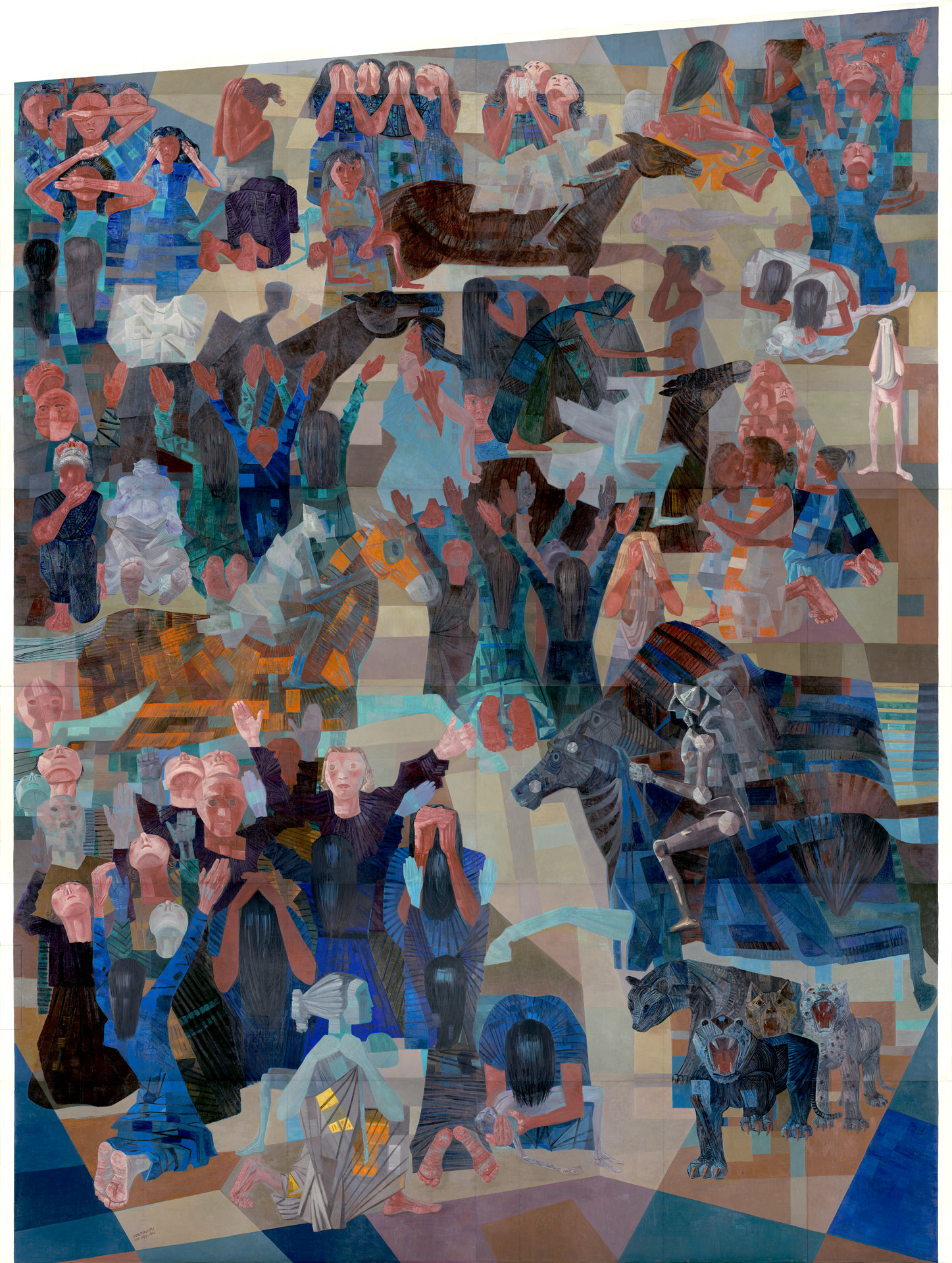
  • Dios ya no es redondo Sobre las asimetrías creadas por el afán de poderGermán Pose | Ball with a Nimbus | 2016

    God is no longer round On the asymmetries created by the desire for power

    By Carlos Mendoza Álvarez

    When God was round

    A couple of decades ago, Juan Villoro described in his book "God is Round" the utopia of football, born as a sport of the plains and streets of the world, in terms of an urban party ritual that brought together children and young people around a plastic sphere, sometimes made of leather, as a celebration of the joy of dodging the opponent until scoring the goal that would be celebrated with cheers, jumps and hugs on the field and in the stands.

    Nicholas of Cusa wrote his book "De ludo Globi" in 1462, a philosophical work that used the game of bowls of the time to describe the round cosmos with its world of planetary spheres as a metaphor for the perfection of divine creation and its imprint on human intelligence. Centuries later, in the collective imagination of our time, a round ball embodies that yearning for a world of equidistant extremes, a symbol that also sets people in motion on a field of dirt or grass.

    The ancient Mesoamerican peoples had also ritualized this perfection of the sphere in the ball game, sacralizing - according to modern archaeology - the struggle between light and cosmic darkness in a ritual game that passed the rubber ball through a stone hoop, in a back-and-forth of blows with the hip, elbows and shoulders, where the joints of the human body mirrored the cosmos.

    In modern times, FIFA has transformed the art of football into a business created by a television-driven industrial machine to voraciously manage the sport from the streets and pitches of the working-class neighborhoods of Buenos Aires, Rio de Janeiro, Mexico City, Barcelona, Seoul, and Lagos. We proudly say that Mexico has hosted the World Cup three times, but from 1970 to the present, the television industry, colluding with corrupt governments—first the PRI and now its perverse clone, Morena—has corrupted the beautiful game, turning it into a multi-billion dollar business. It is astonishing to see the media propaganda that FIFA has deployed to justify its greed in the three host countries. And even more shameful is the subservience of the Mexican government, kneeling before this oligarchy that enjoys unprecedented tax privileges in our country and that has seized control of stadiums and public spaces like the Campo Marte of the Mexican Army and Chapultepec Castle to celebrate its avarice.

    Fortunately, the magic of the Mesoamerican ball game, or the Italian Renaissance bowling game, and modern football persists wherever two teams display the fantasy of moving a sphere and the aim of achieving a goal to celebrate life.

    A transcultural Pope

    Pope Leo XIV has surprised the world with his fourth apostolic journey, now through Madrid, Barcelona and Gran Canaria, by summoning the people who live there - Castilians, Catalans and Latin Americans - to a celebration of life and human dignity.

    I have been surprised by the clarity and courage with which the first transcultural Pope - an American son of migrants and Peruvian by choice, today a universal citizen by vocation - has encouraged people to care for the dignity of people and nature, especially migrants in forced mobility.

    His speech in Tenerife was a direct attack on the human trafficking mafias, reminding them that they will have to answer to God for their criminal acts, and calling them to conversion and to stop enriching themselves at the expense of the suffering of the most vulnerable. Also memorable was his criticism of the “warlords” in his address to the Spanish Parliament, denouncing the use of God’s name in vain to justify wars that destroy peoples and cultures.

    The inalienable dignity of migrants, the dignity of human life from its beginning to its end, the building of peace and the dismantling of the war industry, humanization in times of artificial intelligence as an instrument in the control of a handful of oligarchs, are the principles of an ethics for times of systemic violence that wave like flags in the speeches and gestures of Pope Leo.

    It remains for us now, those of us who are part of the Church in its Roman Catholic tradition, to unite with the other spiritual traditions of humanity to resume the path of reconciled humanity in times of a growing spiral of violence.

    Israelis in Chiapas

    Chiapas civil society has raised concerns in recent weeks about the presence of Israeli veterans and soldiers on a “humanitarian” campaign in schools in Zinacantán.

    In a brief survey of residents of that municipality, I was able to verify that in recent weeks, "foreign groups speaking English" have been offering painting and English workshops in primary schools in Nachig, Zinacantán, and Jech-Chentic. Some journalists warn of the danger that this group is Warriors Without Borders, presenting itself as the humanitarian organization Heroes of Life, thus whitewashing the image of the Israeli army worldwide, which is currently embroiled in the genocide of the Palestinian people with its Zionist ideology.

    This presence is compounded by the recent visit of the Israeli consul and “security experts” to authorities in the state of Chiapas, ostensibly to exchange security experiences and to reassure them that this southeastern Mexican state is a safe place for Israeli visitors. The state secretary of security seems unaware that his visitors come from a genocidal state, implementing strategies and mechanisms of war against the Palestinian civilian population—acts considered war crimes by the International Criminal Court.

    It is urgent to demand that the Chiapas state government make public any existing collaboration agreements with the Israeli government, its companies, and its organizations. And we, as part of civil society, must be vigilant and responsibly monitor the activities of Israeli organizations in Chiapas, especially those of its veterans, ex-combatants, and military personnel. For their part, the indigenous communities—which have thus far been the primary target of their “humanitarian” actions—have a responsibility to safeguard the common good at stake in their communities, particularly their schools and educational and recreational groups, to prevent the manipulation of children and youth by ideologies of death that threaten their territories.

    God is no longer round because the masters of global war, genocidal states, and criminal mafias have created the dystopia in which we live today on a planetary scale, perverting the festival of football as a business and domination of peoples in their national teams that were trapped in the FIFA industry.

    Fortunately, the playful sense of existence is preserved by communities, especially those that confront systemic violence and yet celebrate life amidst death. In these communities beats the stubborn hope that the world can be harmonious by embracing the differences of peoples, cultures, and spiritualities as a numinous polyhedron.

    San Cristóbal de Las Casas, June 13, 2026

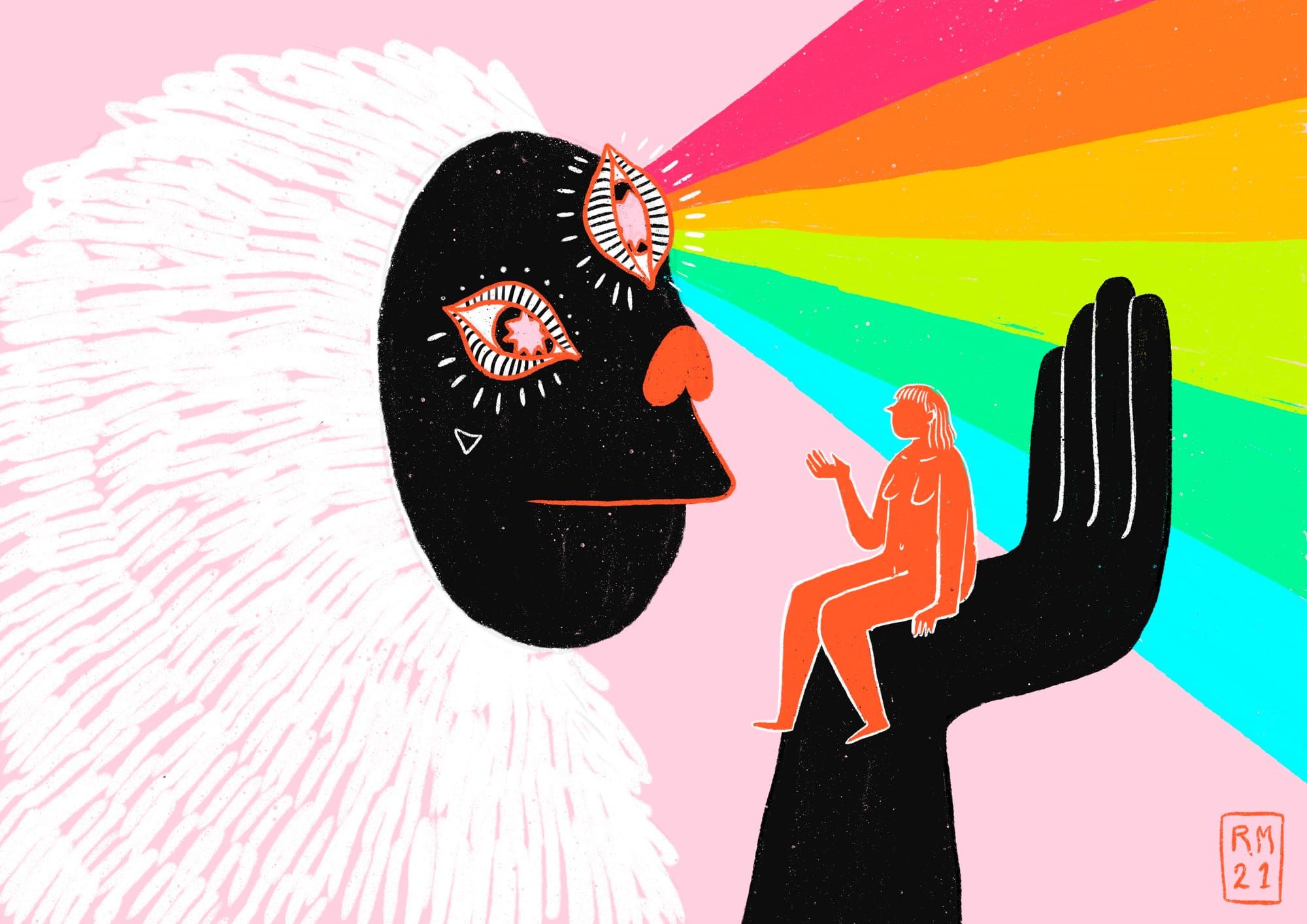
  • La IA, ¿amenaza o compañera? Sobre los retos del mundo digital y la conmemoración 500 OP ChiapasFreepik | Digital art, AI-generated resource | 2026

    AI: threat or partner? On the challenges of the digital world and the 500th anniversary of the Chiapas Open Air Movement

    By Carlos Mendoza Álvarez


    In recent days, the topic of artificial intelligence (AI) has gone viral on social media due to Pope Leo XIV's first encyclical letter. Ironically, in this age of systems—as Ivan Illich termed this new social paradigm that should be considered when analyzing the digital world—the pontiff's warnings have already been devoured by algorithms and accounts on Instagram, X, TikTok, and Facebook (for the older generation of the digital world). Memes of Pope Leo battling AI have flooded social media, such as the one of the pontiff with his staff firmly warning Palantir: "You shall not pass." And to top it all off, thousands, perhaps millions of people have used AI to create a summary of the encyclical, mostly out of curiosity, sometimes with the aim of criticizing the Pope or the power of the companies that produce and control it. A slow, personal reading of the encyclical letter would be worthwhile to analyze its content.

    Without losing sight of the ethical critique and the international legal regulation that must be promoted for the production and use of AI, it seems to me that it is important to first realize that we are already immersed in that tangle of data driven by individual, corporate and governmental wills, with an ever-increasing “autonomy” of what was called years ago “the internet of things” (IoT)., Internet of ThingsThis network of digital data flow systems is here to stay, monitoring information circulating in the digital environment in an automated way within systems created by humans, but operating with increasing “autonomy” to generate new data and produce unprecedented social, commercial, scientific and cultural effects.

    The dystopian science fiction series Black Mirror, Created in Great Britain in 2011, the series depicted fascinating and chilling episodes of a society controlled by technology, where the boundaries between human reality and the virtual world were so porous that they created apocalyptic scenarios. Fifteen years ago, this reality of the algorithm's power seemed like a figment of the imagination. Today, it's already part of our daily lives.


    I am currently preparing a couple of talks on AI. I will be giving the first one this week at the Diocesan House in San Cristóbal de Las Casas to a group of priests from Generations X and Y—both born after 1965, following the generation of the Baby boomers- until 1982 when the Millennials. Of course, this classification, proposed by British and Canadian colonial sociology to designate first a generation without a defined desire, and then the first generation of digital natives, is relevant for describing certain social strata in each country. But it also designates the other side of the coin of globalization, due to the technological impact that television and computers have had on the lives of all people.

    Later, with the team of JobeLab We will hold a discussion on AI at the end of June in the Temple of Charity to reflect on the recent Encyclical Letter Magnificent Humanity by Pope Leo XIV, published last Monday, May 24th. We will approach this from an interdisciplinary perspective, first giving voice to colleagues in computer science, education, and philosophy. There, I will offer some reflections on the meaning theological of the problem in question, from a phenomenological and decolonial perspective, deepening an intuition present in the Encyclical Letter, human vulnerability, but unfortunately not developed sufficiently by Pope Leo.

    There are many ecclesial, university, and social forums where we must open intelligent conversations, with creative imagination, to think together about the digital reality that has already reached us, with its enormous possibilities for the flow of information and its challenging scenarios of post-human control of production and knowledge processes that we have never imagined.

    AI is perceived today as a threat, even though it's already part of our digital-age "customs and practices." Perhaps we should learn to coexist with it as a "creature," that is, as a reality marked by the finiteness of all creation and, therefore, incapable of supplanting our imagination and creativity—much less divine glory—though we must remain vigilant against the danger of its control over our lives and destinies. Today more than ever, the bastion mystical The human condition is presented more clearly as a source of freedom in times of AI.


    500 OP Chiapas


    This Thursday, June 4th, we begin the commemorative events for the 500th anniversary of the arrival of the Dominican friars to Tierra Firme of the American continent, on June 23, 1526 in Villa Rica de la Veracruz, as the first anchor of European colonization and the arrival of the Gospel with its model of Western Christianity.

    In Chiapas, the small community of Dominican friars in San Cristóbal de Las Casas, along with friends and colleagues, has prepared cultural and liturgical events to commemorate this historic event. We will begin on Thursday, June 4th, with a concert by the San Cristóbal de Las Casas Symphony Orchestra and Choir at the Santo Domingo Church, where this youth ensemble will perform works of Baroque and modern classical music, with interludes that will briefly recall the friars' arrival in these lands, their evangelizing mission, their heyday during the colonial period, and their subsequent decline in the 19th century, leading up to their gradual resurgence in the 20th century.

    On Friday, June 5, an academic colloquium on the Dominicans' contribution to Chiapas culture will take place at the friars' former convent in San Cristóbal de Las Casas, now the Museum of the Highlands of Chiapas. Two historians specializing in Dominican architecture in Chiapas during the colonial period will participate. The event will also feature the presentation of Friar Pablo Iribarren's latest book on the Dominicans in the 20th century, focusing on their evangelization efforts in dialogue with the indigenous peoples of Chiapas. Marimba music by the Díaz Sisters will provide a festive atmosphere.

    On Saturday, June 6th, the celebration will take place in Zinacantán, thanks to the generous collaboration of the faithful communities of the Parish of Saint Lawrence the Martyr. A solemn Mass of Thanksgiving at the Church of Saint Lawrence the Martyr, the parish seat, will be followed by the cultural event “Transfigurations: Mayan Spiritualities Today,” which I have had the honor of organizing along with two masters of contemporary Mayan art. We will begin with the unveiling of the mural 500 OP Chiapas, a masterful work by Antún Kojtom, a Tseltal artist from Tenejapa, depicting the encounter between the spiritual traditions of the Tsotsil people and other Mayan communities of the Highlands and Rainforest of Chiapas with the Dominican friars throughout history. Tsotsil poetry by Xun Betán and some of his students from the creative writing workshop, held this month in preparation for this event, will be accompanied by traditional Tsotsil music performed by musicians from the parish church. And in the afternoon, a talk about the Dominicans in Zinacantán will be given by Friar Pablo Iribarren, as a framework for a closing liturgical act in which young people from Zinacantán will make their initial promises as members of the Dominican Youth Movement.

    And to conclude the commemorative events, on Sunday, June 7, with a Eucharist presided over by Don Rodrigo Aguilar, current bishop of the Diocese of San Cristóbal de Las Casas, the Dominican family and the faithful of the city will give thanks to the God of Life for this half-millennium of preaching, with its lights and shadows, invoking divine mercy to walk with hope as the people of God in the arduous times we are living through, to bear witness to the Gospel of liberation with justice and peace for all creatures of the cosmos.

    We look forward to seeing you soon in Chiapas.

    San Cristóbal de Las Casas, May 31, 2026

English