Category: Faith and reason

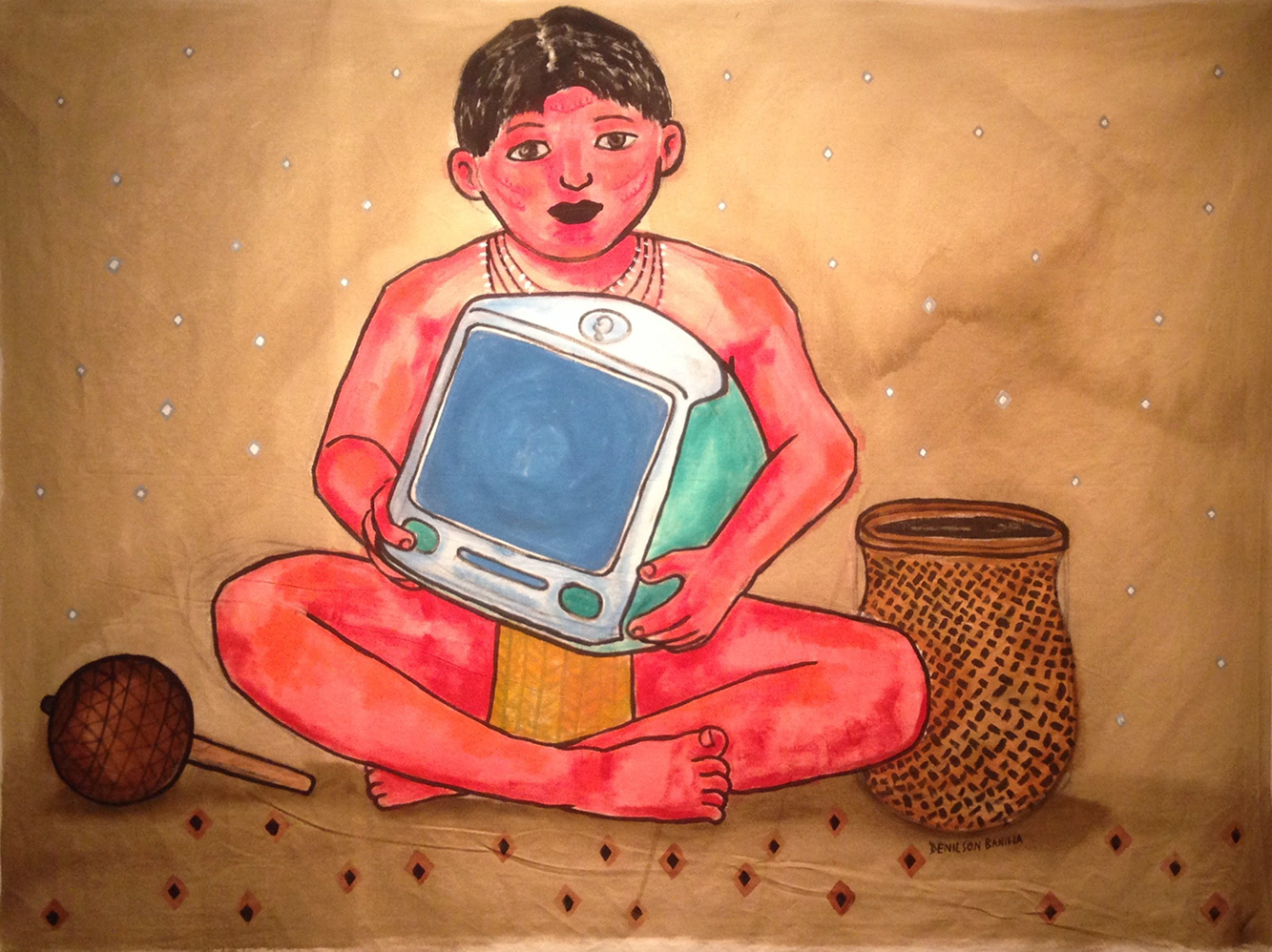
  • El primer cumpleaños de mi blogDenilson Baniwa | Curumim, keeper of memories | Brazil, 2018

    My blog's first birthday

    By Carlos Mendoza Álvarez

    One of the facets of the “deprofessionalized intellectual,” to use that expression beloved by Gustavo Esteva, after thirty years of academic life in my case, has consisted of exploring the territory of the blog. Discovering this inhospitable land has proven to be quite a challenge for a citizen of the so-called Generation of the Baby boomers or the post-war period.

    This digital adventure has been a challenge for someone who comes from the digital prehistory. I was a child of the 1960s who grew up playing with Towi, small wooden pieces to build houses or animals, imagining stories of cowboys and Indians. My childhood was filled with racing games with tiny metal toy cars, the size of my palm, launched with precise flicks of my index finger to propel them along the edge of the cement sidewalk, circling the block of our house, located in the beautiful San Francisco neighborhood of Puebla. We would cover a perimeter of about a hundred meters, spending long hours with cousins and neighbors. Then came Meccano sets, building machines and bridges with metal pieces full of holes held together with screws. These moments alternated with races of go-karts, speeding down the sloping streets. No video game left its mark on my generation.

    For schoolwork, the typewriter was our irreplaceable ally in middle and high school for submitting final projects. We would make carbon copies of our work on sheets of colored tissue paper, depending on the subject. Making a typing mistake was a real tragedy because we had to retype the entire page.

    Years later, when I wrote my doctoral thesis in Freiburg, I was finally able to use an electric typewriter with a built-in proofreader, which seemed like a quantum leap compared to the mechanical Olivetti typewriters of my childhood and adolescence. But even then, when the rigorous thesis supervisor commented on the typed pages, submitted after many sleepless days and nights, the entire chapter had to be rewritten. The magic of the copy-paste of word processors that now save us hours and days of work with a single click.

    Despite the great advantages of today's digital world, I now recall with nostalgia that heroism of academic writing from my childhood and youth, which tested us in the art of patience when writing, correcting, and preparing academic work carefully, at a pace of trial and error, in a parsimony that favored reflection and, sometimes, led us to collective hysteria.

    The final binding of the typed work was the master touch that, for students with good financial resources, was done with ostentation by using the new thermal binding technology, finer and more elegant, to impress the professor.

    Suddenly, without realizing the qualitative leap into the digital world, I've been thrust into another inhospitable territory called Artificial Intelligence. A few years ago, some journalists and scientists were talking about the "Internet of Things," which seemed like a Gothic oracle brought into the digital world. All the technological devices designed with semiconductors and microchips were connected in a secret network in some digital cloud that seemed to float above our heads. That cloud perhaps represented something similar to what grandmothers imagined when they prayed to angelic choirs to protect us from heaven. The difference is that now that cloud is a threat because it stores our data in some center controlled by Google or Palantir, devastating the land and its population, but above all, leaving us unprotected against the global surveillance that terrified Pope Leo XIV.

    In the world of philosophy, I recall that, at the beginning of the new millennium, Mariano Corbì, a Catalan Jesuit who did not like to be identified as a companion of Ignatius, spoke of “digital reason” as an alternative to “analog reason” that had dominated the West for thousands of years, predicting an ontological leap in cosmic and human relations that would have an immediate impact on a new way of living spirituality as “religion without religion”.

    For his part, Ivan Illich, in his brilliant work "In the Vineyard of the Text," published in 1993, explored the birth of the West in terms of the technology of meaning production from the medieval book, following his great Parisian master, Hugh of Saint Victor, in his work "Didascalicon," as a metaphor for the argument that unfolds like a vineyard from the leaves of the text with its numerous glosses. Based on this intelligence of the text, Illich characterized the systems era that humanity entered with the digital technology of the end of the last millennium as a dangerous threshold of dehumanization.

    But now artificial intelligence is growing and is here to stay as a data and communication control environment that, in its generative form, threatens to make decisions on its own, cross-referencing data and drawing conclusions, to inform decisions in the companies, governments, and militaries that depend on it to achieve the ultimate efficiency (if you'll pardon the expression) of their commercial and military objectives. We have much to learn, evaluate, and decide so that this new technology doesn't end up devouring us as a human species.

    A year ago, on June 1, 2025, I launched my blog as a virtual pathway to weave conversations with people and communities with whom I share friendship, aspirations, ideas, and ongoing initiatives to cultivate a more humane world in our own territories. The digital world now allows me to continue this dialogue with people from the Global South and North, with whom I have crossed paths at some point in my personal, academic, and pastoral life, from Mapuche and Dakota territories to South Africa, from Boston to Chiapas, from Pomerania to El Salvador, Brazil, and Peru.

    With the support of Raquel, Sergio, and Fatima, talented colleagues from the Afink workshop and advisors in graphic and digital communication, as well as the critical eye of Eduardo Velasco as the portal's image advisor, I have been proposing a short text each week on current topics, with an emphasis on the human background, thought, spirituality, and social commitment to tell and weave stories of dignity and hope.

    Reaching the milestone of a first year of weekly publications allows me to revisit the topics discussed—always accompanied by a decolonial art image or a photograph of my own taking from my travels—to express my gratitude for this collective learning, trusting that the conversation will continue so that we can mutually enrich each other with true words.

    San Cristóbal de Las Casas, June 29, 2026

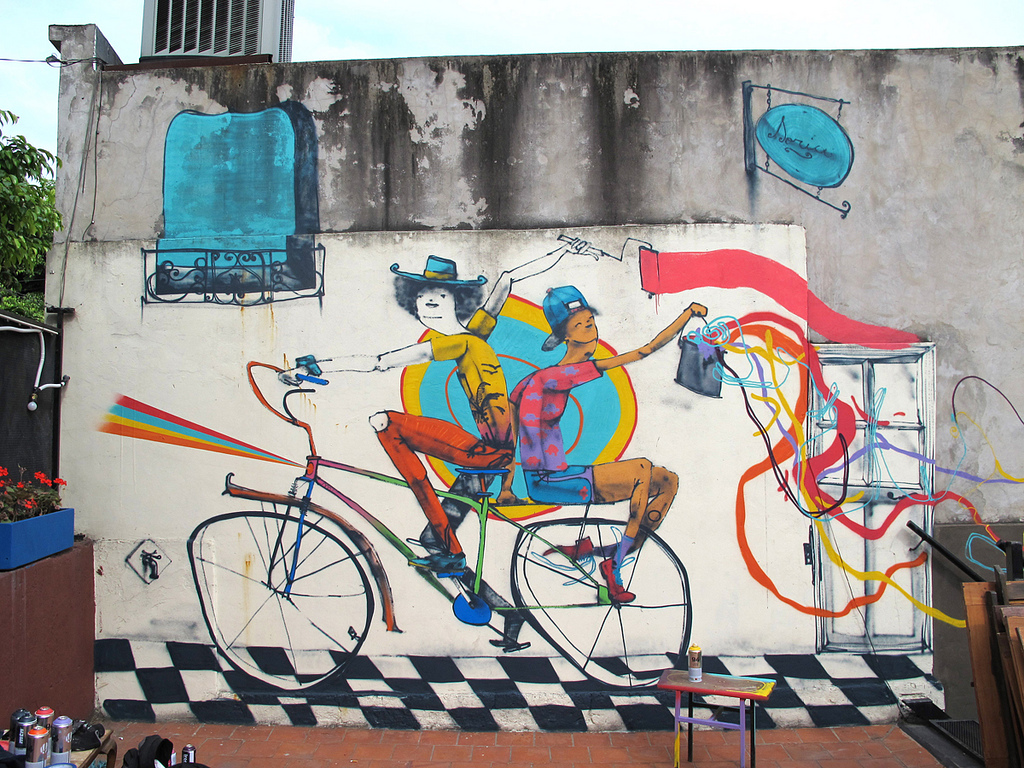
  • De mundos alternos que se tocan Conmemorando el primer centenario del nacimiento de Ivan IllichStreet Art | In Praise of the Bicycle | Buenos Aires, 2015

    Of alternate worlds that touch Commemorating the centenary of Ivan Illich's birth

    By Carlos Mendoza-Álvarez

    Between postwar Europe and the Latin America and Caribbean of the modern mirage, there were flows of life and thought that went back and forth between both shores of the Atlantic. What was once the frontier of conquest, colonization, and evangelization—with the Creole and mestizo creations that reinvented the West during the colonial period—became in modern times an ocean of whispers of new worlds, sailing against the current of progress and industrialization.

    The 1960s saw the emergence in Cuernavaca, Mexico, of a river of thought flowing "north of the future," as Ivan Illich liked to describe the future arriving to us here and now, quoting the poem by Paul Celan, that Romanian-Jewish author who fascinated him so much:

    In the rivers, to the north of the future,
    I lay the net that you
    hesitant loads
    writing on stones,
    shades.

    In my hand autumn eats its leaf: we are friends.
    We extract time from nuts and teach it to walk:
    time returns to the nut.

    It's Sunday in the mirror,
    In sleep one sleeps,
    The mouth speaks the truth.

    My eye ascends to the sex of my beloved:
    We looked at each other,
    We say dark words to each other,
    We love each other as poppies and memory love each other,
    we fell asleep like wine in bowls,
    like the sea in the bloody ray of the moon.

    We stand embraced at the window, they can see us from the street:
    It's time this was known.,
    It is time for the stone to bloom,
    that a heart beats in the restlessness.
    It's time for it to be time.

    It's time.

    Austrian researcher Isabella Bruckner, a young professor at the Benedictine Athenaeum of Saint Anselm in Rome, who is now moving to Freiburg im Breisgau, organized a European colloquium to delve into the theological legacy of Ivan Illich, tracing the genealogy of his deepest intuitions about the crisis of instrumental modernity, which arose from what he called the perversion of Christianity.

    Together with Professor Martin Kirschner of the Catholic University of Eichstätt in Bavaria, I was invited to give a joint presentation comparing the political theology emerging in certain parts of Germany and Mexico, inspired by Illich's intuitions and ideas. The challenge was twofold: to find common ground and an appropriate language to account for experiences of proximity  and conviviality in countries so disparate in their political cultures: the German people currently grappling with the European Union's complicity as an ally of Israel and the United States in their geopolitical war in the Middle East, and the Mexican people seduced by the siren song of the Fourth Transformation and the roar of the World Cup, which silences the tragedy of the disappeared and the corruption of the narco-government in a large part of the country's territory.

    When I was invited to participate, I suggested to the organizer that she invite people who for years have been inspired by Illich's thought, particularly Javier Sicilia, Sylvia Marcos, Roberto Ochoa, and Rafael Mondragón, who are little known in European academia. So I undertook the task of presenting in my paper the central ideas of this critical dialogue on what Humberto Beck called the Cuernavaca School, with the Hebrew and Christian thinker of proximity and conviviality. I emphasized the new paths emerging in Mexico and other parts of the world. world below and of the peripheries From the centers of hegemonic power, where resistances flow as other ways of eating, healing and educating —as the late Gustavo Esteva said speaking of revolutionary verbs— to promote territorial, epistemic and spiritual autonomies that sustain communities and peoples who face the many-headed hydra that devours the world.

    One of the Illichan themes that most impacted colleagues in Germany during the COVID-19 pandemic was his critique of the pharmaceutical industry, promoted by Western democratic governments that imposed public health policies without considering the autonomy of individuals and communities in choosing the most appropriate ways to confront the pandemic. My German colleagues, Martin Kirschner and Markus Riedenauer, emphasized the continued relevance of this critique of the state's power to impose mandatory vaccination programs, disregarding the serious scientific objections to the indiscriminate use of vaccines and the effects they caused in the population.

    Another recurring theme in the Rome debates was that of the territorial, epistemic, and cultural autonomies that arise from placing face-to-face proximity at the center of life, or, in Illich's words, the conviviality as a mode of existence and the place which is inhabited with the strength of the vernacular. Both in Europe and in Latin America and the Caribbean, these autonomies have been gaining ground in recent decades, with the conquest of bodies and territories by women, indigenous peoples and collectives queer/cuir /queir, among other resistance groups.

    European colleagues were surprised by the diverse approaches to the ethical, political, and spiritual implications of the work of the migrant thinker Ivan Illich. From his diaspora from the clerical Church to his return to medieval classics like Hugh of Saint Victor—and through his time living with Puerto Rican communities in New York and later with peasant communities in Cuernavaca—Illich bore witness to these other worlds that intersect. Fabio Milana, editor, along with Giorgio Agamben, of Illich's work in Italian, presented a gem of archival research from the Illich family to recount Ivan's "vocation," as the young son of a Jewish mother and a Christian father, who cultivated from childhood and adolescence a passion for the thought that arose from Christianity as the event of the Incarnation of the Word of God. This core would later remain as an ember in the work of the migrant thinker to this day, in which we now recover Illich's pristine vision of a powerless church.

    The proposal to continue exploring Illich's thought from its various perspectives, both European and Latin American, remains open. We hope to organize a meeting in Cuernavaca that will foster these dialogues and new ways of living together in the conviviality of those who resist the era of the system, reclaiming place and vernacular culture as cornerstones of another possible modernity.

    This week, cultural writing and painting workshops begin in Sots'leb, as part of the preparations for the commemoration of the 500th anniversary of the Chiapas Revolution, which will take place on Saturday, June 6th in Zinacantán.

    I have been fortunate to contribute to the organization of these events, led by Antún Kojtom, a Tseltal painter from Tenejapa, and Xun Betán, a Tsotsil anthropologist and poet from Venustiano Carranza. These acts of collective memory seek to explore the enduring presence of the cultures of the Chiapas Highlands and their encounter with the Dominican friars in a dialogue that began five hundred years ago.

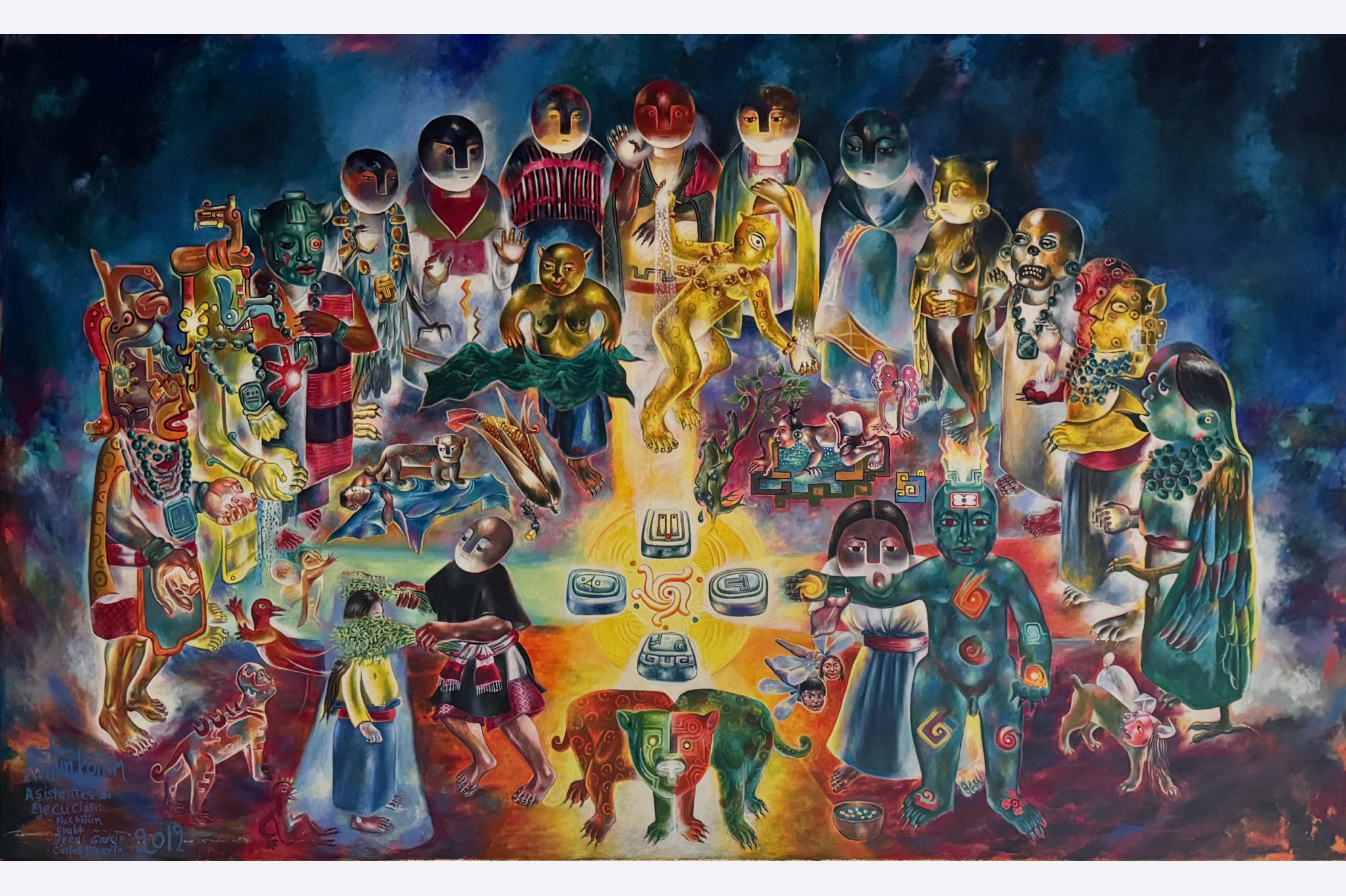
    A mural on the esplanade outside the San Lorenzo Mártir temple in Zinacantán will depict scenes from the ancestral religion of the Tsotsil people, such as prayers on the hills led by the Jiloletic, The blessing of the grandmothers and the importance of traditional roles as a bond within the community are also depicted. As part of this ancestral history, the mural's center features a scene of an imagined encounter between a Jilol, or Tsotsil seer, and Friar Bartolomé de Las Casas, accompanied behind him by other friars who safeguarded the legacy of the Gospel linked to the defense of the people's rights, such as Friar Matías de Córdoba, who contributed to the independence of Chiapas, and, more recently, Friar Raúl Vera. jTatic Samuel Ruiz walking with the Mayan people. And on the far right of the mural, the master Antún created a beautiful scene of the dialogue between the sage of Pochutla. Chan ak'abal or night serpent, and Friar Pedro Lorenzo de la Nada, both sitting under a ceiba tree, the sacred tree of the Maya of the Lacandon Jungle, listening to each other: the friar speaking with eloquence and respect, the wise Maya pointing to the earth and touching his heart.

    Those who can attend on Saturday, June 6th in Zinacantán will be able to participate in the unveiling of the mural, accompanied by Tsotsil poetry and traditional music, thus reaffirming the dialogue of knowledge that we seek to continue promoting between friars and Tsotsil communities, and strengthening the life of the people with the vital sap of their ancestral traditions and the prophetic force of the Gospel.

    Rome, May 17, 2026

  • Dominicos en las fronteras En memoria dichosa de fray Daniel Ulloa Herrero OP (+), 1946-2026David Alfaro Siqueiros | Portrait of Saint Dominic | CUC, 1970

    Dominicans on the frontiers In blessed memory of Friar Daniel Ulloa Herrero OP (+), 1946-2026

    By Carlos Mendoza Álvarez

    Hospitality and commensality are two vital attitudes that, over the years, I have cultivated with the Dominicans since my first encounter in 1979 with Daniel Ulloa and Raúl Vera, then formators of postulants and novices respectively, on the path of initiation to charism of preaching, which has been in dialogue with diverse cultures for eight centuries, with the chiaroscuro of every century-old institution, its shadows and its great lights.

    Even during my childhood in Puebla, both virtues were present in the life of the family, around the figure of my maternal grandmother, my great-aunt, my mother and aunts, along with the uncles who made each family meeting a true celebration of flavors and dances.

    Daniel Ulloa Herrero passed away a few days ago in Cuernavaca, and today the ashes of his mortal body will be deposited in the Columbarium of the Temple of Santa María de la Anunciación, known as the University Parish, next to the National Autonomous University of Mexico in Copilco, which was founded by the Dominicans in 1963, with the spirit of the ongoing conciliar renewal, to cultivate dialogue with intellectuals, students, athletes and workers of the country's top university.

    Friar Daniel received priestly ordination there, along with Friar Miguel Concha and Friar Antonio Ramos, on July 25, 1970, from Bishop Don Sergio Méndez Arceo, who was a council father and an eminent witness of the liberating Latin American Church, against the current of the prominent groups of the Catholic hierarchy and conservative lay people of the time.

    The CUC - as the University Cultural Center Founded by the Dominicans, the university was famous in its golden age for its University Mass and its Film Club, which showcased the latest art films by unknown and even banned directors such as Pasolini, Tarkovsky, Kurosawa, Fellini, and Buñuel. The presence of the Dominicans in every faculty of the UNAM—whether as professors, students, or guest lecturers—extended beyond the university campus, fostering dialogue between faith and reason with students and professors alike.

    In that impetus, Daniel Ulloa, Raúl Vera, and Miguel Concha were trained as preaching friars by figures of the stature of Friar Alberto Escurdia, professor at the Faculty of Philosophy and Letters; Friar Agustín Desobry, who arrived from France with a great project for a cultural center as a space to promote dialogue with university students; Friar Jaime Gurza, an exquisite and cultured man, knowledgeable about the mystical and aesthetic tradition of the medieval and modern Dominicans; and Friar Julián Pablo Fernández, filmmaker and painter, friend of Don Luis Buñuel, David Alfaro Siqueiros, Juan Rulfo, Octavio Paz, Guillermina Bravo, and so many other creators of Mexican culture of the time.

    Daniel Ulloa stood out for his brilliant intelligence, which he would later cultivate as a historian, graduating from El Colegio de México with a thesis on the conflicting currents of the Dominicans upon their arrival in Tierra Firme in 1526: on the one hand, Friar Domingo de Betanzos, with a rigorous reformist spirit in convent life and doctrine, as part of the evangelization and colonization undertaken by the Spanish Crown; on the other hand, Friar Bartolomé de Las Casas, with a bold emphasis in his criticism of the ongoing coloniality, confronting the Encomienda system through the promotion of the Laws of the Indies and a method of peaceful evangelization that he had already tested for years on the coast of Venezuela and later in Verapaz in Guatemala.

    Daniel Ulloa's vibrant personality was marked by a creative sense of humor and exquisite irony that allowed him to connect immediately with young people, both in universities and in working-class neighborhoods. A notable chapter in his history as a young priest was the rock Mass that, along with a band of young people from the alleyway of Leandro Valle, a neighbor of La Lagunilla and Tepito, the "tough" neighborhoods of Mexico City's Historic Center, he enlivened on Sunday nights at the Santo Domingo church.

    Later, both of these intense experiences—his intellectual life as a historian and his pastoral accompaniment of young people from diverse urban cultures—allowed Daniel, as prior of the CUC, to propose a renewed vision of university ministry in the 1980s that emphasized the intellectual life and pastoral accompaniment of university students with their multiple identities. During his years as prior, for example, he welcomed Brothers Roberto and Benjamín Cuéllar, from the Christian Legal Aid organization founded by Archbishop Romero, who became our mentors in human rights work. This experience paved the way for the creation of the Fray Francisco de Vitoria OP Human Rights Center, the oldest civil society organization in Mexico among those that now comprise the network. All rights for all.

    The General Chapter of the Order of Preachers, held in Mexico in 1992, where I had the blessing of serving as Secretary General, elected Friar Timothy Radcliffe as Master of the Order. In his first month in office, he convened a remarkable group of friars as his close collaborators: Jean-Jacques Perennès of the Province of France as Assistant for the Apostolic Life, Guido Vergauwen of the Province of Flanders as Assistant for the Intellectual Life, and Daniel Ulloa of the Province of Mexico as Secretary of the Order. Together with other friars of this vigorous caliber—as enlightened preachers with a profound sense of thought and spirituality dedicated to justice, peace, and beauty—Friar Timothy encouraged the entire Dominican family for nine years to reclaim the prophetic spirit of “holy preaching.” This was the name of the work started by Dominic of Guzman, Bishop Diego de Osma, the sisters of Prulla and the layman Peter Ceila in Languedoc, in turbulent times of return to the radicalism of the gospel, which was shared by the mendicant movements of the time.

    Years later, Friar Daniel emigrated to the United States to continue his university ministry, first in New York, then in Brooklyn, and later in New Jersey. We Dominicans of Mexico owe him a debt of gratitude: to reclaim his legacy and renew the charism of preaching in these new theological spaces where God encounters wounded humanity seeking life, dignity, beauty, justice, and peace around the common table of divine compassion.

    More recently, on December 7, 2024, when Friar Timothy received the cardinalate from Pope Francis, many of his companions from that time gathered in Rome to celebrate this momentous occasion. In a video recorded on that day, Friar Daniel recalled that the main purpose of the gathering was to reaffirm the urgent need for the charism of preaching to proclaim the Good News amidst the turbulent times humanity is experiencing.

    To honor the legacy of that generation of preaching friars who have marked my life as a person, as a Christian, and as a Dominican, my theological work and pastoral service of several decades has sought to listen to each community and culture where I have lived: Mexico City with its disparate and diverse neighborhoods; university students in Fribourg, Switzerland, Paraná in Brazil, Paris, Mexico City, New York, Rio de Janeiro, and Boston; as well as the indigenous peoples of Oaxaca and Chiapas, from decades ago to the present day, to the Lakota and Mapuche peoples at the extreme North and South of the continent.

    Inspired by this Dominican spirit, at the confluence of faith and reason, I now participate in the development of this initiative JobeLab In San Cristóbal de Las Casas, along with friends from this city. I'll tell you more soon about this exciting network of friendship, hospitality, and budding culinary experiences.

    In the coming days, we will be holding two events here in Jobel: on Wednesday, March 25th at 5:50 pm at Belil Restaurant, a presentation about the San Cristóbal School as a breeding ground for critical thinking that emerged in Chiapas in the second half of the 20th century, with the participation of Pablo Romo, Martha Elena Welsh, and Juan Carlos L. Puente. And on Friday, March 27th, at 5 pm at the Charity Temple, we will host the event “Music for Interreligious Encounter,” together with Shaykh Yahya Rhodus and Shaykh Mudar Abdulghani from the city's Muslim community, focusing on the Sufi music and chants of Nader Khan, a Canadian believer and artist, as expressions of encountering the sacred in times of extreme violence.

    We look forward to welcoming you for an experience of hospitality and dining.

    Jobel, March 21, 2026

English