Category: Hope

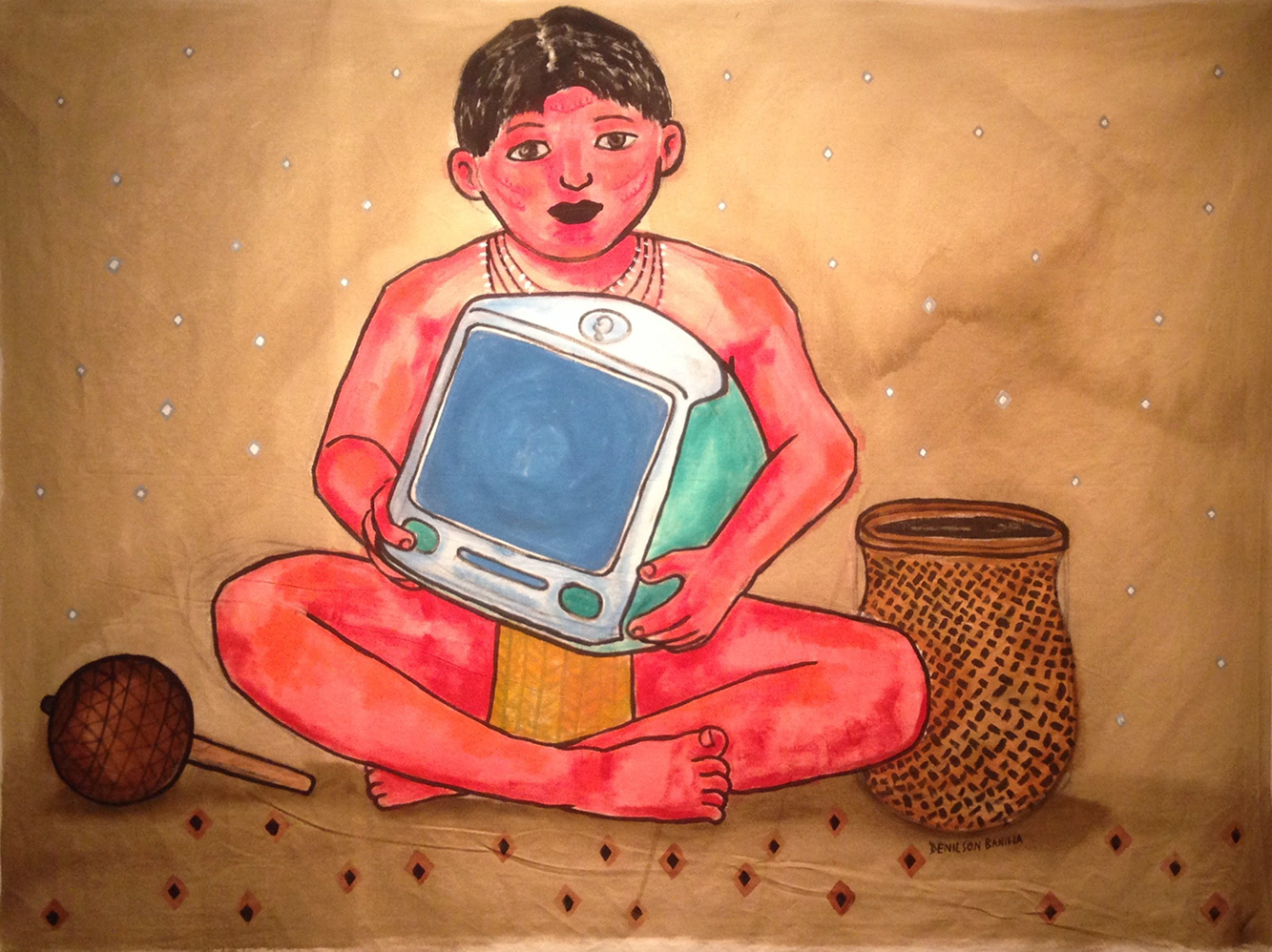
  • El primer cumpleaños de mi blogDenilson Baniwa | Curumim, keeper of memories | Brazil, 2018

    My blog's first birthday

    By Carlos Mendoza Álvarez

    One of the facets of the “deprofessionalized intellectual,” to use that expression beloved by Gustavo Esteva, after thirty years of academic life in my case, has consisted of exploring the territory of the blog. Discovering this inhospitable land has proven to be quite a challenge for a citizen of the so-called Generation of the Baby boomers or the post-war period.

    This digital adventure has been a challenge for someone who comes from the digital prehistory. I was a child of the 1960s who grew up playing with Towi, small wooden pieces to build houses or animals, imagining stories of cowboys and Indians. My childhood was filled with racing games with tiny metal toy cars, the size of my palm, launched with precise flicks of my index finger to propel them along the edge of the cement sidewalk, circling the block of our house, located in the beautiful San Francisco neighborhood of Puebla. We would cover a perimeter of about a hundred meters, spending long hours with cousins and neighbors. Then came Meccano sets, building machines and bridges with metal pieces full of holes held together with screws. These moments alternated with races of go-karts, speeding down the sloping streets. No video game left its mark on my generation.

    For schoolwork, the typewriter was our irreplaceable ally in middle and high school for submitting final projects. We would make carbon copies of our work on sheets of colored tissue paper, depending on the subject. Making a typing mistake was a real tragedy because we had to retype the entire page.

    Years later, when I wrote my doctoral thesis in Freiburg, I was finally able to use an electric typewriter with a built-in proofreader, which seemed like a quantum leap compared to the mechanical Olivetti typewriters of my childhood and adolescence. But even then, when the rigorous thesis supervisor commented on the typed pages, submitted after many sleepless days and nights, the entire chapter had to be rewritten. The magic of the copy-paste of word processors that now save us hours and days of work with a single click.

    Despite the great advantages of today's digital world, I now recall with nostalgia that heroism of academic writing from my childhood and youth, which tested us in the art of patience when writing, correcting, and preparing academic work carefully, at a pace of trial and error, in a parsimony that favored reflection and, sometimes, led us to collective hysteria.

    The final binding of the typed work was the master touch that, for students with good financial resources, was done with ostentation by using the new thermal binding technology, finer and more elegant, to impress the professor.

    Suddenly, without realizing the qualitative leap into the digital world, I've been thrust into another inhospitable territory called Artificial Intelligence. A few years ago, some journalists and scientists were talking about the "Internet of Things," which seemed like a Gothic oracle brought into the digital world. All the technological devices designed with semiconductors and microchips were connected in a secret network in some digital cloud that seemed to float above our heads. That cloud perhaps represented something similar to what grandmothers imagined when they prayed to angelic choirs to protect us from heaven. The difference is that now that cloud is a threat because it stores our data in some center controlled by Google or Palantir, devastating the land and its population, but above all, leaving us unprotected against the global surveillance that terrified Pope Leo XIV.

    In the world of philosophy, I recall that, at the beginning of the new millennium, Mariano Corbì, a Catalan Jesuit who did not like to be identified as a companion of Ignatius, spoke of “digital reason” as an alternative to “analog reason” that had dominated the West for thousands of years, predicting an ontological leap in cosmic and human relations that would have an immediate impact on a new way of living spirituality as “religion without religion”.

    For his part, Ivan Illich, in his brilliant work "In the Vineyard of the Text," published in 1993, explored the birth of the West in terms of the technology of meaning production from the medieval book, following his great Parisian master, Hugh of Saint Victor, in his work "Didascalicon," as a metaphor for the argument that unfolds like a vineyard from the leaves of the text with its numerous glosses. Based on this intelligence of the text, Illich characterized the systems era that humanity entered with the digital technology of the end of the last millennium as a dangerous threshold of dehumanization.

    But now artificial intelligence is growing and is here to stay as a data and communication control environment that, in its generative form, threatens to make decisions on its own, cross-referencing data and drawing conclusions, to inform decisions in the companies, governments, and militaries that depend on it to achieve the ultimate efficiency (if you'll pardon the expression) of their commercial and military objectives. We have much to learn, evaluate, and decide so that this new technology doesn't end up devouring us as a human species.

    A year ago, on June 1, 2025, I launched my blog as a virtual pathway to weave conversations with people and communities with whom I share friendship, aspirations, ideas, and ongoing initiatives to cultivate a more humane world in our own territories. The digital world now allows me to continue this dialogue with people from the Global South and North, with whom I have crossed paths at some point in my personal, academic, and pastoral life, from Mapuche and Dakota territories to South Africa, from Boston to Chiapas, from Pomerania to El Salvador, Brazil, and Peru.

    With the support of Raquel, Sergio, and Fatima, talented colleagues from the Afink workshop and advisors in graphic and digital communication, as well as the critical eye of Eduardo Velasco as the portal's image advisor, I have been proposing a short text each week on current topics, with an emphasis on the human background, thought, spirituality, and social commitment to tell and weave stories of dignity and hope.

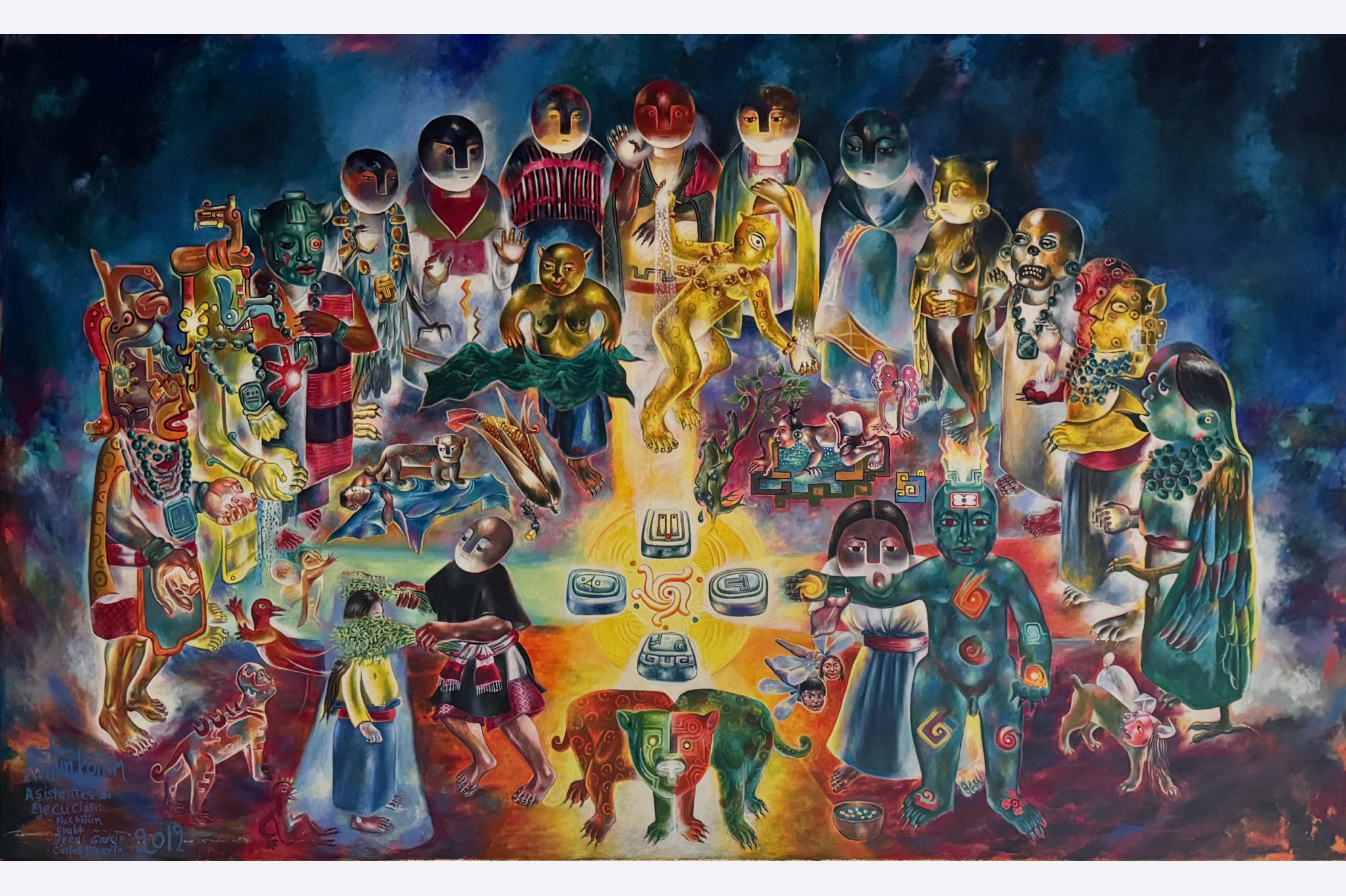
    Reaching the milestone of a first year of weekly publications allows me to revisit the topics discussed—always accompanied by a decolonial art image or a photograph of my own taking from my travels—to express my gratitude for this collective learning, trusting that the conversation will continue so that we can mutually enrich each other with true words.

    San Cristóbal de Las Casas, June 29, 2026

  • JobeLab Una iniciativa de pensamiento crítico y espiritualidades diversas desde San Cristóbal de Las CasasJobeLab | San Cristóbal de las Casas, Chiapas | 2026

    JobeLab An initiative of critical thinking and diverse spiritualities from San Cristóbal de Las Casas

    By Carlos Mendoza Álvarez

    From the second half of the 20th century, Chiapas became a laboratory of new ways of inhabiting and thinking about the world, with the creative confluence of important social, political, cultural and spiritual processes.

    Among them, dynamism stands out synodal (or shared path by all the believing people with their diversity of ministries) of six decades, implemented by the Diocese of San Cristóbal de Las Casas with jTatik Samuel Ruiz as pastor walker And hundreds of local, regional, and international communities and groups, convened for justice and peace for the Indigenous peoples and other communities of this region of Chiapas. In an astonishing confluence of paths, the Indigenous Congress of 1974 marked the beginning of the public presence of Indigenous peoples with their own voice. Indigenous, mestizo, and international social and cultural movements also emerged, with research projects on the rich Mayan heritage, both ancient and modern, developed by teams of social anthropologists, archaeologists, and linguisticists. Waves of researchers arrived from Latin America, the United States, and Europe, and, with an academic model still largely based on extractive practices, made significant discoveries in the social sciences and humanities. The translation of the Bible into Mayan languages, initially promoted by the Summer School of Bible as part of a U.S. interventionist plan, evolved into intercultural dialogue, continued to this day by various Christian churches, including the Roman Catholic Church. Finally, the Zapatista movement, with its armed and media-driven uprising of 1994, became the watershed moment of a social, political, and cultural insurrection that continues to this day as one of the most radical critiques of the hegemonic system of the multi-headed capitalist hydra, including patriarchy and colonialism.

    The “San Cristóbal School” is a name proposed decades ago by Pablo Romo and others in academia and the arts to evoke the legacy of critical thought, resistance, and spirituality that emerged in Chiapas, as a counterpart to the Cuernavaca School, analyzed by Humberto Beck. In their connections and differences, both represent significant contributions to critical thought that arose in Mexico during the last century.

    In this way, recognizing the individuals, groups, organizations, and initiatives of civil society that have been an active part of these processes, as a collective inspired by them, with JobeLab -apocope of Jobel which is the Tsotsil name of San Cristóbal de Las Casas and laboratory To designate this city as a laboratory, we seek to give continuity to such a legacy in a new context, focusing on critical thinking and the spiritualities that have sustained them, such as those of the native peoples, Catholic Christianity, and more recently Buddhism and Islam.

    Through the initiative JobeLab. Ongoing dialogues and mutual support for re-existences We will continue to cultivate this heritage in the new scenario of the civilizational crisis that humanity faces in the second quarter of the 21st century, where peaceful coexistence between nations and the balance of planet Earth are at risk and call us to promote processes of resistance and re-existence.

    We will nurture this initiative based on two inspiring attitudes that are, at the same time, transversal axes of the talks, meetings and festivals that we will organize in various spaces of the city: hospitality and commensality.

    The hospitality It is one of the human gestures that most powerfully expresses our shared human condition, that is, our way of becoming individuals and communities as beings in relation to one another. This radical attitude of openness to otherness is a fundamental ethical and political act, where the religions and spiritualities of humanity celebrate a glimpse of divinity.

    The commensality, Like the other side of the moon, it is the nourishing soil where we receive the otherness of Mother Earth, of other humans who become our neighbors, and of Divinity, through food and drink created by the unique genius of each people. We celebrate this gift as an inclusive banquet where Divine Sophia prepares a table for all nations and creatures of the cosmos.

    Together with Carmen Reyes and Ricardo Hernández, Angélica Evangelista and Abraham Mena, I am enthusiastically participating in this project, drawing on the Dominican tradition of life and thought. In these exchanges, we seek to discover new expressions of the divine and human Word as a creative fire that redeems, animates, and shelters us in our present circumstances. times of hardship as a human species that puts itself and the Common Home at risk, leading us to the precipice of annihilation.

    This week two events will be the formal presentation of JobeLab, after the first event where the initiative germinated, on January 28, with a presentation on Gaza and Chiapas at the Charity temple in the city of San Cristóbal de Las Casas.

    On Wednesday, March 25th at 5:30 pm, we will hold the discussion “The School of San Cristóbal,” with the participation of Pablo Romo, who was one of the key figures in the diocesan process of promoting human rights, paving the way for the creation of the Fray Bartolomé de Las Casas Human Rights Center. Martha Elena Welsh, choreographer who animates in Xitla House In Mexico City, workshops were held to support people in situations of extreme vulnerability, facing various forms of violence. And Juan Carlos La Puente, a Peruvian with extensive international experience in providing spiritual support to human rights defenders, has been developing a methodology for this purpose from his base in Oregon, USA. permanent discernment as a path of body for people and communities in re-existence.

    And then, on Friday, March 27th at 5 p.m., we will explore another facet of re-existence: forgiveness as a path to reconciliation in contexts of violence. With the Muslim community of San Cristóbal de Las Casas, represented by Shaykh Yahya Rhodus and Shaykh Mudar Abudlghani, we will discuss forgiveness in Christian and Muslim traditions as a common path to peace, at a critical moment of violence in the Middle East. And we will do so accompanied by the extraordinary music and song of Nader Khan, a Canadian Sufi artist.

    We invite you to be a part of JobeLab From wherever we may be, whether attending talks and meetings, or imagining and creating similar spaces where we can come together and flourish as individuals and communities in resistance and re-existence, going beyond the spiral of violence that surrounds us, towards a world another world of hospitality and commensality.

    Jobel, March 23, 2026

  • La casa de la Palabra encarnada Una apuesta por el diálogo social y cultural en Chiapas al estilo de los dominicosPilar Emitxin | Embodied poetics | 2019

    The House of the Incarnate Word A commitment to social and cultural dialogue in Chiapas in the style of the Dominicans

    By Carlos Mendoza Álvarez

    A few days ago, we opened a new space for dialogue in the city of San Cristóbal de Las Casas on the feast day of Saint Thomas Aquinas. This was the first event in a year-long celebration of the fifth centenary of the arrival of the Dominican friars to Tierra Firme, as the American continent was then called. Abya Yala. Next June we will be holding various cultural and religious events, both in San Cristóbal and in Zinacantán, with the program 500-OP Chiapas which we will announce soon.

    Together with Abraham and Angélica, dear friends from Ecosur with whom we worked in university ministry at CUC years ago in Mexico City, and with Carmen and Ricardo, friends involved in social and cultural activism in the city, we have been imagining together a project to continue cultivating the great legacy of the School of San Cristóbal, as it is called Pablo Romo to critical thinking and inculturated liberation theology that has developed in the Highlands of Chiapas for more than half a century, with the specific contribution of the Dominicans in these lands. There are many cultural forums that currently exist here—such as CIDECI and Dialectics in the Museum. jTatik Samuel, El Paliacate, Galería MUY and many more – where it is possible to talk about urgent and important issues for the cosmopolitan society that lives here – a microcosm of Mayan, mestizo and foreign peoples – with its many local, regional and global connections.

    Since the 1970s, San Cristóbal de Las Casas has been the scene of important meetings such as the First Indigenous Congress convened by Bishop Samuel Ruiz and leaders of indigenous communities in 1974, it proved to be a watershed moment in the indigenous consciousness of Mexico, as it refers Fabiola Ramírez in her Master of Arts thesis at Tulane University. She also highlights the First International Symposium of Lascasistas, The event, organized by Manuel Velasco Suárez, Agustín Yáñez, and the Dominican friar Enrique Ruiz, was held in 1974. Both events shared a common thread—starting with the fifth centenary of the birth of Fray Bartolomé de Las Casas—the search for paths to promote justice for the indigenous peoples of Chiapas, subjected for almost five hundred years to a racist system, marked by centuries of social injustice and the suppression of their collective imaginaries in their cultural and religious expressions. The spirit of liberation theology, as a creative reception of the Second Vatican Council, was mediated by the prophetic force of the Second General Assembly of the Latin American and Caribbean Bishops in Medellín in 1968, ecclesial events in which they participated. jTatik Samuel Ruiz, made their presence felt with vigor and creative imagination in these lands.

    Two decades of sowing the Gospel in the diocese, with its message of liberation for oppressed peoples, allowed that seed to germinate into a diocesan synod, intimately connected with the indigenous cause, which found in the Zapatista movement one of its most relevant expressions for promoting the autonomy of native peoples. There were other fruitful fruits, such as indigenous theology, which, not without difficulty with Vatican authorities, also expressed the vitality of a profound ecclesial process that continues to this day.

    But the old Royal City of the colonial era, inhabited by a mestizo and Creole population that called itself intercultural, He had become accustomed to living with the "Indians" in modern times with a normalized racism, which was expressed as paternalistic assistance from the caxlanes or Creole chieftains towards the Indians, as Rosario Castellanos masterfully recounted in her collection of short stories Ciudad Real.

    The Zapatista uprising, in addition to its political effects—with the 1996 San Andrés Accords betrayed by the federal government and the creation of the Caracoles or Zapatista autonomous municipalities—had a cultural impact on the city, which suddenly became more cosmopolitan in its daily life, as they tell university students Immigrants in the Highlands of Chiapas since the years surrounding the uprising. As early as the 1950s, Harvard anthropologists and linguists from the Summer School of the Bible had arrived in the Jobel Valley to settle in the colonial city, turning it into a base for their research trips to the indigenous communities they studied, mostly using an extractive academic or religious model.

    But over time, the gentrification of the city of traditional neighborhoods It grew in an unusual way as a result of the rebellion of the canyons that impacted the Highlands of Chiapas in the last three decades.

    Today, more than fifty years after that Indigenous Congress of 1974, and thirty-two years after the Zapatista uprising of 1994, much has changed in San Cristóbal de Las Casas. Indigenous communities have achieved diverse forms of autonomy in the political, social, and cultural spheres, including religious matters, surpassing the vision of their initial proponents. These communities are no longer under the tutelage of political parties, churches, universities, or civil society organizations. The cultural fusion of Indigenous peoples with hip-hop music, audiovisual culture, and contemporary art will surprise many. Indigenous identity now transcends even revolutionary movements.

    And like a boomerang effect, the mixed-race and foreign population living in the city also blends into this landscape of identities. An event about Gaza primarily draws university students and members of civil society, but attracts few of the displaced Indigenous people who live in the northern part of the city. A hip-hop concert, on the other hand, fills plazas. And then there's the Sinaloan band invited to the Zinacantán festival, which will keep the Tsotsil youth on tenterhooks for hours, mesmerized by a professional stage that rivals any pop or ranchera music festival in any major city in the country—and, incidentally, managed by a young entrepreneur from Zinacantán.

    How can we participate in these ongoing cultural changes using the Dominican word itself, not only from the past but also from the present, in its diverse forms of life with friars, sisters, and lay people inspired by the charism of preaching? What signs of the times... deglobalization It is necessary to interpret in order to scrutinize the passage of the God of Life, As the Dominican friar Gustavo Gutiérrez said in Peru, what is needed for a humanity bewildered by global violence?

    The roaming This is a vital attitude of the Dominicans since their founding by Dominic of Guzmán in the 13th century, a time of transition from feudal to urban society. "Holy preaching," the initial name of Dominic's apostolic project conceived with Bishop Diego de Osma, the layman Peter Seila of Toulouse, and Wilhelmina and Raymonda Claret, sisters from Prouille in southern France, expresses the original inspiration of a spiritual tradition that has dedicated itself for eight centuries to seeking truth in every age, trusting in the power of the Word made flesh. Therefore, it is not just any truth that is being sought, but the truth that liberates, saves, and redeems humankind, humanity, and the cosmos from the bonds of evil, as did the Galilean.

    The Dominican-style study is, therefore, the spring of hope According to that beautiful reflection by Friar Timothy Radcliffe, former Master of the Order of Preachers, this spirit led the friars to disperse throughout Europe from the beginning, going to universities "to study and found monasteries," that is, communities of life centered on the Incarnate Word. This impetus took them as far as Mongolia in search of Genghis Khan. This itinerancy was described by Matthew of Paris, the staunch enemy of the new friars at the Sorbonne in the 13th century, who scornfully declared: "Their cloister is the oceans and their cell the world," thus defining for posterity the daemon or the genius of the religious order that was emerging in the medieval towns, as Father Chenu repeatedly reminded us doctoral students in Paris.

    Centuries later, already in Chiapas, that same itinerant journey led Friar Pedro Lorenzo to the Jataté canyons and the Lacandon Jungle to search there, “in the middle of nowhere,” as the prior of Santo Domingo de Ciudad Real admonished him for his rebellion, for the people who lived there. That is why from then on he decided to call himself Friar Pedro Lorenzo de la Nada, according to Jan de Vos.

    In our times of the Great Catastrophe—begun in Gaza and now spread throughout the world in the Trump era—itinerantness leads us to new territories to be created as places of conviviality of the Word. Here in the Highlands of Chiapas, we'll do it like new. itinerant space, where we can foster creative dialogues in search of the truth that saves.

    San Cristóbal de Las Casas, February 7, 2026

    Note: Let's continue the conversation with any comments you'd like to post below.

English