Category: Hope

  • Las flechas de San Sebastián Luces y sombras de una fiesta zinacantecaCarlos Mendoza Alvarez | San Sebastian | Sot'sleb, Chiapas | 2026

    The arrows of Saint Sebastian Lights and shadows of a Zinacantecan festival

    By Carlos Mendoza-Álvarez

    One of the emblematic martyrs of the time of Roman persecution in the beginnings of Christianity, pierced by arrows in his naked and vulnerable body, has been venerated for seventeen hundred years by diverse peoples who recognize in Saint Sebastian humanity mortally wounded by empires that supplant divine glory.

    In the Highlands of Chiapas, the saints are adorned with flowery cloaks, colorful ribbons, and mirrors that reflect alternate worlds where the Ch'ulel It dwells, with its avatars that protect or threaten those who approach its spheres of power. In Chamula, according to oral history, the saints can be punished for a time if they do not respond to the pleas of their faithful devotees: they are placed against a wall for a while, until their grace manifests itself. I have not found that custom in the lands of Sot'sleb, or place of bats, known as Zinacantán, a name documented by the famous anthropologist and linguist Robert Laughlin. But I have been surprised by the profusion of life in the garments with which they adorn the images of the saints: the Christ of Esquipulas, the Guadalupana, Saint Jude, Saint Lawrence and Saint Sebastian are the images that increase their clothing for their annual festival, in an overabundance of colors and textures that leave their faces and hands exposed, with their bodies imperceptible before such a profusion of life.

    What lies behind so much flowery beauty? How can I approach with devotion those images that transcend the ordinary in such an avalanche of flowers and decorations that sometimes seem to overwhelm those we reverently invoke?

    I found the key in the arrows of San Sebastián during its three days of popular festival in the municipal capital of Zinacantán.

    People from all the surrounding areas and neighboring towns flood the streets of the village and the plaza next to the church of the martyred saint in a lively festival that blends ancestral traditions like the jaguar tree with fleeting horse races. Asking the young catechists about the meaning of these traditions... performances Today, I heard different interpretations, more or less confused, which always concluded with the laconic phrase: “it is the custom”The jaguar climbs the trunk of a tree that was chosen a year in advance in the sacred hills The surrounding area. This tree is visited and venerated three times by those in charge of the tradition before being cut down and taken to the center of the plaza. During the festival, the trunk becomes the center of a ritual that commemorates the three days of darkness spent praying for rain and abundant harvests. From this trunk, standing upright in the ground, a man dressed as a jaguar—wearing a suit of Chinese fabrics crudely imitating the skin of the rain guardian—throws stuffed squirrels and eggs to the crowd gathered around, accompanied by young people dressed in black who play and dance as a troupe during the festival rituals. The horse race runs along the main avenue at the beginning of the day and again in the afternoon, recalling, according to some, the arrival of the Spanish—a memory that marks the time and space of the festival brought by the friars?

    During those days, like stepping back in time, the popular festival blends traditional dance and music—performed with deliberate slowness before the Tsotsil green altar of the Three Crosses, where the image of Saint Sebastian is placed—with the deafening roar of the band in the bandstand, which overwhelms those present but provides the perfect soundtrack for the celebration. And at night, everyone eagerly awaits the Sinaloan band concert, when the thumping drums mingle with the firecrackers and fireworks displays prepared to light up the sky.

    Amidst that endless surge of color, sound, and movement, I pause to approach the saint who is the reason for the festivities. I look for him on the altar in the atrium and then inside the church at the main altar. In both places, I can barely make out his face. Through his vestments, an arrow pierces his arm. And there is no way to see his lacerated body.

    Then I recall conversations I've had in past and recent years with young Indigenous people from diverse sexual orientations who have confided in me about their suffering from living in the shadows in their communities. It was unimaginable for them to be able to celebrate San Sebastián as their patron saint, to be part of the celebration, as so many Catholic communities around the world do. They celebrate it only in the silence of their hearts and their prayers. And I realize the arrows that continue to pierce the wounded body of the martyr. The vulnerable bodies of these young people today are adorned with floral fabrics, like everyone else in the community, but those bodies are not recognized in their difference by an ancestral culture to this day.

    I wonder if those bodies that live in the shadows today will one day be able to come into the light, with the love and responsibility that calls us all, as other Indigenous cultures have done for centuries. Years ago, the same question arose in conversations with women from the Zapatista grassroots and civil society who were forging a path in their own personal and communal histories to be recognized as life partners, living together as mothers with their children, and with a clear community and political commitment to defend their peoples. Today, the Zapatista narrative speaks to us of others –as he masterfully recounts Sylvia Marcos by exploring gender fluidity in Mesoamerica - finally making visible the experience of different lives and bodies as valuable and essential voices in the human symphony and the world to come.

    With a burning heart I sow a candle in front of San Sebastián in the name of those young people so that they may soon emerge of the shadows of the shadows of the shadows and live their lives joyfully in the midst of the community.

    The lights and shadows of the San Sebastián festival continue to be a revelation and a concealment that calls us to see with wide-open eyes the world around us where divine and human glory bursts forth as a promise of life for all.

    Sots'leb, January 24, 2026

    Note: I look forward to your comments below to continue the conversation.

  • Los Cristos negros de ZinacantánCarlos Mendoza Álvarez | Black Christ | Elambó Esquipulas, Chiapas | 2026

    The Black Christs of Zinacantán

    By Carlos Mendoza Álvarez

    .

    The patron saint festival of Elambó Esquipulas in the Highlands of Chiapas opens with the resounding music of a band whose cymbals, clarinet, trumpets, and drum enliven the community's procession. We walk from the entrance of the village to the chapel of the Black Christ, draped in a pink mantle embroidered with colorful flowers and adorned with a curly wig of jet-black hair. The darkness of his skin stands out even more against the flowery backdrop and reflects, with a few glimmers in his arms outstretched on the cross, the candles. sown on the floor, burning amidst the incense that fills the altar.

    Once the initial greeting is given, the community kneels to pray the invocation of mercy in the Tsotsil language, under the guidance of Mariano, the catechist in charge, all imploring God for forgiveness for the world, in a murmur that begins like raging waves and then becomes a whisper and caress, like waves brushing against the sand of the beach, a sign of a pacified communal conscience.

    The Mass continues with biblical readings in Tsotsil focusing on the cross of Galilee, followed by a brief meditation that I lead for the community in Spanish. I summarize three key thoughts for the catechist-interpreter to develop with endless eloquence. I center on the biblical meaning of Jesus' cross as a result of his commitment to the excluded of his time. Then, I briefly recount the story of the Lord of Esquipulas in Guatemala, quoting my brother. jTotik Alfonso, though adding my own commentary, points out that its black color symbolizes the sufferings of the people that Christ bears. I see the image adorned with flowers and realize that the Crucified One offers us a loving embrace in the last breath of his life. It comes spontaneously to me to say this to the community, who listen attentively, and I see them receive that embrace with grateful expressions. And I conclude by inviting us all to celebrate the Lord of Esquipulas with our own commitment of love, caring, as he did in life, for those who suffer most in the community, beginning with children whose health is threatened by the soft drink and junk food industries, young people drawn to money, drugs, and alcohol, and women who suffer violence in their own homes and communities.

    The consecration of the bread and wine is experienced with profound devotion by the kneeling community. But this sacred moment of adoration of the body and blood of Jesus, the anointed of God, suddenly becomes an even deeper reverence thanks to the traditional song and dance of the Bolom Chon o jaguar song which expresses the deepest soul of the Tsotsil, Tseltal, and Tojolabal peoples, the Mayan peoples of the Chiapas Highlands. Traditional musicians play the harp, violin, and guitar with a slow, measured rhythm, like a mantra growing in a sonic spiral of infinite tenderness, lulling the incarnate God and Mother Earth, whom our feet touch with their dance. For it is worth remembering that, for the Mayan peoples, in the rites of ancestral tradition—such as those of the Tseltal people studied by the Jesuit— Eugenio Maurer In Bachajón, the dance has a religious meaning, because with the feet one caresses Mother Earth, the primordial gift of the Giver of Life.

    .

    .

    The Christ of Esquipulas, which originated in Guatemala, is a powerful representation of the diverse faces of faith of the ancient Mayan peoples, celebrating Tezcatlipoca under Mexica influence, according to the Dominican chronicler. Friar Diego Durán, to ask for rain:

    […] it was made of a very shiny and jet-black stone [obsidian], the stone from which they make razors and knives for cutting. In the other cities it was made of wood carved in the figure of a man, all black from the temples down, with a white forehead, nose, and mouth, the color of an Indian, dressed in some fine attire in his Indian style. First, he had gold ear ornaments and others of silver. On his lower lip, he had a lip plug of crystalline beryl in which was inserted a green feather, and sometimes a blue one, which from the outside looked like an emerald or ruby. This lip plug was about a gem long, above a ponytail of hair that he had on his head (Durán, II, 1995: 47).

    Centuries later, in that image, the Christianized Mayan people venerate the Nazarene with new meanings. In every corner of Zinacantán I visited this week, I found new and astonishing alterations to the image and the meanings the community gives it. From the story of a charred black Christ who miraculously survived a fire to the icon that darkens because it absorbs the sins of the world, we encounter stories that recount the anxieties and longings of its faithful devotees, giving the Christ increasingly intense shades according to the skin color or the consciousness of the community that venerates him.

    Two scenes remain in my memory from these days exploring the Zinacanteco landscapes. Both hark back to the ancestral rites of the Tsotsil people.

    The first is the prayer of forgiveness when the entire community, in a collective surge, with cries, tears, and sighs, raises its prayer kneeling on the sedge –These are the pine needles laid like a green and fragrant carpet on the floor of the hermitage, chapel, or temple, supporting the feet of the community gathered amidst candles—the incense mingled with the scent of pine from the surrounding forests. A vestige of the people of the mist and the forest, as the poet from Tuxtla sings. Juan Bañuelos:

    .

    Dawn breaks. The humidity is like sleep: motionless. Only
    ascends
    a people with roots in the throats of birds
    whose song stirs the fragrant carpet of the rushes
    The smoke from the huts rises, mimicking Mayan fretwork patterns.
    while the cyclical serum of memory is filtered out

    .

    The second scene that lingers in my heart is the ritual dance of sonic and rhythmic adoration that moves the assembled community, caressing the earth that has borne fruit to the son of Mary, perhaps a jaguar Christ, according to the memory of the Mayan peoples. Bodies transfigured by a radiance of ancestral humanity that opens itself to the loving mystery.

    The Black Christs of Zinacantán continue to luminize in every place, with darker or lighter tones, depending on the land that welcomes and venerates them. Black Christ of Esquipulas during the time of the Captaincy General of Guatemala. Black Christ of Tila during the time of Chiapas' independence. Black Christ of Zinacantán during the time of the indigenous uprising. Black Christ of today's communities facing the mirage of prosperity from the flower and textile trade. Black Christs that will come in the troubled times we live in.

    What laments and what praises will future generations of the Tsotsil people sing when, half a century from now, the cry of wounded humanity makes the Black Christ even darker?

    What laments, praises, and dances do we experience when we realize that time is running out to seek and find solace for a humanity threatened with death by the world of the powerful?

    The black Christs of Zinacantán are a great paradox: an embrace of suffering and a promise of life.

    .

    Ts'ajal Nam, January 17, 2026

    .

    Note: I would like to read your comments in the final section of this page.

  • Alégrate, humanidad desoladaAntún Kojtom | Guardian of Mirrors | Tenejapa, Chiapas | 2021

    Rejoice, desolate humanity

    By Carlos Mendoza Álvarez

    In the era of the Monroe Doctrine 2.0, launched last week for the “Western Hemisphere” by the global despot as National Security Strategy From the United States, it seems foolish to talk about joy.

    Some analysts, such as Michel Ignatieff, predict the end of the West along with the the civilizational erasure of Europe. Today, something is at stake. global geopolitical strategy With areas of power divided among the three dominant military and economic powers—the United States, China, and Russia—each brazenly administering a region of the planet for its own benefit, the military intelligence apparatuses of the United States and the other powers are already in operation to control entire populations and their territories through a vast military-digital system, subjugating individuals and nations that choose to oppose the might of the Maga empire and its counterparts.

    The creation of Western Hemisphere Command The deployment of the U.S. military, announced by the Trump administration this week, is part of a geopolitical strategy that has already declared war on mass immigration within its borders. It is also worth highlighting the war already underway against drug cartels, which are portrayed as terrorist groups threatening U.S. security, regardless of the civilian "collateral damage" that this new colonialism will cause, as the Israeli state has already demonstrated in Palestine before the astonished eyes of the world. The strategy of constantly threatening new tariffs that Trump has used in his first year in office has been another attempt to promote a new mode of deglobalization which seeks to subordinate the economies of its "backyard" now called the "western hemisphere" to the interests of the transnational corporations that sustain its wealth.

    The nations that for centuries were swallowed up in the Western Hemisphere during early modernity will now be trapped in the web of the voracious monster's hegemonic power. But that giant has feet of clay and one day it will fall. Until then, the destruction it leaves in its wake will be a cause of desolation on a planetary scale. Such a scenario is what Nelson Maldonado-Torres calls the Great Catastrophe —a concept I develop in a collective book on political philosophy and theology that I am currently preparing for an American publisher— seems unrelated to a reflection on the joy What could humanity expect in this hour of global misfortune? But it is precisely the only place where it is possible to speak of a meaning that transcends the apparent immeasurability of the evil that stalks us.

    Tomorrow, Christian communities will celebrate the third Sunday of Advent, known as Gaudete. The name comes from a poem by an anonymous disciple of the prophet Isaiah in Babylon, announcing to Jerusalem, the desolate city, that the time of its liberation after the exile had arrived: Gaudete Ierusalem,Rejoice, Jerusalem! (Isaiah 66:10). Like echoes of that ancient voice of resistance, the same song could also resonate in today's exiles, with new melodies according to the genius of each era and culture, as in the case of the Palestinian people, whom we will evoke at the end of these lines.

    Christianity discovered centuries later the radical motive and scope of the joy of the messianic proclamation, extending God's closeness not only to the desolate Hebrew city, but to all. messianic communities scattered throughout the Roman diaspora of that time, who have now entered the new era thanks to faith in the redeeming God, according to the words of the apostle Paul (Philippians 4:4-7):

    Rejoice in the Lord always. I will say it again: Rejoice!

    Let your kindness be evident to all.

    The Lord is near.

    Don't worry about anything […].

    And the peace of God, which surpasses all understanding,

    He will guard their hearts and their thoughts in the Messiah Jesus.

    It is about God's consolation for the little ones of the Kingdom of Heaven. They live in the interrupted time Precisely at the heart of the catastrophe. A way of existing that the dispossessed of the earth experience in their lives in a way messianic, That is, as a power to untie the knots of hatred and resentment in their bodies and territories. It is possible to perceive that murmur of a peaceful present amidst desolation in the Gregorian chant antiphon for this third Sunday of Advent, which is known precisely as Rejoice in the Lord.

    But let's turn to our own time. Who can proclaim such hope today amidst global desolation? Paradoxically, it is the victims themselves who possess that hope. power. Something that executioners will never have because their hearts have been paralyzed and are incapable of opening to joy until they reach the depths of their own desolation and annihilation. This is how Daniela Rea and Pablo Ferri describe it in the book The Troop: Why Does a Soldier Kill? by interviewing hitmen in Mexico who have come to terms with their crimes. In a collective way, the Houses of Memory which promoted in recent years in Colombia the Truth Commission They bear witness to that complex process of moving from violence to peace, based on the strength of the victims summoning the perpetrators, in order to open paths to transitional justice in a country that suffered more than thirty years of war, with four hundred and fifty thousand dead and almost eight hundred thousand internally displaced persons.

    In such experiences of transforming systemic violence from the margins of society, thanks to the persistence of individuals and communities of survivors, it is possible to receive the good news of Sunday. Gaudete from Christian liturgy as a call to learn to live an ethic of care and a summons to cultivate a spirituality of mutual accompaniment among survivors, both processes enriching each other to pave the way for fighting hope.

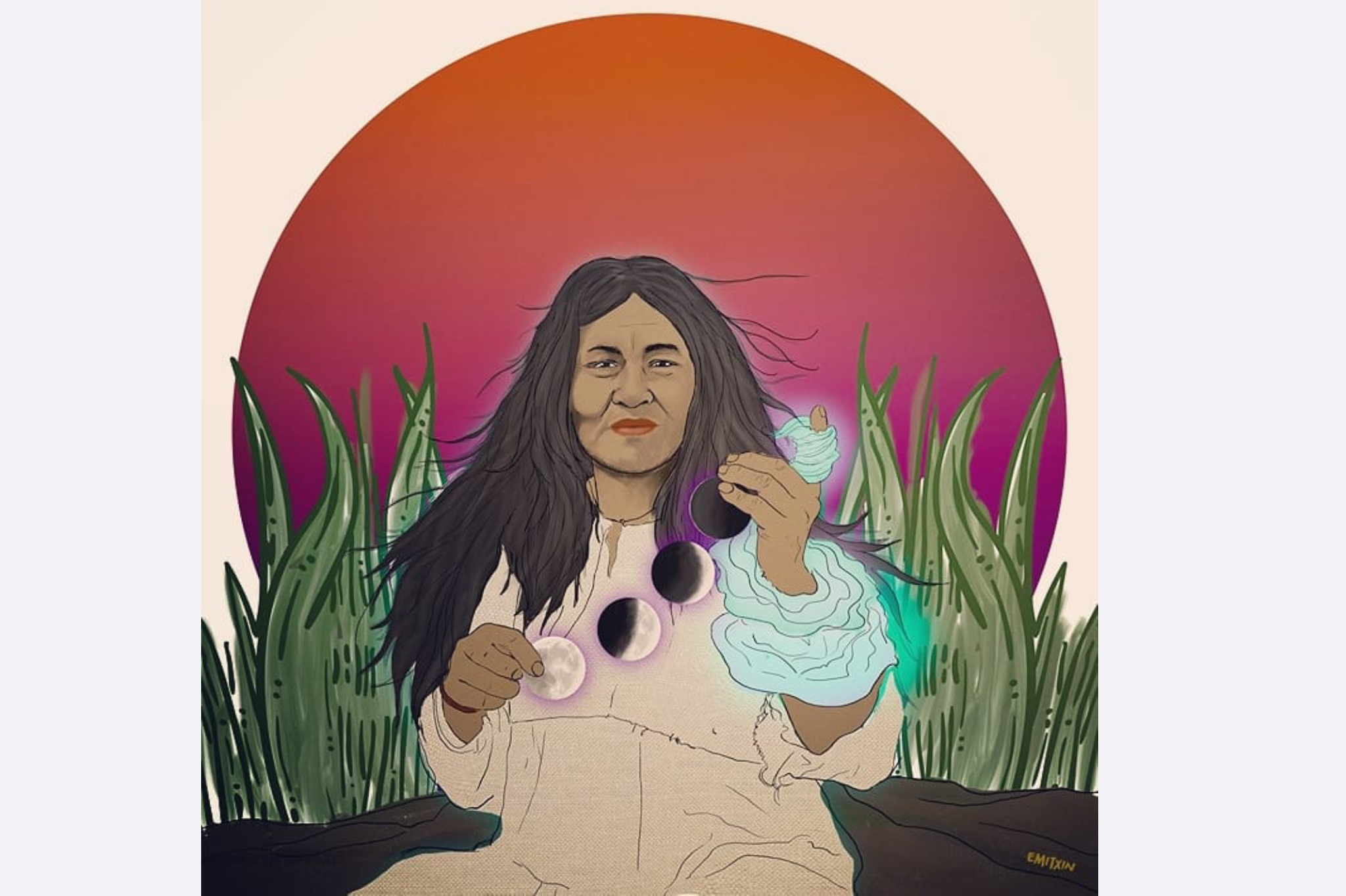
    Therefore, there is a change in tone in the hopelessness. From the purple of Advent, which symbolizes desolation, we move today to pink, the luminosity of consolation that emerges from the shadows like a small but real spark, illuminating everyone, like the painting by the Mayan artist Antún Kojtom that accompanies this post. other tonality, typical of messianic times, arises thanks to the victims who establish the sorry, That is, the overabundance of the gift. A realistic hope that does not mean blindness to evil and its perpetrators, nor a renunciation of accountability and justice, but rather a reinvention of violent history based on the overabundance of love that recreates the world.

    A new way of existing which is no longer just desolation. Nor mere resistance. But the creation of something new, Amid the ruins, from the scars left by violence, but which are transfigured as a glimmer of hope and joy: “After two hundred and fifty years of the occupation of the white settlers we are still here and that is why there is hope,” said smiling Cecelia Firethunder, shaman and historian of the Lakota people, at the past Re-existe 2025 meeting in Guadalajara.

    It is a joy that also arises as rebellious imagination from the rubble turned into a home by the Sumud or the creative resistance experienced by the Palestinian people who never tire of waiting, as the Tunisian artist sings. Emel Mathlouthi walking through the streets of an occupied Palestine:

    Broken hope

    deep

    furious

    friendly

    deceptive

    that penetrates arduous times

    eternal

    happy

    unwavering

    new

    A hope that fills my life and renews it.

    Thanks to the acts of resistance of the victims to the violence of today's global power, we can say with profound joy, without triumphalism, and with great courage: Rejoice, Gaza! Rejoice, desolate humanity! For the day of our liberation is near.

    Zinacantán, December 13, 2025

    Note: I look forward to reading your comments about possible hope today in the section below this post.

English