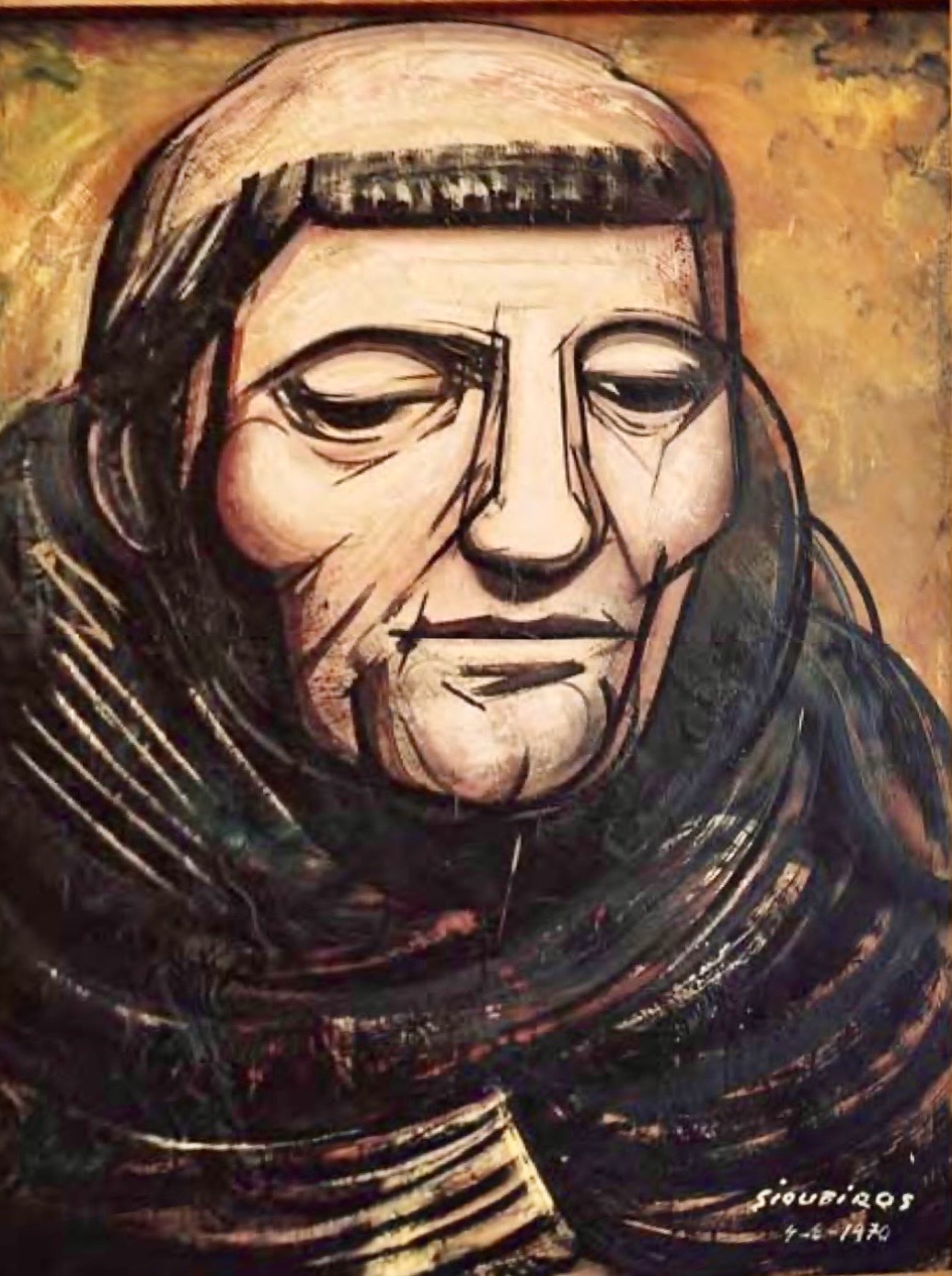
Autor: mendocinomx

  • La casa de la Palabra encarnada Una apuesta por el diálogo social y cultural en Chiapas al estilo de los dominicosPilar Emitxin | Embodied poetics | 2019

    The House of the Incarnate Word A commitment to social and cultural dialogue in Chiapas in the style of the Dominicans

    By Carlos Mendoza Álvarez

    A few days ago, we opened a new space for dialogue in the city of San Cristóbal de Las Casas on the feast day of Saint Thomas Aquinas. This was the first event in a year-long celebration of the fifth centenary of the arrival of the Dominican friars to Tierra Firme, as the American continent was then called. Abya Yala. Next June we will be holding various cultural and religious events, both in San Cristóbal and in Zinacantán, with the program 500-OP Chiapas which we will announce soon.

    Together with Abraham and Angélica, dear friends from Ecosur with whom we worked in university ministry at CUC years ago in Mexico City, and with Carmen and Ricardo, friends involved in social and cultural activism in the city, we have been imagining together a project to continue cultivating the great legacy of the School of San Cristóbal, as it is called Pablo Romo to critical thinking and inculturated liberation theology that has developed in the Highlands of Chiapas for more than half a century, with the specific contribution of the Dominicans in these lands. There are many cultural forums that currently exist here—such as CIDECI and Dialectics in the Museum. jTatik Samuel, El Paliacate, Galería MUY and many more – where it is possible to talk about urgent and important issues for the cosmopolitan society that lives here – a microcosm of Mayan, mestizo and foreign peoples – with its many local, regional and global connections.

    Since the 1970s, San Cristóbal de Las Casas has been the scene of important meetings such as the First Indigenous Congress convened by Bishop Samuel Ruiz and leaders of indigenous communities in 1974, it proved to be a watershed moment in the indigenous consciousness of Mexico, as it refers Fabiola Ramírez in her Master of Arts thesis at Tulane University. She also highlights the First International Symposium of Lascasistas, The event, organized by Manuel Velasco Suárez, Agustín Yáñez, and the Dominican friar Enrique Ruiz, was held in 1974. Both events shared a common thread—starting with the fifth centenary of the birth of Fray Bartolomé de Las Casas—the search for paths to promote justice for the indigenous peoples of Chiapas, subjected for almost five hundred years to a racist system, marked by centuries of social injustice and the suppression of their collective imaginaries in their cultural and religious expressions. The spirit of liberation theology, as a creative reception of the Second Vatican Council, was mediated by the prophetic force of the Second General Assembly of the Latin American and Caribbean Bishops in Medellín in 1968, ecclesial events in which they participated. jTatik Samuel Ruiz, made their presence felt with vigor and creative imagination in these lands.

    Two decades of sowing the Gospel in the diocese, with its message of liberation for oppressed peoples, allowed that seed to germinate into a diocesan synod, intimately connected with the indigenous cause, which found in the Zapatista movement one of its most relevant expressions for promoting the autonomy of native peoples. There were other fruitful fruits, such as indigenous theology, which, not without difficulty with Vatican authorities, also expressed the vitality of a profound ecclesial process that continues to this day.

    But the old Royal City of the colonial era, inhabited by a mestizo and Creole population that called itself intercultural, He had become accustomed to living with the "Indians" in modern times with a normalized racism, which was expressed as paternalistic assistance from the caxlanes or Creole chieftains towards the Indians, as Rosario Castellanos masterfully recounted in her collection of short stories Ciudad Real.

    The Zapatista uprising, in addition to its political effects—with the 1996 San Andrés Accords betrayed by the federal government and the creation of the Caracoles or Zapatista autonomous municipalities—had a cultural impact on the city, which suddenly became more cosmopolitan in its daily life, as they tell university students Immigrants in the Highlands of Chiapas since the years surrounding the uprising. As early as the 1950s, Harvard anthropologists and linguists from the Summer School of the Bible had arrived in the Jobel Valley to settle in the colonial city, turning it into a base for their research trips to the indigenous communities they studied, mostly using an extractive academic or religious model.

    But over time, the gentrification of the city of traditional neighborhoods It grew in an unusual way as a result of the rebellion of the canyons that impacted the Highlands of Chiapas in the last three decades.

    Today, more than fifty years after that Indigenous Congress of 1974, and thirty-two years after the Zapatista uprising of 1994, much has changed in San Cristóbal de Las Casas. Indigenous communities have achieved diverse forms of autonomy in the political, social, and cultural spheres, including religious matters, surpassing the vision of their initial proponents. These communities are no longer under the tutelage of political parties, churches, universities, or civil society organizations. The cultural fusion of Indigenous peoples with hip-hop music, audiovisual culture, and contemporary art will surprise many. Indigenous identity now transcends even revolutionary movements.

    And like a boomerang effect, the mixed-race and foreign population living in the city also blends into this landscape of identities. An event about Gaza primarily draws university students and members of civil society, but attracts few of the displaced Indigenous people who live in the northern part of the city. A hip-hop concert, on the other hand, fills plazas. And then there's the Sinaloan band invited to the Zinacantán festival, which will keep the Tsotsil youth on tenterhooks for hours, mesmerized by a professional stage that rivals any pop or ranchera music festival in any major city in the country—and, incidentally, managed by a young entrepreneur from Zinacantán.

    How can we participate in these ongoing cultural changes using the Dominican word itself, not only from the past but also from the present, in its diverse forms of life with friars, sisters, and lay people inspired by the charism of preaching? What signs of the times... deglobalization It is necessary to interpret in order to scrutinize the passage of the God of Life, As the Dominican friar Gustavo Gutiérrez said in Peru, what is needed for a humanity bewildered by global violence?

    The roaming This is a vital attitude of the Dominicans since their founding by Dominic of Guzmán in the 13th century, a time of transition from feudal to urban society. "Holy preaching," the initial name of Dominic's apostolic project conceived with Bishop Diego de Osma, the layman Peter Seila of Toulouse, and Wilhelmina and Raymonda Claret, sisters from Prouille in southern France, expresses the original inspiration of a spiritual tradition that has dedicated itself for eight centuries to seeking truth in every age, trusting in the power of the Word made flesh. Therefore, it is not just any truth that is being sought, but the truth that liberates, saves, and redeems humankind, humanity, and the cosmos from the bonds of evil, as did the Galilean.

    The Dominican-style study is, therefore, the spring of hope According to that beautiful reflection by Friar Timothy Radcliffe, former Master of the Order of Preachers, this spirit led the friars to disperse throughout Europe from the beginning, going to universities "to study and found monasteries," that is, communities of life centered on the Incarnate Word. This impetus took them as far as Mongolia in search of Genghis Khan. This itinerancy was described by Matthew of Paris, the staunch enemy of the new friars at the Sorbonne in the 13th century, who scornfully declared: "Their cloister is the oceans and their cell the world," thus defining for posterity the daemon or the genius of the religious order that was emerging in the medieval towns, as Father Chenu repeatedly reminded us doctoral students in Paris.

    Centuries later, already in Chiapas, that same itinerant journey led Friar Pedro Lorenzo to the Jataté canyons and the Lacandon Jungle to search there, “in the middle of nowhere,” as the prior of Santo Domingo de Ciudad Real admonished him for his rebellion, for the people who lived there. That is why from then on he decided to call himself Friar Pedro Lorenzo de la Nada, according to Jan de Vos.

    In our times of the Great Catastrophe—begun in Gaza and now spread throughout the world in the Trump era—itinerantness leads us to new territories to be created as places of conviviality of the Word. Here in the Highlands of Chiapas, we'll do it like new. itinerant space, where we can foster creative dialogues in search of the truth that saves.

    San Cristóbal de Las Casas, February 7, 2026

    Note: Let's continue the conversation with any comments you'd like to post below.

  • (Trans)modernidades indianasJuan Chawuk | Cosmic Connection | San Cristóbal de Las Casas | 2000

    (Trans)modernities of India

    By Carlos Mendoza Álvarez

    The line of cars waiting to reach Apaz stretches for several kilometers along the narrow dirt road that winds through the hills. The sounds of the festival can be heard from afar, even from Navenchauc, with its polluted lagoon, once surrounded by wooded slopes and now overrun with unfinished brick houses. The hamlet is a specter of grayish desolation, like something you might see in the poor suburbs of any modern city.

    More than 140 people, mostly young, accompanied by their families and communities, patiently await the bishop and the friars for the celebration of the sacrament of Confirmation. A crowd of more than 500 people, adorned for the occasion, solemnly celebrates the liturgy of anointing with holy chrism, while the monumental choir sings invocations to the Holy Spirit in Tsotsil. Don Rodrigo delegates the three friars present to perform the rite of Confirmation with him, divided into four groups of confirmands. It consists of the laying on of hands, the anointing with holy chrism, and the slap on the face to call them to live with audacity.parrhesia, (in Greek) proper to following Christ in the midst of an increasingly violent world. We reverently pronounce the words in Tsotsil following the liturgical phrase: Ich'bo li skélobil li'e + ja' matanal yu'un Ch'ul Spirit: Ta j'ch'un | Li jun o'onale teyuk ta ajotol: Xchi'uk vo'ot (Receive this symbol, which is the gift of the Holy Spirit. I believe it | Peace be with you. And with you.).

    The Mass continues, and after the consecration of the bread and wine as the body and blood of Jesus, three traditional musicians sing the ancestral chant, which the congregation mostly accompanies with ritual dance. Unfortunately, some members of the community no longer include these traditional symbols in their celebrations. The parish's large choir and media team participate in the festivities with their youthful talent, dressed in traditional attire and singing in Tsotsil, but also embracing the technology that has transformed their minds and ways of life. Modernity Indiana —to paraphrase the expression of chroniclers from colonial Mexico in a new context— of a generation deeply rooted in tradition, yet simultaneously passionate about new lifestyles mediated by algorithms and artificial intelligence. Thus, today's youth explore their evolving identities.

    What has caused these changes in the Highlands of Chiapas, which I first visited almost half a century ago, a region then plagued by extreme poverty and now experiencing an economic boom reflected in concrete houses and all-terrain vehicles? That modernity of the counter-productivity -analyzed in its historical genesis by Ivan Illich and conceived by Jean Robert as a perversion of place– it forcefully entered the territory of the Tsotsil nation.

    In recent decades, the Zinacanteco economy has experienced exponential growth, thanks to the hard work of the Tsotsil people in flower cultivation and the excellence of their textiles. In particular, greenhouses have transformed the landscape of the stately hills into a mosaic of metal and plastic, with greenhouses protecting the crops of the flowers of Zinacantán. Roses, gladiolas, anthuriums, birds of paradise, hibiscus, bromeliads, desert roses and wallflowers are the most popular in the local market, from where they are exported to the neighboring states of Tabasco, Campeche, Yucatán and Quintana Roo, also to Mexico City.

    Similar effects are visible in the surrounding areas. The houses of Tsotsil families in Chamula express this economic boom through a new indigenous architecture that blends traditional colors with forms kitsch, similar to that of Freddy Mamani, The Bolivian creator of the so-called “neo-Andean architecture.” These houses reflect the new economic status of their inhabitants, generated by local commerce, remittances from fellow countrymen, and, according to studies from 2001 to the present, some criminal enterprises, among which the most prominent is… human trafficking.

    Something similar regarding housing is happening in Zinacantán, with new forms of housing, foreign to vernacular architecture, that are developing in imitation of other municipalities that have recently experienced economic prosperity. This phenomenon has produced a fissure in the  kuxlejal, or the integral way of life, which the Zinacanteca communities developed for centuries, but which is now collapsing due to the degraded management of the forests.

    At first glance, the deforestation of the hills, which has given way to greenhouses, is readily apparent. This phenomenon is already producing devastating effects on the rainfall cycle and the impoverishment of the soil. The use of toxic fertilizers and pesticides, This phenomenon, already analyzed by scientific studies, persists despite agroecology promotion campaigns carried out by civil society organizations and the Catholic Church through its ministries. guardians of Mother Earth. The relentless logic of the market is dragging flower producers into that environmental hell already seen in other parts of the world.

    These are some of the modernities Indianas which appear as mirages to the Tsotsil people of today, where the illusion of economic prosperity is hiding the devastating effects on Mother Earth.

    There are other modernities to explore, following, among others, the model proposed by the political ecology of Víctor Toledo and his scientific colleagues around the world, proposing the bioculturality as a new way of understanding our relationship with our common home as a human species to avoid the Great Catastrophe. Other models emphasize the importance of returning to cultivating and inhabiting from the vernacular, without abandoning modern science and technology, but orienting them towards the sustainability of peoples' ways of life.

    Perhaps in that path of alternative, other, moving modernities - and that's why trans-modernities As proposed by Enrique Dussel, the new generations of Zinacantecans will be able to find their new identity to become part of the regional economy and universal culture, preserving and promoting their own ways of life, of communality and of ancient and new spirituality.

    What are the best ways to accompany communities in their struggle for life from the heart of their spirituality? With this question in mind, we are moving forward in the mutual accompaniment between the Dominican friars and the people of the Chiapas Highlands.

    “Let the people who welcomed the friars celebrate their arrival,” Elena Poniatowska told me in an interview last December at her home in Chimalistac, Mexico City. And she was right about remembering a five-hundred-year historical process, with its highs and lows, where the evangelization of these lands of Chiapas was initially marked by a profound respect for the indigenous nations on the part of friars like Bartolomé de Las Casas, renowned as a defender of the indigenous peoples, and Pedro Lorenzo de la Nada, who, defiantly confronting the closed-mindedness of his brethren, ventured into the jungle to encounter the Zendales, Pochutlas, and Lacandones peoples of the 16th century. Unfortunately, with the passage of time, that impetus for peaceful evangelization turned into greed, with the accumulation of wealth in the estates and haciendas of Dominican priories that controlled and subjugated entire communities in the following centuries.

    Therefore, the commemorative narrative of these five hundred years that we are preparing in San Cristóbal de Las Casas and in Zinacantán will revolve around the mutual accompaniment between the Dominican friars and the peoples of the Highlands of Chiapas: remembering the apostolic zeal of the first missionaries, while recognizing the ancestral legacy that persists in the spiritual life of the native peoples who have inhabited these lands since ancient times.

    Guided by a young Tsotsil poet and a renowned Tseltal master painter, the youth of Zinacanteco will weave this collective memory from their present perspective. Tsotsil poetry and Tseltal painting will be at the heart of the cultural celebrations commemorating the five hundredth anniversary of the Dominicans' arrival in Mexico, which we are preparing for this year in Chiapas. In this way, next June we can joyfully and gratefully celebrate this shared journey of half a millennium, with our gaze fixed on the legacy of our ancestors, both Maya and Christian, in the manner of the Dominican friars and the people of the Chiapas Highlands. We will soon share the 500 OP – Chiapas program that we are currently preparing to celebrate the life that flourishes in these lands.

    San Cristóbal de Las Casas, January 31, 2026

    Note: I hope we can continue the conversation with your comments.

  • Las flechas de San Sebastián Luces y sombras de una fiesta zinacantecaCarlos Mendoza Alvarez | San Sebastian | Sot'sleb, Chiapas | 2026

    The arrows of Saint Sebastian Lights and shadows of a Zinacantecan festival

    By Carlos Mendoza-Álvarez

    One of the emblematic martyrs of the time of Roman persecution in the beginnings of Christianity, pierced by arrows in his naked and vulnerable body, has been venerated for seventeen hundred years by diverse peoples who recognize in Saint Sebastian humanity mortally wounded by empires that supplant divine glory.

    In the Highlands of Chiapas, the saints are adorned with flowery cloaks, colorful ribbons, and mirrors that reflect alternate worlds where the Ch'ulel It dwells, with its avatars that protect or threaten those who approach its spheres of power. In Chamula, according to oral history, the saints can be punished for a time if they do not respond to the pleas of their faithful devotees: they are placed against a wall for a while, until their grace manifests itself. I have not found that custom in the lands of Sot'sleb, or place of bats, known as Zinacantán, a name documented by the famous anthropologist and linguist Robert Laughlin. But I have been surprised by the profusion of life in the garments with which they adorn the images of the saints: the Christ of Esquipulas, the Guadalupana, Saint Jude, Saint Lawrence and Saint Sebastian are the images that increase their clothing for their annual festival, in an overabundance of colors and textures that leave their faces and hands exposed, with their bodies imperceptible before such a profusion of life.

    What lies behind so much flowery beauty? How can I approach with devotion those images that transcend the ordinary in such an avalanche of flowers and decorations that sometimes seem to overwhelm those we reverently invoke?

    I found the key in the arrows of San Sebastián during its three days of popular festival in the municipal capital of Zinacantán.

    People from all the surrounding areas and neighboring towns flood the streets of the village and the plaza next to the church of the martyred saint in a lively festival that blends ancestral traditions like the jaguar tree with fleeting horse races. Asking the young catechists about the meaning of these traditions... performances Today, I heard different interpretations, more or less confused, which always concluded with the laconic phrase: “it is the custom”The jaguar climbs the trunk of a tree that was chosen a year in advance in the sacred hills The surrounding area. This tree is visited and venerated three times by those in charge of the tradition before being cut down and taken to the center of the plaza. During the festival, the trunk becomes the center of a ritual that commemorates the three days of darkness spent praying for rain and abundant harvests. From this trunk, standing upright in the ground, a man dressed as a jaguar—wearing a suit of Chinese fabrics crudely imitating the skin of the rain guardian—throws stuffed squirrels and eggs to the crowd gathered around, accompanied by young people dressed in black who play and dance as a troupe during the festival rituals. The horse race runs along the main avenue at the beginning of the day and again in the afternoon, recalling, according to some, the arrival of the Spanish—a memory that marks the time and space of the festival brought by the friars?

    During those days, like stepping back in time, the popular festival blends traditional dance and music—performed with deliberate slowness before the Tsotsil green altar of the Three Crosses, where the image of Saint Sebastian is placed—with the deafening roar of the band in the bandstand, which overwhelms those present but provides the perfect soundtrack for the celebration. And at night, everyone eagerly awaits the Sinaloan band concert, when the thumping drums mingle with the firecrackers and fireworks displays prepared to light up the sky.

    Amidst that endless surge of color, sound, and movement, I pause to approach the saint who is the reason for the festivities. I look for him on the altar in the atrium and then inside the church at the main altar. In both places, I can barely make out his face. Through his vestments, an arrow pierces his arm. And there is no way to see his lacerated body.

    Then I recall conversations I've had in past and recent years with young Indigenous people from diverse sexual orientations who have confided in me about their suffering from living in the shadows in their communities. It was unimaginable for them to be able to celebrate San Sebastián as their patron saint, to be part of the celebration, as so many Catholic communities around the world do. They celebrate it only in the silence of their hearts and their prayers. And I realize the arrows that continue to pierce the wounded body of the martyr. The vulnerable bodies of these young people today are adorned with floral fabrics, like everyone else in the community, but those bodies are not recognized in their difference by an ancestral culture to this day.

    I wonder if those bodies that live in the shadows today will one day be able to come into the light, with the love and responsibility that calls us all, as other Indigenous cultures have done for centuries. Years ago, the same question arose in conversations with women from the Zapatista grassroots and civil society who were forging a path in their own personal and communal histories to be recognized as life partners, living together as mothers with their children, and with a clear community and political commitment to defend their peoples. Today, the Zapatista narrative speaks to us of others –as he masterfully recounts Sylvia Marcos by exploring gender fluidity in Mesoamerica - finally making visible the experience of different lives and bodies as valuable and essential voices in the human symphony and the world to come.

    With a burning heart I sow a candle in front of San Sebastián in the name of those young people so that they may soon emerge of the shadows of the shadows of the shadows and live their lives joyfully in the midst of the community.

    The lights and shadows of the San Sebastián festival continue to be a revelation and a concealment that calls us to see with wide-open eyes the world around us where divine and human glory bursts forth as a promise of life for all.

    Sots'leb, January 24, 2026

    Note: I look forward to your comments below to continue the conversation.

English