Autor: mendocinomx

  • JobeLab Una iniciativa de pensamiento crítico y espiritualidades diversas desde San Cristóbal de Las CasasJobeLab | San Cristóbal de las Casas, Chiapas | 2026

    JobeLab An initiative of critical thinking and diverse spiritualities from San Cristóbal de Las Casas

    By Carlos Mendoza Álvarez

    From the second half of the 20th century, Chiapas became a laboratory of new ways of inhabiting and thinking about the world, with the creative confluence of important social, political, cultural and spiritual processes.

    Among them, dynamism stands out synodal (or shared path by all the believing people with their diversity of ministries) of six decades, implemented by the Diocese of San Cristóbal de Las Casas with jTatik Samuel Ruiz as pastor walker And hundreds of local, regional, and international communities and groups, convened for justice and peace for the Indigenous peoples and other communities of this region of Chiapas. In an astonishing confluence of paths, the Indigenous Congress of 1974 marked the beginning of the public presence of Indigenous peoples with their own voice. Indigenous, mestizo, and international social and cultural movements also emerged, with research projects on the rich Mayan heritage, both ancient and modern, developed by teams of social anthropologists, archaeologists, and linguisticists. Waves of researchers arrived from Latin America, the United States, and Europe, and, with an academic model still largely based on extractive practices, made significant discoveries in the social sciences and humanities. The translation of the Bible into Mayan languages, initially promoted by the Summer School of Bible as part of a U.S. interventionist plan, evolved into intercultural dialogue, continued to this day by various Christian churches, including the Roman Catholic Church. Finally, the Zapatista movement, with its armed and media-driven uprising of 1994, became the watershed moment of a social, political, and cultural insurrection that continues to this day as one of the most radical critiques of the hegemonic system of the multi-headed capitalist hydra, including patriarchy and colonialism.

    The “San Cristóbal School” is a name proposed decades ago by Pablo Romo and others in academia and the arts to evoke the legacy of critical thought, resistance, and spirituality that emerged in Chiapas, as a counterpart to the Cuernavaca School, analyzed by Humberto Beck. In their connections and differences, both represent significant contributions to critical thought that arose in Mexico during the last century.

    In this way, recognizing the individuals, groups, organizations, and initiatives of civil society that have been an active part of these processes, as a collective inspired by them, with JobeLab -apocope of Jobel which is the Tsotsil name of San Cristóbal de Las Casas and laboratory To designate this city as a laboratory, we seek to give continuity to such a legacy in a new context, focusing on critical thinking and the spiritualities that have sustained them, such as those of the native peoples, Catholic Christianity, and more recently Buddhism and Islam.

    Through the initiative JobeLab. Ongoing dialogues and mutual support for re-existences We will continue to cultivate this heritage in the new scenario of the civilizational crisis that humanity faces in the second quarter of the 21st century, where peaceful coexistence between nations and the balance of planet Earth are at risk and call us to promote processes of resistance and re-existence.

    We will nurture this initiative based on two inspiring attitudes that are, at the same time, transversal axes of the talks, meetings and festivals that we will organize in various spaces of the city: hospitality and commensality.

    The hospitality It is one of the human gestures that most powerfully expresses our shared human condition, that is, our way of becoming individuals and communities as beings in relation to one another. This radical attitude of openness to otherness is a fundamental ethical and political act, where the religions and spiritualities of humanity celebrate a glimpse of divinity.

    The commensality, Like the other side of the moon, it is the nourishing soil where we receive the otherness of Mother Earth, of other humans who become our neighbors, and of Divinity, through food and drink created by the unique genius of each people. We celebrate this gift as an inclusive banquet where Divine Sophia prepares a table for all nations and creatures of the cosmos.

    Together with Carmen Reyes and Ricardo Hernández, Angélica Evangelista and Abraham Mena, I am enthusiastically participating in this project, drawing on the Dominican tradition of life and thought. In these exchanges, we seek to discover new expressions of the divine and human Word as a creative fire that redeems, animates, and shelters us in our present circumstances. times of hardship as a human species that puts itself and the Common Home at risk, leading us to the precipice of annihilation.

    This week two events will be the formal presentation of JobeLab, after the first event where the initiative germinated, on January 28, with a presentation on Gaza and Chiapas at the Charity temple in the city of San Cristóbal de Las Casas.

    On Wednesday, March 25th at 5:30 pm, we will hold the discussion “The School of San Cristóbal,” with the participation of Pablo Romo, who was one of the key figures in the diocesan process of promoting human rights, paving the way for the creation of the Fray Bartolomé de Las Casas Human Rights Center. Martha Elena Welsh, choreographer who animates in Xitla House In Mexico City, workshops were held to support people in situations of extreme vulnerability, facing various forms of violence. And Juan Carlos La Puente, a Peruvian with extensive international experience in providing spiritual support to human rights defenders, has been developing a methodology for this purpose from his base in Oregon, USA. permanent discernment as a path of body for people and communities in re-existence.

    And then, on Friday, March 27th at 5 p.m., we will explore another facet of re-existence: forgiveness as a path to reconciliation in contexts of violence. With the Muslim community of San Cristóbal de Las Casas, represented by Shaykh Yahya Rhodus and Shaykh Mudar Abudlghani, we will discuss forgiveness in Christian and Muslim traditions as a common path to peace, at a critical moment of violence in the Middle East. And we will do so accompanied by the extraordinary music and song of Nader Khan, a Canadian Sufi artist.

    We invite you to be a part of JobeLab From wherever we may be, whether attending talks and meetings, or imagining and creating similar spaces where we can come together and flourish as individuals and communities in resistance and re-existence, going beyond the spiral of violence that surrounds us, towards a world another world of hospitality and commensality.

    Jobel, March 23, 2026

  • Dominicos en las fronteras En memoria dichosa de fray Daniel Ulloa Herrero OP (+), 1946-2026David Alfaro Siqueiros | Portrait of Saint Dominic | CUC, 1970

    Dominicans on the frontiers In blessed memory of Friar Daniel Ulloa Herrero OP (+), 1946-2026

    By Carlos Mendoza Álvarez

    Hospitality and commensality are two vital attitudes that, over the years, I have cultivated with the Dominicans since my first encounter in 1979 with Daniel Ulloa and Raúl Vera, then formators of postulants and novices respectively, on the path of initiation to charism of preaching, which has been in dialogue with diverse cultures for eight centuries, with the chiaroscuro of every century-old institution, its shadows and its great lights.

    Even during my childhood in Puebla, both virtues were present in the life of the family, around the figure of my maternal grandmother, my great-aunt, my mother and aunts, along with the uncles who made each family meeting a true celebration of flavors and dances.

    Daniel Ulloa Herrero passed away a few days ago in Cuernavaca, and today the ashes of his mortal body will be deposited in the Columbarium of the Temple of Santa María de la Anunciación, known as the University Parish, next to the National Autonomous University of Mexico in Copilco, which was founded by the Dominicans in 1963, with the spirit of the ongoing conciliar renewal, to cultivate dialogue with intellectuals, students, athletes and workers of the country's top university.

    Friar Daniel received priestly ordination there, along with Friar Miguel Concha and Friar Antonio Ramos, on July 25, 1970, from Bishop Don Sergio Méndez Arceo, who was a council father and an eminent witness of the liberating Latin American Church, against the current of the prominent groups of the Catholic hierarchy and conservative lay people of the time.

    The CUC - as the University Cultural Center Founded by the Dominicans, the university was famous in its golden age for its University Mass and its Film Club, which showcased the latest art films by unknown and even banned directors such as Pasolini, Tarkovsky, Kurosawa, Fellini, and Buñuel. The presence of the Dominicans in every faculty of the UNAM—whether as professors, students, or guest lecturers—extended beyond the university campus, fostering dialogue between faith and reason with students and professors alike.

    In that impetus, Daniel Ulloa, Raúl Vera, and Miguel Concha were trained as preaching friars by figures of the stature of Friar Alberto Escurdia, professor at the Faculty of Philosophy and Letters; Friar Agustín Desobry, who arrived from France with a great project for a cultural center as a space to promote dialogue with university students; Friar Jaime Gurza, an exquisite and cultured man, knowledgeable about the mystical and aesthetic tradition of the medieval and modern Dominicans; and Friar Julián Pablo Fernández, filmmaker and painter, friend of Don Luis Buñuel, David Alfaro Siqueiros, Juan Rulfo, Octavio Paz, Guillermina Bravo, and so many other creators of Mexican culture of the time.

    Daniel Ulloa stood out for his brilliant intelligence, which he would later cultivate as a historian, graduating from El Colegio de México with a thesis on the conflicting currents of the Dominicans upon their arrival in Tierra Firme in 1526: on the one hand, Friar Domingo de Betanzos, with a rigorous reformist spirit in convent life and doctrine, as part of the evangelization and colonization undertaken by the Spanish Crown; on the other hand, Friar Bartolomé de Las Casas, with a bold emphasis in his criticism of the ongoing coloniality, confronting the Encomienda system through the promotion of the Laws of the Indies and a method of peaceful evangelization that he had already tested for years on the coast of Venezuela and later in Verapaz in Guatemala.

    Daniel Ulloa's vibrant personality was marked by a creative sense of humor and exquisite irony that allowed him to connect immediately with young people, both in universities and in working-class neighborhoods. A notable chapter in his history as a young priest was the rock Mass that, along with a band of young people from the alleyway of Leandro Valle, a neighbor of La Lagunilla and Tepito, the "tough" neighborhoods of Mexico City's Historic Center, he enlivened on Sunday nights at the Santo Domingo church.

    Later, both of these intense experiences—his intellectual life as a historian and his pastoral accompaniment of young people from diverse urban cultures—allowed Daniel, as prior of the CUC, to propose a renewed vision of university ministry in the 1980s that emphasized the intellectual life and pastoral accompaniment of university students with their multiple identities. During his years as prior, for example, he welcomed Brothers Roberto and Benjamín Cuéllar, from the Christian Legal Aid organization founded by Archbishop Romero, who became our mentors in human rights work. This experience paved the way for the creation of the Fray Francisco de Vitoria OP Human Rights Center, the oldest civil society organization in Mexico among those that now comprise the network. All rights for all.

    The General Chapter of the Order of Preachers, held in Mexico in 1992, where I had the blessing of serving as Secretary General, elected Friar Timothy Radcliffe as Master of the Order. In his first month in office, he convened a remarkable group of friars as his close collaborators: Jean-Jacques Perennès of the Province of France as Assistant for the Apostolic Life, Guido Vergauwen of the Province of Flanders as Assistant for the Intellectual Life, and Daniel Ulloa of the Province of Mexico as Secretary of the Order. Together with other friars of this vigorous caliber—as enlightened preachers with a profound sense of thought and spirituality dedicated to justice, peace, and beauty—Friar Timothy encouraged the entire Dominican family for nine years to reclaim the prophetic spirit of “holy preaching.” This was the name of the work started by Dominic of Guzman, Bishop Diego de Osma, the sisters of Prulla and the layman Peter Ceila in Languedoc, in turbulent times of return to the radicalism of the gospel, which was shared by the mendicant movements of the time.

    Years later, Friar Daniel emigrated to the United States to continue his university ministry, first in New York, then in Brooklyn, and later in New Jersey. We Dominicans of Mexico owe him a debt of gratitude: to reclaim his legacy and renew the charism of preaching in these new theological spaces where God encounters wounded humanity seeking life, dignity, beauty, justice, and peace around the common table of divine compassion.

    More recently, on December 7, 2024, when Friar Timothy received the cardinalate from Pope Francis, many of his companions from that time gathered in Rome to celebrate this momentous occasion. In a video recorded on that day, Friar Daniel recalled that the main purpose of the gathering was to reaffirm the urgent need for the charism of preaching to proclaim the Good News amidst the turbulent times humanity is experiencing.

    To honor the legacy of that generation of preaching friars who have marked my life as a person, as a Christian, and as a Dominican, my theological work and pastoral service of several decades has sought to listen to each community and culture where I have lived: Mexico City with its disparate and diverse neighborhoods; university students in Fribourg, Switzerland, Paraná in Brazil, Paris, Mexico City, New York, Rio de Janeiro, and Boston; as well as the indigenous peoples of Oaxaca and Chiapas, from decades ago to the present day, to the Lakota and Mapuche peoples at the extreme North and South of the continent.

    Inspired by this Dominican spirit, at the confluence of faith and reason, I now participate in the development of this initiative JobeLab In San Cristóbal de Las Casas, along with friends from this city. I'll tell you more soon about this exciting network of friendship, hospitality, and budding culinary experiences.

    In the coming days, we will be holding two events here in Jobel: on Wednesday, March 25th at 5:50 pm at Belil Restaurant, a presentation about the San Cristóbal School as a breeding ground for critical thinking that emerged in Chiapas in the second half of the 20th century, with the participation of Pablo Romo, Martha Elena Welsh, and Juan Carlos L. Puente. And on Friday, March 27th, at 5 pm at the Charity Temple, we will host the event “Music for Interreligious Encounter,” together with Shaykh Yahya Rhodus and Shaykh Mudar Abdulghani from the city's Muslim community, focusing on the Sufi music and chants of Nader Khan, a Canadian believer and artist, as expressions of encountering the sacred in times of extreme violence.

    We look forward to welcoming you for an experience of hospitality and dining.

    Jobel, March 21, 2026

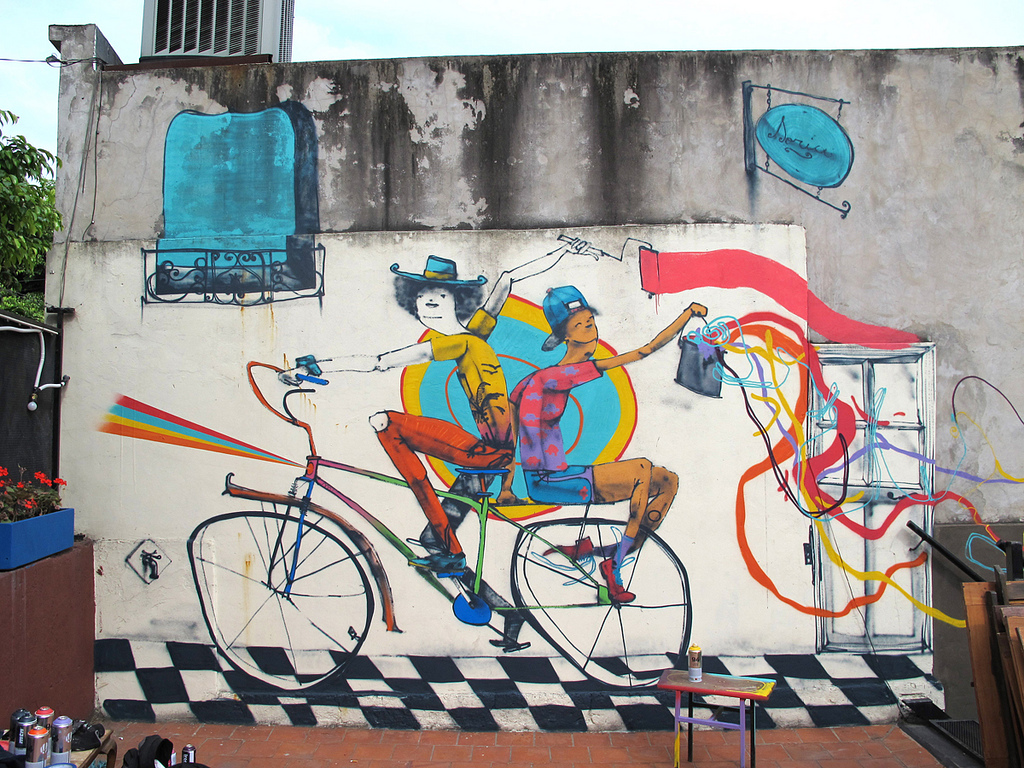
  • La teología feminista como resistencia al clericalismo y reinvención de la Iglesia Sobre las voces y saberes de las mujeres sobrevivientes de abusosLolo Góngora | Women on the Front Lines | Santiago, Chile, 2020

    Feminist theology as resistance to clericalism and reinvention of the Church On the voices and knowledge of women survivors of abuse

    By Carlos Mendoza Álvarez

    Yesterday I participated in the brilliant doctoral thesis defense of María Soledad Del Villar Tagle, a Chilean feminist thinker and activist, for the award of her PhD in the Department of Theology of Boston College,, after six years of mentoring as a thesis director, along with three outstanding colleagues of international renown: Lisa Cahil, Margaret Guider and Nancy Pineda-Madrid.

    With this act I concluded my academic commitments with that American university, where I was fortunate to weave networks of critical thinking with some colleagues, especially doctoral students who are now professors at various universities around the world such as Laurel Potter, Valentina Nilo, Amirah Orozco and Maddie Jarrett, who represent the new voices of feminist theologies, queer, Latinx and disability, with a seal decolonial in their research.

    Sole's thesis topic, as her colleagues affectionately call her, was inherently complex because it touches on an open wound in the Roman Catholic Church: justice for women survivors of sexual abuse committed by clergy in recent decades, particularly in Chile. Unfortunately, sexual abuse by clergy—against adult women and mostly male minors—is a phenomenon spreading like a silent cancer in other local churches around the world, where civil and ecclesiastical commissions have been established, especially in France, Australia, Canada, and the United States. In Mexico, unfortunately, the strength of the patriarchal pact It persists. The systemic practice of sexual and moral abuse is frequently associated with male leadership as an instrument of power in other religions as well, forming a patriarchal system with clerical religious justification, as analyzed by Kochurani Abraham in India.

    And to make matters worse, sexual and moral abuse against women and vulnerable people has persisted for millennia in various institutions such as schools and the military, not to mention families, where men with toxic masculinity practices impose perverse forms of control over the bodies, minds, and desires of women and vulnerable people.

    Below, I share some of my reflections that I proposed yesterday to open the dialogue with Sole in her thesis defense, which, virtually bringing together people from the North and South, created a community of listening, excited to receive the harvest of a living feminist theological thought.

    It is a pleasure to welcome you to the thesis defense of María Soledad del Villar Tagle, which crowns a research of profound significance and long academic work that contributes to Latin American feminist theology and its connections in other cultural contexts.

    It is also an honor to preside as Advisor This academic act together with the admired colleagues Lisa Cahil, Margaret Guider and Nancy Pineda-Madrid, who make up the Academic Committee that has accompanied with a critical reading the thesis of María Soledad Del Villar Tagle, providing her with important elements to refine the argument, methodology and the theological implications of the thesis.

    The title of the dissertation is in itself eloquent and challenging: “The Sexual Abuse Crisis in the Chilean Catholic Church: Feminist Theological Reflections for Survivors and for a Wounded Church.” The candidate confronts us with a debt of epistemic justice This research focuses on adult women survivors of sexual abuse perpetrated by clergy in the Roman Catholic Church in Chile in recent decades. It is an interdisciplinary study that combines qualitative research methodology within the theoretical framework of contemporary feminism and trauma studies. Through both lenses, it is possible to analyze the reality of these women survivors in its multifaceted complexity, as well as to consider the implications for the process of personal and communal healing. A crucial part of the thesis argument is the implications for an ecclesiology that addresses the causes of gender-based violence in the Church and its relationship to clericalism as an ideology of patriarchal power that persists in this ancient institution.

    For my part, I want to begin this dialogue with you, Sole, by recalling three moments from your shared seven-year research process. Inspiring moments that, in my opinion, lie “behind the scenes” of your theological work.

    The first instance was our meeting in Leuven, during the 2019 Congress on Systematic Theology, where you first told me about your nascent research project. Even then, your Latin American and feminist approach was opening up to questions that extended to other contexts and subjectivities experiencing diverse forms of violence, beginning with women, but also connecting with other subjectivities such as migrants, LGBTQ+ communities, and people with disabilities. We explored this together in the undergraduate course "God, the Person, and Society," where you collaborated as a teaching assistant upon my arrival in BC during the harsh winter of 2021, in the midst of the pandemic. That thread of violence against vulnerable people remains present in the fabric of your dissertation.

    The second moment was the meeting with the Basic Ecclesial Communities (BECs) of El Salvador, to which Laurel Potter invited us. This meeting served as a moment to verify the results of her dissertation research on the ecclesiology of the BECs as a narrative theology of liberation, with its altars, memorials, and Sunday celebrations. In that colloquium, enriched by the visit to the site of Archbishop Romero's martyrdom, you emphasized your experience with the women's communities in Chile that embraced the see-think-act as part of their journey of following Jesus. Processes that connect you with your Chilean ancestors in the construction of a another world, Beyond patriarchy, like Gabriela Mistral and Violeta Parra in times of liberation, or Elizabeth Lira and the social workers of the Vicariate of Solidarity during the Chilean dictatorship. Another precious thread in your theological tapestry is this communal fabric of women's experience and their way of embodiment redemption through care practices through which they creatively confront the pedagogy of cruelty produced by the mandate of masculinity analyzed by Rita Segato.

    The third moment I want to evoke today was the festival encounter It re-exists. The Spirit crossing peripheries, held in Guadalajara, Mexico, in 2023. In particular, I want to recall here the clay workshop led by the ITESO student LGBTQ+ collective. We went guests to mold the reproductive organs with plasticine to then talk about our own relationship with our bodies. Then you were pregnant with Manuel and you molded your belly with the embryo inside using plasticine. The most surprising thing that afternoon was your dialogue with the Searching Mothers who mourn the absence of their children in Mexico. children. They connected with you powerfully, and you with them, through the presence—or absence—of their own motherhood experiences. Mutual care as sisterhood This translated into a memorable moment as an experience of bodies in resistance and re-existence. There I discover another precious thread in the loom of your thesis.

    With these reflections in mind, I would like to ask you to explain more clearly two elements of your thesis that are already mentioned in the last chapter, but which will undoubtedly be part of future research: What is the spirituality of resistance among abused women and survivors that not only empowers them but also allows them to connect with other subjectivities in resistance? What rituals of sisterhood Can they connect with other collectives in resistance as an expression of the Church as the wounded body of Christ in the process of resurrection?

    And then a rich dialogue ensued about the practices through which women survivors imagine and create another possible world: rituals of sisterhood, the reinterpretation of Christian sacramental celebrations by returning to their symbolic and ethical source, as well as the connection with ancestral spiritualities that keep alive the sacramentality of Mother Earth as a gift from Divinity, and many more practices.

    These questions remain open for future research. I have no doubt that feminist theology is still relevant today with a new generation of thinkers, proposing critical thought such as that of María Soledad Del Villar Tagle, thus contributing to building new expressions of a post-patriarchal Christianity as a fulfilled promise of life for everyone.

    At the conclusion of the defense, the Committee unanimously approved the brilliant thesis, recommending its publication in Spanish to return to the survivors and their collectives the knowledge gained, as well as some articles or monographs in English on the topics that intersect in this interdisciplinary fabric, such as feminism, trauma and the spiritualities of the survivors.

    Those who wish to see Sole's publications can find them here: https://psiucv.academia.edu/Mar%C3%ADaSoledadDelVillarTagle

    Boston – San Cristóbal de Las Casas – Valparaíso, March 13, 2026

English