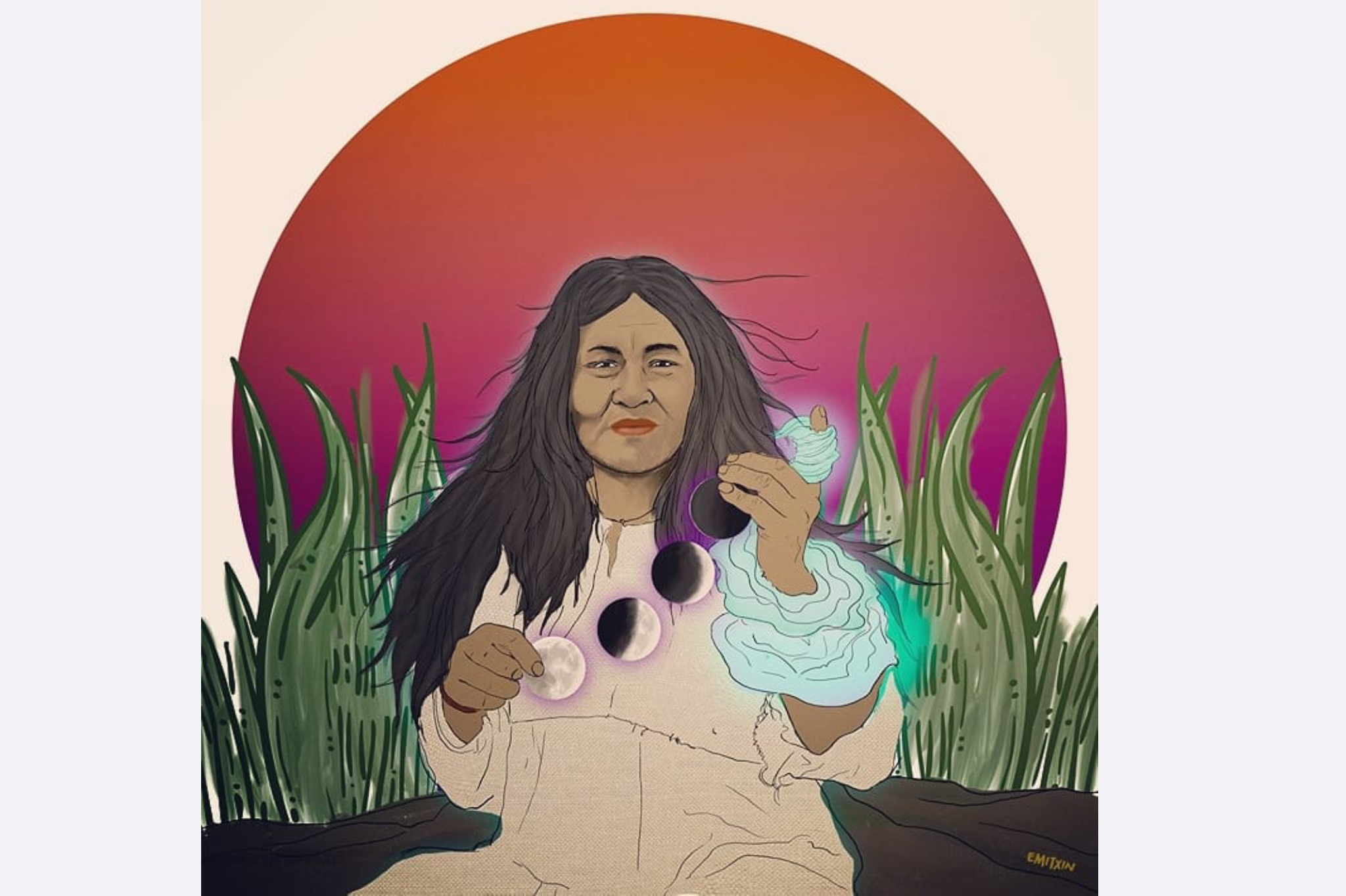
Autor: mendocinomx

  • Navidad en lo secretoCarlos Mendoza | Tsotsil birthplace | Nachig, Chiapas | 2025

    Secret Christmas

    By Carlos Mendoza-Álvarez

    Christmas Eve was shaping up to be different this year, a stark contrast to the frigid weather of Boston, which gave way to the cool but sunny days of the Chiapas Highlands. Of course, it wasn't just a difference in climate, but above all, a shift in cultural perspective. The chants of the Episcopalian monks from Cambridge, in Massachusetts, which I had enjoyed for several years, now gave way to prayers of forgiveness and reconciliation according to the traditional Tsotsil rite of the Chiapas Highlands, led by one of the catechists or Eucharistic ministers.

    During these days, the Tsotsil communities of the Zinacantán parish adorn their chapels with thousands of flowers. Sunflowers, birds of paradise, roses, and gladioli surround the birth of the Christ Child, especially the bromeliad or flower of Niluyarilo. This species, endemic to the Chiapas Highlands, is now endangered due to its overuse in some religious festivals in the Chiapa de Corzo area. The Nativity scene is adorned with garlands of seeds and fruits, representing an explosion of life from Mother Earth, who gives thanks for the arrival of the Christ Child. Bananas, tangerines, pears, oranges, pomegranates, and lemons hang from bowers as if falling from the sky. Paradoxically, the world above blossoms and rains down delicious fruits to nourish the community gathered around the newborn Messiah.

    Joseph and Mary inhabit that sacred green cave, dressed in traditional Tsotsil clothing. He is wearing the Pok'u'ul or a pink poncho embroidered with flowers, carrying a leather satchel on his shoulder and huaraches on his feet. She, adorned with her il chil k'uk'umal or the feathered huipil, also replete with embroidery of flowers and birds. Life flourishes everywhere in these communities, although they face new problems such as the growing presence of drug trafficking and criminal gangs. The historical strength of these Mayan peoples is community unity, although division now appears within the communities between groups that only want to follow the Bible and others that keep the traditions of their ancestors alive, for example, the processions to sacred hills, like the community of Pinar Salinas, which keeps their ancestral traditions alive. These communities have a dynamic cultural identity that, with each new generation, acquires its own unique characteristics. Such is the case of church choirs that now prefer to play instruments from norteño bands, such as the tololoche for strings and the snare drum for percussion, instead of the drum and chirimía of the ancestral music they keep alive for pilgrimages to the hills of the Chiapas Highlands and, every year, in their pilgrimage to Tepeyac in the Valley of Anáhuac.

    My surprise was great when Petul, the catechist and interpreter, during Christmas Mass, translated my very brief biblical reflections into lengthy descriptions of what I was saying about the story of Mary, the child, and the shepherds in the Gospel of Matthew. I had no choice but to trust his skill as an interpreter, glancing at the congregation to nod whenever I recognized a word in the catechist's voice. My intention was to emphasize the importance of the angels' message to the shepherds in Bethlehem: “Glory to God in the highest, and on earth peace to those on whom his favor rests” (Luke 2:14), which invites us to do something similar. Let us learn to be like the shepherds—I would say to the congregation with emphatic gestures—who became a mirror reflecting God's glory through peace here on earth, so threatened by wars. The sermon concluded by reminding the assembled community that this message was even more urgent today because Bethlehem is in Palestine, besieged by a cruel war waged in the name of God. The community responded with a resounding “Long live the Christ Child born in Palestine!” followed by the traditional reveille, sung with gusto by the choir.

    Is there anything to celebrate on the fringes of the privileged world? In what places does God draw near to us to be a spark of light illuminating the nations? Who can help us see those sparks amidst the long night that humanity is traversing?

    The first thing that comes to mind is that reflection by Hannah Arendt in her book The Human Condition, pointing out that in every human birth there is a promise of a future for all humanity. The thinker drew from the wellspring of her Hebrew tradition to speak of the future as something to be fulfilled through justice, as an interruption of evil in history. But perhaps she overlooked the heart of the promise God made to Abraham and Sarah in its spiritual sense, which consists of the promise being a gift from the Eternal, offering His very being to wounded humanity. It is no coincidence that this promise has a name, the one that Hebrew and Christian faith call "Messiah": the one anointed by the divine Ruah to console the suffering people. A Messiah who is slow in coming, who makes the wait long, and, paradoxically, who is already present "in secret," inviting us to enter that space of redemption "through the narrow gate." What does this metaphor mean? This thought takes on even greater significance when we celebrate the birth of a Galilean child two thousand years ago in Palestine.

    The birth of Mary's son in Bethlehem of Palestine, as recounted by the Synoptic Gospels, is a sign worth following as a guiding light in the darkness. That Hebrew child, son of migrants fleeing Roman power represented by Herod and seeking refuge in Egypt, is the promise fulfilled of messianic times. Those who arrive with birth pangs in the most fragile part of the human condition, exposed to so much violence, both ancient and new. His childhood, recounted in retrospect by the evangelists, will unfold over time, especially during the brief period of barely three years he lived as an itinerant preacher in Galilee. He announced the fulfillment of the new times that we will be able to recognize in the present time when “the blind see, the deaf hear, and good news is announced to the poor” (Luke 7:22).

    We are invited to pass through the narrow gate of the Messiah, which is the gate of humility: “You must become like a child to enter the kingdom of heaven” (Matthew 18:3), said Jesus, the Galilean. The Bible is full of stories from this other perspective, as Anna sang in the book of Samuel: “He raises the poor from the dust and lifts the needy from the ash heap, to make them sit with princes and inherit a throne of glory.” Or also the hymn of Jesus that praises his heavenly Abba because “he has hidden the things of the kingdom from the wise and understanding and revealed them to little children,” the nepioi from the Gospel of Luke in Greek (10:21).

    The arrival of the Messiah subverts the logic of the powerful and builds a new world from the perspective of those who live amidst the ruins. Like in Gaza and the Highlands of Chiapas.

    My first few weeks in Tsotsil lands have allowed me to reconnect with the Ch'ulel, This spiritual force, with its multiple meanings, is what I discovered forty-five years ago in these communities, when we visited as Dominican novices with Friar Raúl Vera. It is the spirit of the Chiapas Highlands, manifest in its hills, forests, and mist, its animals and naguales, that inspires the communities to flourish and prosper. Since then, I have returned at least once a year to the Chiapas Highlands and the canyons of Ocosingo to continue exploring the faith of the Mayan peoples, with their ancestral spirituality nourished by faith in Jesus of Nazareth as Messiah and Son of God.

    Now I am about to explore and enjoy, for an extended period, the faith-based life of these communities, with its new expressions in spirituality and art, as well as its struggle for justice against the necropower groups that have reached even here with their tentacles of corruption, easy money, and the false illusion of happiness based on armed force, drugs, alcohol, and criminal pacts. A few days ago, Angélica, a dear friend from Ecosur, told me that there are several ongoing sociological and anthropological research projects on urban Indigenous children and youth in Jobel. These are supported by initiatives from civil society and churches, such as Melel Xojobal to provide alternatives for education, social life, and recreation to this population highly vulnerable to the criminal networks that take over the northern area of this city, which has the largest indigenous population in Mexico.

    Celebrating Christmas in this land is a call to return to the margins of my motherland to relearn the language of the little ones of the Kingdom. In the heart of my longings I seek to return to the sources of faith, that which I inherited from my ancestors of blood and spirit in the order of preachers.

    A quiet Christmas. A time of grace and truth thanks to the child messiah, adorned with flowers and song, tears and whispers of life, who does not surrender to evil in this remote region in the mountains of southeastern Mexico. Communities that, in secret, transform adversity into gifts of life.

    Jobel, December 27, 2025

    Note: Comment below what Christmas means to you.

  • El clamor de lo (post) humanoAnonymous | Watercolor of the Montesinos monument | Dominican Republic, 2020

    The cry of the (post)human

    By Carlos Mendoza-Álvarez

    .

    In 1511, Friar Antón de Montesinos, along with a handful of Dominican friars who had recently landed in Quisqueya, the Taíno word for the mother of all lands, uttered a cry that still resonates in the Western conscience: “Are these not men?” He was referring to the original inhabitants of that Caribbean island—later known as Hispaniola, where the modern states of Haiti and the Dominican Republic were established—who had been subjected by Spanish soldiers in the name of the Crowns of Castile and Aragon to harsh servitude and slavery. In the sermon for the Fourth Sunday of Advent on December 21 of that year, with the central figure of John the Baptist announcing the urgency of preparing the way for the coming Messiah, Friar Antón became a prophetic voice to counterbalance the nascent coloniality of power. According to this concept of the Peruvian Aníbal Quijano (Coloniality of power, Eurocentrism and Latin AmericaIt is possible to explain from our time the logic of power that led Europe to dominate the modern world, from the Renaissance to the Enlightenment, with its later avatars of American and Russian imperialism that we know today.

    More than five centuries have passed. Now, this enterprise of coloniality is acquiring global dimensions in our time with the extractive capitalist model that is expanding across the world, like a many-headed hydra, according to the Zapatista narrative that emerged in 1994 in southeastern Mexico. Three decades later, new ways of naming the diverse resistances to this lethal force that dominates the world will be heard in the seedbed « Of pyramids, of stories, of love and, of course, heartbreak » which will take place at CIDECI-Unitierra at the end of December.

    The question surrounding humanity may seem rhetorical, but it becomes more urgent when we consider the landscape of exclusion based on class, gender, ethnicity, and cultural identity that entire nations suffer today. The collapse of the international order we knew in modern times leaves us exposed. The foundations of that shared world were laid by the School of Salamanca with the Ius Gentium or the law of nations in the 16th century, with Friar Francisco de Vitoria at the forefront in dialogue with Friar Bartolomé de Las Casas from Chiapas and Guatemala, as analyzed by Enrique Dussel. It was one of the cornerstones of the model of Christendom created to justify the expansion of the earthly city in the image of the City of God under the tutelage of the Spanish Crown. Subsequently, this interpretation was transformed into an internationalist model, beginning with the Enlightenment, with a rationalist foundation of a contractual nature, making international law a pact between sovereign states, without an ultimate foundation in a metaphysical order that had its sustenance in God (Ancient and contemporary law of nations).

    .

    .

    Beyond the theoretical discussions about the transition from the Salamanca model to the Germanic model of international law, what is important to highlight here are the internal contradictions of the modern social contract that is collapsing before our eyes. Today we are witnessing the return of authoritarian regimes based on religious fundamentalisms with messianic pretensions (The United States is a messianic state), as is the case with US imperialism and Israeli Zionism. In the name of what ethical-political principle or source do today's powers justify their mechanisms of domination, neocolonialism, and the elimination of entire peoples? What limits are there to the power deployed by this unbridled new geopolitical “order”?

    But it is necessary to go beyond the catastrophic scenario described so far to recognize the role of peoples and the spiritual traditions of humanity in strengthening communal life among nations. How can we understand and promote the autonomy of individuals, peoples, and territories today in order to preserve what is human How can we cope with the threats of the system that already dominates us, encompassing both traditional and digital territories?

    In this context, Montesinos' sermon acquires remarkable relevance since it expands the question of mutual recognition of the human and the creature to all the victims of systemic violence that is leading humanity and the entire planet to the precipice (International treaties on biodiversity (SCJN)Are the nations and species that inhabit the face of the Earth not creatures with rights? In the post-human world, as it is called today, it is essential to develop a critical way of thinking that affirms the dignity of every creature in the cosmos in its profound dignity linked to the loving mystery of reality.

    It is no longer just about reaffirming the historical strength of indigenous peoples confronting the Eurocentric colonialism of five hundred years ago, but about the subaltern peoples who are disposable in the planetary war economy of the Trump Era, as he comments Leonardo Boff. Latin America and the Caribbean, as evidenced by the US invasion of international waters in the Caribbean Sea, are now a battleground for the war waged by the Southern Command of that neighboring country. Unfortunately, we will soon witness the full extent of this new model of imperial interventionism through the selective occupation of territories, the control of local governments aligned with the interests of the necrostate, and surgical strikes against the “enemies” of US national security.

    Nor is the cry for the dignity of humanity enough if it is dissociated from the cry of the Earth, “the poorest of the poor,” as Leonardo Boff also called it. That “escalation to extremes” conceived by Girard in 2007 based on the phenomenon of terrorism seems like child’s play today in the face of current wars whose objective is the blatant domination of entire populations in order to control their territories as objects of predatory enrichment of ecosystems.

    .

    .

    For this reason, it is more urgent than ever to recognize the new Montesinos who, with their outcry, appeal to the common humanity that unites us as individuals and peoples, with its mystical source that gives strength and opens horizons of life for all, in order to reverse those processes of necropower that claim more and more victims every day.

    But today it is urgent to move beyond the anthropocentric paradigm, transitioning towards an "ecocentric" one (Anthropocentrism and ecocentrism in the jurisprudence of the Inter-American Court of Human Rights) that promotes the dignity of Mother Earth, who is also subjugated by the dominant model of extractive society and economy. «Rethinking as a human species,» according to the proposal of political ecology promoted by Víctor Toledo and a significant network of scientists worldwide (Political ecology is here to stay) is a key step to regain our course as humanity inhabiting the Common Home that has been given to us by the Giver of Life.

    The green martyrs, the searching mothers, and the indigenous peoples in rebellion are some of the voices that have sounded the alarm about the devastating situation that has already reached us. Listening to their denunciations is a beginning of ethical and mystical conversion, but it is not enough. We must join those processes of subjective, territorial, and spiritual autonomy carried out by those who have said enough to necropower.

    .

    .

    Perhaps the most inspiring way for believing communities to celebrate the approaching Christmas is by honoring the memory of Montesinos and all the prophetic voices of yesterday and today.

    Preparing the way for the arrival of the messiah is not, after all, an act of Christmas folklore, but a change of course in our ways of life with ethical-political, practical and mystical decisions, such as recycling garbage, reforesting forests, and including the vulnerable at our tables as gestures of celebrating life amidst the ruins of the present world.

    As I mentioned some years ago (Messianic time and narrative for a theological interpretation of the narrative practices of victims) it is urgent and a priority that we pave the way to messianic times through our acts of resistance to necropower, promoting communities where we learn to spell anew, with imagination and vigor, the humanity and creatureliness that unites us, all drinking from the inexhaustible source of Life.

    .

    Jobel, December 20, 2025

    .

    Note: I would like to read your comments in the final section of this page.

  • Alégrate, humanidad desoladaAntún Kojtom | Guardian of Mirrors | Tenejapa, Chiapas | 2021

    Rejoice, desolate humanity

    By Carlos Mendoza Álvarez

    In the era of the Monroe Doctrine 2.0, launched last week for the “Western Hemisphere” by the global despot as National Security Strategy From the United States, it seems foolish to talk about joy.

    Some analysts, such as Michel Ignatieff, predict the end of the West along with the the civilizational erasure of Europe. Today, something is at stake. global geopolitical strategy With areas of power divided among the three dominant military and economic powers—the United States, China, and Russia—each brazenly administering a region of the planet for its own benefit, the military intelligence apparatuses of the United States and the other powers are already in operation to control entire populations and their territories through a vast military-digital system, subjugating individuals and nations that choose to oppose the might of the Maga empire and its counterparts.

    The creation of Western Hemisphere Command The deployment of the U.S. military, announced by the Trump administration this week, is part of a geopolitical strategy that has already declared war on mass immigration within its borders. It is also worth highlighting the war already underway against drug cartels, which are portrayed as terrorist groups threatening U.S. security, regardless of the civilian "collateral damage" that this new colonialism will cause, as the Israeli state has already demonstrated in Palestine before the astonished eyes of the world. The strategy of constantly threatening new tariffs that Trump has used in his first year in office has been another attempt to promote a new mode of deglobalization which seeks to subordinate the economies of its "backyard" now called the "western hemisphere" to the interests of the transnational corporations that sustain its wealth.

    The nations that for centuries were swallowed up in the Western Hemisphere during early modernity will now be trapped in the web of the voracious monster's hegemonic power. But that giant has feet of clay and one day it will fall. Until then, the destruction it leaves in its wake will be a cause of desolation on a planetary scale. Such a scenario is what Nelson Maldonado-Torres calls the Great Catastrophe —a concept I develop in a collective book on political philosophy and theology that I am currently preparing for an American publisher— seems unrelated to a reflection on the joy What could humanity expect in this hour of global misfortune? But it is precisely the only place where it is possible to speak of a meaning that transcends the apparent immeasurability of the evil that stalks us.

    Tomorrow, Christian communities will celebrate the third Sunday of Advent, known as Gaudete. The name comes from a poem by an anonymous disciple of the prophet Isaiah in Babylon, announcing to Jerusalem, the desolate city, that the time of its liberation after the exile had arrived: Gaudete Ierusalem,Rejoice, Jerusalem! (Isaiah 66:10). Like echoes of that ancient voice of resistance, the same song could also resonate in today's exiles, with new melodies according to the genius of each era and culture, as in the case of the Palestinian people, whom we will evoke at the end of these lines.

    Christianity discovered centuries later the radical motive and scope of the joy of the messianic proclamation, extending God's closeness not only to the desolate Hebrew city, but to all. messianic communities scattered throughout the Roman diaspora of that time, who have now entered the new era thanks to faith in the redeeming God, according to the words of the apostle Paul (Philippians 4:4-7):

    Rejoice in the Lord always. I will say it again: Rejoice!

    Let your kindness be evident to all.

    The Lord is near.

    Don't worry about anything […].

    And the peace of God, which surpasses all understanding,

    He will guard their hearts and their thoughts in the Messiah Jesus.

    It is about God's consolation for the little ones of the Kingdom of Heaven. They live in the interrupted time Precisely at the heart of the catastrophe. A way of existing that the dispossessed of the earth experience in their lives in a way messianic, That is, as a power to untie the knots of hatred and resentment in their bodies and territories. It is possible to perceive that murmur of a peaceful present amidst desolation in the Gregorian chant antiphon for this third Sunday of Advent, which is known precisely as Rejoice in the Lord.

    But let's turn to our own time. Who can proclaim such hope today amidst global desolation? Paradoxically, it is the victims themselves who possess that hope. power. Something that executioners will never have because their hearts have been paralyzed and are incapable of opening to joy until they reach the depths of their own desolation and annihilation. This is how Daniela Rea and Pablo Ferri describe it in the book The Troop: Why Does a Soldier Kill? by interviewing hitmen in Mexico who have come to terms with their crimes. In a collective way, the Houses of Memory which promoted in recent years in Colombia the Truth Commission They bear witness to that complex process of moving from violence to peace, based on the strength of the victims summoning the perpetrators, in order to open paths to transitional justice in a country that suffered more than thirty years of war, with four hundred and fifty thousand dead and almost eight hundred thousand internally displaced persons.

    In such experiences of transforming systemic violence from the margins of society, thanks to the persistence of individuals and communities of survivors, it is possible to receive the good news of Sunday. Gaudete from Christian liturgy as a call to learn to live an ethic of care and a summons to cultivate a spirituality of mutual accompaniment among survivors, both processes enriching each other to pave the way for fighting hope.

    Therefore, there is a change in tone in the hopelessness. From the purple of Advent, which symbolizes desolation, we move today to pink, the luminosity of consolation that emerges from the shadows like a small but real spark, illuminating everyone, like the painting by the Mayan artist Antún Kojtom that accompanies this post. other tonality, typical of messianic times, arises thanks to the victims who establish the sorry, That is, the overabundance of the gift. A realistic hope that does not mean blindness to evil and its perpetrators, nor a renunciation of accountability and justice, but rather a reinvention of violent history based on the overabundance of love that recreates the world.

    A new way of existing which is no longer just desolation. Nor mere resistance. But the creation of something new, Amid the ruins, from the scars left by violence, but which are transfigured as a glimmer of hope and joy: “After two hundred and fifty years of the occupation of the white settlers we are still here and that is why there is hope,” said smiling Cecelia Firethunder, shaman and historian of the Lakota people, at the past Re-existe 2025 meeting in Guadalajara.

    It is a joy that also arises as rebellious imagination from the rubble turned into a home by the Sumud or the creative resistance experienced by the Palestinian people who never tire of waiting, as the Tunisian artist sings. Emel Mathlouthi walking through the streets of an occupied Palestine:

    Broken hope

    deep

    furious

    friendly

    deceptive

    that penetrates arduous times

    eternal

    happy

    unwavering

    new

    A hope that fills my life and renews it.

    Thanks to the acts of resistance of the victims to the violence of today's global power, we can say with profound joy, without triumphalism, and with great courage: Rejoice, Gaza! Rejoice, desolate humanity! For the day of our liberation is near.

    Zinacantán, December 13, 2025

    Note: I look forward to reading your comments about possible hope today in the section below this post.

English