Category: Decolonial practices

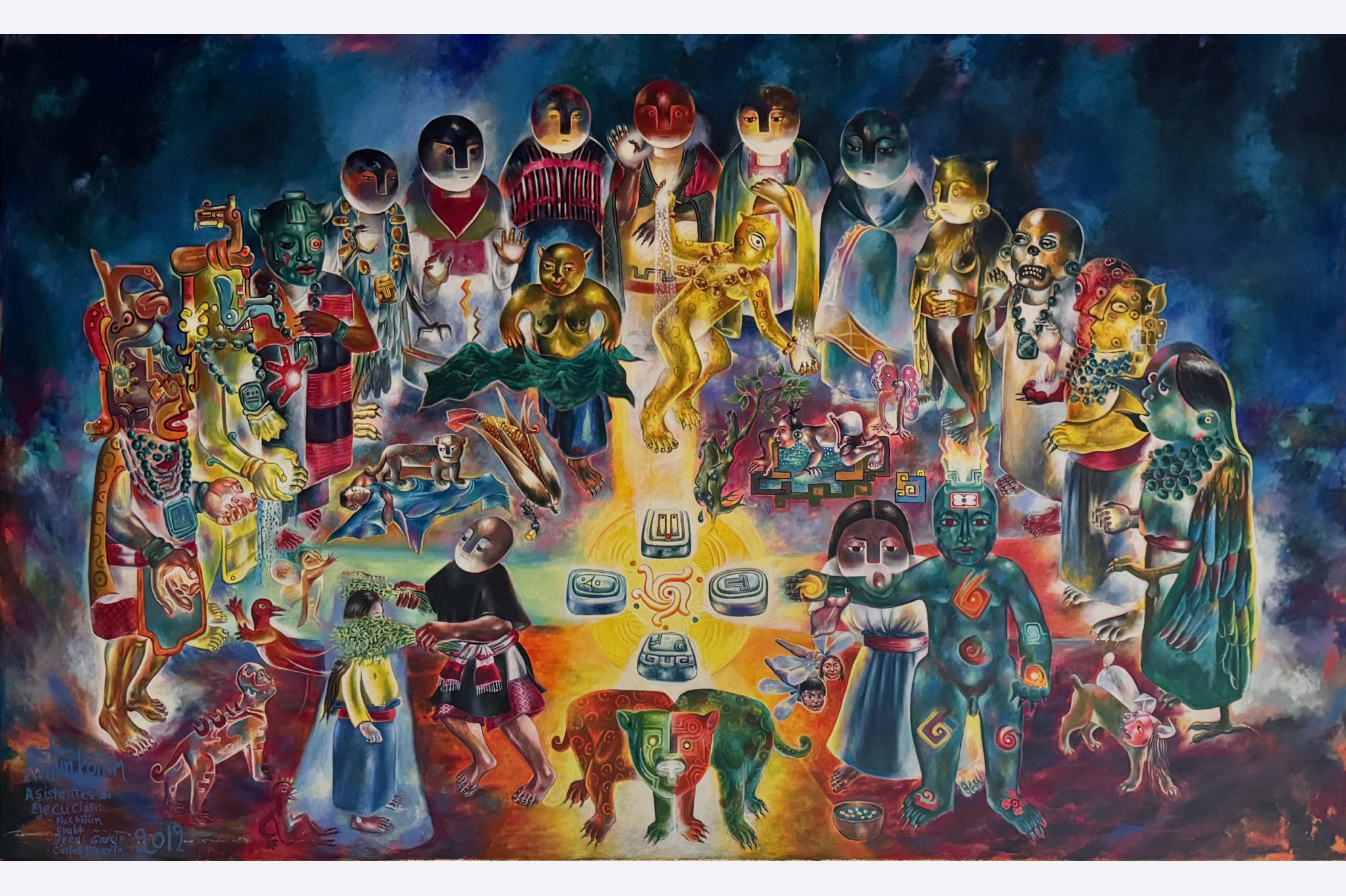
  • La paz como caminos de insurrección mesiánica Sobre la Agenda Frayba 2026 Memorias subterráneasGabriela Soriano | Underground Memories | San Cristóbal de las Casas, Chiapas | 2026

    Peace as a path to messianic insurrection About the Frayba Agenda 2026 Underground Memories

    By Carlos Mendoza Álvarez

    Last Wednesday, the presentation of the fifteenth edition of the Frayba Agenda Titled “Underground Memories,” it was prepared by the Fray Bartolomé de Las Casas Human Rights Center in Chiapas. This annual publication, since 2011, preserves the living memory of the actions carried out in the promotion and defense of the human rights of the indigenous peoples of Chiapas, as well as of people in forced migration and refugees, who have been supported by this civil society organization over several decades. Frayba -as this organization is affectionately called- was born inspired by the winds of conciliar renewal of the diocese of San Cristóbal de Las Casas and the social processes that emerged as an expression of the indigenous movement of the second half of the twentieth century.

    Three articles reflecting on the local, regional, and national context—by Jorge Santiago, founder of several ecclesial and civil organizations, Susana Montes de la Commission for Support of Community Reconciliation (Coreco) and an interview with Carlos González, a member of the Coordination of National Indigenous Congress of Government Created by Pedro Faro, these are accompanied by a valuable graphic record of the key moments of three decades of peacebuilding in Chiapas. The editorial design and illustrations by Gabriela Soriano Segoviano reflect, with beautiful strokes of contemporary folk art, the connections of the underground memories of resistance that inspire the indigenous peoples of today, as well as civil society and the churches that walk with them.

    Below, I transcribe my participation in the round table discussion, on that rainy afternoon in San Cristóbal de Las Casas.

    “There is no path to peace, peace is the path”

    Mahatma Gandhi

    This year we are commemorating three decades of peacebuilding in Chiapas: Frayba, Coreco, Sipaz, the National Indigenous Congress, the Zapatista Movement, the San Andrés Accords, and many other initiatives of civil society, churches, and social movements. These networks emerged from the fertile soil of Chiapas, prepared more than six decades ago by the pastoral plan of the Diocese of San Cristóbal with the arrival of Bishop [name missing]. jTatik Samuel Ruiz, who, after an arduous and patient conversation and journey with the native peoples, led to the birth of an indigenous Church.

    A decade later, the Indigenous Congress of 1974 fostered the emergence of a collective consciousness among Indigenous peoples as historical subjects. And finally, the rise of the Zapatista movement, with its support bases and militias, proposed a different way of living and creating the political sphere as a shared endeavor. All these processes were accompanied by a vibrant and creative current of critical thought, which arose in the Highlands of Chiapas and the canyons of the Lacandon Jungle throughout the second half of the 20th century.

    The San Cristóbal School, so named by Pablo Romo, along with the Cuernavaca School, analyzed by Humberto Bech, have been, in my opinion, the two main Mexican contributions to critical thought in the second half of the 20th century. Both provide us today with a precise direction for confronting with clarity the growing spiral of systemic violence that, with the Puerto Rican decolonial thinker Nelson Maldonado-Torres, we call here the Great Catastropheand.

    Jorge Santiago's reflection on the Frayba Agenda 2026. Underground Memories The work we present today rightly underscores the centrality of the San Andrés Accords as a crucible of decades of struggle for peace with justice and dignity. The thinker from San Cristóbal points out that the historical demands of Indigenous peoples remain relevant, and that the Mexican state still owes a debt for honoring these historic accords.

    Two pastoral letters from jTatik Samuel Ruiz and Don Raúl Vera prepared the celebration of the Third Diocesan Synod, which took place from 1995 to 1999. This process allowed the diocese to reap the harvest of half a century of pastoral life and thus give a clear path of synodality to the life and commitments of this diocese. Both letters arose in a context of uncertainty due to the animosity and conflict on the part of Vatican authorities of that time, fueled by the Club of Rome, or a group of Mexican bishops who were declared enemies of liberation theology in Mexico and Latin America.

    The first pastoral letter So that justice and peace may meet (1996) is an ecclesial response to the armed uprising of 1994. It reflects the struggle for land by indigenous peoples, as well as the commitment to justice and peace made by this diocese, following the impetus of the Second Vatican Council and the Second General Conference of Latin American Bishops in Medellín. The second pastoral letter From pain to hope, The agreement, signed by both bishops in 1998, after the Acteal massacre, is a commitment to hope amid the pain of the survivors and a pledge to continue seeking peace with justice and dignity.

    The Vatican's violence against this pastoral project would later be unleashed against Don Raúl Vera, who was transferred to the Diocese of Saltillo on December 30, 1999, in a failed attempt to dismantle the synodal process. What his detractors never imagined was that this perverse decision would become the opportunity to sow the seeds of a liberating Church, now in lands of mining extraction and gender violence, which Don Raúl would embrace with fidelity to his mission as a pastor in those desert lands of northern Mexico.

    Finally, I would like to make two final comments to continue the conversation.

    The challenges of moving forward, after three decades of peacebuilding, are now unprecedented, as we find ourselves in the uncertain moment of civilizational collapse. A commitment to justice for Indigenous peoples is no longer enough; it is essential to integrate other forms of justice, such as gender justice (sexual diversity) and ecological justice, to understand the rebellions. transmodern that build individuals and collectives of survivors in contexts of global violence. The historical strength of the poor, which the first generation of liberation theology envisioned, is giving way to the unsubmissive reason of social and ecclesial movements that are already weaving networks of mutual support, dignity, resistance and diverse re-existences.

    It is also time to reformulate the theoretical framework for thinking about systemic violence. Liberation theology requires a radicalization that arises from dialogue with decolonial thought and theory. queer/cuir /queer and intersectionality to continue supporting peace processes, transitional justice, and diverse spiritualities of life that face the ongoing Great Catastrophe.

    Let us not forget that it is our task to honor the legacy of the ancestors of the liberating Church, but from the new subjectivities, bodies and territories in resistance, with the fruits of thought, art and spirituality that emerge as messianic insurrections anticipating other worlds, of dignity and life for everyone.

    The spirituality of messianic time is an interruption of the linear time of that Chronos that devours its children on altars of bloody sacrifices. Such a messianic force arises as an insurrection. peaceful In the face of systemic violence, that is, as a break from the vicious cycle of rivalry and violence, to establish processes of mutual recognition, beyond the violence that produces poverty, exclusion, and subjugation to hegemonic powers. It is a spirituality of life in the midst of death. Another time that (in)emerges as an anticipation of other possible worlds from the survivors of yesterday and today.

    Next Wednesday, March 25, at 6 p.m., we will continue our discussion on critical thinking emerging from Chiapas, with reflections by Pablo Romo on the San Cristóbal School and experiences of a spirituality of mutual support amidst violence, presented by our friend and Peruvian colleague Juan Carlos La Puente. Both reflections will be followed by a dance performance by Martha Elena Welsh.

    See you at the restaurant Belil, in the historic center of San Cristóbal de Las Casas, where with Ricardo and Carmen as hosts, along with Angélica and Abraham, we will continue opening dining spaces, where resistances and spiritualities emerge as a commitment to permanent dialogue and mutual support in the care of life.

    San Cristóbal de Las Casas, March 7, 2026

  • Las flechas de San Sebastián Luces y sombras de una fiesta zinacantecaCarlos Mendoza Alvarez | San Sebastian | Sot'sleb, Chiapas | 2026

    The arrows of Saint Sebastian Lights and shadows of a Zinacantecan festival

    By Carlos Mendoza-Álvarez

    One of the emblematic martyrs of the time of Roman persecution in the beginnings of Christianity, pierced by arrows in his naked and vulnerable body, has been venerated for seventeen hundred years by diverse peoples who recognize in Saint Sebastian humanity mortally wounded by empires that supplant divine glory.

    In the Highlands of Chiapas, the saints are adorned with flowery cloaks, colorful ribbons, and mirrors that reflect alternate worlds where the Ch'ulel It dwells, with its avatars that protect or threaten those who approach its spheres of power. In Chamula, according to oral history, the saints can be punished for a time if they do not respond to the pleas of their faithful devotees: they are placed against a wall for a while, until their grace manifests itself. I have not found that custom in the lands of Sot'sleb, or place of bats, known as Zinacantán, a name documented by the famous anthropologist and linguist Robert Laughlin. But I have been surprised by the profusion of life in the garments with which they adorn the images of the saints: the Christ of Esquipulas, the Guadalupana, Saint Jude, Saint Lawrence and Saint Sebastian are the images that increase their clothing for their annual festival, in an overabundance of colors and textures that leave their faces and hands exposed, with their bodies imperceptible before such a profusion of life.

    What lies behind so much flowery beauty? How can I approach with devotion those images that transcend the ordinary in such an avalanche of flowers and decorations that sometimes seem to overwhelm those we reverently invoke?

    I found the key in the arrows of San Sebastián during its three days of popular festival in the municipal capital of Zinacantán.

    People from all the surrounding areas and neighboring towns flood the streets of the village and the plaza next to the church of the martyred saint in a lively festival that blends ancestral traditions like the jaguar tree with fleeting horse races. Asking the young catechists about the meaning of these traditions... performances Today, I heard different interpretations, more or less confused, which always concluded with the laconic phrase: “it is the custom”The jaguar climbs the trunk of a tree that was chosen a year in advance in the sacred hills The surrounding area. This tree is visited and venerated three times by those in charge of the tradition before being cut down and taken to the center of the plaza. During the festival, the trunk becomes the center of a ritual that commemorates the three days of darkness spent praying for rain and abundant harvests. From this trunk, standing upright in the ground, a man dressed as a jaguar—wearing a suit of Chinese fabrics crudely imitating the skin of the rain guardian—throws stuffed squirrels and eggs to the crowd gathered around, accompanied by young people dressed in black who play and dance as a troupe during the festival rituals. The horse race runs along the main avenue at the beginning of the day and again in the afternoon, recalling, according to some, the arrival of the Spanish—a memory that marks the time and space of the festival brought by the friars?

    During those days, like stepping back in time, the popular festival blends traditional dance and music—performed with deliberate slowness before the Tsotsil green altar of the Three Crosses, where the image of Saint Sebastian is placed—with the deafening roar of the band in the bandstand, which overwhelms those present but provides the perfect soundtrack for the celebration. And at night, everyone eagerly awaits the Sinaloan band concert, when the thumping drums mingle with the firecrackers and fireworks displays prepared to light up the sky.

    Amidst that endless surge of color, sound, and movement, I pause to approach the saint who is the reason for the festivities. I look for him on the altar in the atrium and then inside the church at the main altar. In both places, I can barely make out his face. Through his vestments, an arrow pierces his arm. And there is no way to see his lacerated body.

    Then I recall conversations I've had in past and recent years with young Indigenous people from diverse sexual orientations who have confided in me about their suffering from living in the shadows in their communities. It was unimaginable for them to be able to celebrate San Sebastián as their patron saint, to be part of the celebration, as so many Catholic communities around the world do. They celebrate it only in the silence of their hearts and their prayers. And I realize the arrows that continue to pierce the wounded body of the martyr. The vulnerable bodies of these young people today are adorned with floral fabrics, like everyone else in the community, but those bodies are not recognized in their difference by an ancestral culture to this day.

    I wonder if those bodies that live in the shadows today will one day be able to come into the light, with the love and responsibility that calls us all, as other Indigenous cultures have done for centuries. Years ago, the same question arose in conversations with women from the Zapatista grassroots and civil society who were forging a path in their own personal and communal histories to be recognized as life partners, living together as mothers with their children, and with a clear community and political commitment to defend their peoples. Today, the Zapatista narrative speaks to us of others –as he masterfully recounts Sylvia Marcos by exploring gender fluidity in Mesoamerica - finally making visible the experience of different lives and bodies as valuable and essential voices in the human symphony and the world to come.

    With a burning heart I sow a candle in front of San Sebastián in the name of those young people so that they may soon emerge of the shadows of the shadows of the shadows and live their lives joyfully in the midst of the community.

    The lights and shadows of the San Sebastián festival continue to be a revelation and a concealment that calls us to see with wide-open eyes the world around us where divine and human glory bursts forth as a promise of life for all.

    Sots'leb, January 24, 2026

    Note: I look forward to your comments below to continue the conversation.

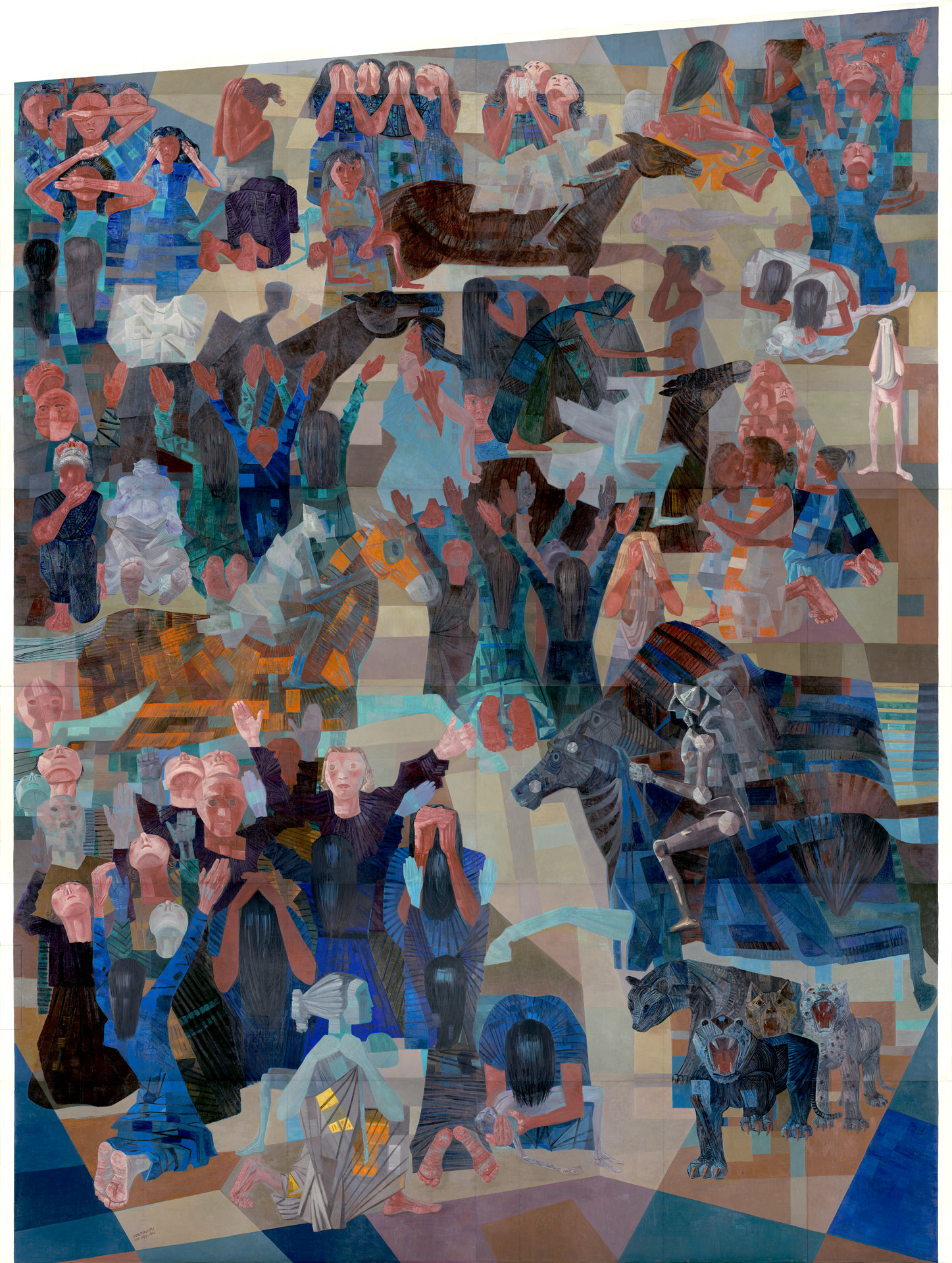
  • Desaprendiendo la eficacia para habitar la incertidumbreDiedrick Brackens | The Cup is a Cloud | Los Angeles, 2018

    Unlearning efficiency to inhabit uncertainty

    By Carlos Mendoza-Álvarez

    It has been seven months since I left Boston, after five years of academic life in the frenetic gears of American efficiency, with a special challenge in the background that consisted of translating the master ideas of modern Latin American and European theology to multicultural groups of white students from the United States, and others who came mostly from Korea, China and Japan, plus some from Turkey, El Salvador, Colombia and Chile.

    The initial courtesy of colleagues, both students and professors, gradually gave way with a few of them to a genuine conversation, always with respect for individual work prevailing and few exchanges about the meaning of our work as an academic community.

    I cherish the best moments of those encounters, such as the colloquiums to which we gave the decolonial tone of “conversations” (Beyond Global Violence Initiative), where we were able to open windows so that colleagues from the north and south could listen to each other, with certain difficulties in moving between both worlds, not only because of the differences in language but also because of the diverse experiences that sustain the body, thought and the word.

    What we all enjoyed most were the gatherings in the warmth of Valentina and Domingo's Chilean-Bostonian home, exceptional hosts to both our hearts and our palates. There, we could share, with greater intimacy and freedom, the ideas and intuitions that had lingered in the auditoriums of the Chestnut Hill campus. Sometimes, with Francis's Italian flair, assisted by Martín, and in the warmth of Neto's affability in his home, always ready to welcome us like a true Salvadoran, each of us found our place in the ebb and flow of conversation, wine, and song. In those welcoming homes, we received friends from Brazil, Mexico, El Salvador, Colombia, Puerto Rico, Spain, Ohio, Illinois, New York, Indiana, and California, passing through Massachusetts. And there, new projects for colloquiums, books, and trips were born, projects that continue to surprise and inspire us all to this day.

    But everything was interrupted by my sudden departure from US territory in the Trump era, leaving that seed of cordial intelligence sown in living memory.

    In the following months, back home and with interwoven journeys between South Africa, Turkey, Brazil, and Chile, I faced the challenge of seeing diverse worlds with new eyes, paying special attention to "those who dwell in the shadows of the shadows of the shadows." Thus, I was led—by the pure gift of my hosts during those travels—to experience moments of devastating and beautiful simplicity, such as accompanying Lance from the University of Pretoria to the Congolese refugee farm on the outskirts of the city. There, the pain of being homeless for more than five years was evident in his eyes, but within them also shone a glimmer of dignity that I still carry in my heart and spirit as a call to closeness.

    I vividly remember the walk along the cliffs of Cape Town with Grant and his team, where on a sunny but cold South African winter morning we contemplated how the two great oceans, the Atlantic and the Indian, meet, sometimes with fury and other times with tenderness. A metaphor for intertwined worlds.

    I also recall with emotion the ecumenical Taizé-style prayer led by my Dominican brother Claudio, along with Eda, a resident of Istanbul, and a group of African and Ukrainian students living there. Interspersing mantras for peace in various languages, they gathered in the dim light of the Church of the Preachers, located near the Galata Tower. It was a glimpse of what Pentecost means, albeit only as a bastion of spirituality amidst a vibrant, modern Muslim culture that looks with curiosity at what happens within these Christian enclaves.

    I treasure in my memory the simple and brief Eucharist in the small wooden chapel of the Jesuits in Tirúa, on a small altar covered with a Mapuche textile and adorned with an oriental-style oil lamp that created a luminous twilight, on a spring morning in Wallmapu, in the far south of Chile. I had the grace to share with them for a few days their joyful dispossession, as travelers accompanying the Mapuche people in defense of their territory, their language, and their ancestral spirituality.

    In each of those experiences, the question of how to build bridges to share spiritual intimacy between people and communities of diverse traditions lingered for me. And I remembered the rituals we have explored at Re-existe, precisely seeking new languages to celebrate together our precarious lives, open to hope, according to diverse ancestral traditions, from indigenous peoples to Abrahamic religions and the secular inner lives of those who are individuals or groups without religion.

    Back in the land of my ancestors, now free from the daily pressure of the classroom and the unbearable academic meetings, I'm beginning to understand what it means to unlearn efficiency. To enjoy the free time of otium, beyond the negotium, as I told you here a few weeks ago.

    But it's about more than just slowing down. Something compels me today to live in the moment. otherwise as a renewed inner life and the place as my homeland. I seek an external rhythm between morning walks, religious duties, attentive reading of books piled on my desk for years, and more creative writing, loosening my pen and exploring new literary genres. But it's not enough. There's something more I sense on the horizon, the search for a "place" to put down roots, grow slowly, and blossom, following that creative intuition of Ivan Illich and Jean Robert (The place in the space age). The place and time where inspiration flows will gradually become clearer in the coming months.

    Now that I have time to “do nothing,” I feel invited to reinvent myself every day. I am certainly working in the present on wonderful intellectual projects, such as the collaborative book on political theology—with the introduction I am writing, inviting fifteen contributors from eight different countries to the table of words to reflect on “the common good” in times of great catastrophe—whose manuscript I am revising with the support of Francis and Nathan, dear colleagues I met at Boston College, and which will be published next year by a prestigious publisher in the United States.

    I am delighted to review the scripts for the documentary and the comic book – by Juan and Katsumi respectively – which will commemorate the past meeting Re-exists 2025. The Spirit connecting the peripheries which we will soon share in the digital world to continue strengthening our resistance against the evil that surrounds us today as systemic violence. This initiative has been creating a multifaceted space-time where we learn to re-exist, reinventing ourselves alongside other survivors.

    And with excitement, I also imagine—along with some Dominicans who are seeking new expressions of the charism of preaching in our unprecedented context—what will emerge from our meeting on Nicaea last October in Istanbul. Situated in today's cities and villages, which are like laboratories, we seek how to communicate to humanity the joy of being inhabited by the divine and human Word that redeems us, whether rooted in the secularized world or amidst diverse spiritual traditions.

    Encouraged by these vivid memories and by the ongoing work that connects with my deepest desire, I now face the challenge of "stopping" the whirlwind of efficiency, unlearning to live and think only in terms of production. It is a journey in reverse, but above all, an implosion of a dizzying desire, to return to the still center of body, desire, thought, and spirit from which it flows another mode of existence.

    And then I will learn to let myself be inhabited and moved – as I discussed with my friend Juan Carlos La Puente in the heart of the pandemic (Mutual accompaniment in the divine Ruah)– because of the uncertainty as a gift and surprise of the fluttering of Life that encourages us all.

    Mexico City, November 15, 2025

    Note: I would appreciate your feedback at the end of this page.

English