By Carlos Mendoza Álvarez
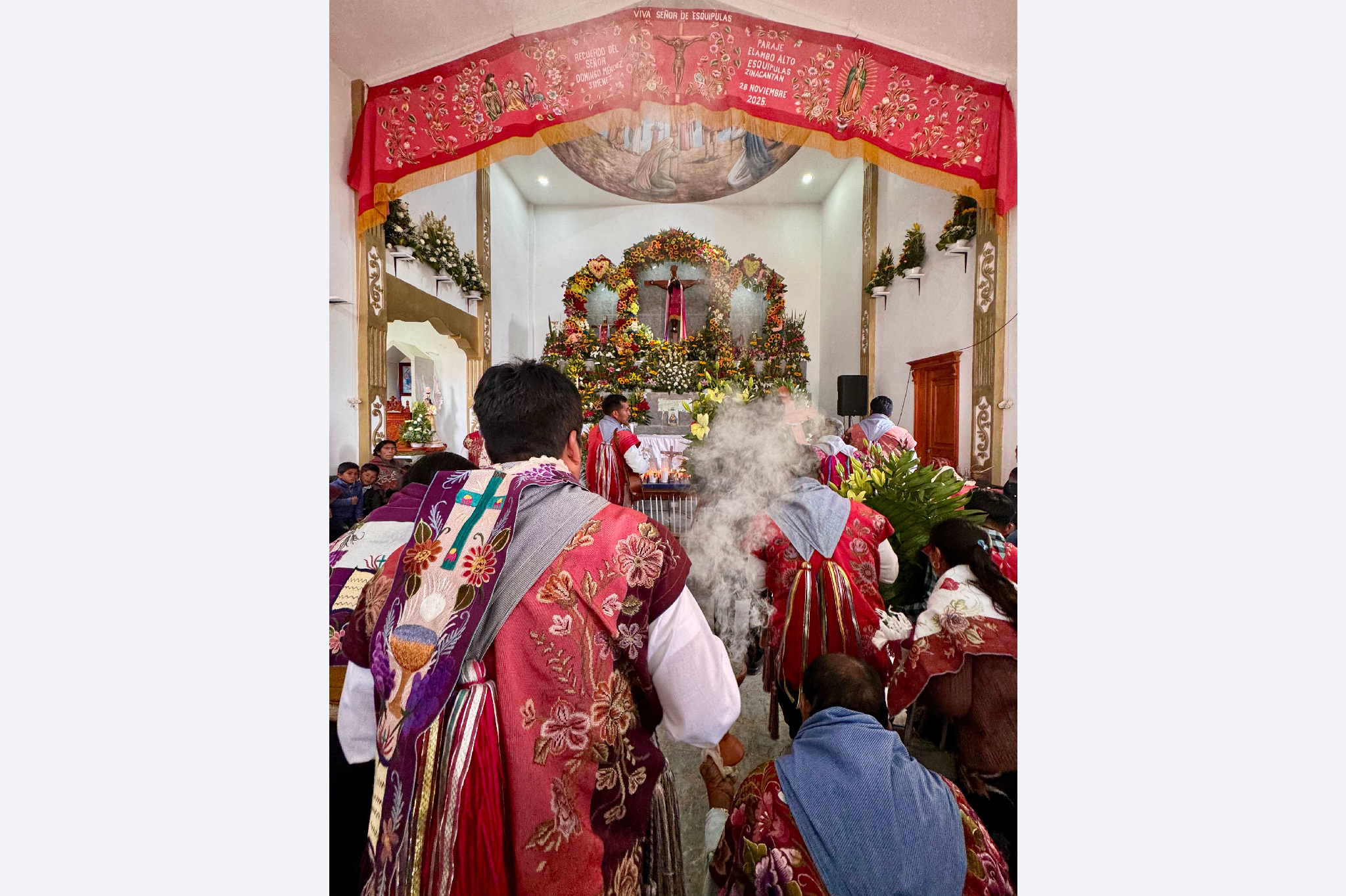
A few days ago, we opened a new space for dialogue in the city of San Cristóbal de Las Casas on the feast day of Saint Thomas Aquinas. This was the first event in a year-long celebration of the fifth centenary of the arrival of the Dominican friars to Tierra Firme, as the American continent was then called. Abya Yala. Next June we will be holding various cultural and religious events, both in San Cristóbal and in Zinacantán, with the program 500-OP Chiapas which we will announce soon.
Together with Abraham and Angélica, dear friends from Ecosur with whom we worked in university ministry at CUC years ago in Mexico City, and with Carmen and Ricardo, friends involved in social and cultural activism in the city, we have been imagining together a project to continue cultivating the great legacy of the School of San Cristóbal, as it is called Pablo Romo to critical thinking and inculturated liberation theology that has developed in the Highlands of Chiapas for more than half a century, with the specific contribution of the Dominicans in these lands. There are many cultural forums that currently exist here—such as CIDECI and Dialectics in the Museum. jTatik Samuel, El Paliacate, Galería MUY and many more – where it is possible to talk about urgent and important issues for the cosmopolitan society that lives here – a microcosm of Mayan, mestizo and foreign peoples – with its many local, regional and global connections.
∂
Since the 1970s, San Cristóbal de Las Casas has been the scene of important meetings such as the First Indigenous Congress convened by Bishop Samuel Ruiz and leaders of indigenous communities in 1974, it proved to be a watershed moment in the indigenous consciousness of Mexico, as it refers Fabiola Ramírez in her Master of Arts thesis at Tulane University. She also highlights the First International Symposium of Lascasistas, The event, organized by Manuel Velasco Suárez, Agustín Yáñez, and the Dominican friar Enrique Ruiz, was held in 1974. Both events shared a common thread—starting with the fifth centenary of the birth of Fray Bartolomé de Las Casas—the search for paths to promote justice for the indigenous peoples of Chiapas, subjected for almost five hundred years to a racist system, marked by centuries of social injustice and the suppression of their collective imaginaries in their cultural and religious expressions. The spirit of liberation theology, as a creative reception of the Second Vatican Council, was mediated by the prophetic force of the Second General Assembly of the Latin American and Caribbean Bishops in Medellín in 1968, ecclesial events in which they participated. jTatik Samuel Ruiz, made their presence felt with vigor and creative imagination in these lands.
Two decades of sowing the Gospel in the diocese, with its message of liberation for oppressed peoples, allowed that seed to germinate into a diocesan synod, intimately connected with the indigenous cause, which found in the Zapatista movement one of its most relevant expressions for promoting the autonomy of native peoples. There were other fruitful fruits, such as indigenous theology, which, not without difficulty with Vatican authorities, also expressed the vitality of a profound ecclesial process that continues to this day.
But the old Royal City of the colonial era, inhabited by a mestizo and Creole population that called itself intercultural, He had become accustomed to living with the "Indians" in modern times with a normalized racism, which was expressed as paternalistic assistance from the caxlanes or Creole chieftains towards the Indians, as Rosario Castellanos masterfully recounted in her collection of short stories Ciudad Real.
The Zapatista uprising, in addition to its political effects—with the 1996 San Andrés Accords betrayed by the federal government and the creation of the Caracoles or Zapatista autonomous municipalities—had a cultural impact on the city, which suddenly became more cosmopolitan in its daily life, as they tell university students Immigrants in the Highlands of Chiapas since the years surrounding the uprising. As early as the 1950s, Harvard anthropologists and linguists from the Summer School of the Bible had arrived in the Jobel Valley to settle in the colonial city, turning it into a base for their research trips to the indigenous communities they studied, mostly using an extractive academic or religious model.
But over time, the gentrification of the city of traditional neighborhoods It grew in an unusual way as a result of the rebellion of the canyons that impacted the Highlands of Chiapas in the last three decades.
∂
Today, more than fifty years after that Indigenous Congress of 1974, and thirty-two years after the Zapatista uprising of 1994, much has changed in San Cristóbal de Las Casas. Indigenous communities have achieved diverse forms of autonomy in the political, social, and cultural spheres, including religious matters, surpassing the vision of their initial proponents. These communities are no longer under the tutelage of political parties, churches, universities, or civil society organizations. The cultural fusion of Indigenous peoples with hip-hop music, audiovisual culture, and contemporary art will surprise many. Indigenous identity now transcends even revolutionary movements.
And like a boomerang effect, the mixed-race and foreign population living in the city also blends into this landscape of identities. An event about Gaza primarily draws university students and members of civil society, but attracts few of the displaced Indigenous people who live in the northern part of the city. A hip-hop concert, on the other hand, fills plazas. And then there's the Sinaloan band invited to the Zinacantán festival, which will keep the Tsotsil youth on tenterhooks for hours, mesmerized by a professional stage that rivals any pop or ranchera music festival in any major city in the country—and, incidentally, managed by a young entrepreneur from Zinacantán.
How can we participate in these ongoing cultural changes using the Dominican word itself, not only from the past but also from the present, in its diverse forms of life with friars, sisters, and lay people inspired by the charism of preaching? What signs of the times... deglobalization It is necessary to interpret in order to scrutinize the passage of the God of Life, As the Dominican friar Gustavo Gutiérrez said in Peru, what is needed for a humanity bewildered by global violence?
∂
The roaming This is a vital attitude of the Dominicans since their founding by Dominic of Guzmán in the 13th century, a time of transition from feudal to urban society. "Holy preaching," the initial name of Dominic's apostolic project conceived with Bishop Diego de Osma, the layman Peter Seila of Toulouse, and Wilhelmina and Raymonda Claret, sisters from Prouille in southern France, expresses the original inspiration of a spiritual tradition that has dedicated itself for eight centuries to seeking truth in every age, trusting in the power of the Word made flesh. Therefore, it is not just any truth that is being sought, but the truth that liberates, saves, and redeems humankind, humanity, and the cosmos from the bonds of evil, as did the Galilean.
The Dominican-style study is, therefore, the spring of hope According to that beautiful reflection by Friar Timothy Radcliffe, former Master of the Order of Preachers, this spirit led the friars to disperse throughout Europe from the beginning, going to universities "to study and found monasteries," that is, communities of life centered on the Incarnate Word. This impetus took them as far as Mongolia in search of Genghis Khan. This itinerancy was described by Matthew of Paris, the staunch enemy of the new friars at the Sorbonne in the 13th century, who scornfully declared: "Their cloister is the oceans and their cell the world," thus defining for posterity the daemon or the genius of the religious order that was emerging in the medieval towns, as Father Chenu repeatedly reminded us doctoral students in Paris.
Centuries later, already in Chiapas, that same itinerant journey led Friar Pedro Lorenzo to the Jataté canyons and the Lacandon Jungle to search there, “in the middle of nowhere,” as the prior of Santo Domingo de Ciudad Real admonished him for his rebellion, for the people who lived there. That is why from then on he decided to call himself Friar Pedro Lorenzo de la Nada, according to Jan de Vos.
In our times of the Great Catastrophe—begun in Gaza and now spread throughout the world in the Trump era—itinerantness leads us to new territories to be created as places of conviviality of the Word. Here in the Highlands of Chiapas, we'll do it like new. itinerant space, where we can foster creative dialogues in search of the truth that saves.
San Cristóbal de Las Casas, February 7, 2026
Note: Let's continue the conversation with any comments you'd like to post below.