Category: Liberating spirituality

  • El Espíritu conectando las periferias

    The Spirit connecting the peripheries

    By Carlos Mendoza-Álvarez


    Since the end of the last century, humanity's religions have updated their mission, realizing the growing poverty and injustice in the world, accompanied by wars promoted by corrupt leaders, where religion was used as a weapon of exclusion and violence.

    The Parliament of the World's Religions with the project of a global ethic (Toward a Global Ethic: An Initial Declaration) where the contribution of the Swiss theologian Hans Küng stood out, or the Earth Charter  Promoted by, among others, the Brazilian Leonardo Boff, along with several spiritual leaders, they sounded the alarm to mobilize religions to stop the spiral of hatred that is spreading across the planet, turning to the sources of human interiority that religions have cultivated for millennia as a source of peace.

    However, many of these initiatives, while they managed to raise awareness among their leaders and communities as well as in the media of the urgent task of building peace with justice and truth, did not always listen to the knowledge and spirituality of people and communities in their daily struggles to defend human life, rivers, forests and mineral, plant and animal species that inhabit the face of the earth but are threatened by the sixth mass extinction underway (What is the sixth mass extinction and what can we do about it?).

    Second and third generation liberation theologies, as we have already analyzed in the Mexican context (Liberation Theology in Mexico: Creative Reception of the Second Vatican Council), have shifted the perspective by placing the victims of global violence themselves at the center as "knowers," that is, experts in humanity thanks to the resilience that has transformed into resistance. Above all, it must be emphasized that, from this experience of vulnerability, these survivors have recognized themselves as privileged interlocutors of Divinity. Indeed, the victims seek to re-exist with new modes of communal organization, agroecological work, and diverse spiritualities. These practices emerge precisely from the people and communities themselves who are threatened by systems of domination.

    Feminist ecotheology, developed by Ivonne Gebara (Ecofeminism: A Latin American Perspective) in Brazil and Marilú Rojas (The relevance of ecofeminist theology and its political impact on current femicide and ecocide) in Mexico, took a radical turn in thinking about the interconnections between the faith of excluded women, their violated bodies and territories, as well as their ancestral knowledge of care and resistance as the beginning of a world change where a new face of divine Sophia is revealed.

    Thus, an increasingly clear awareness emerged among religions and social movements to listen to those who live on the peripheries of the world of wealth and privilege, to explore how "another world is possible" from those social and religious margins.


    ∂


    Since 2015, a group of university students, along with artists and social movements in defense of the territory in Mexico – with the advice of Gustavo Esteva (Center for Intercultural Meetings and Dialogues) and Boaventura de Sousa Santos with his Conversations of the World With several authors from the epistemic South such as Silvia Rivera Cusicanqui – we began to explore ways to decolonize the university and learn to “weave voices for the common home” (Weaving voices). Thus, we learned the demands of attentive listening to those living on the peripheries, who are not only victims but individuals and collectives who create processes of awakening, healing, and embodying together, and thus weave together knowledge that expresses their ways of life, community organization, and their profound spirituality of life.

    In 2019, we continued this path by analyzing various voices of decolonial theology at a conference (Congress on resistance and spiritualities) organized jointly by the Universidad Iberoamericana, Mexico City, the international journal of theology Concilium, and the Dominican University Cultural Center of Mexico to explore together the common features of resistance to systemic violence and the spiritualities that arise from it.

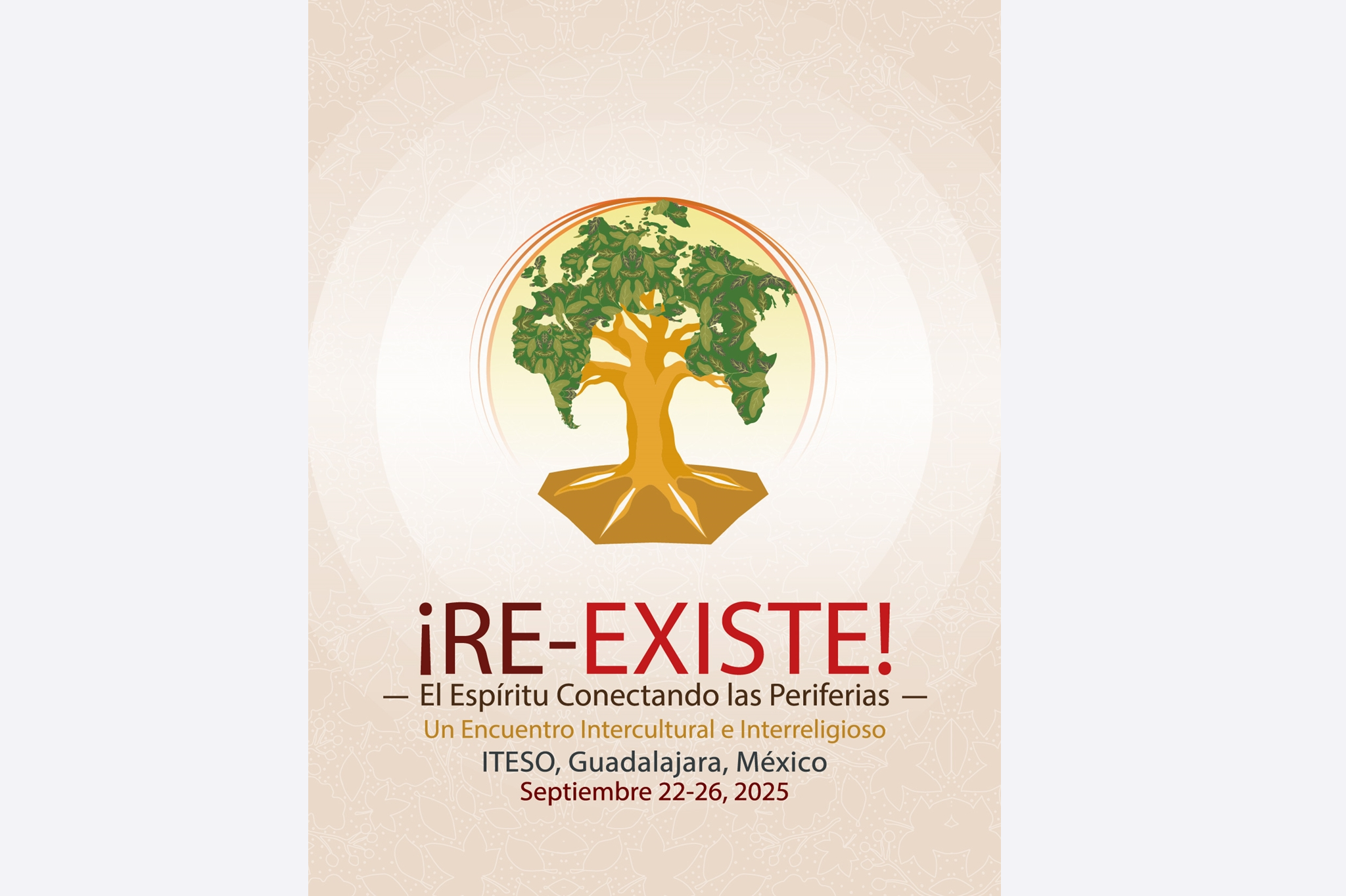
    In 2023, a group of university colleagues, with the support of Mexican civil society organizations and ITESO, the Jesuit University of Guadalajara in Mexico, managed to bring together more than thirty groups from Latin America (Re-Exists! The spirit crossing peripheries) with the aim of understanding the new forms of life, subjectivity, and communality that individuals and communities of survivors are weaving together. We sought a way to glimpse hope amidst the horror of clandestine graves in Mexico, discrimination based on gender, race, and social status, the devastation of Mother Earth, as well as to explore the rituals that emerge from these practices of resistance. graphic memory of that congress, with his documentary that includes some interviews, can give an idea of what we experienced at that meeting.


    ∂


    Now comes the time for the next phase of Re-exist that will emphasize the connections survivors make and the strength that animates them.

    This time, it is a meeting-festival with two novel and challenging features: interculturality as a way of existence and thought, to "rethink as a species," according to the call of the scientific community, closely linked to interreligious dialogue as the only viable way to approach the sacred.

    We propose to explore together the paths of re-existence in this hour of collapse of the modern civilizational model, where the genocide in Gaza has put humanity in jeopardy and becomes a touchstone for human civilization.

    Through three steps we will explore the wake up in the face of the horror that each collective has faced. We will continue analyzing the heal as personal and collective actions of memory, truth and justice that allow victims to rebuild their lives. Then we will be able to access the moment of support each other with new forms of communality.

    Collectives of women from India facing patriarchal violence in the Hindu, Buddhist, and Christian religions will enter into mutual accompaniment with mothers of the disappeared in Mexico. Caretakers of Mother Earth from the Jesuit mission of Bachajón in Chiapas will dialogue with leaders of the Lakota people who work on collective memory to heal from the colonial past, while recovering their ancestral forms of agriculture through traditional diets, the cultivation of local plants, and the rediscovery of rituals such as the Inipi or ritual bathing which is a creation of communality, or the buffalo dance as one of the main symbols of the sacredness of earth and sky.

    Stay tuned on social media Re-exists 2025 where brief informative capsules, interviews, and graphic memories of these moments will be published, which we hope will be like glimpses of life that resists and re-exists, because the strength of the survivors is animated by the divine Ruah that flutters over chaos to bring forth life in the midst of death.


    Guadalajara, September 20, 2025

  • ¿Santidad laical?Kite designed by Francisco Toledo on handmade paper from Vista Hermosa Art Paper

    Lay holiness?

    By Carlos Mendoza-Álvarez


    This weekend two young Roman Catholics will be canonized by Pope Leo XIV (Canonization of Carlo Acutis and Pier Giorgio Frassati). Pier Giorgio Frassatti, an Italian Dominican layman who lived in the first quarter of the 20th century. The other, Carlo Acutis, the so-called “first millennial saint.” Each reveals not only l'air du temps of each century, but rather raise the question of the model of Church that we urgently need to present in our times of global catastrophe.

    Since the end of the 19th century, the Roman Catholic Church, especially in Europe, has sought to listen to the working class and maintain contact with the population produced by the Industrial Revolution. The social teaching of the papal magisterium—since Pope Leo XIII and his Encyclical Letter Rerum Novarum until the current pontiff Leo XIV, who chose his name for that reason, displayed an urban pastoral approach typical of the time to walk with that suffering sector of the people of God.

    Catholic Action would be a lay response, supported by groups of bishops in countries such as Belgium and France, to such challenges. The worker priests (Worker Priests: The Church's Commitment to the Working World) were another praiseworthy page in this history, where it is worth remembering the accompaniment of the Dominican theologian Marie-Dominique Chenu and the subsequent infamous suppression of the movement by Pope Pius XII. The influence of Catholic Action would reach Latin America with its see-judge-act methodology, later inspiring liberation theology in Peru, Brazil and other countries in the region, as Agenor Brighenti has carefully studied in recent years (The ver-julgar-agir method).

    One hundred years ago, a young Dominican layman from Piedmont (Pier Giorgio Frassati OP), close to the miners in his land and a mountaineer by passion, was the fruit of that ecclesial sensitivity of the time that would bear fruit in later decades in pastoral experiences in the rest of Europe and Latin America, with the pastoral movements of insertion in popular environments, especially the working world and indigenous peoples. Son of a famous journalist who was the owner of The StampPier Giorgio Frassati used to combine his political activism in the Italian Popular Party with readings of Thomas Aquinas and Catherine of Siena, accompanied by climbs in the Alps with a club of friends and days of Eucharistic adoration in which he unfolded his interior life. A figure of his time, Pier Giorgio is today claimed by the Roman Catholic Church as a youthful lay saint, whose life ended abruptly at the age of 24 due to fulminant poliomyelitis probably contracted through his apostolate to the poor of Turin, leaving a spiritual imprint on the pastoral youth movements of a century ago.

    The other young lay saint is Carlo Acutis, an Italian born in London, devoted to the Eucharist and very active on social media. He lived as a teenager focused on spreading the word about Eucharistic miracles and Marian apparitions. After his death from leukemia at the age of fifteen, he became a symbol for today's "Catholic influencers," but with a more devotional tone than the social and political one like his fellow canonizer. A few months ago, I received Carlo's relics along with the youth ministry group of the Parish of Santa Rosa de Lima in Mexico City, founded by the Dominican friars almost a hundred years ago. This was an initiative of the Archdiocese of Mexico to commemorate the Jubilee of Youth (A faith that never ages: Rome, 25 years after the Jubilee of Youth with John Paul II) convened by Pope Francis and carried out by Pope Leo XIV. I was struck by the low attendance of young people from this hipster area of the city, with the presence of some devout young people with very pious traits and little social sensitivity. The rosary prayer prepared by the local youth group in the tradition of Dominican spirituality meditated on the sorrowful mysteries of Christ's passion, associating them with the cry of today's youth in this neighborhood of Mexico City: gentrification, insecurity, violence against women, unemployment, and drug abuse as wounds of Christ's body today. It was an attempt to connect the tradition of the rosary with the lives of people today. The small community of older adults gathered there prayed in amazement, following the lead of the young people, and then returned to their traditional devotions, meditating on Christ's life in his passion and death. At the end, a few young people from other parishes gave a brief workshop on the millennial saint, urging the use of social media as a new place to proclaim Christ and promote the adoration of the Eucharist in communities, along with the values of the Gospel.


    ∂


    I had already encountered this new generation of young traditionalist Catholics in Europe and the United States, among lay people, Dominicans, and Jesuits, among the religious orders and congregations recognized as promoters of the conciliar renewal of Vatican II. Their interests seem retrograde to me at first, although later I try to get closer to those generations and discover in them an inner beauty, mixed with naiveté and fear of getting lost in the labyrinth of pluralism. They seek identities that give them certainty. Religiously, they love the ancient Latin culture of medieval Christianity, above all, less so that of the Greek patristic era. They are enraptured by Gregorian chant and the Summa of Theology of Thomas Aquinas and other medieval masters, but without understanding their method open to conversation with pagan philosophers, nor following scholastic logical thought. They are fascinated by conspicuous signs of belief, such as the religious habit, the liturgical veil, and receiving communion by kneeling with great devotion, but clumsily because they do so as if they were newborn giraffes.

    Despite their intense devotion, they are indifferent to social issues as a spiritual and theological context. Talking about Gaza in a sermon seems like ideology to them. Not to mention inviting unmarried couples to the Eucharistic table, much less welcoming the community of sexual diversity at Mass. They deem such practices a deviation from Church doctrine. These younger generations of Catholic laypeople seek to return to the doctrinal Church, like that of the Council of Trent and Vatican I, without fully understanding the meaning of the conciliar spirit that inspired Pope Benedict XVI to convene Vatican II.


    ∂


    And I wonder then what models of Church are urgently needed today for a laboratory city like Mexico City and so many others around the world. It's about responding to a range of youth identities where it's a challenge to create spaces to invite them to look at one another, almost impossible to welcome them in a single liturgical celebration. I remember that my generation still dreamed of "taking Paradise by storm" through a commitment to justice and peace, with universal human rights as a sign of the new times. This led us to a university ministry at the CUC in the 1980s focused on a liberating Church.

    Something that seems outdated in this era of deglobalization and the expansion of war ministries, military drone invasions, and the cynicism of capitalism in its expansionist phase of obscene forced colonization. The perverse use of religion, as we see today in Palestine with the Israeli government and its allies around the world justifying their genocidal actions in the Bible, seems to leave young Catholics today indifferent, absent from the protests in the streets and squares of the world against this manipulation of faith.

    What secular saints does humanity need today amidst the ruins of our civilization? Frassati or Acutis. The young mountaineer close to the miners or the saint. millennial of Eucharistic adoration as a “highway to heaven.”

    I think neither one nor the other, because both were children of their time. Today I see a new generation of young people passionate about Christ as Messiah and universal brother, whom they recognize for his exceptional inclusive love of the just and sinners that arises from their intimate experience of communion with his AbbaYoung people who are simultaneously touched by the teachings of the Dalai Lama and Tich Nath Han, or by the Zen meditation masters they have encountered at retreats in diverse spiritual traditions.

    Young lay people who live holiness in their eroticized and loving bodies, unafraid to explore different modes of femininity and masculinity, of biological or adoptive fatherhood and motherhood, wrapped in the love of Christ and passionate about serving his wounded body.

    Millennials who are not tasteless influencers who reproduce on social media the same things they heard in their parish groups, but who invent "blessed blends" of narrative theologies close to the discarded, crossing the peripheries, weaving bonds of life, empathy and political-spiritual solidarity. Lay holiness as the new generation of young people from the Ecclesial Base Communities of Latin America and the Caribbean (Blessed Mixture. Narrative Theology of Our America) that reinvents that old method of see-judge-act with a narrative theology on the peripheries of society, with compassionate imagination, following in the footsteps of Jesus of Nazareth and his messianic community.

    Perhaps today, as daughters and sons of uncertain times, lay holiness is experiencing a collapse of religious institutions and the invention of other ways of worshipping the loving presence of Divinity, not only in the temple, but also in the community that, animated by its faith, seeks to save a polluted river or a dying lake. Youth communities climb the volcanoes of Mesoamerica or the Andean mountain range, with its endangered glaciers, as paths to ecological spirituality.

    Initiatives that seek to worship Christ in his wounded body today.

    Lay holiness which, after all, is the life of the Ruah divine who makes all things new from the rubble of the crumbling world.


    Mexico City, September 6, 2025

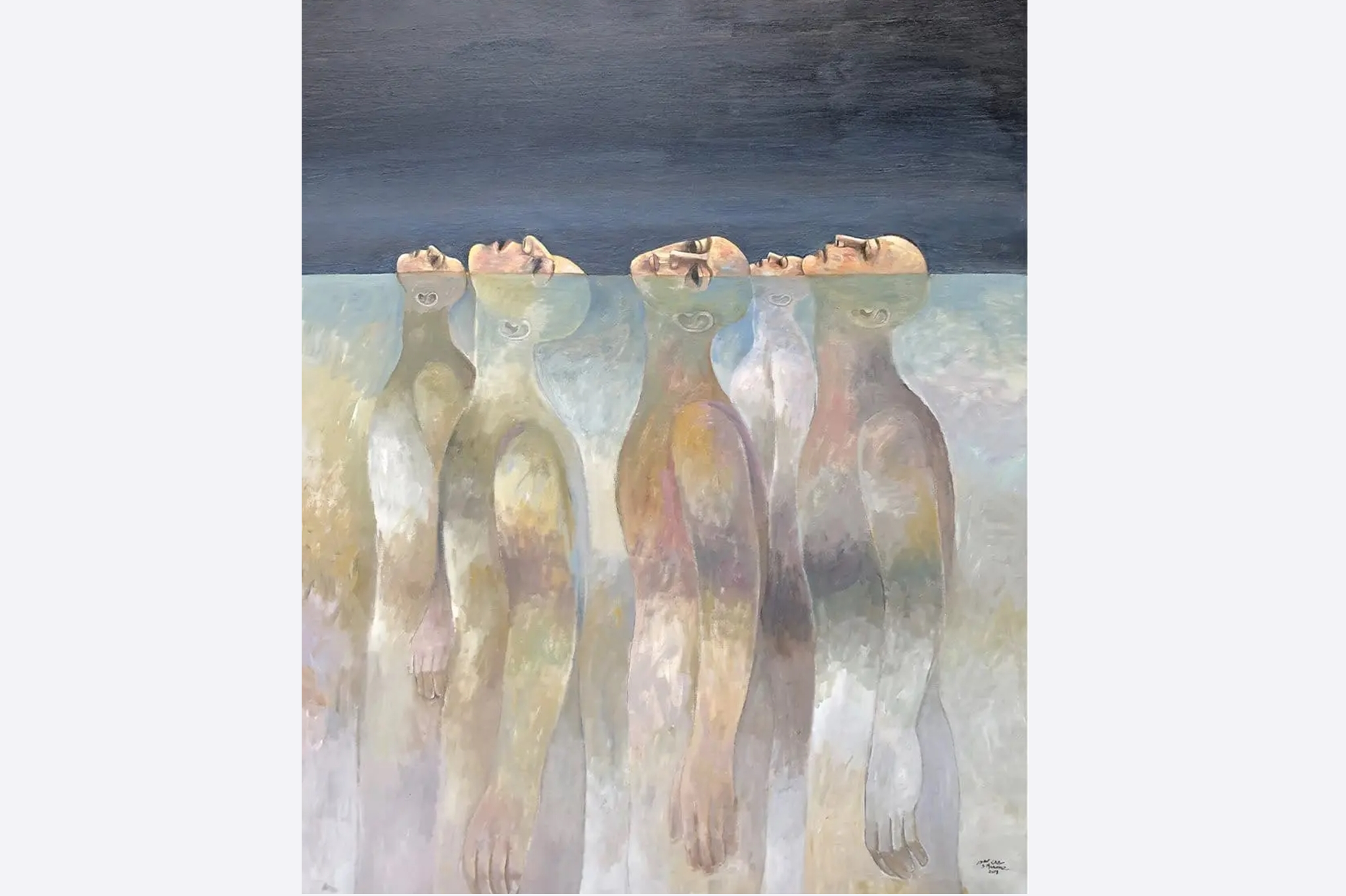
  • Sobre el ocio y el silencio en tiempos reciosSliman Mansour, Temporary escape, 2018

    On leisure and silence in difficult times

    By Carlos Mendoza-Álvarez


    One of the advantages of being retired from academic life now is having free time that flows by day, like a trickle of water that runs down the mountain and becomes a stream until one day it becomes a river.

    The uncertainty of seeing time pass at the beginning of a new stage in life can be uncomfortable because it is accompanied by questions about the purpose of life, especially of each day. I no longer have to prepare the night before to have the next day's course updated, with the necessary teaching materials and the attire to wear for the classroom ritual. Time is measured in advance, minute by minute, in the time that will later pass in the classroom to ensure efficiency and the success of the program, as happened in my last years of teaching in Boston.

    Now I finally have time to think, read, and write. However, the ideas flow with astonishing slowness at times, suddenly untimely in the early morning.

    I no longer have to worry about having my PowerPoint presentation ready with clear ideas, essential quotes, and suggestive images to literally “capture” the attention of students, who were increasingly distracted by the virtual world and demanding the services of the “instructor.” Although they called me “teacher” when addressing me ceremoniously, they were actually demanding duties worthy of a gym instructor. It's no coincidence that this is what the experts in school education called us: “instructors.” This teaching service was an expectation that made itself felt with all its weight in the hundreds of emails each month that had to be answered to clarify questions about classes, authors, and assignments; or to send reports to school services requesting information on how we were handling students with mental illnesses, depression, syndromes I had never heard of, as well as special attention to people with motor, visual, or hearing disabilities. As never before in my thirty years of teaching, the most recurring problem to address in Boston College, It was depression, associated with anxiety, particularly during periods of midterm exams and especially finals.

    And now that I no longer have to live with the urge to jump between the classroom and the cubicle, time stretches out and deflates, with the impression of not moving anymore.


    ∂


    There are other new activities in this "retirement" stage. Not because I'm always filled with joy, although there are certainly moments of great joy, but because I have to relearn how to live with time. I usually wake up early in the morning as before, but now without rushing, leisurely enjoying the time to meditate in silence and set off for my morning walk. I continue the day with the ritual of espresso and the latest news on the internet, checking a diary while I savor my coffee, which fortunately is no longer filled with appointments one after another. Now there's enough space and time to "do nothing." Which means I have to get down to the task of taste those hours of the day in the leisure.

    I fondly remember the classes of Father Ángel Melcón, a noted Thomist philosopher who was our formator during the Dominican novitiate in Agua Viva at the foot of the volcanoes. He insisted, following the Desert Fathers like Evagrius Ponticus, on the importance of re-educating ourselves during this time of initiation to move from "negotium" to "otium," as a countercultural act because business denies leisure. Thus, he invited us to discover, as novices, the time of pause in life, of silence, of learning to do nothing.

    Today we value similar teachings from the “desert mothers and fathers” (The Apophthegms of the Mothers and Fathers of the Desert), as the spiritual sources of early Christian monastic life in North Africa and the Middle East are known in theology, with its aphorisms or sayings of spiritual wisdom that express the ancient practice of leisure. Business is the worldly hustle and bustle that prevents the silence and contemplation that are precisely the substance of leisure, allowing us to live in inner freedom, confront evil and practice good.

    But how difficult it is to practice this art again, after decades of academic and religious activity. This "second novitiate" will be useful to me as a watershed to enter a new stage of life in the leisure of contemplation, now located in the silence of being and its shadows.


    ∂


    Sara del Carmen, a dear reader friend from Coyoacán, gave me the novel a few days ago The Spinoza enigma Written by Irvin D. Yalom, the Stanford psychiatrist. I placed it on my desk for when I finished reading another novel which is the third part of the saga that began with The cathedral of the sea, written by the famous Spanish lawyer Ildefonso Falcones, following the story of an Aragonese soldier and aristocrat in Naples in the 14th century (In Love and War. The Cathedral of the Sea 3). While this novel fascinated me for the way it recounted the wars and loves that gave rise to Latin Europe, which later undertook the conquest of the New World, moving on to the other novel connecting the life of a philosopher excommunicated by the Jewish community of Amsterdam in the 17th century with the traumas of Hitler's ideologue and his aversion to Jews in the midst of the Nazi regime, brought me to the heart of a question that today lacerates my conscience about the perversion of the Jewish and Christian religion turned into a weapon of war.

    In recent years, the Palestinian question It has been deepening in my mind and heart like a cry of today's victims where questions about God, the world and myself arise with greater radicality that I cannot answer. Obviously the Jewish religion perverted by Zionism, both Christian and Jewish in our days, provokes in me a frank rejection because a century after the Shoah The Israeli state reproduces the same monstrosity, in the name of God and with the complicity of far-right Christian Zionism, to annihilate a brother Semitic people.

    The leisure time I enjoy now allows me to tie up the loose ends of the emotions, ideas, and stories that have surfaced in my life over recent years, revealing their intimate connection. Spinoza suffered excommunication from his Jewish community in Amsterdam with an Epicurean ataraxia that helps me understand the vocation that other free thinkers have followed, with its reverberations in my own life and in those of us who live on the peripheries of systems.

    The famous expression Deus sive Natura, God or Nature, proposed by Spinoza perhaps summarizes the daemon or modern genius that we urgently need to recover today. Boaventura de Sousa Santos told me this in a personal exchange, when I invited him to write an article on God as a critique of the Cartesian idea, which unfortunately could not be published in the issue of the magazine Concilium Divine Providence: Beyond the Paradigm of Omnipotence  because it had already been shared on the network (The end of the confinement of the Cartesian God). The excesses of religion have made God a transcendent being, as an omnipotent imperial substance associated with the powers of this world, when in reality he is immanent to the world, Spinoza argued. Pantheism in the eyes of the inquisitors of yesterday and today. “Pan-en-theism” as a philosophical current that runs through the history of the West, as described by the Stanford Encyclopedia of Philosophy. But according to the most daring theologians and mystics of the Christian tradition, such as Meister Eckhart, Teilhard and Panikkar, what we call today “pan-en-theism” is in reality what they perceived and thought as the unity of reality that arises because everything real is theological core. That is to say, all reality is imbued with “the improvident divine providence,” as the French philosopher Emmanuel Falque says in the aforementioned issue of the magazine Concilium that I had to prepare.

    What does Spinoza's God have to do with the ongoing genocide of the Palestinian people? Perhaps this catastrophe, unpunished to this day, is supposed to be justified precisely by the idea of a God. religious who chooses a people, to give it a land and becomes his Warrior defender. Nothing could be further from reason, the excommunicated Jew would say. An idol that is not God, the apophatic mystics would say. And nothing could be further from the faith in the Messiah who comes as a gift to redeem the world from hatred, according to the radical vision of Jesus in Galilee and his itinerant community.


    ∂


    Leisure in this new stage of life opens up a new perspective for exploring my own faith as a silence amidst the rubble of modernity. And thus, I learn to distinguish true religion, which is the contemplation of superabundant Love, which is not a being as an object, but the source of being that animates and sustains everything, and, in extreme cases, those who live in the shadows of non-being.

    However, to access this world of mysterion divine, cosmic and human, it is necessary to dismantle the pseudo-divine avatars that with destructive force control minds, institutions and ritual practices full of arrogance, fear and violent segregation of what is different.

    I cannot forget the main lesson I learned from my stay in South Africa last summer, which will serve as a beacon for years to come: the invitation to cultivate the ability to listen to the cries, whispers, and screams of those who dwell in the shadows of non-being, which is like an anticipated death. And even less do I wish to forget the most unexpected and hopeful thing that emerges in this desert of desolation: the knowledge of the peoples who resist violence as provocations of those lives that return from death, summoning us all. Ancestors. Remnants. Survivors. Their silence is the most eloquent language of the human, the cosmic, and the divine, to contemplate in leisure time and walk with them.

    Making room for leisure requires silence. An experience of the suspension of the senses, like an implosion of appearances that gives way to the appearance of true faces. And with that silence emerges the eloquence of the gaze, the power of the caress, the rebellion of the liberated body, the hope of those who have left us but live on in divine memory.

    In the “tough times” to come, as Teresa of Avila said, I am preparing to go beyond the business from life in the university and in the temple, even in the public square and social networks.

    Inhabiting everyday reality differently, in the cracks and silences, mine and others', some murmur of life will rise to heaven. From the cracked earth and from the rubble of the collapsing world and from my shattered ego, a radiance of being appears.


    Mexico City, August 30, 2025

English