Category: Contemplation and silence

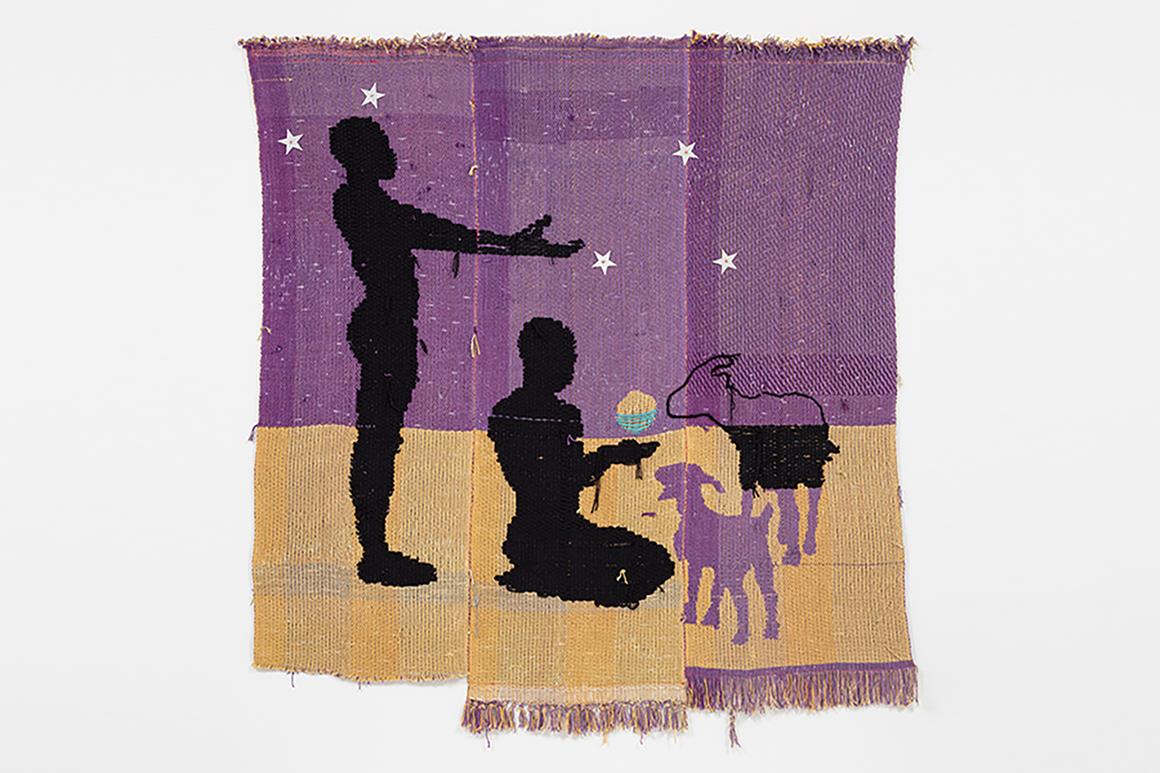
  • Desaprendiendo la eficacia para habitar la incertidumbreDiedrick Brackens | The Cup is a Cloud | Los Angeles, 2018

    Unlearning efficiency to inhabit uncertainty

    By Carlos Mendoza-Álvarez

    It has been seven months since I left Boston, after five years of academic life in the frenetic gears of American efficiency, with a special challenge in the background that consisted of translating the master ideas of modern Latin American and European theology to multicultural groups of white students from the United States, and others who came mostly from Korea, China and Japan, plus some from Turkey, El Salvador, Colombia and Chile.

    The initial courtesy of colleagues, both students and professors, gradually gave way with a few of them to a genuine conversation, always with respect for individual work prevailing and few exchanges about the meaning of our work as an academic community.

    I cherish the best moments of those encounters, such as the colloquiums to which we gave the decolonial tone of “conversations” (Beyond Global Violence Initiative), where we were able to open windows so that colleagues from the north and south could listen to each other, with certain difficulties in moving between both worlds, not only because of the differences in language but also because of the diverse experiences that sustain the body, thought and the word.

    What we all enjoyed most were the gatherings in the warmth of Valentina and Domingo's Chilean-Bostonian home, exceptional hosts to both our hearts and our palates. There, we could share, with greater intimacy and freedom, the ideas and intuitions that had lingered in the auditoriums of the Chestnut Hill campus. Sometimes, with Francis's Italian flair, assisted by Martín, and in the warmth of Neto's affability in his home, always ready to welcome us like a true Salvadoran, each of us found our place in the ebb and flow of conversation, wine, and song. In those welcoming homes, we received friends from Brazil, Mexico, El Salvador, Colombia, Puerto Rico, Spain, Ohio, Illinois, New York, Indiana, and California, passing through Massachusetts. And there, new projects for colloquiums, books, and trips were born, projects that continue to surprise and inspire us all to this day.

    But everything was interrupted by my sudden departure from US territory in the Trump era, leaving that seed of cordial intelligence sown in living memory.

    In the following months, back home and with interwoven journeys between South Africa, Turkey, Brazil, and Chile, I faced the challenge of seeing diverse worlds with new eyes, paying special attention to "those who dwell in the shadows of the shadows of the shadows." Thus, I was led—by the pure gift of my hosts during those travels—to experience moments of devastating and beautiful simplicity, such as accompanying Lance from the University of Pretoria to the Congolese refugee farm on the outskirts of the city. There, the pain of being homeless for more than five years was evident in his eyes, but within them also shone a glimmer of dignity that I still carry in my heart and spirit as a call to closeness.

    I vividly remember the walk along the cliffs of Cape Town with Grant and his team, where on a sunny but cold South African winter morning we contemplated how the two great oceans, the Atlantic and the Indian, meet, sometimes with fury and other times with tenderness. A metaphor for intertwined worlds.

    I also recall with emotion the ecumenical Taizé-style prayer led by my Dominican brother Claudio, along with Eda, a resident of Istanbul, and a group of African and Ukrainian students living there. Interspersing mantras for peace in various languages, they gathered in the dim light of the Church of the Preachers, located near the Galata Tower. It was a glimpse of what Pentecost means, albeit only as a bastion of spirituality amidst a vibrant, modern Muslim culture that looks with curiosity at what happens within these Christian enclaves.

    I treasure in my memory the simple and brief Eucharist in the small wooden chapel of the Jesuits in Tirúa, on a small altar covered with a Mapuche textile and adorned with an oriental-style oil lamp that created a luminous twilight, on a spring morning in Wallmapu, in the far south of Chile. I had the grace to share with them for a few days their joyful dispossession, as travelers accompanying the Mapuche people in defense of their territory, their language, and their ancestral spirituality.

    In each of those experiences, the question of how to build bridges to share spiritual intimacy between people and communities of diverse traditions lingered for me. And I remembered the rituals we have explored at Re-existe, precisely seeking new languages to celebrate together our precarious lives, open to hope, according to diverse ancestral traditions, from indigenous peoples to Abrahamic religions and the secular inner lives of those who are individuals or groups without religion.

    Back in the land of my ancestors, now free from the daily pressure of the classroom and the unbearable academic meetings, I'm beginning to understand what it means to unlearn efficiency. To enjoy the free time of otium, beyond the negotium, as I told you here a few weeks ago.

    But it's about more than just slowing down. Something compels me today to live in the moment. otherwise as a renewed inner life and the place as my homeland. I seek an external rhythm between morning walks, religious duties, attentive reading of books piled on my desk for years, and more creative writing, loosening my pen and exploring new literary genres. But it's not enough. There's something more I sense on the horizon, the search for a "place" to put down roots, grow slowly, and blossom, following that creative intuition of Ivan Illich and Jean Robert (The place in the space age). The place and time where inspiration flows will gradually become clearer in the coming months.

    Now that I have time to “do nothing,” I feel invited to reinvent myself every day. I am certainly working in the present on wonderful intellectual projects, such as the collaborative book on political theology—with the introduction I am writing, inviting fifteen contributors from eight different countries to the table of words to reflect on “the common good” in times of great catastrophe—whose manuscript I am revising with the support of Francis and Nathan, dear colleagues I met at Boston College, and which will be published next year by a prestigious publisher in the United States.

    I am delighted to review the scripts for the documentary and the comic book – by Juan and Katsumi respectively – which will commemorate the past meeting Re-exists 2025. The Spirit connecting the peripheries which we will soon share in the digital world to continue strengthening our resistance against the evil that surrounds us today as systemic violence. This initiative has been creating a multifaceted space-time where we learn to re-exist, reinventing ourselves alongside other survivors.

    And with excitement, I also imagine—along with some Dominicans who are seeking new expressions of the charism of preaching in our unprecedented context—what will emerge from our meeting on Nicaea last October in Istanbul. Situated in today's cities and villages, which are like laboratories, we seek how to communicate to humanity the joy of being inhabited by the divine and human Word that redeems us, whether rooted in the secularized world or amidst diverse spiritual traditions.

    Encouraged by these vivid memories and by the ongoing work that connects with my deepest desire, I now face the challenge of "stopping" the whirlwind of efficiency, unlearning to live and think only in terms of production. It is a journey in reverse, but above all, an implosion of a dizzying desire, to return to the still center of body, desire, thought, and spirit from which it flows another mode of existence.

    And then I will learn to let myself be inhabited and moved – as I discussed with my friend Juan Carlos La Puente in the heart of the pandemic (Mutual accompaniment in the divine Ruah)– because of the uncertainty as a gift and surprise of the fluttering of Life that encourages us all.

    Mexico City, November 15, 2025

    Note: I would appreciate your feedback at the end of this page.
  • Pensar el misterio de Dios desde las ruinas del imperio Sobre encuentros en tierras de Macrina y sus hermanos capadociosCarlos Mendoza | Monasteries of Göreme, Cappadocia | 2025

    Thinking about the mystery of God from the ruins of the empire About meetings in the lands of Macrina and her Cappadocian brothers

    By Carlos Mendoza-Álvarez


    Seven years ago in Toronto a theological initiative was born - during a conversation with Claudio Monge of the Dominican Study Institute (Dost-I) of Istanbul– to think together with other Dominicans about the meaning of preaching the Gospel in today’s laboratory cities, following the style of the order of preachers that for eight centuries has had as its motto “ueritas” to seek the truth wherever it is found, as did Albert the Great in the 13th century, Thomas Aquinas and later Meister Eckhart, Catherine of Siena, the School of Salamanca and Bartholomew de Las Casas in the 16th century until reaching the School of Le Saulchoir in the 20th century.

    We exchanged many emails and virtual meetings over the years, inviting Dominican friars, sisters, and lay people dedicated to theological work to share this concern. On the horizon of those years, we saw the 1700th anniversary of the First Council of Nicaea in 325 CE as a propitious occasion to meet in Istanbul, a city located in a symbolic territory of that ancient Christian past that today urgently calls us to return to the sources of faith.

    This is a very different contemporary context from that of the Emperor Constantine and the bishops of the Eastern Church gathered at the council that defined the orthodoxy of the Christian faith in a Greek key. From the ruins of the Eastern Roman Empire, which somewhat resemble the ruins of the modern West today, we perceived the call to "give an account of the hope to anyone who asks us" (1 Peter 3:15).

    Nicaea 2025 was emerging as an opportune moment to return to the sources of the living Tradition of the Christian faith in its founding event, which is the power of the love of the triune God manifested in the life and Passover of Jesus the Galilean, with the depth of the Greek categories such as person (prosopon), substance (ousia) and loving circularity (perijoresis) to spell out the mystery of the Abba heavenly revealed in Jesus Christ by the inner fire of the divine Ruah.

    Along the way, the personal and professional priorities of those who initially responded to the proposal gradually shifted, until finally, last year, a group of twelve Dominican friars and sisters from Italy, the United States, Canada, Belgium, Mexico, and India began preparing a meeting in Istanbul. This would be the starting point for a shared journey toward theology at the "frontiers" of the contemporary world, as the friars' general chapters had pointed out in the post-conciliar period; located at "the fractures of humanity," as our brother Pierre Claverie, the Bishop of Algiers, murdered along with a friend and collaborator by religious fundamentalism, said; and present as preaching communities in the heart of the laboratory cities of the global village.


    Istanbul is a multifaceted and vibrant city, the epicenter of a modern Islamic culture, traversing with difficulty and imagination the tense borders between religions, cultures, and economies in the complex geopolitical context of deglobalization. Christian communities make up less than 2% of the population. The power of Turkish-style Islam and its Ottoman past shines proudly in its mosques, universities, and bazaars. The great basilica of Hagia Sophia, which served as the seat of the Christian Patriarchate of the East for over a thousand years until the collapse of Eastern Christianity in 1453, has once again become a mosque after a brief hiatus from Turkish secularism, which is now sorely missed in the country's cultural life. The church of the Chora In a newly restored neighborhood of the city, with its splendid frescoes and icons of Christian art, it is a shining flash of that Byzantine past in the midst of the effervescent modern city.

    The "Nicea OP 2025" colloquium was a very modest gathering that built bridges with a few colleagues from Turkey interested in dialogue with the Christian West, especially through art and spirituality as a means of expression for the religions of the book (Judaism, Christianity, and Islam), such as Professor Elif Tokay, who works on these topics with her graduate students at Istanbul University.

    The program of the meeting consisted of three days of reflecting on the meaning of the Christian faith in the context of interreligious dialogue, to accompany communities of faith in living the testimony of the Eternal God amidst the ruins of modern civilization, which find in Gaza their breaking point of that "dream of reason that has produced monsters," as the Spanish engraver Francisco de Goya declared in the late 18th century.

    From three theological categories common to the religions of the Book: salvation, creation, and sanctification, we shaped our dialogue, bringing each of these words into our context to interpret them today. Salvation amidst the systemic violence that produces discrimination, exclusion, and death of the majority; Creation as a cosmology of the new creation that explores ecotheology in dialogue with modern science and ancestral knowledge; and sanctification as a process of divinization of the cosmos and humanity through the power of the Spirit of God, inspiring processes of healing, memory, justice, and reconciliation, especially for the victims of humanity's violent history.

    Following this path, each day we focused on one of these axes, starting with an initial presentation by one of the participants, and then engaging in an exchange of experiences and ideas about what the preaching of the Word of God incarnate in Jesus Christ means in each of these areas.

    The second part of the day was led by Jean-Jacques Perennès and Elif Tokay, who, listening to the initial conversation, opened up new horizons based on their experience and reflection.

    Jean-Jacques, as a French Dominican who has lived in the Arab world for more than three decades, guided us with his knowledge of Islamic cultures to think about the meaning of preaching in those worlds (Bibliography of Jean-Jacques Pérennès), very close to Pierre Claverie and the monks of Tibihrine who offered their lives in Algeria for friendship with people and communities of Islam. He worked at the Dominican Institute in Cairo (Dominican Institute of Oriental Studies), then as assistant in the apostolic life of the Dominican friars during the government of Friar Timothy Radcliffe as master of the order, and more recently as director of the Jerusalem Bible School.

    Elif, as a researcher of Byzantine and Eastern Christianity around the concept of perfection or divinization (theosis) in Christian mystical thought, helped us with her comments and questions to find common ground with the spirituality of Islam. Given her doctoral work on Gregory of Nazianzus as a father of the Anatolian Church, as well as on patristic works translated from Greek and Syriac into Arabic, she opened up a unique and valuable perspective for exploring these connections between communities of believers from diverse traditions, meeting at this common point of the divinization of the cosmos and humanity.

    A visit to the ruins of Nicaea, today Izink in Anatolia (Archaeologists Discover Tombs at the Underwater Basilica in İznik), on a rainy day before the colloquium, had already set a certain tone for the conversations. How could we connect that crucial moment in ancient Christianity to speak of the divine being as a loving communion amidst today's ruins with the challenges that arise for Christian, Jewish, and Islamic communities today in times of extreme violence?

    At the conclusion of our meeting, we agreed to continue building collaborative networks with Dominican friars, sisters, and lay people present with their preaching in today's laboratory cities and their communities of dialogue, both local and virtual, especially with the youngest members of the Dominican family, to deepen their understanding of the faith in the service of the People of God today.

    I proposed preparing the next meeting in Mexico in 2026 to continue exploring the paths of "holy preaching" in that other geography of the global and epistemic South, to search there, amidst other ruins that are those of the region of non-being and of those who dwell in the shadows of shadows, for alternative ways to live and think about the loving mystery of God from the cracks of today's hegemonic power with its idolatries and traps that have humanity and the planet in check.


    After a modest yet profound encounter with this Dominican family atmosphere, I set out to visit Cappadocia for the first time.

    The land of Basil and Gregory, the famous "Cappadocian Fathers," who made a decisive contribution in the fourth century CE to developing a theology of the Holy Spirit as the third person of the Holy Trinity. Their texts had been key sources for the patristic courses I took, first in Mexico with Friar Luis Ramos in his classes at the UNAM (National Autonomous University of Mexico), and then in Fribourg with Friar Christoph Schönborn, then a professor at that Swiss university who later served in his pastoral ministry as Cardinal of Vienna for many years.

    Although I remembered having read some reference to Macrina - the eldest sister of that illustrious Anatolian family who first suffered Roman persecution and then became a promoter of the nascent monastic life - it was by going to her land that I was able to grasp her great influence as a believing woman of her time, especially in the development of an alternative spirituality to that of the Roman Empire that her brother Naucratius also explored, together with his friend Chrysaphius, as part of the early Christian monasticism on the banks of the Iris River, today Kyzilirmark, from the Pontus region.

    Present-day Cappadocia bears no resemblance to its Hittite, Persian, Roman, Byzantine, and Ottoman past. Twenty-first-century Turkish modernity has brought modern urban centers dedicated to agriculture and mining to the region, with a powerful tourism industry catering to travelers from China, Russia, and Japan, who fill the skies of Cappadocia with hot-air balloons to fly over the archaeological sites of ancient rock-cut monasteries; or as swarms of tourists who collapse the underground cities created by its inhabitants since Hittite and Persian times to survive the intermittent wars of the rotating empires.

    In the midst of these hordes of tourists today in lands of ancient history, I took on the task of making meditative walks through these places, trying to suspend time, to reread some fragments of the history of the Cappadocian Fathers and especially the The life of Macrina and her family, told by her brother Gregory of NyssaI am left with Macrina's deathbed prayer: "You, Lord, have freed us from the fear of death. You have made the end of life here below the beginning of true life for us. You rest our bodies in sleep for a time and will awaken them again with the trumpet of the end of time."

    From their testimony, I am impressed by the depth of their hope, with an eschatological imagination for the day to come. Not scorning this world, but opening it to the perspective of the Love that never ends.

    Perhaps this is what we need today, in times of environmental and historical catastrophe, to reflect on the mystery of God amidst the ruins of the empires of yesterday and today. To open our hearts and minds to other possible worlds, emerging from the ruins with the cries of the survivors. Other worlds, too, offered by the God of life who never ceases to love all of his creation without condition or measure.


    Cappadocia, October 7, 2025

  • Sobre el ocio y el silencio en tiempos reciosSliman Mansour, Temporary escape, 2018

    On leisure and silence in difficult times

    By Carlos Mendoza-Álvarez


    One of the advantages of being retired from academic life now is having free time that flows by day, like a trickle of water that runs down the mountain and becomes a stream until one day it becomes a river.

    The uncertainty of seeing time pass at the beginning of a new stage in life can be uncomfortable because it is accompanied by questions about the purpose of life, especially of each day. I no longer have to prepare the night before to have the next day's course updated, with the necessary teaching materials and the attire to wear for the classroom ritual. Time is measured in advance, minute by minute, in the time that will later pass in the classroom to ensure efficiency and the success of the program, as happened in my last years of teaching in Boston.

    Now I finally have time to think, read, and write. However, the ideas flow with astonishing slowness at times, suddenly untimely in the early morning.

    I no longer have to worry about having my PowerPoint presentation ready with clear ideas, essential quotes, and suggestive images to literally “capture” the attention of students, who were increasingly distracted by the virtual world and demanding the services of the “instructor.” Although they called me “teacher” when addressing me ceremoniously, they were actually demanding duties worthy of a gym instructor. It's no coincidence that this is what the experts in school education called us: “instructors.” This teaching service was an expectation that made itself felt with all its weight in the hundreds of emails each month that had to be answered to clarify questions about classes, authors, and assignments; or to send reports to school services requesting information on how we were handling students with mental illnesses, depression, syndromes I had never heard of, as well as special attention to people with motor, visual, or hearing disabilities. As never before in my thirty years of teaching, the most recurring problem to address in Boston College, It was depression, associated with anxiety, particularly during periods of midterm exams and especially finals.

    And now that I no longer have to live with the urge to jump between the classroom and the cubicle, time stretches out and deflates, with the impression of not moving anymore.


    There are other new activities in this "retirement" stage. Not because I'm always filled with joy, although there are certainly moments of great joy, but because I have to relearn how to live with time. I usually wake up early in the morning as before, but now without rushing, leisurely enjoying the time to meditate in silence and set off for my morning walk. I continue the day with the ritual of espresso and the latest news on the internet, checking a diary while I savor my coffee, which fortunately is no longer filled with appointments one after another. Now there's enough space and time to "do nothing." Which means I have to get down to the task of taste those hours of the day in the leisure.

    I fondly remember the classes of Father Ángel Melcón, a noted Thomist philosopher who was our formator during the Dominican novitiate in Agua Viva at the foot of the volcanoes. He insisted, following the Desert Fathers like Evagrius Ponticus, on the importance of re-educating ourselves during this time of initiation to move from "negotium" to "otium," as a countercultural act because business denies leisure. Thus, he invited us to discover, as novices, the time of pause in life, of silence, of learning to do nothing.

    Today we value similar teachings from the “desert mothers and fathers” (The Apophthegms of the Mothers and Fathers of the Desert), as the spiritual sources of early Christian monastic life in North Africa and the Middle East are known in theology, with its aphorisms or sayings of spiritual wisdom that express the ancient practice of leisure. Business is the worldly hustle and bustle that prevents the silence and contemplation that are precisely the substance of leisure, allowing us to live in inner freedom, confront evil and practice good.

    But how difficult it is to practice this art again, after decades of academic and religious activity. This "second novitiate" will be useful to me as a watershed to enter a new stage of life in the leisure of contemplation, now located in the silence of being and its shadows.


    Sara del Carmen, a dear reader friend from Coyoacán, gave me the novel a few days ago The Spinoza enigma Written by Irvin D. Yalom, the Stanford psychiatrist. I placed it on my desk for when I finished reading another novel which is the third part of the saga that began with The cathedral of the sea, written by the famous Spanish lawyer Ildefonso Falcones, following the story of an Aragonese soldier and aristocrat in Naples in the 14th century (In Love and War. The Cathedral of the Sea 3). While this novel fascinated me for the way it recounted the wars and loves that gave rise to Latin Europe, which later undertook the conquest of the New World, moving on to the other novel connecting the life of a philosopher excommunicated by the Jewish community of Amsterdam in the 17th century with the traumas of Hitler's ideologue and his aversion to Jews in the midst of the Nazi regime, brought me to the heart of a question that today lacerates my conscience about the perversion of the Jewish and Christian religion turned into a weapon of war.

    In recent years, the Palestinian question It has been deepening in my mind and heart like a cry of today's victims where questions about God, the world and myself arise with greater radicality that I cannot answer. Obviously the Jewish religion perverted by Zionism, both Christian and Jewish in our days, provokes in me a frank rejection because a century after the Shoah The Israeli state reproduces the same monstrosity, in the name of God and with the complicity of far-right Christian Zionism, to annihilate a brother Semitic people.

    The leisure time I enjoy now allows me to tie up the loose ends of the emotions, ideas, and stories that have surfaced in my life over recent years, revealing their intimate connection. Spinoza suffered excommunication from his Jewish community in Amsterdam with an Epicurean ataraxia that helps me understand the vocation that other free thinkers have followed, with its reverberations in my own life and in those of us who live on the peripheries of systems.

    The famous expression Deus sive Natura, God or Nature, proposed by Spinoza perhaps summarizes the daemon or modern genius that we urgently need to recover today. Boaventura de Sousa Santos told me this in a personal exchange, when I invited him to write an article on God as a critique of the Cartesian idea, which unfortunately could not be published in the issue of the magazine Concilium Divine Providence: Beyond the Paradigm of Omnipotence  because it had already been shared on the network (The end of the confinement of the Cartesian God). The excesses of religion have made God a transcendent being, as an omnipotent imperial substance associated with the powers of this world, when in reality he is immanent to the world, Spinoza argued. Pantheism in the eyes of the inquisitors of yesterday and today. “Pan-en-theism” as a philosophical current that runs through the history of the West, as described by the Stanford Encyclopedia of Philosophy. But according to the most daring theologians and mystics of the Christian tradition, such as Meister Eckhart, Teilhard and Panikkar, what we call today “pan-en-theism” is in reality what they perceived and thought as the unity of reality that arises because everything real is theological core. That is to say, all reality is imbued with “the improvident divine providence,” as the French philosopher Emmanuel Falque says in the aforementioned issue of the magazine Concilium that I had to prepare.

    What does Spinoza's God have to do with the ongoing genocide of the Palestinian people? Perhaps this catastrophe, unpunished to this day, is supposed to be justified precisely by the idea of a God. religious who chooses a people, to give it a land and becomes his Warrior defender. Nothing could be further from reason, the excommunicated Jew would say. An idol that is not God, the apophatic mystics would say. And nothing could be further from the faith in the Messiah who comes as a gift to redeem the world from hatred, according to the radical vision of Jesus in Galilee and his itinerant community.


    Leisure in this new stage of life opens up a new perspective for exploring my own faith as a silence amidst the rubble of modernity. And thus, I learn to distinguish true religion, which is the contemplation of superabundant Love, which is not a being as an object, but the source of being that animates and sustains everything, and, in extreme cases, those who live in the shadows of non-being.

    However, to access this world of mysterion divine, cosmic and human, it is necessary to dismantle the pseudo-divine avatars that with destructive force control minds, institutions and ritual practices full of arrogance, fear and violent segregation of what is different.

    I cannot forget the main lesson I learned from my stay in South Africa last summer, which will serve as a beacon for years to come: the invitation to cultivate the ability to listen to the cries, whispers, and screams of those who dwell in the shadows of non-being, which is like an anticipated death. And even less do I wish to forget the most unexpected and hopeful thing that emerges in this desert of desolation: the knowledge of the peoples who resist violence as provocations of those lives that return from death, summoning us all. Ancestors. Remnants. Survivors. Their silence is the most eloquent language of the human, the cosmic, and the divine, to contemplate in leisure time and walk with them.

    Making room for leisure requires silence. An experience of the suspension of the senses, like an implosion of appearances that gives way to the appearance of true faces. And with that silence emerges the eloquence of the gaze, the power of the caress, the rebellion of the liberated body, the hope of those who have left us but live on in divine memory.

    In the “tough times” to come, as Teresa of Avila said, I am preparing to go beyond the business from life in the university and in the temple, even in the public square and social networks.

    Inhabiting everyday reality differently, in the cracks and silences, mine and others', some murmur of life will rise to heaven. From the cracked earth and from the rubble of the collapsing world and from my shattered ego, a radiance of being appears.


    Mexico City, August 30, 2025

English