Tag: decolonial theology

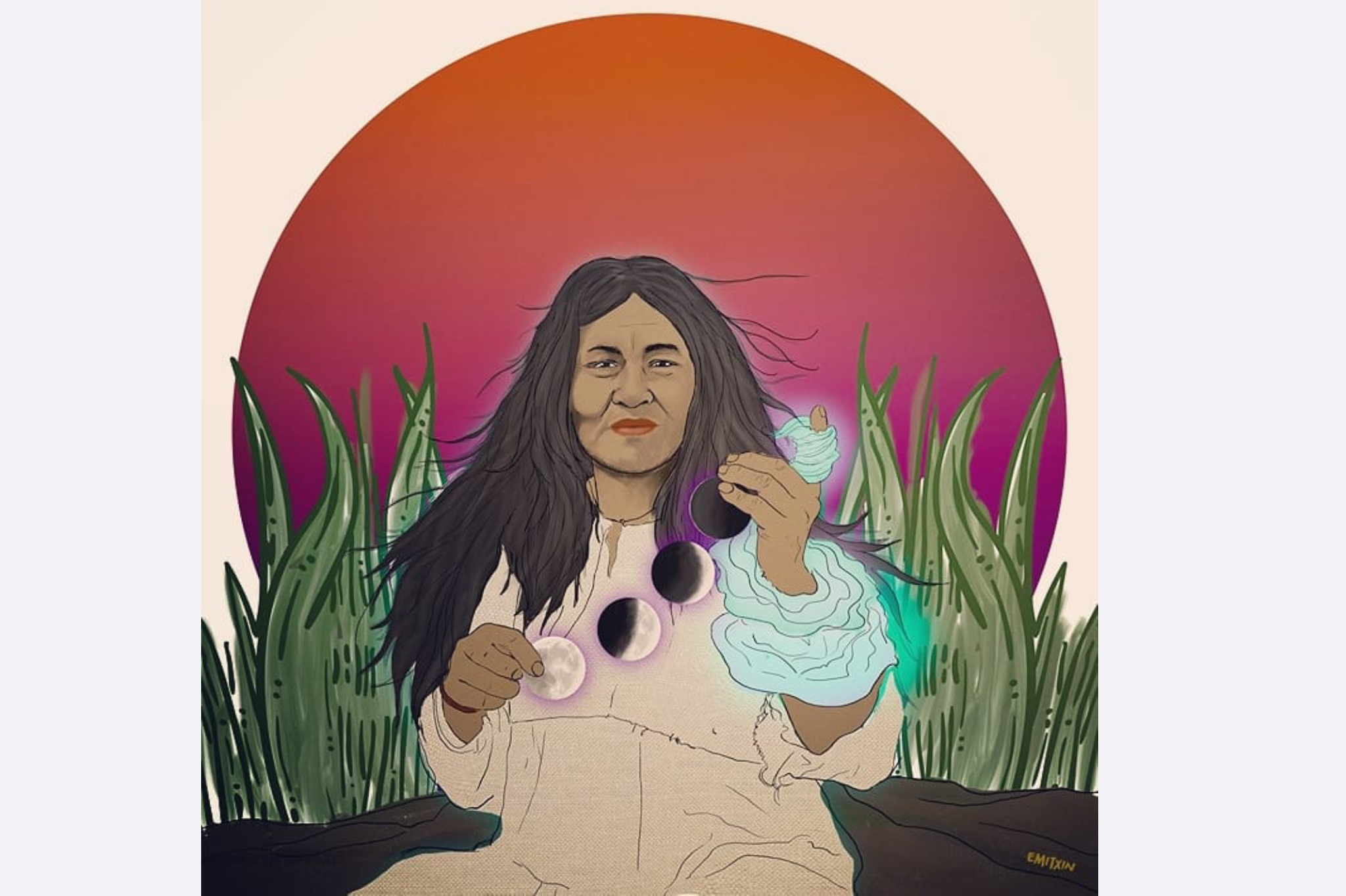
  • La casa de la Palabra encarnada Una apuesta por el diálogo social y cultural en Chiapas al estilo de los dominicosPilar Emitxin | Embodied poetics | 2019

    The House of the Incarnate Word A commitment to social and cultural dialogue in Chiapas in the style of the Dominicans

    By Carlos Mendoza Álvarez

    A few days ago, we opened a new space for dialogue in the city of San Cristóbal de Las Casas on the feast day of Saint Thomas Aquinas. This was the first event in a year-long celebration of the fifth centenary of the arrival of the Dominican friars to Tierra Firme, as the American continent was then called. Abya Yala. Next June we will be holding various cultural and religious events, both in San Cristóbal and in Zinacantán, with the program 500-OP Chiapas which we will announce soon.

    Together with Abraham and Angélica, dear friends from Ecosur with whom we worked in university ministry at CUC years ago in Mexico City, and with Carmen and Ricardo, friends involved in social and cultural activism in the city, we have been imagining together a project to continue cultivating the great legacy of the School of San Cristóbal, as it is called Pablo Romo to critical thinking and inculturated liberation theology that has developed in the Highlands of Chiapas for more than half a century, with the specific contribution of the Dominicans in these lands. There are many cultural forums that currently exist here—such as CIDECI and Dialectics in the Museum. jTatik Samuel, El Paliacate, Galería MUY and many more – where it is possible to talk about urgent and important issues for the cosmopolitan society that lives here – a microcosm of Mayan, mestizo and foreign peoples – with its many local, regional and global connections.

    Since the 1970s, San Cristóbal de Las Casas has been the scene of important meetings such as the First Indigenous Congress convened by Bishop Samuel Ruiz and leaders of indigenous communities in 1974, it proved to be a watershed moment in the indigenous consciousness of Mexico, as it refers Fabiola Ramírez in her Master of Arts thesis at Tulane University. She also highlights the First International Symposium of Lascasistas, The event, organized by Manuel Velasco Suárez, Agustín Yáñez, and the Dominican friar Enrique Ruiz, was held in 1974. Both events shared a common thread—starting with the fifth centenary of the birth of Fray Bartolomé de Las Casas—the search for paths to promote justice for the indigenous peoples of Chiapas, subjected for almost five hundred years to a racist system, marked by centuries of social injustice and the suppression of their collective imaginaries in their cultural and religious expressions. The spirit of liberation theology, as a creative reception of the Second Vatican Council, was mediated by the prophetic force of the Second General Assembly of the Latin American and Caribbean Bishops in Medellín in 1968, ecclesial events in which they participated. jTatik Samuel Ruiz, made their presence felt with vigor and creative imagination in these lands.

    Two decades of sowing the Gospel in the diocese, with its message of liberation for oppressed peoples, allowed that seed to germinate into a diocesan synod, intimately connected with the indigenous cause, which found in the Zapatista movement one of its most relevant expressions for promoting the autonomy of native peoples. There were other fruitful fruits, such as indigenous theology, which, not without difficulty with Vatican authorities, also expressed the vitality of a profound ecclesial process that continues to this day.

    But the old Royal City of the colonial era, inhabited by a mestizo and Creole population that called itself intercultural, He had become accustomed to living with the "Indians" in modern times with a normalized racism, which was expressed as paternalistic assistance from the caxlanes or Creole chieftains towards the Indians, as Rosario Castellanos masterfully recounted in her collection of short stories Ciudad Real.

    The Zapatista uprising, in addition to its political effects—with the 1996 San Andrés Accords betrayed by the federal government and the creation of the Caracoles or Zapatista autonomous municipalities—had a cultural impact on the city, which suddenly became more cosmopolitan in its daily life, as they tell university students Immigrants in the Highlands of Chiapas since the years surrounding the uprising. As early as the 1950s, Harvard anthropologists and linguists from the Summer School of the Bible had arrived in the Jobel Valley to settle in the colonial city, turning it into a base for their research trips to the indigenous communities they studied, mostly using an extractive academic or religious model.

    But over time, the gentrification of the city of traditional neighborhoods It grew in an unusual way as a result of the rebellion of the canyons that impacted the Highlands of Chiapas in the last three decades.

    Today, more than fifty years after that Indigenous Congress of 1974, and thirty-two years after the Zapatista uprising of 1994, much has changed in San Cristóbal de Las Casas. Indigenous communities have achieved diverse forms of autonomy in the political, social, and cultural spheres, including religious matters, surpassing the vision of their initial proponents. These communities are no longer under the tutelage of political parties, churches, universities, or civil society organizations. The cultural fusion of Indigenous peoples with hip-hop music, audiovisual culture, and contemporary art will surprise many. Indigenous identity now transcends even revolutionary movements.

    And like a boomerang effect, the mixed-race and foreign population living in the city also blends into this landscape of identities. An event about Gaza primarily draws university students and members of civil society, but attracts few of the displaced Indigenous people who live in the northern part of the city. A hip-hop concert, on the other hand, fills plazas. And then there's the Sinaloan band invited to the Zinacantán festival, which will keep the Tsotsil youth on tenterhooks for hours, mesmerized by a professional stage that rivals any pop or ranchera music festival in any major city in the country—and, incidentally, managed by a young entrepreneur from Zinacantán.

    How can we participate in these ongoing cultural changes using the Dominican word itself, not only from the past but also from the present, in its diverse forms of life with friars, sisters, and lay people inspired by the charism of preaching? What signs of the times... deglobalization It is necessary to interpret in order to scrutinize the passage of the God of Life, As the Dominican friar Gustavo Gutiérrez said in Peru, what is needed for a humanity bewildered by global violence?

    The roaming This is a vital attitude of the Dominicans since their founding by Dominic of Guzmán in the 13th century, a time of transition from feudal to urban society. "Holy preaching," the initial name of Dominic's apostolic project conceived with Bishop Diego de Osma, the layman Peter Seila of Toulouse, and Wilhelmina and Raymonda Claret, sisters from Prouille in southern France, expresses the original inspiration of a spiritual tradition that has dedicated itself for eight centuries to seeking truth in every age, trusting in the power of the Word made flesh. Therefore, it is not just any truth that is being sought, but the truth that liberates, saves, and redeems humankind, humanity, and the cosmos from the bonds of evil, as did the Galilean.

    The Dominican-style study is, therefore, the spring of hope According to that beautiful reflection by Friar Timothy Radcliffe, former Master of the Order of Preachers, this spirit led the friars to disperse throughout Europe from the beginning, going to universities "to study and found monasteries," that is, communities of life centered on the Incarnate Word. This impetus took them as far as Mongolia in search of Genghis Khan. This itinerancy was described by Matthew of Paris, the staunch enemy of the new friars at the Sorbonne in the 13th century, who scornfully declared: "Their cloister is the oceans and their cell the world," thus defining for posterity the daemon or the genius of the religious order that was emerging in the medieval towns, as Father Chenu repeatedly reminded us doctoral students in Paris.

    Centuries later, already in Chiapas, that same itinerant journey led Friar Pedro Lorenzo to the Jataté canyons and the Lacandon Jungle to search there, “in the middle of nowhere,” as the prior of Santo Domingo de Ciudad Real admonished him for his rebellion, for the people who lived there. That is why from then on he decided to call himself Friar Pedro Lorenzo de la Nada, according to Jan de Vos.

    In our times of the Great Catastrophe—begun in Gaza and now spread throughout the world in the Trump era—itinerantness leads us to new territories to be created as places of conviviality of the Word. Here in the Highlands of Chiapas, we'll do it like new. itinerant space, where we can foster creative dialogues in search of the truth that saves.

    San Cristóbal de Las Casas, February 7, 2026

    Note: Let's continue the conversation with any comments you'd like to post below.

  • Navidad en lo secretoCarlos Mendoza | Tsotsil birthplace | Nachig, Chiapas | 2025

    Secret Christmas

    By Carlos Mendoza-Álvarez

    Christmas Eve was shaping up to be different this year, a stark contrast to the frigid weather of Boston, which gave way to the cool but sunny days of the Chiapas Highlands. Of course, it wasn't just a difference in climate, but above all, a shift in cultural perspective. The chants of the Episcopalian monks from Cambridge, in Massachusetts, which I had enjoyed for several years, now gave way to prayers of forgiveness and reconciliation according to the traditional Tsotsil rite of the Chiapas Highlands, led by one of the catechists or Eucharistic ministers.

    During these days, the Tsotsil communities of the Zinacantán parish adorn their chapels with thousands of flowers. Sunflowers, birds of paradise, roses, and gladioli surround the birth of the Christ Child, especially the bromeliad or flower of Niluyarilo. This species, endemic to the Chiapas Highlands, is now endangered due to its overuse in some religious festivals in the Chiapa de Corzo area. The Nativity scene is adorned with garlands of seeds and fruits, representing an explosion of life from Mother Earth, who gives thanks for the arrival of the Christ Child. Bananas, tangerines, pears, oranges, pomegranates, and lemons hang from bowers as if falling from the sky. Paradoxically, the world above blossoms and rains down delicious fruits to nourish the community gathered around the newborn Messiah.

    Joseph and Mary inhabit that sacred green cave, dressed in traditional Tsotsil clothing. He is wearing the Pok'u'ul or a pink poncho embroidered with flowers, carrying a leather satchel on his shoulder and huaraches on his feet. She, adorned with her il chil k'uk'umal or the feathered huipil, also replete with embroidery of flowers and birds. Life flourishes everywhere in these communities, although they face new problems such as the growing presence of drug trafficking and criminal gangs. The historical strength of these Mayan peoples is community unity, although division now appears within the communities between groups that only want to follow the Bible and others that keep the traditions of their ancestors alive, for example, the processions to sacred hills, like the community of Pinar Salinas, which keeps their ancestral traditions alive. These communities have a dynamic cultural identity that, with each new generation, acquires its own unique characteristics. Such is the case of church choirs that now prefer to play instruments from norteño bands, such as the tololoche for strings and the snare drum for percussion, instead of the drum and chirimía of the ancestral music they keep alive for pilgrimages to the hills of the Chiapas Highlands and, every year, in their pilgrimage to Tepeyac in the Valley of Anáhuac.

    My surprise was great when Petul, the catechist and interpreter, during Christmas Mass, translated my very brief biblical reflections into lengthy descriptions of what I was saying about the story of Mary, the child, and the shepherds in the Gospel of Matthew. I had no choice but to trust his skill as an interpreter, glancing at the congregation to nod whenever I recognized a word in the catechist's voice. My intention was to emphasize the importance of the angels' message to the shepherds in Bethlehem: “Glory to God in the highest, and on earth peace to those on whom his favor rests” (Luke 2:14), which invites us to do something similar. Let us learn to be like the shepherds—I would say to the congregation with emphatic gestures—who became a mirror reflecting God's glory through peace here on earth, so threatened by wars. The sermon concluded by reminding the assembled community that this message was even more urgent today because Bethlehem is in Palestine, besieged by a cruel war waged in the name of God. The community responded with a resounding “Long live the Christ Child born in Palestine!” followed by the traditional reveille, sung with gusto by the choir.

    Is there anything to celebrate on the fringes of the privileged world? In what places does God draw near to us to be a spark of light illuminating the nations? Who can help us see those sparks amidst the long night that humanity is traversing?

    The first thing that comes to mind is that reflection by Hannah Arendt in her book The Human Condition, pointing out that in every human birth there is a promise of a future for all humanity. The thinker drew from the wellspring of her Hebrew tradition to speak of the future as something to be fulfilled through justice, as an interruption of evil in history. But perhaps she overlooked the heart of the promise God made to Abraham and Sarah in its spiritual sense, which consists of the promise being a gift from the Eternal, offering His very being to wounded humanity. It is no coincidence that this promise has a name, the one that Hebrew and Christian faith call "Messiah": the one anointed by the divine Ruah to console the suffering people. A Messiah who is slow in coming, who makes the wait long, and, paradoxically, who is already present "in secret," inviting us to enter that space of redemption "through the narrow gate." What does this metaphor mean? This thought takes on even greater significance when we celebrate the birth of a Galilean child two thousand years ago in Palestine.

    The birth of Mary's son in Bethlehem of Palestine, as recounted by the Synoptic Gospels, is a sign worth following as a guiding light in the darkness. That Hebrew child, son of migrants fleeing Roman power represented by Herod and seeking refuge in Egypt, is the promise fulfilled of messianic times. Those who arrive with birth pangs in the most fragile part of the human condition, exposed to so much violence, both ancient and new. His childhood, recounted in retrospect by the evangelists, will unfold over time, especially during the brief period of barely three years he lived as an itinerant preacher in Galilee. He announced the fulfillment of the new times that we will be able to recognize in the present time when “the blind see, the deaf hear, and good news is announced to the poor” (Luke 7:22).

    We are invited to pass through the narrow gate of the Messiah, which is the gate of humility: “You must become like a child to enter the kingdom of heaven” (Matthew 18:3), said Jesus, the Galilean. The Bible is full of stories from this other perspective, as Anna sang in the book of Samuel: “He raises the poor from the dust and lifts the needy from the ash heap, to make them sit with princes and inherit a throne of glory.” Or also the hymn of Jesus that praises his heavenly Abba because “he has hidden the things of the kingdom from the wise and understanding and revealed them to little children,” the nepioi from the Gospel of Luke in Greek (10:21).

    The arrival of the Messiah subverts the logic of the powerful and builds a new world from the perspective of those who live amidst the ruins. Like in Gaza and the Highlands of Chiapas.

    My first few weeks in Tsotsil lands have allowed me to reconnect with the Ch'ulel, This spiritual force, with its multiple meanings, is what I discovered forty-five years ago in these communities, when we visited as Dominican novices with Friar Raúl Vera. It is the spirit of the Chiapas Highlands, manifest in its hills, forests, and mist, its animals and naguales, that inspires the communities to flourish and prosper. Since then, I have returned at least once a year to the Chiapas Highlands and the canyons of Ocosingo to continue exploring the faith of the Mayan peoples, with their ancestral spirituality nourished by faith in Jesus of Nazareth as Messiah and Son of God.

    Now I am about to explore and enjoy, for an extended period, the faith-based life of these communities, with its new expressions in spirituality and art, as well as its struggle for justice against the necropower groups that have reached even here with their tentacles of corruption, easy money, and the false illusion of happiness based on armed force, drugs, alcohol, and criminal pacts. A few days ago, Angélica, a dear friend from Ecosur, told me that there are several ongoing sociological and anthropological research projects on urban Indigenous children and youth in Jobel. These are supported by initiatives from civil society and churches, such as Melel Xojobal to provide alternatives for education, social life, and recreation to this population highly vulnerable to the criminal networks that take over the northern area of this city, which has the largest indigenous population in Mexico.

    Celebrating Christmas in this land is a call to return to the margins of my motherland to relearn the language of the little ones of the Kingdom. In the heart of my longings I seek to return to the sources of faith, that which I inherited from my ancestors of blood and spirit in the order of preachers.

    A quiet Christmas. A time of grace and truth thanks to the child messiah, adorned with flowers and song, tears and whispers of life, who does not surrender to evil in this remote region in the mountains of southeastern Mexico. Communities that, in secret, transform adversity into gifts of life.

    Jobel, December 27, 2025

    Note: Comment below what Christmas means to you.

  • Sobre la esperanza en tiempos inciertosSearching Mothers | NTR | Zacatecas, 2025

    On hope in uncertain times

    By Carlos Mendoza-Álvarez

    At dusk this Saturday, the first Advent vigil begins, when Christian communities throughout the world embark on a journey, in the midst of the darkness of time, to receive the human and divine light of dignity and hope that the Messiah brings. The ancient hymn will resonate during the nighttime celebrations, Rorate caeli , whose lyrics and melody are like a lament that rises to heaven from the desolate city, crying out that “the clouds rain down on the Righteous One,” as the prophet Isaiah (45:8) implored during the exile in Babylon.

    Each year, this four-week calendar leading up to Christmas is accompanied by symbols of light, greenery, carols, sweets, tenderness, and community. According to each culture, the waiting period for the Messiah's arrival evokes the awareness that "something is lacking" for the fulfillment of those desires for new times of justice, truth, compassion and peace, not only for a people who arrogantly claim to be the only chosen ones, but for all of humanity and even for the entire cosmos.

    Every generation has seen terrible signs that the world is ending, whether through epidemics that make us feel how vulnerable our bodies and knowledge are; whether through wars waged by empires against emerging powers that threaten their arrogance; whether through the uncertainty of life itself, diminished by age, illness, failure, loneliness, or hopelessness.

    The biblical texts that we, the believing communities, meditate on these days speak of the expectation of the messiah, first with a strong apocalyptic tone that announces the destruction of the corrupt world, reaching the entire cosmos with a catastrophe that will destroy everything because of the human pride that has taken over creation.

    Then, as the date of the celebration of the Nativity of the Messiah Child, a Nazarene, approaches, the tone of the texts becomes more hopeful with the announcement of a God who is near, humanized, small, and fragile. It is the incarnate promise of a divine and human life that begins in complete vulnerability in the story of a migrant family with a newborn baby, trying to survive on the periphery of the empire and fleeing the fury of the local ruler, eventually finding refuge in Egypt, from where a definitive chapter in the history of human redemption will begin to be written.

    However, the collective depression we are experiencing today as humanity due to the escalation of hatred to extremes – which is spreading across the planet in an apocalyptic way “like a lie of Satan,” as René Girard said in an interview he gave me in 2007 in Paris (Hope as apocalypse)– this seems to render any narrative of hope for our uncertain times illusory. The genocide in Gaza continues as the climax of the Nakba or Catastrophe that began in 1947 with the expulsion of nearly a million Palestinians from their lands, paving the way for the creation of the state of Israel in 1948, this systemic violence continues today before our digital screens, met with indifference by social media and the international community. The wars in Ukraine, Congo, and South Sudan have become so “normalized” that they no longer make the front page of newspapers, much less a trending topic in the digital world. In Mexico, public indifference to urgent issues such as the crisis facing corn, lemon, and avocado farmers—caused by the violence in Michoacán—along with the persistent femicides and forced disappearances, speaks to a growing discontent among the population, expressed through strikes, road blockades, and street protests. But the masses seem numb, retreating into bubbles of entertainment and unrestrained holiday shopping, which, among other ills, leaves household finances in ruins for months and years to come.

    Religious consumerism is also part of the overwhelming Christmas marketing, amidst kitschy decorations and echoes of folk crafts used to make piñatas featuring popular characters. It will certainly be present at Mexican posadas, Trump's piñata , which is sold in various markets in Mexico and the United States, will receive blows as a ritual of revenge amid laughter and boos until the cardboard breaks and the blond wicks of the tyrant fly out like shooting stars in some tenement courtyard in Mexico City, Chicago or Los Angeles for the delight of all.

    A few families may perhaps rediscover the “mystical” meaning of the Advent wreath, following the Avatar of Carlo Acutis explaining Advent 2025. This video, which is circulating online, aptly explains the spiritual significance of the ritual of lighting each of the four candles during this season that prepares for Christmas. The light lit each Sunday of Advent symbolizes the "people who walked in darkness and have seen a great light" (Isaiah 9:2), which the prophet foretold to the Hebrew people devastated by the division between the small kingdoms of Israel and Judah, with their leaders corrupted by the idolatry of power, seeking alliances with neighboring Syria to defeat the rival tribe.

    And like a non-place amidst so much noise, creating a void in the midst of the urban clamor, in Mexico the collectives of Searching Mothers (Searching mothers light Christmas tree) will set up Christmas trees covered with ornaments bearing the faces of those we have lost. They are today “the voice crying in the wilderness” (John 1:23) because they speak on behalf of the victims of the narco-state war and the idolatry of the necropower of our time.

    Perhaps this is where the theological core of this season lies: the absence of the Messiah is something that has inspired Hebrew and Christian generations for centuries to mobilize in order to make the messianic times present through acts of remembrance, justice and an (im)possible reconciliation.

    Beyond a folkloric celebration of the coming of God-with-us, what we are about today is going to the other side of history to contemplate there, in the silence of the night, some glimmer of light that announces the arrival of the Messiah. And those who feel in every second of their lives, in every breath—like Vero and Fabiola, mothers searching for their missing children who shared their hope with us in a recent meeting in Guadalajara—the absence that hurts and motivates them to search out of love, are the ones who teach us what hope means in times of uncertainty, the heart of Advent.

    Next Monday, December 1st, the documentary Re-exists 2025 will be presented online (Presentation of the documentary Re-exists 2025), prepared by Uruguayan filmmaker Juan Meza. There, some of the stories of awakening, healing, and embodiment shared by people from seventeen countries and different religious and spiritual traditions from four continents facing diverse forms of violence where it has been possible to spell out hope.

    Advent is a time to continue weaving networks of combative hope , say the social movements on the peripheries of the empire, so that our world does not fall into the abyss. And it is possible to do so by listening to the people who for years and centuries have resisted and now accompany us in re-existing.

    Because there will always be hope as long as there are people and communities who live the end times, so insistently emphasized by Javier Sicilia and Elías González, as the opportunity to enter into another way of existing amidst violence but pregnant with the active expectation of messianic times.

    Happy Advent season!

    Mexico City, November 29, 2025

    Note: I would appreciate your feedback at the end of this page.

English