Tag: collective resistance

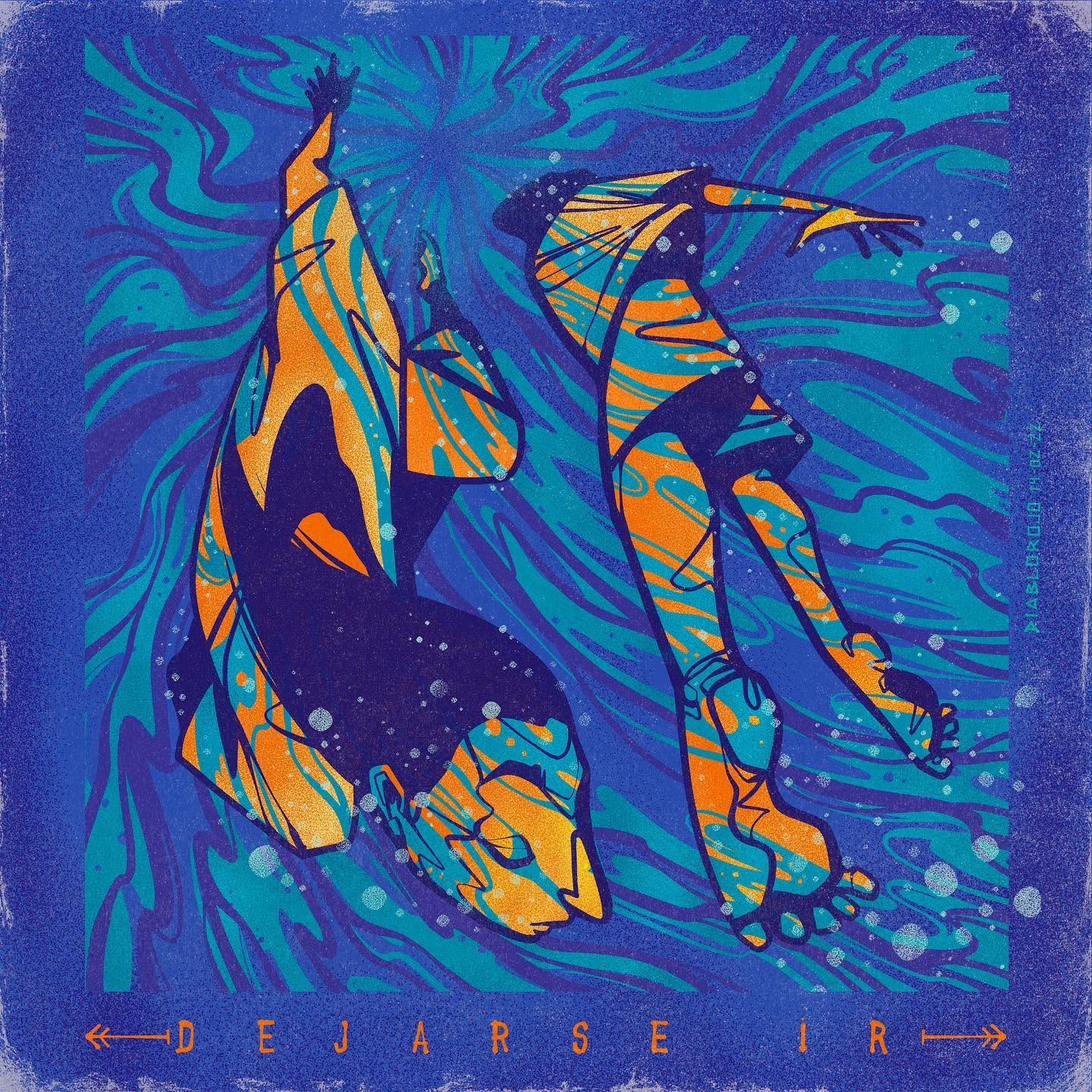
  • Historias del agua Sobre los clamores de un lago y una cuenca de los valles en MéxicoPablo de la Fuente | Diablo Rojo Graphics | Letting Go | Santiago, Chile, 2022

    Water Stories On the cries of a lake and a basin of valleys in Mexico

    By Carlos Mendoza Álvarez

    “Un Salto por la Vida” (A Leap for Life) is a civil society collective from El Salto, a municipality in the state of Jalisco, which we visited a year ago as participants in the Re-existe festival at ITESO University in Guadalajara, Mexico. Its residents and activists had foreseen the contaminated water crisis that erupted last Sunday in Guadalajara for years. The brutal pollution and growing shortages have been caused by the industrial mirage of the so-called Mexican Silicon Valley, an environmental aberration continued to be promoted by governments and companies in the region, leaving a trail of environmental and social destruction that has been documented by residents, organized civil society, and universities in Western Mexico.

    Gradually, the outcry from families—with children and the elderly sickened by the devastating impact of chemicals in "drinking" water—gave way to resistance from civil society. Scientific studies provided the foundation for social activism to promote the right to water as a priority in the struggle for human rights at a time when modern society seems unwilling to awaken from the nightmare of development.

    “The wars of the future will be wars over water,” I recall a historian predicting at the beginning of the millennium. And what seemed like a distant dystopia a quarter of a century ago has become everyday reality in every corner of the planet, from Gaza and the West Bank in Palestine to Wallmapu in the southern tip of the American continent.

    In Mexico, Lake Texcoco and the Lerma-Santiago River basin have become a painful thorn in the side, especially due to the voraciousness of the megacities that devour everything in their path. But at the same time, both territories have become breeding grounds for rebellion when their inhabitants put their finger on the wound and begin a painful but hopeful path of socio-environmental intervention to save a lake with an ancient history and a vital basin in the central-western part of Mexico.

    The “Charter of Lake Texcoco” was an initiative proposed a decade ago by the People’s Front in Defense of the Land and the residents of Atenco, along with their students, activists, and artists, to sing an elegy to water that would give voice to their struggle and make their vision of the territory visible. The poet, academic, and activist Al-Dabi Olvera paved the way for me years ago to understand this poetic-political resistance through the narrative practices we carried out under his guidance at the Ibero-American University in Mexico City with the research project called Narratives of Resistance. That Charter begins by saying:

    “I’ve known about the lake since I was born; it’s my parents’ legacy,

    It's the life we have, the one we want our grandchildren to live.

    Anáhuac is to be between waters,

    fish, frogs and axolotls, ducks, chichicuilotes and swallows.

    There was no shortage of quelites, quintoniles, and purslane.

    The people knew how to live with the waters,

    collecting the ahuautle, the tequesquite.

    That lake is called freedom.”.

    It was an elegy to lost water and a song to water regained. Years later, that lake has finally been declared a nature reserve by the federal government, and its wetlands are being restored thanks to the arduous and constant work of the community, in partnership with the current government, which we hope will continue in the years to come, beyond today's partisan political interests.

    ∂

    In our age of Artificial Intelligence, water is being transformed into a coveted commodity. An indispensable "product" for the digital industry because data centers require it: a single standard data center consumes 25 million liters of this vital liquid annually to cool the computers that power "the cloud." A cloud that is more of a hellscape of semiconductors and digital networks at the service of the powerful. Indeed, ecological devastation is already occurring alarmingly in areas of Texas and Ohio, and is multiplying from China to Argentina, wherever the lords of the digital super-industry need it to establish their data businesses where water is plentiful. In these territories, Israeli power is strategically expanding to sell technology, replicating its voracious business and its power over local governments in the name of supposed progress and water security.

    The water sequestered by fracking is yet another contradiction of this extractive economy. To extract gas from increasingly deeper underground regions, it is necessary to inject unprecedented quantities of water. The life force of water is transformed into a weapon of death at the service of the devastating oil and gas energy industry, which is currently controlled by the United States, China, and Russia across the globe.

    And to make matters worse, the water used by the soft drink industry is another head of the capitalist hydra, as the Zapatistas call it, which transforms a precious resource into poison with every soda placed on the tables of the poor. Mexico is the world's largest consumer of soft drinks, and, as a sad example, Chiapas, the state with the highest poverty rate, is also where soft drink consumption is highest, leading to malnutrition and disease. This is a lamentable example of the Illichian principle of counterproductivity: it takes wasting two hundred liters of water—in the entire water chain, from sugarcane or corn cultivation for processing to the production of the soft drink—to put a single bottle of Coca-Cola on the market. The city of San Cristóbal de Las Casas carries water in its soul, with its Tsotsil name Jobel or land of wetlands: bodies of water that still survive despite the exploitation of springs and the terrible public administration that privatizes wells, monopolized today by Coca Cola, and urbanizes those bodies of water inhabited by reeds, birds and increasingly rare amphibians.

    To complete this picture of the environmental horror that has water held hostage in our time, it is necessary to mention the sewage from the drains of the world's metropolises, which have transformed rivers and basins—once home to wetlands, streams, and rivers—into channels of chemical, organic, and energy waste from the plastics, steel, and semiconductor industries. But the most macabre aspect of these flows is that they have also become receptacles for the human remains of people disappeared by criminal organizations, thus becoming rivers of iniquity.

    Thus we find ourselves thrown into socio-environmental chaos by the machine civilization, now disguised as an algorithm of voracious power.

    ∂

    And amidst so many painful splinters in the body of Mother Earth and our people, where are there signs of comfort and hope to rescue and heal this wounded socio-environmental body?

    The resistance of the people of Atenco in Texcoco and El Salto in Jalisco is like spores spreading through valleys and canyons around the world, giving rise to new organisms in their wake. They do so on a small scale, but a real one. Their methods of organization, their protest marches, their rituals of caring for Mother Earth and the most vulnerable people and creatures in the community are already signs of another way of being, one that transcends greed.

    Without romanticizing these movements, knowing that they also experience tensions over power, control of the narrative, and obtaining resources from the state and international solidarity funds, we recognize that other languages are being babbled there with their decolonial verbs: eating, learning, organizing… and waiting.

    Now it's up to each of us, individuals and communities, to live and tell our own stories of resistance. What is your water story?

    Jobel, October 17, 2026

  • En búsqueda de la unidad perdidaEmbroidery for the "Maternar" exhibition at the MUAC-UNAM, as a tribute to the mothers who track and search. Embroidery by Pau Cuarón

    In search of the lost unity

    By Carlos Mendoza-Álvarez


    The military repression of protests in support of immigrants in Los Angeles, the Israeli bombing of Gaza, and the murder of mothers and fathers searching for their families by criminal gangs in Mexico are lacerating wounds to the lost unity of humanity today.

    While violence is as old as human memory, what has left us astonished in recent days is the rampant cynicism of the US government, which "justifies" police raids against undocumented migrants on the grounds of national security, when in reality it is a typical strategy of any dictatorship to control the population and militarize the country. The passivity of the masses subjected to the digital dictatorship of fake news disseminated by traditional media such as newspapers and television, which goes viral on social media in concentrated doses, strengthens the populist power that spreads across the world, crossing ideologies. From far-right fundamentalist groups in the United States, Israel, El Salvador, Argentina, and Italy promoting the "free world," to India, Russia, and Venezuela with identity-based nationalist ideologies, or even Brazil and Mexico with a supposedly leftist government that disregards indigenous peoples.

    We are at the mercy of those media powers in the era of post-truth, which should better be called the age of unpunished liesWe are no longer surprised by the disqualification of victims by the powerful, nor by the abusive use of words to denigrate others that is spreading like a pandemic in public and private forums. Language has been perverted from its original purpose: instead of reflecting reality with creative imagination, it distorts, manipulates, and accommodates it to the petty interests of those who wield economic, social, or religious power.

    Today, promoting the unity of humanity is irrelevant, as populist leaders emphasize the separation between "free citizens" and the surplus population, between "democratic" peoples and corrupt nations. This madness is now leading to the escalation of violence by Israel and its allies against Lebanon, Syria, and Iran.

    It doesn't matter that modern science has confirmed the unity of the human race through DNA, providing genetic support for that intimate conviction of the unity of the human species that diverse cultures had expressed in the past through myths, stories, and powerful symbols to celebrate the beauty of the human condition in its ethnic and cultural diversity.

    The search for the lost unit It has been the roadmap for humanity's wisdom and religious traditions. Through myths and rituals, these forms of knowledge have since ancient times explored the paths that guide peoples on their journey to build the communion that persists as a collective human desire. Sometimes we see this unity as a lost past, other times as a longed-for future that, in both cases, seems to slip through our fingers.

    Religions were born to connect people with that source of unity The primordial faith that connects the human, the cosmic, and the divine. Faith in a single God was the challenge of monotheistic traditions to interpret the shared belonging of peoples and cultures to a transcendent source of life from which the unity of the cosmos and of humankind flows. More than a revelation from on high, this faith monotheistic expressed in its historical genesis a desire to recover lost unity.


    *


    In this context of global mourning over the violence of the new empire of white supremacy and extractive capitalism, which is devastating everything in its path, it is worth reflecting on the unity of God, according to various religious grammars, for its impact on our way of recovering the longed-for lost unity.

    Christian communities commemorate this weekend, the Sunday after Pentecost, the feast of the tri-unity of God. A belief that is a source of scandal for Hebrew and Islamic monotheisms, which confess the original unity of Yhwh or Allah as the sole merciful father of the universe. For two thousand years, the heart of the Christian faith has been confronted by these monotheistic traditions, considering it a heresy. It has also been a source of mutual interpellation among the three Abrahamic religions for failing to jointly bear witness to this unity of God, creation, and the human race. However, during brief periods of peaceful coexistence, such as during the Umayyad Caliphate of Córdoba in the 10th and 11th centuries of the Common Era, these differences were mediated by a mutual understanding of the root belief in a single living God and the diversity of interpretations of that divine unity as the source of the common union between the divine, human, and cosmic worlds.

    Two thousand years later, Christianity continues to provocatively claim that God is both one and triune, triune Some theologians have said since Christian antiquity, highlighting the intimate communion of divine being. Communion in diversity is what theologies of today will say. queer/cuir  to emphasize the communion of mutual hospitality in difference.

    1700 years ago, in the year 325 of the common era, the first Council of Nicaea began to explore the mutuality of the loving being between Jesus of Nazareth and his Abba which opened up space for a third. Years later, the First Council of Constantinople in 381 included the Holy Spirit in this dynamic communion that is like a “divine circularity.” The famous perijoresis Trinitarian of the Cappadocian Fathers.

    Following this legacy, Saint Augustine and Saint Thomas Aquinas, as classics of ancient and medieval Christianity, sought to harmonize faith in one God with the Christian confession of the communion of divine persons. who share the same being in a loving relationshipWhat seemed in the letter a far-fetched theoretical debate, in reality put on the table the importance of considering divinity, not in an isolated celestial perfection, but in her intimate radical vulnerability which puts it in relation to itself as a mystery of communion and to the cosmos as a mystery of synergy.

    Meister Eckhart, a Dominican of the Rhine in the 14th century, used to describe that divine circularity intimately affecting the human soul like a spiral of annihilation: “The Holy Spirit takes the soul and drags it to the purest and highest, to its origin which is the Son, and the Son continues dragging it to his origin, which is the Father, to the Depth, to the First, in which the Son has his being” “Adolescens, tibi dico: Surge”, Sermon 18, in Treatises and sermons, p. 236)

    Recovering the lost unity of the human species in its communion with the cosmos and with God in times of rivalry and hatred is perhaps the best way to honor the ancient Trinitarian monotheism that Christianity offers as a glimmer of redemption to humanity, today fragmented by the violent spiral that repels all intimacy of life.

    From the depths of Los Angeles raids, the ruins of Gaza, and the clandestine graves of Mexico—a cruel trinity of our times—emerges a cry for unity from today's victims and their survivors, calling us to delve into the bottomless depths of life that endures.

    Perhaps there lies our compass to recover lost unity.


    Mexico City and Johannesburg

    June 14, 2025

English