Tag: Missing in Mexico

  • Sobre la esperanza en tiempos inciertosSearching Mothers | NTR | Zacatecas, 2025

    On hope in uncertain times

    By Carlos Mendoza-Álvarez

    At dusk this Saturday, the first Advent vigil begins, when Christian communities throughout the world embark on a journey, in the midst of the darkness of time, to receive the human and divine light of dignity and hope that the Messiah brings. The ancient hymn will resonate during the nighttime celebrations, Rorate caeli , whose lyrics and melody are like a lament that rises to heaven from the desolate city, crying out that “the clouds rain down on the Righteous One,” as the prophet Isaiah (45:8) implored during the exile in Babylon.

    Each year, this four-week calendar leading up to Christmas is accompanied by symbols of light, greenery, carols, sweets, tenderness, and community. According to each culture, the waiting period for the Messiah's arrival evokes the awareness that "something is lacking" for the fulfillment of those desires for new times of justice, truth, compassion and peace, not only for a people who arrogantly claim to be the only chosen ones, but for all of humanity and even for the entire cosmos.

    Every generation has seen terrible signs that the world is ending, whether through epidemics that make us feel how vulnerable our bodies and knowledge are; whether through wars waged by empires against emerging powers that threaten their arrogance; whether through the uncertainty of life itself, diminished by age, illness, failure, loneliness, or hopelessness.

    The biblical texts that we, the believing communities, meditate on these days speak of the expectation of the messiah, first with a strong apocalyptic tone that announces the destruction of the corrupt world, reaching the entire cosmos with a catastrophe that will destroy everything because of the human pride that has taken over creation.

    Then, as the date of the celebration of the Nativity of the Messiah Child, a Nazarene, approaches, the tone of the texts becomes more hopeful with the announcement of a God who is near, humanized, small, and fragile. It is the incarnate promise of a divine and human life that begins in complete vulnerability in the story of a migrant family with a newborn baby, trying to survive on the periphery of the empire and fleeing the fury of the local ruler, eventually finding refuge in Egypt, from where a definitive chapter in the history of human redemption will begin to be written.

    However, the collective depression we are experiencing today as humanity due to the escalation of hatred to extremes – which is spreading across the planet in an apocalyptic way “like a lie of Satan,” as René Girard said in an interview he gave me in 2007 in Paris (Hope as apocalypse)– this seems to render any narrative of hope for our uncertain times illusory. The genocide in Gaza continues as the climax of the Nakba or Catastrophe that began in 1947 with the expulsion of nearly a million Palestinians from their lands, paving the way for the creation of the state of Israel in 1948, this systemic violence continues today before our digital screens, met with indifference by social media and the international community. The wars in Ukraine, Congo, and South Sudan have become so “normalized” that they no longer make the front page of newspapers, much less a trending topic in the digital world. In Mexico, public indifference to urgent issues such as the crisis facing corn, lemon, and avocado farmers—caused by the violence in Michoacán—along with the persistent femicides and forced disappearances, speaks to a growing discontent among the population, expressed through strikes, road blockades, and street protests. But the masses seem numb, retreating into bubbles of entertainment and unrestrained holiday shopping, which, among other ills, leaves household finances in ruins for months and years to come.

    Religious consumerism is also part of the overwhelming Christmas marketing, amidst kitschy decorations and echoes of folk crafts used to make piñatas featuring popular characters. It will certainly be present at Mexican posadas, Trump's piñata , which is sold in various markets in Mexico and the United States, will receive blows as a ritual of revenge amid laughter and boos until the cardboard breaks and the blond wicks of the tyrant fly out like shooting stars in some tenement courtyard in Mexico City, Chicago or Los Angeles for the delight of all.

    A few families may perhaps rediscover the “mystical” meaning of the Advent wreath, following the Avatar of Carlo Acutis explaining Advent 2025. This video, which is circulating online, aptly explains the spiritual significance of the ritual of lighting each of the four candles during this season that prepares for Christmas. The light lit each Sunday of Advent symbolizes the "people who walked in darkness and have seen a great light" (Isaiah 9:2), which the prophet foretold to the Hebrew people devastated by the division between the small kingdoms of Israel and Judah, with their leaders corrupted by the idolatry of power, seeking alliances with neighboring Syria to defeat the rival tribe.

    And like a non-place amidst so much noise, creating a void in the midst of the urban clamor, in Mexico the collectives of Searching Mothers (Searching mothers light Christmas tree) will set up Christmas trees covered with ornaments bearing the faces of those we have lost. They are today “the voice crying in the wilderness” (John 1:23) because they speak on behalf of the victims of the narco-state war and the idolatry of the necropower of our time.

    Perhaps this is where the theological core of this season lies: the absence of the Messiah is something that has inspired Hebrew and Christian generations for centuries to mobilize in order to make the messianic times present through acts of remembrance, justice and an (im)possible reconciliation.

    Beyond a folkloric celebration of the coming of God-with-us, what we are about today is going to the other side of history to contemplate there, in the silence of the night, some glimmer of light that announces the arrival of the Messiah. And those who feel in every second of their lives, in every breath—like Vero and Fabiola, mothers searching for their missing children who shared their hope with us in a recent meeting in Guadalajara—the absence that hurts and motivates them to search out of love, are the ones who teach us what hope means in times of uncertainty, the heart of Advent.

    Next Monday, December 1st, the documentary Re-exists 2025 will be presented online (Presentation of the documentary Re-exists 2025), prepared by Uruguayan filmmaker Juan Meza. There, some of the stories of awakening, healing, and embodiment shared by people from seventeen countries and different religious and spiritual traditions from four continents facing diverse forms of violence where it has been possible to spell out hope.

    Advent is a time to continue weaving networks of combative hope , say the social movements on the peripheries of the empire, so that our world does not fall into the abyss. And it is possible to do so by listening to the people who for years and centuries have resisted and now accompany us in re-existing.

    Because there will always be hope as long as there are people and communities who live the end times, so insistently emphasized by Javier Sicilia and Elías González, as the opportunity to enter into another way of existing amidst violence but pregnant with the active expectation of messianic times.

    Happy Advent season!

    Mexico City, November 29, 2025

    Note: I would appreciate your feedback at the end of this page.

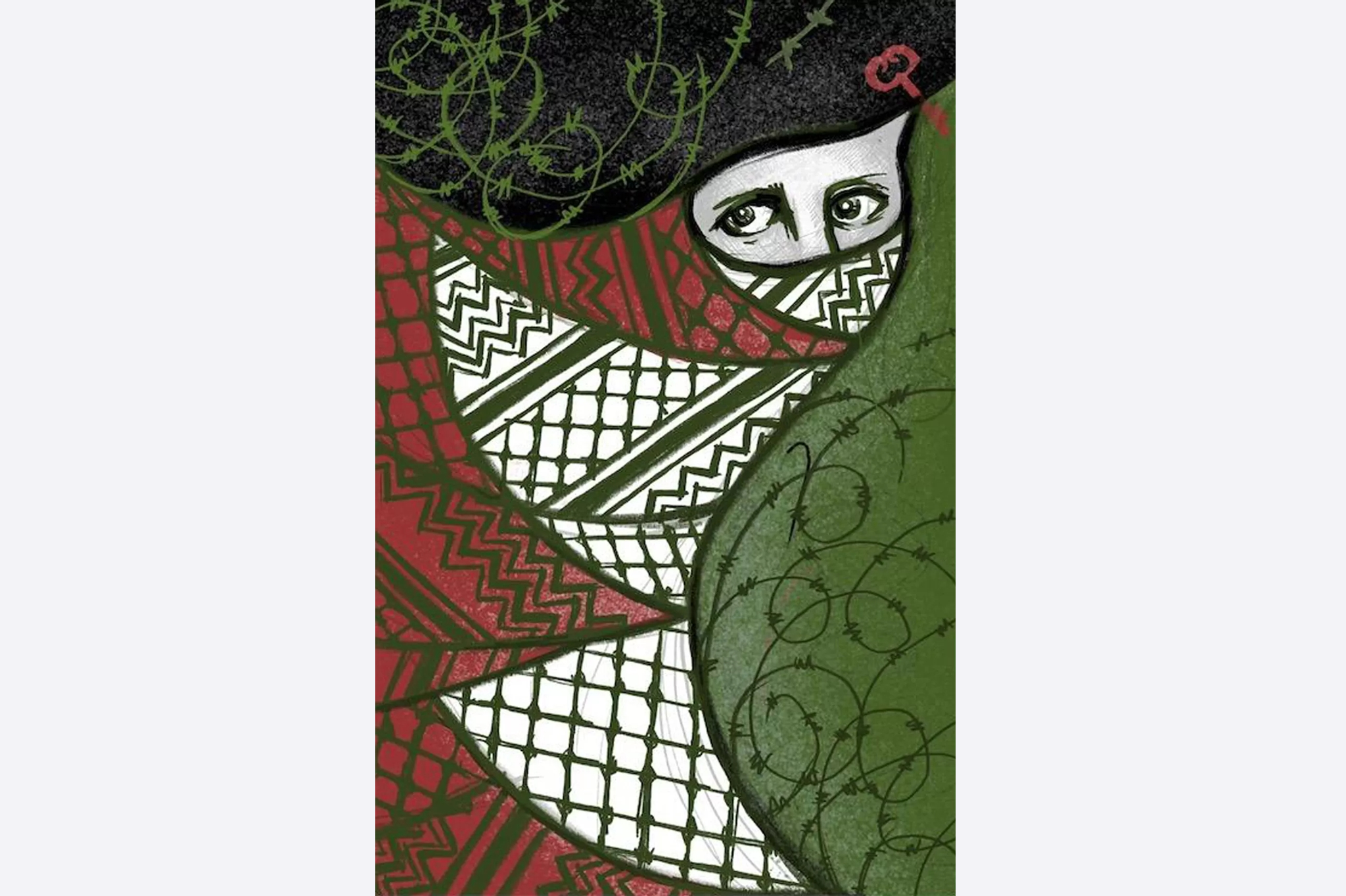
  • Las paces desde abajoTings Chak, “Palestine Will Be Free,” 2023 (courtesy of the artist).

    Peace from below

    By Carlos Mendoza Álvarez

    Two years after the ongoing genocide in Gaza, Trump recently "decreed" his peace plan for Palestine, with the submissive presence of an international "negotiation" group made up of Egypt, Qatar, and Turkey, with the complicity of European political leaders from Italy, Great Britain, and Spain who claim to "seek peace for the region."

    That plan, of course, fails to address justice for the Palestinian victims of the genocide, much less reparations for the economic and cultural devastation wreaked by Netanyahu's Israeli government. With criminal cynicism, Trump visited Israel to reaffirm his alliance with the Israeli prime minister and try to shield him from the accountability to which all war criminals must be held, a project promoted by a minority group of Israeli citizens with a handful of allies in the government.

    The international community now faces the most radical challenge since World War II: to promote a trial for crimes against humanity against Netanyahu and other Israeli military personnel, along with their accomplices from other complicit states, such as Trump and leaders of the European Union. This will involve judging a systematic war against the Palestinian people that began in 1947, when the Nakba or catastrophe that to this day is taking the extermination of the Palestinian people in the Gaza Strip and the West Bank to extremes.

    The accusation of war crimes against Israel filed by South Africa more than a year ago was only the beginning of a long process of international diplomacy that could one day lead to the creation of an international trial similar to that of Nuremberg in the last century to judge the crimes of the Nazi regime.

    But there are other "peaces" (plural: peace) that are worth keeping in mind, located at the bottom of the world of imperial domination, because they are the ones that endure over time and are rooted in the lives of communities.

    We are referring to those that were built against the current of hatred from political leaders by collectives of Palestinian and Jewish women, who organized communal events before the attacks of October 8, 2023, only to be later banned by the Israeli government. But there are also the "peaces" that Kurdish women forge in the face of the violence of the Turkish state. And those that Zapatista women build day by day to reclaim their bodies and territories in Chiapas.

    Carmenmargarita Sánchez de León just presented a few months ago at the Ibero-American University in Mexico City a doctoral thesis in critical gender studies about the resistance of Puerto Rican women creating on many fronts the construction of peace for their people colonized by the US government since 1952, when it was incorporated as a free associated state, a recent mode of colonization of territory within the parameters of modern law. These other peaces are woven body to body, in the mutual care of those who know they are vulnerable but powerful when they connect their wounds. The Ilé Collective in Puerto Rico that analyzes this doctoral thesis, as well as other decolonial feminist collectives such as the Feminist Collective under Construction, they reclaim urban spaces on the island, criticize the public debt of the state of Puerto Rico imposed by the US federal administration, but they also weave sisterhood among women racialized by the white patriarchy through collaborative networks in the production of goods and the formation of decolonial feminist thinking.

    The Women's Pacific Route In Colombia, it represents another attempt to weave peace from below, not from agreements between the actors in the massacres, which were the paramilitaries, the army and the Colombian state, but rather the peace that emerges from listening carefully to the victims and some executioners who seek to acknowledge their guilt, to move towards justice, reparation and thus perhaps one day receive the gift of reconciliation for the wounded social body.

    A paradoxical but significant example of these other ways of building peace is that of the families of missing persons who, upon arriving in a town or city, plant a "tree of memory" with photos of their missing loved ones and a few banners asking for empathy and solidarity from the community they are visiting. They also seek to weave threads of peace with the mailbox they place in the plaza where people can anonymously write information to help them find their missing relatives. Through this means, it has been possible to find clandestine graves, brothels, forced labor farms producing poppies, or drug labs, where their children may be, alive or dead. The searching mothers don't primarily ask for justice or revenge, but rather for information. In this way, they humanize the perpetrators by creating search spaces to find "their treasures," asking for clues that may lead to the whereabouts of their loved ones.

    These are the peace that matters because they are slowly woven by people and communities in resistance, especially by women who deconstruct patriarchy.

    Precisely there, in the cracks of those walls of hatred, other ways of existing with justice and dignity are woven, where peace gradually takes root.

    And what can we do to create peace for the Palestinian people and the other Semitic peoples who have shared the same land for thousands of years?

    To begin, we must stay informed from credible sources about what is happening in Palestine and then connect virtually or in person with a Palestinian community in resistance in those lands, or in the diaspora, to promote listening and person-to-person dialogue. A second step is to better understand the Jewish communities that closely support the cause of the Palestinian people and their right to live in that land. It is important to remember that there are Palestinians and Jews in the diaspora who share a love for the land of Palestine and a desire to find ways for brotherly peoples to once again live together in the same land.

    Perhaps many years will have to pass before there is peace in Palestine, until the sister peoples descended from Abraham, Sarah, and Hagar —yes, all three and their descendants— recognize their shared right to inhabit the same land. In the meantime, building peace will be the task of all communities, wherever they may be.

    Because Palestine is the compass of humanity, divided today, hopefully also in the process of conversion. Let us make peace possible for the Palestinian people, together with their sister nations, by weaving "peaces" where each of us lives. Only in this way can we continue to imagine a future as a human species before we fall into the abyss.

    This morning I arrived in the southern lands that rise between the majestic Andes mountain range and the Pacific Ocean, where the Mapuche and Chilean peoples inhabit the same territory with many barriers that even the democratic governments of recent decades have been unable to tear down. I have come here to discuss with university colleagues the validity and limits of liberation theology, on the occasion of the first anniversary of the death of Gustavo Gutiérrez (Gustavo Gutiérrez International Congress)I will also be able to talk with colleagues from the Chilean Theological Society about the difficult hope in times of catastrophe. And I am very excited to be able to visit Mapuche territory for the first time to hear about the resistance these communities have created to confront so many forms of colonialism, both old and new.Mapuche thought, autonomy and colonialism in Chile).

    In the next post I will be able to tell you some of these stories.

    Santiago, Chile, October 19, 2025

  • Una flor de composta O sobre las re-existencias en medio de la catástrofeCarlos Mendoza | Re-exists 2025 | Opening Ritual 23 IX 25

    A compost flower Or about re-existences in the midst of catastrophe

    By Carlos Mendoza Álvarez


    At the end of September, more than eighty people from survivor groups around the world gathered for a meeting of mutual listening, deepened by attentive dialogues with university students and nourished by provocations from artist groups. We were received with the magnificent hospitality of the Jorge Manzano Chair from ITESO that became home for a few days.

    We began by celebrating the resistances that transform what seems like waste through love, inspired during the opening ceremony by the renowned Catalan singer Lídia Pujol who whispered that “from the compost that is rottenness, the flower can emerge” (Babel). She had discovered this wisdom in the poetry of her 12th-century countryman Ramon Llull, who recounted that “having found a friend who was dying without love, when he asked him why he was dying without love, he replied that no one had made him know about love or had taught him to be a lover.”

    Angelica, from the lands of Malaysia, scattered grains of rice and Himalayan salt as an offering during the inaugural ritual, during which we prepared to listen attentively to the otherness that welcomes us as Mother Earth and inhabits us as Divinity that animates us with its ineffable breath of life.

    Five tables, each with representatives from six collectives, divided into Spanish and English language groups, were the place where we listened to each other each morning, exchanging experiences to awaken, heal, and embrace each other, drawing on the inner vulnerability of each person and collective. Each table had two listeners, who identified the similarities and differences between the experiences described, thus weaving together a mutual accompaniment of solidarity and hope to confront the local and global horror we were describing. Raúl, a young Mayan popular educator through hip hop in Chiapas, commented that "no one had ever sat at a table to listen to my knowledge." Nancy, a Latina feminist theologian from the United States, along with Bosque, a biologist and environmental-spiritual activist from Cuernavaca, were tasked, like other members of academia and organized civil society present at the meeting, with cultivating this attentive listening to weave a common narrative amidst the differences of each experience and context.

    Thus, we respectfully explored the sacred ground of resistance and re-existence. First, by approaching the horror, which we named according to the stories each person told. Sofía, for example, shared her experience as a young Ecuadorian migrant lawyer in Barcelona, where for several years she has worked with undocumented domestic workers in a feminist "coalition" that led them to form a union to strengthen them in the fight for their rights as migrant women while allowing them to develop artisanal skills to support their cause. Sofía's reflection echoed that of Alex, a graphic designer and popular artist who accompanies the Ecclesial Base Communities of El Salvador in the face of President Bukele's state of emergency. Now in its fourth year under an authoritarian leader, this regime of exception produces a filthy life for poor youth in the Salvadoran peripheries accused of criminality to whitewash a regime that has been colluding with criminal mafias for years. The resistance of both groups, in Catalonia and El Salvador, exuded an "interiority" that inspires them in their daily struggles. Christian spirituality in the Salvadoran case and feminist sorority in the Catalan case.

    But it wasn't just about sharing the spoken word; it was about exploring other languages through workshops on body language and sound expression, or through the Jauja dance in the Peruvian Andean highlands as a path of resistance for a people, thus discovering other modes of communication between the seeking mothers and the healing companions who came from South Dakota or Malaysia. These other languages allowed us to overcome language barriers and helped us create powerful nonverbal communication bonds.

    And to tie knots in the fabric of the threads intertwined in each day, the performances, like the one prepared with much love and talent by a Portland collective to celebrate the water that makes us up, thus helping us feel that we are water. To the rhythm of hip hop and rap as an alternative urban art proposal, the Mayan collectives of Chiapas that educate children threatened by drug cartels in the outskirts of cities in the mountains of southeastern Mexico, turned out to be a balm to heal wounds still open from other violence. Like that narrated by Vero looking for her son Diego, missing for ten years, or the violence against girls in Pakistan that Sabine recounted in her Support work in working-class neighborhoods of Faisalabad, in the Punjab region of PakistanThanks to this rapper performance, we all joined in the dance, while drawing symbols on the mural painted by Yara as part of a performance also dedicated to the water being killed in the planet's rivers, lakes, and seas.

    We concluded each day with a harvest moment, where the popular narrative of Blessed Mixture, formed by young people from the Ecclesial Base Communities of Our America, helped us celebrate what we heard and shared through symbols, songs, and rituals. The guiding figures were the bees, a symbol of Mother Earth's resilience, which we welcomed with a wax candle produced by them, burning their flame in the palm of our hand to feel the pain of endangered species. This gesture was accompanied by a drop of honey poured into the other hand to give us a taste of their sweetness as survivors.

    Then came the little house of Acteal, which was placed in the center of the circle of participants to remind us of the martyrdom of some human bees. pacifist collective of Las Abejas linked to the Zapatista bases, opting for the path of active non-violence in their shared struggle with justice and dignity for the indigenous peoples, suffered the murder of 45 of its members, among them four pregnant women, who were massacred on December 22, 1997 in Chiapas in the community hermitage while they were praying for peace, a crime perpetrated by paramilitaries with the complicity of the federal army (Acteal Massacre, Chiapas. Serious human rights violations by the Mexican State in 1997). His memory continues to sting like a splinter that hurts the lives of the indigenous peoples who seek other possible worlds.

    We closed those moments of harvest by making kites with messages of peace for women violated by patriarchy and for the Palestinian people resisting the ongoing genocide by the Israeli state. These artifacts helped us direct our hearts and gaze toward a future with dignity and hope for the people in resistance.


    The visit to the community of El Salto, in the suburbs of Guadalajara, led us to cross the abysmal line of the ongoing ecocide that the environmental collective that received us on the “Tour of Horror” (A Leap of Life) describes itself as “an industrial paradise with an environmental hell.” The Lerma-Santiago River basin, which runs 708 kilometers across western Mexico, is an open wound for Mexican territory and for the animal and plant species and people who inhabit it. Since the post-war industrial boom of the last century, polluting industry has spread across this vast region like a social and environmental virus. To date, more than 90 highly toxic pollutants have been identified, many of them carcinogenic, of which only a few, more visible, are treated with a couple of treatment plants. Sofía and Pedro, young environmentalists from the area, tell us that the transnational corporations established in this basin, such as Nestlé, Toyota, IBM, and many others, claim to be green companies today, when in reality, their local parts suppliers are the ones producing the most pollution because they do not comply with current national and international regulations.15 transnational corporations pollute the Santiago River, according to an international report.). ITESO is part of a network of universities in the region that study the water problem (Industry and nature in conflict: will there be a
    future for water in Lerma-Chapala?) in constant collaboration with the collectives of residents and environmentalists who seek to save the watershed with its inhabitants of diverse species.

    Among the members of the group welcoming us is Emmanuel, a little boy of barely ten years old. Wearing cowboy boots and a cowboy hat, he leads his mother's hand as they show us the polluted wetlands, filled with the fetid odor of the city's sewage and the invasive species that inhabit them, such as tilapia, a contaminated fish sold in many markets across the country. The ecological present for this little boy from Guadalajara is catastrophic, but a possible future is beginning to emerge with community organizing.


    One of the morning rituals was presided over by Cecelia Firethunder, a Lakota grandmother who told us about her people's long journey of healing their wounds in resistance in the United States. Her experience as a child in a sunflower field that welcomed her in a dance of dignity and strength when she faced discrimination at school has continued to inspire her ever since, as she accompanies her people in awakening from centuries-old segregation, to heal their wounded memories by recovering their language, their knowledge, and their ancestral rituals. It is then possible to walk forward creating new ways of eating, like the initiative shared by her compatriot Nick Hernández to recover lands and methods of communal organization and indigenous Lakota agriculture (Makoce. Agricultural Development) in the heart of the Indian reservations, which have been territories controlled by the US government for two hundred and fifty years.


    From the compost that is rotten, the flower can emerge, as Lídia Pujol said.

    But for that moment to arrive in our time of environmental collapse, it is necessary to first recycle the waste produced by extractive, racist, and patriarchal capitalism to recover the organic essence of the resistance of communities of survivors, including Mother Earth.

    At the end of the meeting, we each returned to our places of origin and life choices, certain that as long as there is resistance, there will be hope, because there, in the midst of catastrophe, the lilies of re-existence sprout.


    Guadalajara, September 28, 2025

English