Category: Contemporary violence

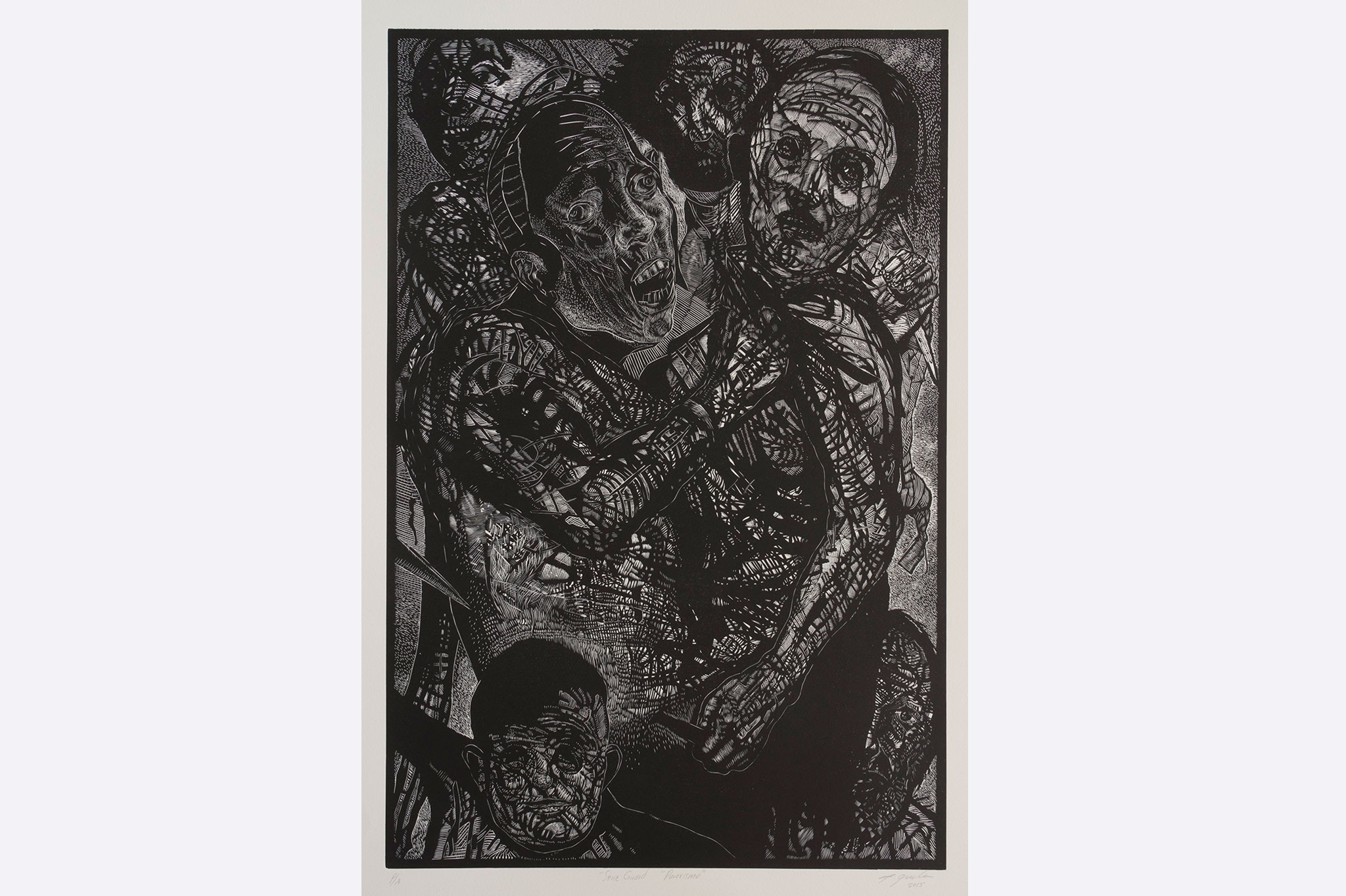
  • ¿Santidad laical?Kite designed by Francisco Toledo on handmade paper from Vista Hermosa Art Paper

    Lay holiness?

    By Carlos Mendoza-Álvarez


    This weekend two young Roman Catholics will be canonized by Pope Leo XIV (Canonization of Carlo Acutis and Pier Giorgio Frassati). Pier Giorgio Frassatti, an Italian Dominican layman who lived in the first quarter of the 20th century. The other, Carlo Acutis, the so-called “first millennial saint.” Each reveals not only l'air du temps of each century, but rather raise the question of the model of Church that we urgently need to present in our times of global catastrophe.

    Since the end of the 19th century, the Roman Catholic Church, especially in Europe, has sought to listen to the working class and maintain contact with the population produced by the Industrial Revolution. The social teaching of the papal magisterium—since Pope Leo XIII and his Encyclical Letter Rerum Novarum until the current pontiff Leo XIV, who chose his name for that reason, displayed an urban pastoral approach typical of the time to walk with that suffering sector of the people of God.

    Catholic Action would be a lay response, supported by groups of bishops in countries such as Belgium and France, to such challenges. The worker priests (Worker Priests: The Church's Commitment to the Working World) were another praiseworthy page in this history, where it is worth remembering the accompaniment of the Dominican theologian Marie-Dominique Chenu and the subsequent infamous suppression of the movement by Pope Pius XII. The influence of Catholic Action would reach Latin America with its see-judge-act methodology, later inspiring liberation theology in Peru, Brazil and other countries in the region, as Agenor Brighenti has carefully studied in recent years (The ver-julgar-agir method).

    One hundred years ago, a young Dominican layman from Piedmont (Pier Giorgio Frassati OP), close to the miners in his land and a mountaineer by passion, was the fruit of that ecclesial sensitivity of the time that would bear fruit in later decades in pastoral experiences in the rest of Europe and Latin America, with the pastoral movements of insertion in popular environments, especially the working world and indigenous peoples. Son of a famous journalist who was the owner of The StampPier Giorgio Frassati used to combine his political activism in the Italian Popular Party with readings of Thomas Aquinas and Catherine of Siena, accompanied by climbs in the Alps with a club of friends and days of Eucharistic adoration in which he unfolded his interior life. A figure of his time, Pier Giorgio is today claimed by the Roman Catholic Church as a youthful lay saint, whose life ended abruptly at the age of 24 due to fulminant poliomyelitis probably contracted through his apostolate to the poor of Turin, leaving a spiritual imprint on the pastoral youth movements of a century ago.

    The other young lay saint is Carlo Acutis, an Italian born in London, devoted to the Eucharist and very active on social media. He lived as a teenager focused on spreading the word about Eucharistic miracles and Marian apparitions. After his death from leukemia at the age of fifteen, he became a symbol for today's "Catholic influencers," but with a more devotional tone than the social and political one like his fellow canonizer. A few months ago, I received Carlo's relics along with the youth ministry group of the Parish of Santa Rosa de Lima in Mexico City, founded by the Dominican friars almost a hundred years ago. This was an initiative of the Archdiocese of Mexico to commemorate the Jubilee of Youth (A faith that never ages: Rome, 25 years after the Jubilee of Youth with John Paul II) convened by Pope Francis and carried out by Pope Leo XIV. I was struck by the low attendance of young people from this hipster area of the city, with the presence of some devout young people with very pious traits and little social sensitivity. The rosary prayer prepared by the local youth group in the tradition of Dominican spirituality meditated on the sorrowful mysteries of Christ's passion, associating them with the cry of today's youth in this neighborhood of Mexico City: gentrification, insecurity, violence against women, unemployment, and drug abuse as wounds of Christ's body today. It was an attempt to connect the tradition of the rosary with the lives of people today. The small community of older adults gathered there prayed in amazement, following the lead of the young people, and then returned to their traditional devotions, meditating on Christ's life in his passion and death. At the end, a few young people from other parishes gave a brief workshop on the millennial saint, urging the use of social media as a new place to proclaim Christ and promote the adoration of the Eucharist in communities, along with the values of the Gospel.


    I had already encountered this new generation of young traditionalist Catholics in Europe and the United States, among lay people, Dominicans, and Jesuits, among the religious orders and congregations recognized as promoters of the conciliar renewal of Vatican II. Their interests seem retrograde to me at first, although later I try to get closer to those generations and discover in them an inner beauty, mixed with naiveté and fear of getting lost in the labyrinth of pluralism. They seek identities that give them certainty. Religiously, they love the ancient Latin culture of medieval Christianity, above all, less so that of the Greek patristic era. They are enraptured by Gregorian chant and the Summa of Theology of Thomas Aquinas and other medieval masters, but without understanding their method open to conversation with pagan philosophers, nor following scholastic logical thought. They are fascinated by conspicuous signs of belief, such as the religious habit, the liturgical veil, and receiving communion by kneeling with great devotion, but clumsily because they do so as if they were newborn giraffes.

    Despite their intense devotion, they are indifferent to social issues as a spiritual and theological context. Talking about Gaza in a sermon seems like ideology to them. Not to mention inviting unmarried couples to the Eucharistic table, much less welcoming the community of sexual diversity at Mass. They deem such practices a deviation from Church doctrine. These younger generations of Catholic laypeople seek to return to the doctrinal Church, like that of the Council of Trent and Vatican I, without fully understanding the meaning of the conciliar spirit that inspired Pope Benedict XVI to convene Vatican II.


    And I wonder then what models of Church are urgently needed today for a laboratory city like Mexico City and so many others around the world. It's about responding to a range of youth identities where it's a challenge to create spaces to invite them to look at one another, almost impossible to welcome them in a single liturgical celebration. I remember that my generation still dreamed of "taking Paradise by storm" through a commitment to justice and peace, with universal human rights as a sign of the new times. This led us to a university ministry at the CUC in the 1980s focused on a liberating Church.

    Something that seems outdated in this era of deglobalization and the expansion of war ministries, military drone invasions, and the cynicism of capitalism in its expansionist phase of obscene forced colonization. The perverse use of religion, as we see today in Palestine with the Israeli government and its allies around the world justifying their genocidal actions in the Bible, seems to leave young Catholics today indifferent, absent from the protests in the streets and squares of the world against this manipulation of faith.

    What secular saints does humanity need today amidst the ruins of our civilization? Frassati or Acutis. The young mountaineer close to the miners or the saint. millennial of Eucharistic adoration as a “highway to heaven.”

    I think neither one nor the other, because both were children of their time. Today I see a new generation of young people passionate about Christ as Messiah and universal brother, whom they recognize for his exceptional inclusive love of the just and sinners that arises from their intimate experience of communion with his AbbaYoung people who are simultaneously touched by the teachings of the Dalai Lama and Tich Nath Han, or by the Zen meditation masters they have encountered at retreats in diverse spiritual traditions.

    Young lay people who live holiness in their eroticized and loving bodies, unafraid to explore different modes of femininity and masculinity, of biological or adoptive fatherhood and motherhood, wrapped in the love of Christ and passionate about serving his wounded body.

    Millennials who are not tasteless influencers who reproduce on social media the same things they heard in their parish groups, but who invent "blessed blends" of narrative theologies close to the discarded, crossing the peripheries, weaving bonds of life, empathy and political-spiritual solidarity. Lay holiness as the new generation of young people from the Ecclesial Base Communities of Latin America and the Caribbean (Blessed Mixture. Narrative Theology of Our America) that reinvents that old method of see-judge-act with a narrative theology on the peripheries of society, with compassionate imagination, following in the footsteps of Jesus of Nazareth and his messianic community.

    Perhaps today, as daughters and sons of uncertain times, lay holiness is experiencing a collapse of religious institutions and the invention of other ways of worshipping the loving presence of Divinity, not only in the temple, but also in the community that, animated by its faith, seeks to save a polluted river or a dying lake. Youth communities climb the volcanoes of Mesoamerica or the Andean mountain range, with its endangered glaciers, as paths to ecological spirituality.

    Initiatives that seek to worship Christ in his wounded body today.

    Lay holiness which, after all, is the life of the Ruah divine who makes all things new from the rubble of the crumbling world.


    Mexico City, September 6, 2025

  • La Biblia como arma de genocidio o casa de vidaSliman Mansour. Revolution was the beginning (2016), oil on canvas, 200 x 500 cm

    The Bible as a weapon of genocide or a house of life

    By Carlos Mendoza-Álvarez


    The State of Israel began this week a new phase of the strategy of control of the territory of Palestine (Israel approves controversial West Bank settlement project). Israeli settler settlements in the West Bank will expand to divide the territory, which was the result of the 1993 Oslo Accords to relocate Palestinian residents into two isolated groups, leaving only one outlet to the Jordan River on the Jericho side.


    Christ at the Checkpoint, August 21, 2025   


    The ultimate goal is the creation of Greater Israel, once the possibility of a Palestinian state has been destroyed because, as Israeli Finance Minister Bezalel Smotrich said this week, “there is nothing to recognize, and no one to recognize” (Israel approves illegal settlement plan that would split occupied West Bank) once the genocide of the Palestinian people has been consummated.

    This plan of contemporary Israeli expansionism "after Gaza" suggests at least two main objectives: the first is the isolation of Palestinians in apartheid zones, in addition to the invasion of the Gaza Strip, with the goal of their expulsion or subsequent extermination; and the second is the control of the Jordan River as a strategic source of water resources for times of global scarcity.


    But this is not merely the military strategy of a rampaging Zionist state supported by global capitalism, particularly the governments of the United States and the United Kingdom. The ongoing Zionist plan demonstrates the perversity of an ideology of genocide that manipulates the Bible to justify the supremacy of one state over others, subordinating peoples of diverse ethnic and religious origins to a selective process of annihilation in the name of a supposed divine promise.

    Both Jewish and Christian Zionism, in fact, are the modern version of the manipulation of the biblical promises recounted by the saga of Abraham and Sarah as ancestors of the believers of the three monotheistic religions. The biblical account, in fact, tells us that God the Eternal promised the primordial couple offspring "as numerous as the stars of the sky and the sand on the seashore" (Gen 22:17). Hebrew Talmudic and ancient Christian commentaries saw in this double metaphor of the heavens and the earth the proclamation of the universality of the promise: the stars of the sky evoking the daughters and sons of Israel, and the sand on the seashore representing all the nations of the earth.

    The ideology of the “chosen people” was later developed in the Bible by a religious movement that perverted the announcement of the promise of the land, focusing it on the conquest of a territory as an exclusive monopoly of one people over other Semitic peoples. This “political theology” was devised by an interpretation of messianism in a Davidic key, present in the Bible since the time of the judges of Israel, which is called the “Joshua factor” by the Palestinian Lutheran theologian Mitri Raheb (Imperial Theology, Colonization, Settler Colonialism, and the Struggle for Decolonization: A Review Essay) as a source of the theology of empire.

    But the prophets of Israel, from Moses to John the Baptist—and Jesus of Nazareth and his community who were part of that lineage—were always critical of the powers that be, which have sought to supplant divine glory under various masks. Theology prophetic It is found at the origin of the Abrahamic faith as a universal vision of the promise and the land that includes all peoples. As the French Dominican biblical scholar Philippe Lefebvre (Conference: Jésus et le pouvoir – P. Lefebvre), prophetic messianism is present like an underground river throughout the Bible, from the book of Genesis to its fulfillment in the Passover of Jesus of Nazareth.

    And the Jesus movement in Galilee takes up this prophetic vein to radicalize it with the innovation of a messianism scatological, as another Dominican, José Luis Espinel, commented a few decades ago in Salamanca (Eschatological Messianism of Jesus from his prophetic actions). A prophetic tradition that announces the fulfillment of the promise for all peoples as a call to the universal love that flows from the wounds of a crucified Messiah.


    Palestinian Christians, as the Palestinian Lutheran theologian Munther Isaac (Faith, the Bible, and the Genocide in Gaza) call us today to decolonize the Bible, which has become the weapon of war of Israeli and Christian Zionism against the Palestinian people. There is no chosen people to conquer a land in the name of God, stealing it from its original inhabitants, from the ancient Canaanites and Jebusites to the Palestinians of today. Nor is there a promise of the land that justifies, in the name of God, an Israeli state imposed by war on territories inhabited by Semitic peoples for millennia.

    Christian churches of all denominations, as well as universities and political movements that appeal to the Bible as their source, face a grave dilemma: either continue to justify the genocide of the Palestinian people in the name of the God of Israel, or decolonize the Bible to recover the messianic and prophetic spirit of the divine and human word that frees all peoples from the slavery of earthly powers that supplant divine glory, with their current avatars, such as Trump and Netanyahu, or Milei and Bolsonaro, who are today's false messiahs.

    The promise of the land that Abraham and Sarah received in that story of origins when they left Ur in Sumeria in search of the Eternal One – as the Jewish thinker from Strasbourg André Neher says in his book The essence of prophecy – is only fulfilled in the silence symbolized by the desert as a land of incessant search for the Covenant.

    Hence, Christianity drinks from that source of original Hebrew prophecy to announce the arrival of “the new heavens and the new earth,” as the book of Revelation (21: 1) said in the context of the devastation of the old, idolatrous Roman imperial world and the Temple religion that perverted the divine promise.

    This radical critique of all imperial theology stemming from a prophetic and eschatological messianism that heralds the end of the corrupt world has been rejected by both old and new earthly powers that seek to continue domesticating the divine promise.

    But from the rubble of Gaza, the promise of the land emerges today, with renewed vigor, summoning all peoples of humanity and compelling all spiritual traditions to care for the lives of the innocent victims and their survivors. It calls us to continue searching for the promised land as a utopia in the midst of dystopia. It invites us to cultivate hope as a promise of life that emerges amid the threat of imminent death, like that experienced by Gazans today and other peoples threatened by necropower.

    The Bible is not a weapon of war but “the house of the people,” as Carlos Mesters said in Brazil in his beautiful and powerful parable (The parable of the house of the people of God). A house we are invited to inhabit, to recognize in our own stories the spring of life that emerges like living water gifted by God from the ruins of the power that kills.

    Let us reread and inhabit these messianic and prophetic testimonies of the promise of the land and the choice of divine love for all peoples, so that we may be inspired by the consolation that comes from God to the victims and their survivors, as a moving promise that is happening in the silence of the desert.


    Mexico City, August 24, 2025

  • Entre aguas y tierra: de Soweto al Caracol MoreliaDetail of a mural, Caracol de Oventic. Sosa, J., Rivero, E., and Wolkovicz, P. (2015)

    Between water and land: from Soweto to Caracol Morelia

    By Carlos Mendoza-Álvarez


    This weekend concludes in Chiapas the International meeting of resistance and rebellions "Some parts of the whole" Organized by the Zapatista bases of young EZLN militia members and their leadership, a new generation has expressed—through plays, concerts, workshops, and dance—the self-criticism of their decades-old movement to reaffirm their worldview and their struggle to build other possible worlds.

    This new generation was born in autonomous territories, after the armed and media uprising of 1994, where their perspective on life and understanding of the world below has enabled them to develop a creative imagination about the human and the cosmic. As Raúl Zibechi astutely points out (Zapatista self-criticism), the meeting represents a valuable innovation in the Latin American left of the last half-century due to its capacity for self-criticism and its persistence over more than three decades in defending its territory, its ways of life, and learning a mode of governance where one “commands by obeying.”


    After my stay in South Africa this summer, I returned to Mexico with a clearer awareness of the connections that exist between the resistances of “those below,” from the refugees on the outskirts of Pretoria and the artists of “combative decolonality” in Soweto, to the Palestinian resistance of the Sumud in Gaza, the West Bank, and everywhere else the clamor to stop the genocide of the Palestinian people emerges from public squares and digital campaigns.

    Driven by this awareness of the urgency of continuing to learn from these social movements and build bridges, I was preparing to participate in the meeting of resistance groups at the Caracol Morelia, when the chaos generated by the storm that hit Mexico City a week ago prevented me from doing so. A massive urban sludge—created by the amount of rain that fell with a force unseen in 73 years, exacerbated by the garbage accumulated in the streets by an indolent citizenry that clogged urban drainage systems, and worsened by the appalling water policy of governments in modern times of chaotic growth in ancient Tenochtitlan—paralyzed the lives of millions of people. I was stranded for hours at the airport, unable to reach southeastern Mexico due to the chaos that lasted into the following days.

    So I had to settle for attending the event virtually, thanks to the online broadcasts made by the organizers (Live broadcast from the Meeting of Resistances and Rebellions "Some Parts of the Whole") and various civil society organizations were present at the Caracol Morelia, near Altamirano, for workshops, plays, and concerts. Among the presentations of resistance to the pyramid of privilege, it is worth highlighting the presence of women's collectives dismantling patriarchy, students creating alternative education networks, farmers resisting extractivism, and settlers confronting gentrification, among many other local, regional, and "intergalactic" initiatives resisting the capitalist and patriarchal hydra.


    However, in my opinion, it remains to be explored in these anti-systemic meetings spiritual resistances of these collectives and peoples. Because it's not enough to expose the strategies of resistance to the many-headed hydra. Nor is it enough to organize networks of solidarity and support between collectives and peoples to dismantle the pyramid of privileges. Rowing against the current often leads to desolation. That's why it's necessary to go to the source from which the fighting hope who does not cease his creative imagination in the midst of catastrophe.

    What inner and collective strength enables surviving individuals and communities living amidst increasing systemic violence to resist? How do they experience an awakening from the destiny imposed by the hegemony that kept them subjugated and made them declare that the world had to change? What processes of personal and collective healing have they developed to strengthen their resistance? How do survivors support, accompany, and care for one another? Because we cannot forget that resistance is a way of life that also involves symbols, rituals, and celebrations, as profound expressions of collective memory that allow for a connection with ancestors, with Mother Earth, and with divinity celebrated in so many ways. This dimension has been cultivated for millennia by the religions and spiritualities of humanity, from shamanism in Mongolia to monotheistic religions and their diverse ways of nurturing peoples to live with dignity and hope.

    As we mentioned a few weeks ago here, in order to explore this spiritual and political source of resistance, a meeting called “Re-exists: The Spirit connecting the peripheries”. A group of sixty people from social and religious movements in Asia, Africa, Europe and our America, together with university people and artists located in the interstices of hegemonic power, will meet to share these and other questions, analyzing the reality we face and nourishing ourselves with ethical-political ideals and ancestral knowledge. We will seek to listen to individuals and collectives of survivors, through words, rituals and workshops, to “heart” what we have learned, crowning each day with an urban performance that will tie up loose ends to recognize the Ruah divine that gives life to the people.

    In every neighborhood and city, in every network of people and communities, the urgency to do something concrete to dismantle the systemic violence that plagues us has awakened. There we can open our imaginations, our hearts, and our intelligence to propose collaborative projects. Community gardens, soup kitchens, meditation groups, performances in public squares, interactive classrooms, research projects in a dialogue of knowledge, and so many other ways of weaving networks of shared care flourish today in the cracks in the walls of the world-system of privilege and greed.

    The storms that create floods and ecological chaos in the city represent a world crumbling. The water that flows down from the mountains to irrigate the land, on the other hand, is like the web of care woven by the survivors of yesterday and today. Let us listen to those who say, "We are the earth growing autonomy," as the Caracol de Oventic mural that accompanies these lines tells us.

    Let us trust in our imaginative capacity to navigate the living waters with their underground rivers that connect Soweto with Gaza, with the Caracol Morelia, and with so many other places of survival, resistance, and re-existence.


    Mexico City, August 16, 2025

English