Category: Decolonial thought

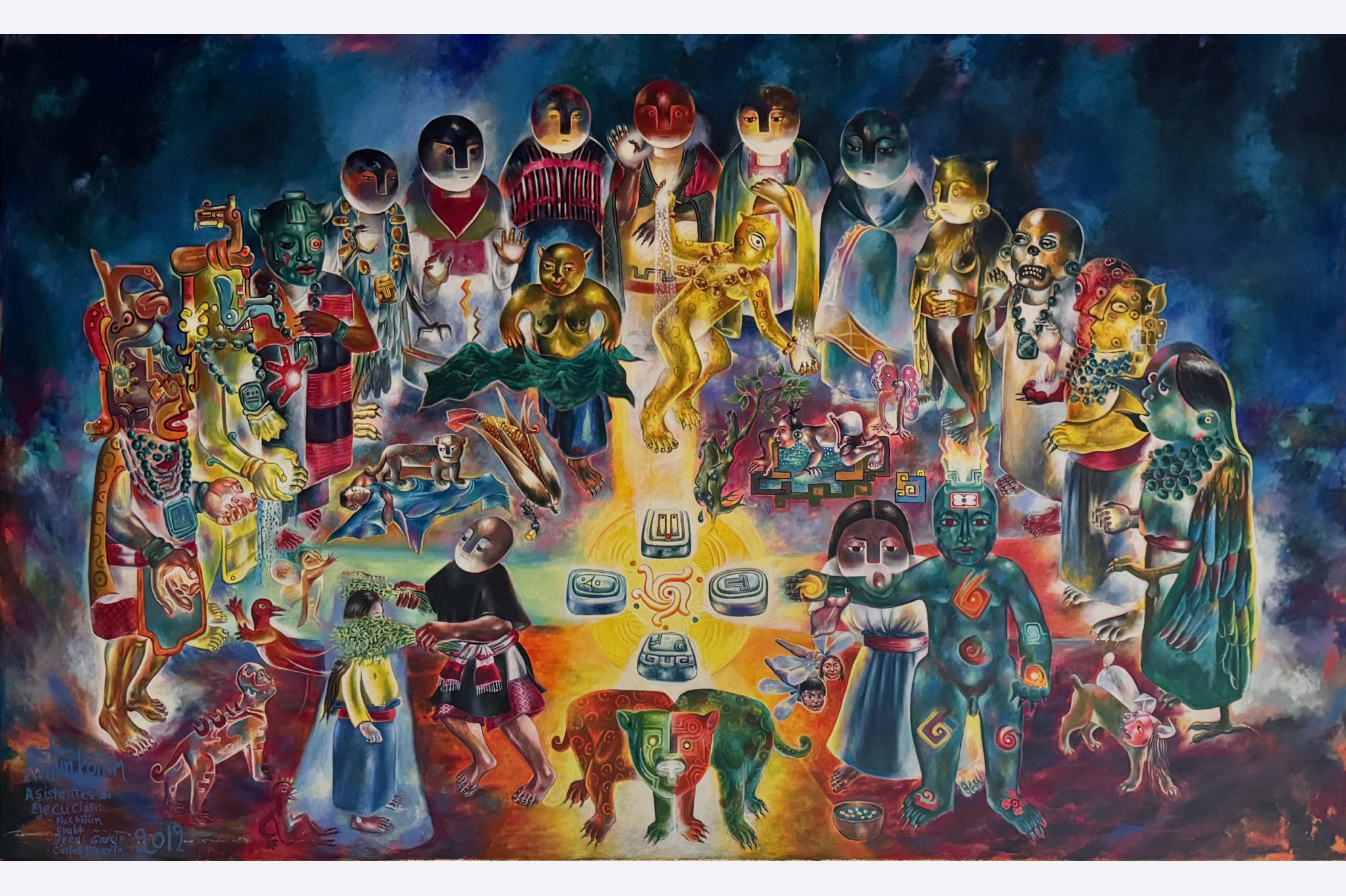
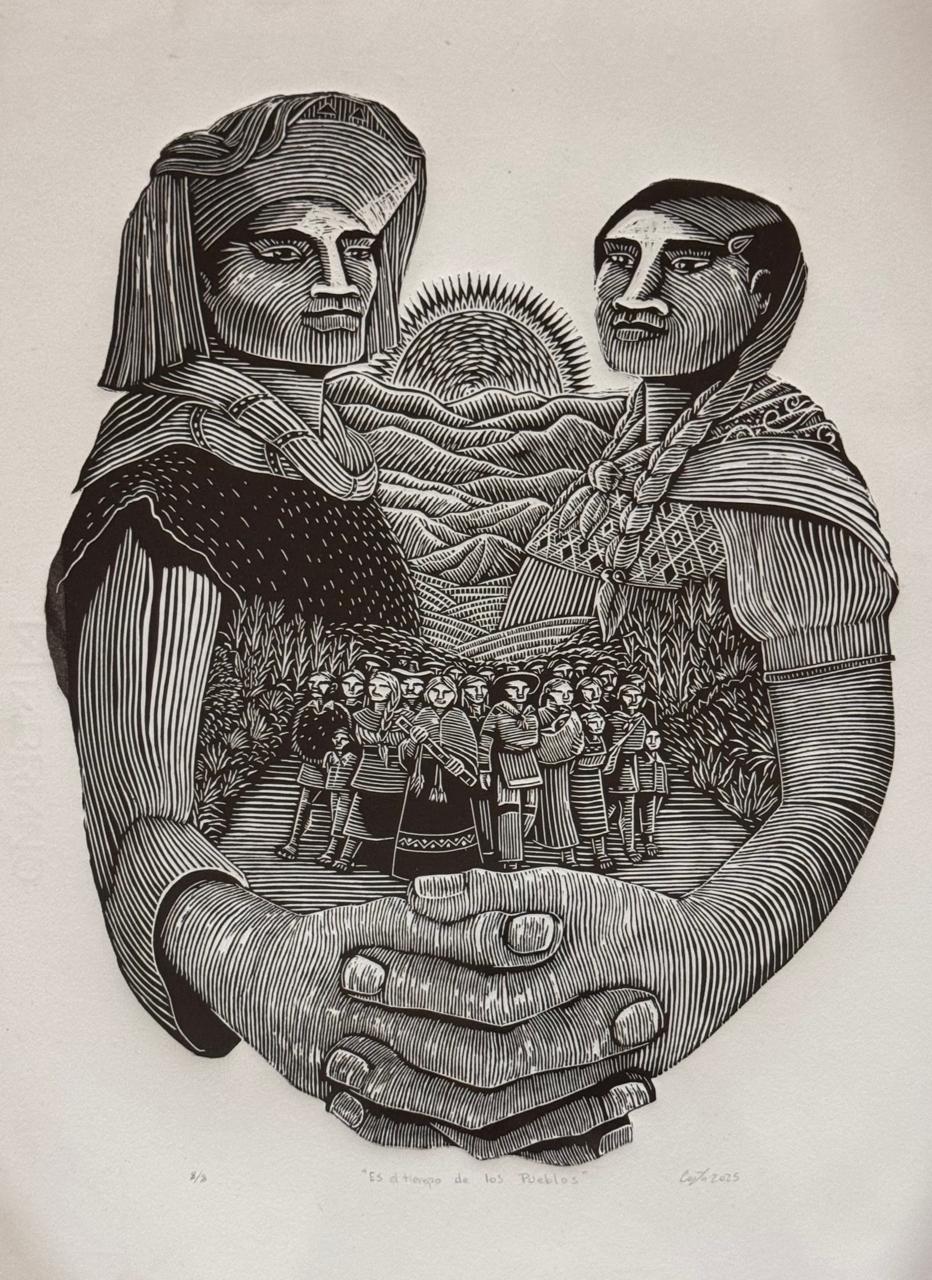
  • De vuelta a las raíces en tiempos de devastación Sobre testigos de mundos otrosCoast | The Hour of the Peoples | Jobel, 2025

    Back to our roots in times of devastation About witnesses from other worlds

    By Carlos Mendoza Álvarez

    A few months ago, we mourned the passing of Diego Irrazábal, a Chilean theologian who dedicated a significant part of his adult life to accompanying Andean indigenous peoples and grassroots communities in "Our America," as the youth of Bendita Mezcla (Blessed Mix) often refer to our continent. Our dear friend Fran Bosch wrote a memorable farewell to Diego in Ameridia from Mar del Plata, recalling his legacy of smiles and warmth as spiritual and theological spaces where we can celebrate the God of Life. Such was the precious gift of this missionary theologian to so many people and communities throughout his life.

    I met Diego on the editorial board of the journal Concilium a decade ago, where we briefly coincided in a passing of the torch between Latin American colleagues of both older and newer generations. In that space, we shared the desire to update the vision and mission of an international journal that had been able to read “the signs of the times” in the spirit of the Good Pope, John XXIII, opening new perspectives for Christian theology during the difficult times of the Cold War and the utopian ideals of social change of the 1960s and 70s that were spreading throughout Latin America and other continents.

    But the theoretical framework for Catholic theology of those years could not remain the same sixty years later in order to account for the decolonial turn that all theology—not only Christian but also Jewish, Muslim, Hindu, and all religious and spiritual traditions—is called to undertake in order to discern the complicity of coloniality that appropriated our religious practices and theological discourses, where the paths of resistance and liberation take on bold and new forms. We were able to make some progress in this new understanding of theology in times of global devastation and the re-existence of people and communities with combative hope, but the processes and work of critical reflection that can emerge in these new theological spaces in times of systemic violence that is rapidly taking over the world remain pending.

    Remembering Diego these days at the World Forum for Theology and Liberation (WFTL) held in Cotonou, Benin, Luiz Carlos Suzin - a Brazilian colleague from the generation that founded this theological process to accompany the social movements of the Global South - recalled with gratitude the vision of the Chilean colleague, from long ago, to admire the soul of the peoples in their ancestral religions and their diverse ways of coexisting with the colonial Christianity that marked the first evangelization of America, exploring new ways of dialogue of spiritual knowledge.

    I met Diego again at some colloquiums in Belo Horizonte, Brazil, and Santiago, Chile. He was always a curious man, passionate about knowing how to forge connections with new generations, without losing the impetus of a prophetic and liberating Christianity that could not renounce its spiritual and theological DNA in order to always stand with the poor and the dispossessed of the earth.

    Participating these days in the World Forum on Theology and Liberation, I see its influence also in this process of accompanying social movements that cultivate, in each territory, the world change we yearn for, and that build diverse collectives from the margins of the hegemonic world. Ultimately, we seek to build the “other possible world” of the World Social Forum, one “where many worlds fit,” as the Zapatista communities propose today.

    In its current edition, uncertainty gripped the participants in the World Social Forum upon receiving the unexpected news that it would be postponed, partly due to the difficult relationship with the Beninese government, as well as the political instability of the West African region in an international context aseptic to social internationalism, and some confusion on the part of the organizing committee in following the process that followed the forum held in 2024 in Kathmandu, Nepal.

    Faced with this situation, the international delegation invited to the World Forum on Theology and Liberation was called to a last-minute assembly to decide how to host the two panels that the FMTL had offered to the World Social Forum: one on feminisms as theological voices of change and innovation confronting patriarchy, and the other on the resistance of peoples to the devastation of Mother Earth. An intense day allowed us to hear voices from social movements that are a sign of hope, such as the Ecolojah initiative with its Center for the Valorization of Agroecology, Sciences, and Endogenous Techniques (Cevaste), opened by Père Jah and Mère Jah in the interior of Benin, where it is possible to explore the connections between caring for the land and the spiritualities of the God of life.

    In order to keep alive “the spirit of Porto Alegre” that gave birth to the World Social Forum, Silvia Regina de Lima Silva, Nicolas Panotto, and I proposed to the coordination team a day of work as the international delegation of the FMTL to creatively reflect together on the current challenges of liberation theology in a context of escalating global violence. We reformulated the traditional see-think-act steps of liberation theology with a decolonial emphasis, to make visible, problematize, and articulate our political, epistemic, and spiritual options where today we weave theology with social movements. It was a rich and intense day of reflection, accompanied by symbols of resistance and re-existence where we see glimpses of the Kingdom of God emerging in our present time.

    We finally decided to spend a day at the World Social Forum to explore its current edition in an African country. The difficult negotiations between the organizing committee and the government, as well as the limited time for many international delegations to reach the event, raised doubts about the future of this space for autonomous social movements that share the vision of another possible world that gave rise to the WSF. The relevance of this model, now twenty-five years old and facing a crisis of internationalism and alter-globalization in times of global technofascism, will have to be evaluated.

    Today, August 8th, is the feast of Dominic of Guzman who—along with Diego de Osma, a bishop troubled by the uncertainty of his time in 13th-century Castile, a group of women from Prouille in southern France seeking to return to the roots of the Gospel in community, poverty, and prayer, and Peter Ceyla, a layman from Languedoc who offered his house to host the initiative of “holy preaching”—shared “the charism of preaching” to return to the roots of the Christian faith through apostolic preaching.

    This is an opportunity to celebrate, without triumphalism and with a critical eye, a constantly evolving lifestyle that has borne rich fruit for the Church and for humanity. A charism of seeking truth, wherever it may be found, as lived by Albertus Magnus, Thomas Aquinas, and Meister Eckhart in the Middle Ages. A drive for justice, beginning with the forgotten of society, as exemplified by the School of Salamanca and Bartolomé de Las Casas in Chiapas in the 16th century, and in our times by Albert Nolan in Apartheid-era South Africa and Gustavo Gutiérrez in Shining Path-era Peru. A passion for beauty, which is the splendor of divinity, from Fra Angelico in Florence to Father Couturier in France, and Julián Pablo in Mexico. A yearning for spirituality from the unfathomable mystery of the living God, like Meister Eckhart on the banks of the Rhine, or the laywoman Catherine of Siena in medieval Tuscany, or the layman Piergiorgio Frassati in the 20th century, a mystical tradition never trapped by any feeling, idea or institution, but seduced by the loving divinity that is always unattainable and yet close.

    Today I celebrate this feast with the Dominican friars and the Dominican family of Cotonou, enlivened by a youth choir with powerful voices and African rhythms, even amidst a Roman ritual that shows no sign of inculturation of the faith of the Beninese people. I hope that one day preaching, theology, and spirituality will reach that “decolonial stage” that will allow us, as peoples, to quench our thirst for the divine in the polyphony of spiritual traditions that weave us together as a human and divine creation in the heart of our communities.

    Happy Feast of Domingo, the seeker and preacher of the saving truth.


    Cotonou, August 8, 2026

  • La puerta sin retorno Algunos ecos del XII Foro Mundial Teología y LiberaciónCarlos Mendoza | Door of no return (detail) | Cotonou, August 1, 2026

    The door of no return Some echoes of the XII World Forum on Theology and Liberation

    By Carlos Mendoza Álvarez


    Ouidah is the symbolic port of captivity, human trafficking, and African slavery at the dawn of modernity. It represents the dark side of the moon of the egoic dream of Western reason, which became a nightmare for those subjected to the dominating libido of European conquering power.

    This small city on the Atlantic coast of Benin, in West Africa, has slowly transformed the memory of the atrocious suffering endured by around fourteen million people - who were enslaved by Portuguese traders, from the 16th to the 18th century - into a territory of resistance and hope for its survivors.

    «"Africa Decides" is a cultural community center that promotes the healing of the collective memory of the survivors of those individuals and communities deported to Brazil five hundred years ago. It was an unprecedented diaspora that crossed "the door of no return," a succinct expression to describe the horror of those generations who never went home.

    In the 19th century, after the abolition of slavery in Brazil in 1888, some decided to return from northeastern Brazil to their homeland in Benin, the former kingdom of Dahomey. They returned with the longing to find the land from which they had been taken, the land that was etched into their bodies, hearts, and souls. That indelible mark was what drew them back.

    But upon returning, these new generations from the diaspora discovered a different time and place, where they didn't recognize their families or their crops. Their land had been colonized by France in the 18th century until its independence in 1960. Another period of dispossession that, to this day, has left a mark of impoverishment on the daily lives of its people. The country had a brief socialist period between 1960 and 1975 that left a legacy of social unrest, until it transitioned to a Western-style democracy with a strong influence in the West African region.

    Those who had been resurrected had returned to reunite with their ancestors and reclaim their path as a diaspora people with those who remained behind. The revival of Vodou in present-day Benin represents a way of recovering precisely that collective memory that was stolen from them and left tattooed on their bodies and souls. It is a radically different mark from the brand of slavery imposed with a hot iron on their black skin, by which the trafficker assigned them an owner, a plantation, and a task that ranged from forced labor on the farms to systematic sexual abuse. These were practices that lasted for centuries and proved to be the foundation of the enrichment by dispossession that created modern European wealth.

    Silvia Regina de Lima Silva is a decolonial feminist theologian who has participated in the World Forum on Theology and Liberation for many years. She spoke to us from her own history as an Afro-Brazilian woman, rooted in both Christianity and Candomblé. She wove a narrative from her diasporic history of "returning home." Silvia proposed that we consider decoloniality as a process of liberation from diverse colonialities—those of power-knowledge-being analyzed by the Peruvian Aníbal Quijano—in which she delved into the spiritual depths of this devastating process she called "coloniality of the soul," a process of domination that, in her own words, consists of "killing one's own beliefs from within." The deepest aspect of modern coloniality, intrinsically linked to racism, is, for her, this servitude of being in its deepest spiritual impulses.

    In dialogue with Silvia Regina, we have begun a joint theological reflection to consider the new forms of Christianity that can emerge from this process of "decolonizing the soul," engaging in creative dialogue with the spiritual traditions that inhabit our bodies and imaginations. Each of us, from our own "place," our "body," our "deepest being of believers," explores dialogues, mixtures, dynamic syntheses, and other practices of diverse spiritualities that we now call "dual belonging," or perhaps "mutual belonging," until we find no other way to speak of new ways of living in the divine Ruah.

    Whether in South Africa or Brazil, in Benin or Chiapas, we, the people, are living through the time of that "return," to give a decolonial turn to the history of coloniality of yesterday and today, giving way to spiritualities of the pluriverse.

    The "no return" signifies today a generating impulse of new spiritual communities of shared belonging, where traditions leave behind the logic of the coloniality of the soul to give way to a "decoloniality of believing" as a source of full life for all the spiritual traditions of humanity.

    The World Social Forum is about to take place in Benin, updating the "spirit of Porto Alegre" that inspired social movements in the Global South to seek "other possible worlds." As an alternative to the Davos Forum, controlled by governments and transnational corporations from the Global North, this forum has, for more than twenty-five years, sought to build networks of solidarity among social movements for justice, human rights, and the care of the planet from an alter-globalization perspective.

    In the context of de-globalization, the financial oligarchy and the "warlords" who control the global economy and world politics today, enormous challenges are emerging for the articulation of resistance to this "war against humanity," as the Zapatistas from southeastern Mexico call it.

    In the coming days, we will learn how these networks are being woven amidst an uncertain local context. It is a time for creativity, for mutual listening, support, South-South solidarity, and the cross-cutting nature of resistance. Indigenous peoples, women, children, and youth, along with so many other collectives resisting systemic violence, continue to weave their voices, where the recovery of each people's soul will be the compass for the birth of these other worlds, "where many worlds fit.".


    Cotonou, August 2, 2026

  • En las laderas volcánicas del altiplano mexicano Sobre la vida que resiste y florece en las grietas del mundoJorge González Camarena | The Mountain | Encaustic on Masonite | BBVA Mexico Collection | ca. 1980

    On the volcanic slopes of the Mexican plateau About life that endures and flourishes in the cracks of the world

    By Carlos Mendoza Álvarez

    The fumarole of the Popocatépetl volcano is perceived from afar as a powerful sign of sacred land, venerated by the ancient Mexicans and later by the "graniceros" of today, who preserve the prayer with offerings to the ancestral mountains of the Cholula valley, heart of the volcanic axis of the Mexican highlands.

    Returning to the landscape of childhood, scanning for signs to sow dreams of words and true encounters, brought to my memory surprising episodes of life.

    The first was the campsite on the slopes of Iztaccíhuatl, or the Sleeping Woman, which we, the colleagues from the Emiliano Zapata Preparatory School, organized fifty years ago. The camaraderie of Raúl, Arturo, Adrián, Juan, and Alfredo, among other dear friends, forged a sacred friendship in that place that endures to this day. The youthful rituals of student camping were enlivened by periods of silence, games, cooking, and celebration, listening in the heart of the forest to the progressive rock music of our generation, from Pink Floyd and Queen to Emerson, Lake & Palmer and other British bands that populated our collective imagination.

    Another memorable moment in volcanic lands was the ascent to the Popocatépetl crater, with Friar Raúl Vera as our novice master, guided by Güero, a young, expert mountaineer from Amecameca, in the State of Mexico, one early morning in the spring of 1980. After a great effort in the final part of the climb, well-equipped with ice axes, mountain boots, and goggles for the glare of the snow, the group of ten novices and their master reached the crater. We found the volcano's chimney exhaling sulfurous vapors, still silent, as Don Goyo—as Popocatépetl is called because of March 12, the day of Saint Gregory, on which, since ancient times, its feast day has been celebrated with offerings to ask for rain—would not reactivate its active cycle until December 21, 1994, after seventy years of volcanic inactivity. Peering towards the inner cone from the crater's ridge, amidst an astonishing silence, we celebrated "the Mass on the world," according to that phrase by Teilhard de Chardin, that remarkable scientist and Jesuit mystic of the cosmic Christ, Alpha and Omega of the evolution of the cosmos.

    As a sacred place, this land of volcanoes has also suffered the siege of evil, but with the triumph of life, leaving scars on the wounded social body.

    I remember the harrowing experience of four friars who volunteered to mediate, for humanitarian and evangelical reasons, the ransom payment for a kidnapping victim. It happened in 1994, that fateful year for Mexico, when disparate worlds collided like tectonic plates: the modernity of President Salinas, marked by the greed and corruption of the Mexican political system, clashed head-on with the guerrilla movements that still survived in the country after their persecution by the Mexican state since the Dirty War of the 1970s. Living through the experience of mediating the ransom payment for a kidnapped person was a profound experience, bringing me face to face with the fragility of human life in the face of the abyss of evil. The cursed money of that thirty-million-dollar ransom symbolized, on the one hand, the perversion of the powerful members of the Mexican elite who amassed such wealth, and on the other, the wickedness of those who used human life as a banner of justice for dubious social causes. As part of the ransom delivery route, the kidnappers, who were guiding us by satellite phones—very rare even then—made us cross the Paso de Cortés, right between the two sacred volcanoes, to reach Puebla and deliver the cursed briefcases there. This wasn't possible because, according to those manipulating us, we were being followed by the government. After a few days of uncertainty, we were able to deliver the ransom in a working-class neighborhood of Mexico City, and the person was released hours later. The four friars who volunteered to be mediators will never forget that experience of humanitarian assistance amidst a wave of criminal violence, with perpetrators on both sides. Violence that, unfortunately, persists to this day in new forms of necropower.

    Years later, I returned to that area through Tlamacas, a mountain refuge also located in Paso de Cortés, during a dramatic moment for a community there on a spiritual retreat led by Friar Ricardo Villarreal at the Hermitage of Silence. In the middle of the night, after a day of meditation, the community was attacked by bandits. Their collective trauma did not prevent this contemplative meditation community from continuing on its path of inner healing and strengthening of its communal life, uniting body, mind, and spirit in a journey of spirituality in motion, through sacred walks, Christian and Buddhist mantras, and service to the community. The silence of the forest, with its human and other inhabitants, had been desecrated by criminal gangs.

    In recent decades, the plume of Don Goyo (Goyo's volcano) has persisted, sometimes exhaling sulfurous vapors and volcanic ash accompanied by lava. Thus, it presides over the dawns of the Puebla-Tlaxcala valley, with its history of earthquakes and social movements of indigenous peoples, of youth demanding democracy, and of collectives dedicated to the spirituality of the land.

    Popocatépetl is the guardian of Iztaccíhuatl, also called "La Volcana" (The Volcano) by the farming communities that live on its slopes, or Rosita because its August festival gratefully celebrates the rains and the fertility of the crops. She is the beloved Sleeping Woman of Mexica mythology, reimagined in recent times as the guardian of the planet's chakras, according to the mythology of Regina created by Antonio Velasco Piña.

    A few days ago, I had the good fortune to visit the territory of San Juan Tianguismanalco and Santiago Xalitzintla, accompanied by Víctor and Carolina, with their young son Emik, who live there and lovingly care for it. For me, this short trip was a reunion with sacred land. I experienced that day as a ritual within the spiral of time, to once again tread that sacred ground of my youth, now with dreams in my heart of returning to the land of my ancestors.

    I met a young and talented witness to the communities organized in defense of their land, connected by family ties and choice to the villages, forests and springs, birds and insects, reptiles and rodents, cornfields and greenhouses that inhabit it. A land of volcanoes with lush avocado, apple, peach, and pear trees. A territory of flowers and aromatic plants with healing essences used in traditional therapies. Ancestry and agroecology find in this land a strength deeply rooted in the land, a promise of life in a present lived with hope amidst so many global uncertainties.

    The dream of Tabor - another holy mountain that has always accompanied me as a symbolic place of ancient and new transfigurations, from that of Jesus of Galilee to that of the peoples in resistance and re-existence - is now revived with impetuous force in these parts, now in these sacred mountains.

    The volcano evokes the virtuous triangle I've been discovering with friends like Juan Carlos from Peru, Kochurani from India, and Laurel from the United States and El Salvador, as well as with collectives from diverse latitudes, to represent our learning process of sowing combative hope where life is threatened. One vertex of the triangle is the practice of mutual support among individuals and collectives resisting systemic violence as a source of life. The other vertex is the creative experiences where we learn to re-exist, reinventing ourselves from the ruins amidst the Great Catastrophe we are experiencing. And the third vertex is the spiritual and theological seedbeds, with ethical and mystical depth, that we can cultivate collectively to learn to care for ourselves and flourish as individuals and creatures of the cosmos. Soon, in this land of volcanoes, we will create a virtual and in-person seedbed on the decolonial theology we are developing in community.

    We will see how the breath of the divine Ruah makes us discover, with exquisite respect for the territory and its inhabitants, new calls to inhabit together the sacred land of the Puebla highlands.

    And speaking of resistance to necropower in the territories, we must now also consider the digital realm where artificial intelligence, manipulated by transnational corporations and authoritarian governments, is designing techno-fascism. For this reason, next Thursday, July 9th, the JobeLab collective, formed by friends from San Cristóbal de Las Casas, will hold the discussion “Disarming Power and Rescuing the Human: Readings on Leo XIV’s Encyclical 'Magnifica Humanitas'‘ at La Madriguera bookstore in San Cristóbal de Las Casas. We will have the participation of experts in computer science, communication, anthropology, philosophy, and theology. Chiapas is a prize for its natural resources, coveted by the industry behind AI, so it is crucial to understand what we are facing. We hope to see you there.

    San Juan Tianguismanalco, July 2, 2026

English