Category: Youth

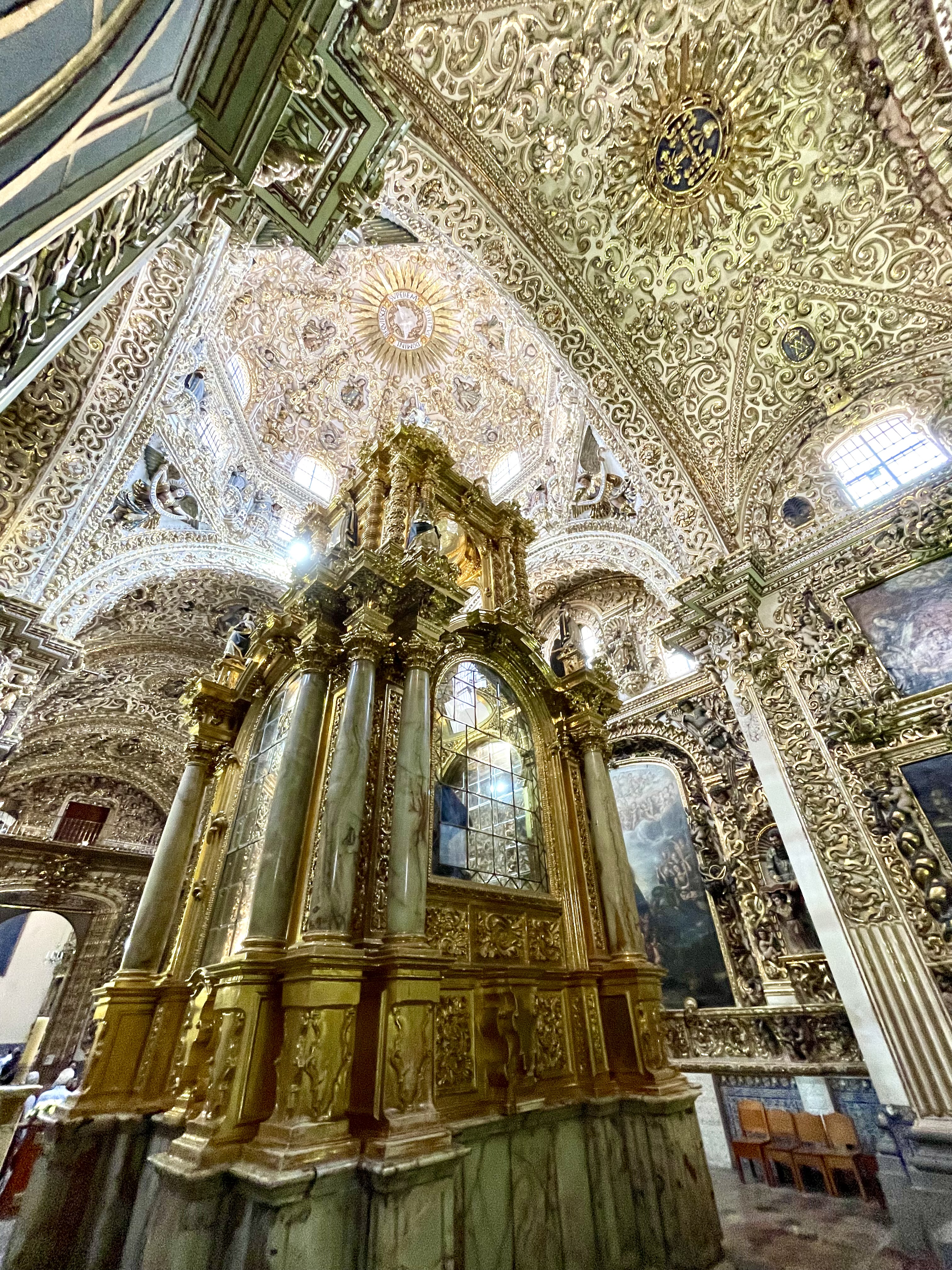
  • Los frutos de la Pascua floridaCarlos Mendoza Álvarez | Chapel of the Rosary, Santo Domingo Church of Puebla | 2026

    The fruits of Easter

    By Carlos Mendoza Álvarez

    Three weeks of silence on this blog have passed amidst a whirlwind of pastoral and personal events that, in retrospect, I see as related fruits of this year's Easter journey. Through brief stories, I will try to recount the glimpses of the world to come that I perceived during these days.

    The religious celebrations of Holy Week suddenly intertwined with a mysterious encounter at the water wells of Yalentay, in the hills of Zinacantán, where I was unexpectedly welcomed by the guardian of the place. These multifaceted religious celebrations unfolded amidst visits from dear colleagues and friends who had traveled from afar—Amirah and Alicia with Adriana—with whom I longed to share the rich fruits of an indigenous Church rooted in and embodied by the Tsotsil people, accompanied by questions about what still needs to be learned about caring for the land as part of the path of resistance.

    Easter in Jobel

    The group of six acolytes was entrusted to me for their training and the preparation of their vestments in the Dominican style. They are six teenagers. pigtails who, with great conviction and emotion, wish to dedicate part of their human and spiritual lives, occupying their free time during middle and high school, to “serving at the altar.” In the context of San Cristóbal de Las Casas, a city of intense religious and devotional practice, connecting with young people to serve Christ at the altar and in the community, especially the poor and the excluded, presents a significant pastoral challenge. Integrating a new generation of young believers faces various forms of resistance from older generations, who seem unwavering in their hierarchical and individualistic religious practices of San Cristóbal's popular piety.

    But after two months of Saturday meetings in a fraternal atmosphere, with simple prayer from the heart and through listening to biblical stories in contemporary audiovisual versions, an incipient community of friendship with Jesus, as shepherd and friend of the sheep of this and other flocks, was formed.

    At the end of this process, which had some tensions with the older generation, I realize the good heart of today's young ponytail holders, eager to serve with beauty and truth at the liturgical altar, while also anxious to translate the symbolism of the altar of Christ—the poor—into acts of service to the most vulnerable in the city.

    65 soles

    And April arrived with its birthday-like emotional force, giving me the opportunity to relive the feast of desire in my own flesh—with mass and a table set with the hallmark of the flavors and style of Puebla—, accompanied by my family and by old and new friends, as thanksgiving for the 65 springs I have been able to live as a man and as a Dominican, most of my life.

    The Chapel of the Rosary, the epicenter of the spiritual life of many families in Puebla, including my own, was the perfect place to offer a prayer of thanksgiving for the gift of life, accompanied by my family and friends throughout so many years of sharing bread and salt, pain and hope, celebration and the work of building other worlds here and now. The Baroque music performed by Julio Saldaña and Suzy Torres, with Magda as soprano and Abraham on keyboard, allowed us to connect with the ancestors of my family and my religious order. This extraordinary space of Baroque art is even more admirable because it tells the stories of women of faith, like Mary, the young woman from Palestine who said yes to the angel, and of many women from the Bible and Dominican sisters from Europe and America, all of them walking, accompanied by the three theological virtues, toward fullness of grace.

    It was a pleasure to host my classmates from the State Normal Institute and the Emiliano Zapata Popular Preparatory School as guests. The years that flew by now seem to bring us closer than we are apart. I had the feeling that we were coming home, after each of us had followed our own path, whether as a lawyer, chemist, engineer, educator, or guerrilla fighter.

    And to my surprise, meeting Polo Sánchez Brito, scout guide of the Antelopes patrol of Group 1 of Puebla, more than half a century later, was to reaffirm those lessons to be self-reliant and in community in the middle of the forest, orienting oneself with the compass and the stars on the initiation walks, learning to light a fire with flint and a little straw, to cook breakfast and prepare coffee with milk at dawn, in addition to recognizing the footprints of the animals that passed by on the paths and recording them in plaster molds.

    Six toasts, one for each decade lived, allowed me to recall small stories of family childhood and as a boy scout, the affective awakening of adolescence, the critical high school youth, the profession chosen from an early age in my case as a Dominican, the faith committed throughout the years according to a spiritual and intellectual tradition of eight centuries, and finally the academic life of three decades inspired by the pastoral accompaniment to vulnerable communities in Mexico.

    And in the end, all this shared memory was crowned by the loving toast in the voices of my sister María Eugenia, my friend Raúl from high school and Amirah, who represented the doctoral students of Boston College from various countries of Our America, from whom I continue to learn so much.

    What a joy to celebrate the gift of life in this way!


    Bavarian dialogues

    And, as a challenging continuation of life, I am now undertaking a brief academic stay in Eichstätt, in Bavaria, thanks to the invitation of my friend, Professor Martin Kirschner, who is allowing me to reconnect with that profession of teaching that I left a year ago when I resigned from Boston College, after three decades of academic life.

    Being the “subject of study” for doctoral students in Bavaria wasn't entirely unfamiliar to me, after Cleusa Caldeira, at the Jesuit Faculty of Theology in Belo Horizonte, Brazil, dedicated her doctoral thesis to exploring my contribution to theological thought. Here, Constantin was tasked with reading my latest book on the resurrection as messianic anticipation, in order to pose incisive questions about the “reality” of Jesus' resurrection, asking what happened to his body and how it affects us today. At its core, there was a metaphysical questioning underlying this foundational event of Christian existence.

    Returning to the rhythm of a European university city—calm, quiet, and orderly in its timing and customs—is a delight. But it's also a challenge not to disconnect from the life and pastoral processes I've been immersed in for the past five months in Chiapas.

    In what way, going forward, will you be able to achieve a balance between action and thought, with enough time for meditation, reflection, and writing?

    The dream of a cabin-home appears on the horizon, a place to socialize with friends in body and spirit, the breath of the divine Ruah to let us be moved by its breeze.

    Perhaps the volcanic environment of my childhood is the fertile humus that will make that dream bloom.

    Eichstätt, April 30, 2026

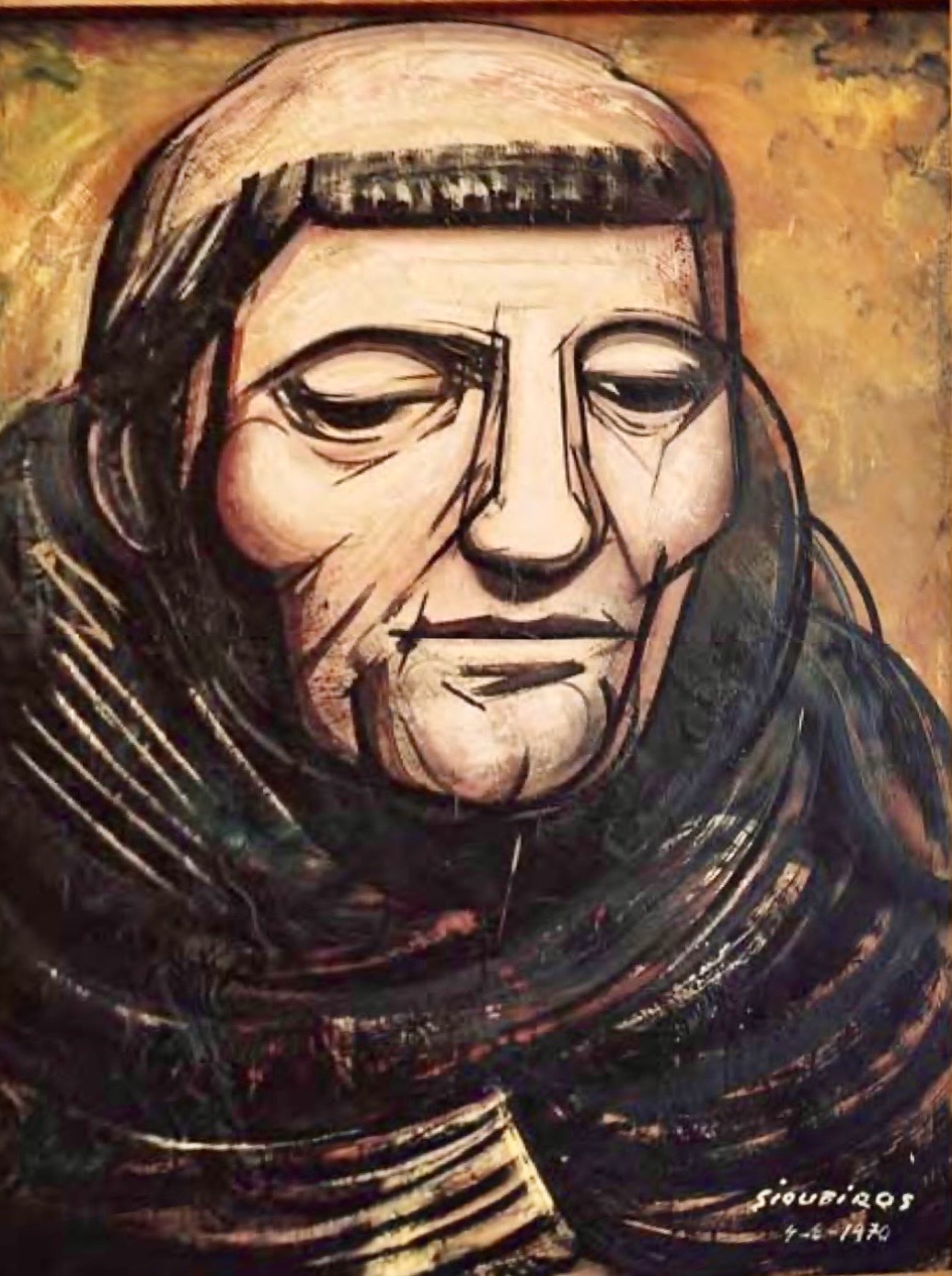
  • Dominicos en las fronteras En memoria dichosa de fray Daniel Ulloa Herrero OP (+), 1946-2026David Alfaro Siqueiros | Portrait of Saint Dominic | CUC, 1970

    Dominicans on the frontiers In blessed memory of Friar Daniel Ulloa Herrero OP (+), 1946-2026

    By Carlos Mendoza Álvarez

    Hospitality and commensality are two vital attitudes that, over the years, I have cultivated with the Dominicans since my first encounter in 1979 with Daniel Ulloa and Raúl Vera, then formators of postulants and novices respectively, on the path of initiation to charism of preaching, which has been in dialogue with diverse cultures for eight centuries, with the chiaroscuro of every century-old institution, its shadows and its great lights.

    Even during my childhood in Puebla, both virtues were present in the life of the family, around the figure of my maternal grandmother, my great-aunt, my mother and aunts, along with the uncles who made each family meeting a true celebration of flavors and dances.

    Daniel Ulloa Herrero passed away a few days ago in Cuernavaca, and today the ashes of his mortal body will be deposited in the Columbarium of the Temple of Santa María de la Anunciación, known as the University Parish, next to the National Autonomous University of Mexico in Copilco, which was founded by the Dominicans in 1963, with the spirit of the ongoing conciliar renewal, to cultivate dialogue with intellectuals, students, athletes and workers of the country's top university.

    Friar Daniel received priestly ordination there, along with Friar Miguel Concha and Friar Antonio Ramos, on July 25, 1970, from Bishop Don Sergio Méndez Arceo, who was a council father and an eminent witness of the liberating Latin American Church, against the current of the prominent groups of the Catholic hierarchy and conservative lay people of the time.

    The CUC - as the University Cultural Center Founded by the Dominicans, the university was famous in its golden age for its University Mass and its Film Club, which showcased the latest art films by unknown and even banned directors such as Pasolini, Tarkovsky, Kurosawa, Fellini, and Buñuel. The presence of the Dominicans in every faculty of the UNAM—whether as professors, students, or guest lecturers—extended beyond the university campus, fostering dialogue between faith and reason with students and professors alike.

    In that impetus, Daniel Ulloa, Raúl Vera, and Miguel Concha were trained as preaching friars by figures of the stature of Friar Alberto Escurdia, professor at the Faculty of Philosophy and Letters; Friar Agustín Desobry, who arrived from France with a great project for a cultural center as a space to promote dialogue with university students; Friar Jaime Gurza, an exquisite and cultured man, knowledgeable about the mystical and aesthetic tradition of the medieval and modern Dominicans; and Friar Julián Pablo Fernández, filmmaker and painter, friend of Don Luis Buñuel, David Alfaro Siqueiros, Juan Rulfo, Octavio Paz, Guillermina Bravo, and so many other creators of Mexican culture of the time.

    Daniel Ulloa stood out for his brilliant intelligence, which he would later cultivate as a historian, graduating from El Colegio de México with a thesis on the conflicting currents of the Dominicans upon their arrival in Tierra Firme in 1526: on the one hand, Friar Domingo de Betanzos, with a rigorous reformist spirit in convent life and doctrine, as part of the evangelization and colonization undertaken by the Spanish Crown; on the other hand, Friar Bartolomé de Las Casas, with a bold emphasis in his criticism of the ongoing coloniality, confronting the Encomienda system through the promotion of the Laws of the Indies and a method of peaceful evangelization that he had already tested for years on the coast of Venezuela and later in Verapaz in Guatemala.

    Daniel Ulloa's vibrant personality was marked by a creative sense of humor and exquisite irony that allowed him to connect immediately with young people, both in universities and in working-class neighborhoods. A notable chapter in his history as a young priest was the rock Mass that, along with a band of young people from the alleyway of Leandro Valle, a neighbor of La Lagunilla and Tepito, the "tough" neighborhoods of Mexico City's Historic Center, he enlivened on Sunday nights at the Santo Domingo church.

    Later, both of these intense experiences—his intellectual life as a historian and his pastoral accompaniment of young people from diverse urban cultures—allowed Daniel, as prior of the CUC, to propose a renewed vision of university ministry in the 1980s that emphasized the intellectual life and pastoral accompaniment of university students with their multiple identities. During his years as prior, for example, he welcomed Brothers Roberto and Benjamín Cuéllar, from the Christian Legal Aid organization founded by Archbishop Romero, who became our mentors in human rights work. This experience paved the way for the creation of the Fray Francisco de Vitoria OP Human Rights Center, the oldest civil society organization in Mexico among those that now comprise the network. All rights for all.

    The General Chapter of the Order of Preachers, held in Mexico in 1992, where I had the blessing of serving as Secretary General, elected Friar Timothy Radcliffe as Master of the Order. In his first month in office, he convened a remarkable group of friars as his close collaborators: Jean-Jacques Perennès of the Province of France as Assistant for the Apostolic Life, Guido Vergauwen of the Province of Flanders as Assistant for the Intellectual Life, and Daniel Ulloa of the Province of Mexico as Secretary of the Order. Together with other friars of this vigorous caliber—as enlightened preachers with a profound sense of thought and spirituality dedicated to justice, peace, and beauty—Friar Timothy encouraged the entire Dominican family for nine years to reclaim the prophetic spirit of “holy preaching.” This was the name of the work started by Dominic of Guzman, Bishop Diego de Osma, the sisters of Prulla and the layman Peter Ceila in Languedoc, in turbulent times of return to the radicalism of the gospel, which was shared by the mendicant movements of the time.

    Years later, Friar Daniel emigrated to the United States to continue his university ministry, first in New York, then in Brooklyn, and later in New Jersey. We Dominicans of Mexico owe him a debt of gratitude: to reclaim his legacy and renew the charism of preaching in these new theological spaces where God encounters wounded humanity seeking life, dignity, beauty, justice, and peace around the common table of divine compassion.

    More recently, on December 7, 2024, when Friar Timothy received the cardinalate from Pope Francis, many of his companions from that time gathered in Rome to celebrate this momentous occasion. In a video recorded on that day, Friar Daniel recalled that the main purpose of the gathering was to reaffirm the urgent need for the charism of preaching to proclaim the Good News amidst the turbulent times humanity is experiencing.

    To honor the legacy of that generation of preaching friars who have marked my life as a person, as a Christian, and as a Dominican, my theological work and pastoral service of several decades has sought to listen to each community and culture where I have lived: Mexico City with its disparate and diverse neighborhoods; university students in Fribourg, Switzerland, Paraná in Brazil, Paris, Mexico City, New York, Rio de Janeiro, and Boston; as well as the indigenous peoples of Oaxaca and Chiapas, from decades ago to the present day, to the Lakota and Mapuche peoples at the extreme North and South of the continent.

    Inspired by this Dominican spirit, at the confluence of faith and reason, I now participate in the development of this initiative JobeLab In San Cristóbal de Las Casas, along with friends from this city. I'll tell you more soon about this exciting network of friendship, hospitality, and budding culinary experiences.

    In the coming days, we will be holding two events here in Jobel: on Wednesday, March 25th at 5:50 pm at Belil Restaurant, a presentation about the San Cristóbal School as a breeding ground for critical thinking that emerged in Chiapas in the second half of the 20th century, with the participation of Pablo Romo, Martha Elena Welsh, and Juan Carlos L. Puente. And on Friday, March 27th, at 5 pm at the Charity Temple, we will host the event “Music for Interreligious Encounter,” together with Shaykh Yahya Rhodus and Shaykh Mudar Abdulghani from the city's Muslim community, focusing on the Sufi music and chants of Nader Khan, a Canadian believer and artist, as expressions of encountering the sacred in times of extreme violence.

    We look forward to welcoming you for an experience of hospitality and dining.

    Jobel, March 21, 2026

  • (Trans)modernidades indianasJuan Chawuk | Cosmic Connection | San Cristóbal de Las Casas | 2000

    (Trans)modernities of India

    By Carlos Mendoza Álvarez

    The line of cars waiting to reach Apaz stretches for several kilometers along the narrow dirt road that winds through the hills. The sounds of the festival can be heard from afar, even from Navenchauc, with its polluted lagoon, once surrounded by wooded slopes and now overrun with unfinished brick houses. The hamlet is a specter of grayish desolation, like something you might see in the poor suburbs of any modern city.

    More than 140 people, mostly young, accompanied by their families and communities, patiently await the bishop and the friars for the celebration of the sacrament of Confirmation. A crowd of more than 500 people, adorned for the occasion, solemnly celebrates the liturgy of anointing with holy chrism, while the monumental choir sings invocations to the Holy Spirit in Tsotsil. Don Rodrigo delegates the three friars present to perform the rite of Confirmation with him, divided into four groups of confirmands. It consists of the laying on of hands, the anointing with holy chrism, and the slap on the face to call them to live with audacity.parrhesia, (in Greek) proper to following Christ in the midst of an increasingly violent world. We reverently pronounce the words in Tsotsil following the liturgical phrase: Ich'bo li skélobil li'e + ja' matanal yu'un Ch'ul Spirit: Ta j'ch'un | Li jun o'onale teyuk ta ajotol: Xchi'uk vo'ot (Receive this symbol, which is the gift of the Holy Spirit. I believe it | Peace be with you. And with you.).

    The Mass continues, and after the consecration of the bread and wine as the body and blood of Jesus, three traditional musicians sing the ancestral chant, which the congregation mostly accompanies with ritual dance. Unfortunately, some members of the community no longer include these traditional symbols in their celebrations. The parish's large choir and media team participate in the festivities with their youthful talent, dressed in traditional attire and singing in Tsotsil, but also embracing the technology that has transformed their minds and ways of life. Modernity Indiana —to paraphrase the expression of chroniclers from colonial Mexico in a new context— of a generation deeply rooted in tradition, yet simultaneously passionate about new lifestyles mediated by algorithms and artificial intelligence. Thus, today's youth explore their evolving identities.

    What has caused these changes in the Highlands of Chiapas, which I first visited almost half a century ago, a region then plagued by extreme poverty and now experiencing an economic boom reflected in concrete houses and all-terrain vehicles? That modernity of the counter-productivity -analyzed in its historical genesis by Ivan Illich and conceived by Jean Robert as a perversion of place– it forcefully entered the territory of the Tsotsil nation.

    In recent decades, the Zinacanteco economy has experienced exponential growth, thanks to the hard work of the Tsotsil people in flower cultivation and the excellence of their textiles. In particular, greenhouses have transformed the landscape of the stately hills into a mosaic of metal and plastic, with greenhouses protecting the crops of the flowers of Zinacantán. Roses, gladiolas, anthuriums, birds of paradise, hibiscus, bromeliads, desert roses and wallflowers are the most popular in the local market, from where they are exported to the neighboring states of Tabasco, Campeche, Yucatán and Quintana Roo, also to Mexico City.

    Similar effects are visible in the surrounding areas. The houses of Tsotsil families in Chamula express this economic boom through a new indigenous architecture that blends traditional colors with forms kitsch, similar to that of Freddy Mamani, The Bolivian creator of the so-called “neo-Andean architecture.” These houses reflect the new economic status of their inhabitants, generated by local commerce, remittances from fellow countrymen, and, according to studies from 2001 to the present, some criminal enterprises, among which the most prominent is… human trafficking.

    Something similar regarding housing is happening in Zinacantán, with new forms of housing, foreign to vernacular architecture, that are developing in imitation of other municipalities that have recently experienced economic prosperity. This phenomenon has produced a fissure in the  kuxlejal, or the integral way of life, which the Zinacanteca communities developed for centuries, but which is now collapsing due to the degraded management of the forests.

    At first glance, the deforestation of the hills, which has given way to greenhouses, is readily apparent. This phenomenon is already producing devastating effects on the rainfall cycle and the impoverishment of the soil. The use of toxic fertilizers and pesticides, This phenomenon, already analyzed by scientific studies, persists despite agroecology promotion campaigns carried out by civil society organizations and the Catholic Church through its ministries. guardians of Mother Earth. The relentless logic of the market is dragging flower producers into that environmental hell already seen in other parts of the world.

    These are some of the modernities Indianas which appear as mirages to the Tsotsil people of today, where the illusion of economic prosperity is hiding the devastating effects on Mother Earth.

    There are other modernities to explore, following, among others, the model proposed by the political ecology of Víctor Toledo and his scientific colleagues around the world, proposing the bioculturality as a new way of understanding our relationship with our common home as a human species to avoid the Great Catastrophe. Other models emphasize the importance of returning to cultivating and inhabiting from the vernacular, without abandoning modern science and technology, but orienting them towards the sustainability of peoples' ways of life.

    Perhaps in that path of alternative, other, moving modernities - and that's why trans-modernities As proposed by Enrique Dussel, the new generations of Zinacantecans will be able to find their new identity to become part of the regional economy and universal culture, preserving and promoting their own ways of life, of communality and of ancient and new spirituality.

    What are the best ways to accompany communities in their struggle for life from the heart of their spirituality? With this question in mind, we are moving forward in the mutual accompaniment between the Dominican friars and the people of the Chiapas Highlands.

    “Let the people who welcomed the friars celebrate their arrival,” Elena Poniatowska told me in an interview last December at her home in Chimalistac, Mexico City. And she was right about remembering a five-hundred-year historical process, with its highs and lows, where the evangelization of these lands of Chiapas was initially marked by a profound respect for the indigenous nations on the part of friars like Bartolomé de Las Casas, renowned as a defender of the indigenous peoples, and Pedro Lorenzo de la Nada, who, defiantly confronting the closed-mindedness of his brethren, ventured into the jungle to encounter the Zendales, Pochutlas, and Lacandones peoples of the 16th century. Unfortunately, with the passage of time, that impetus for peaceful evangelization turned into greed, with the accumulation of wealth in the estates and haciendas of Dominican priories that controlled and subjugated entire communities in the following centuries.

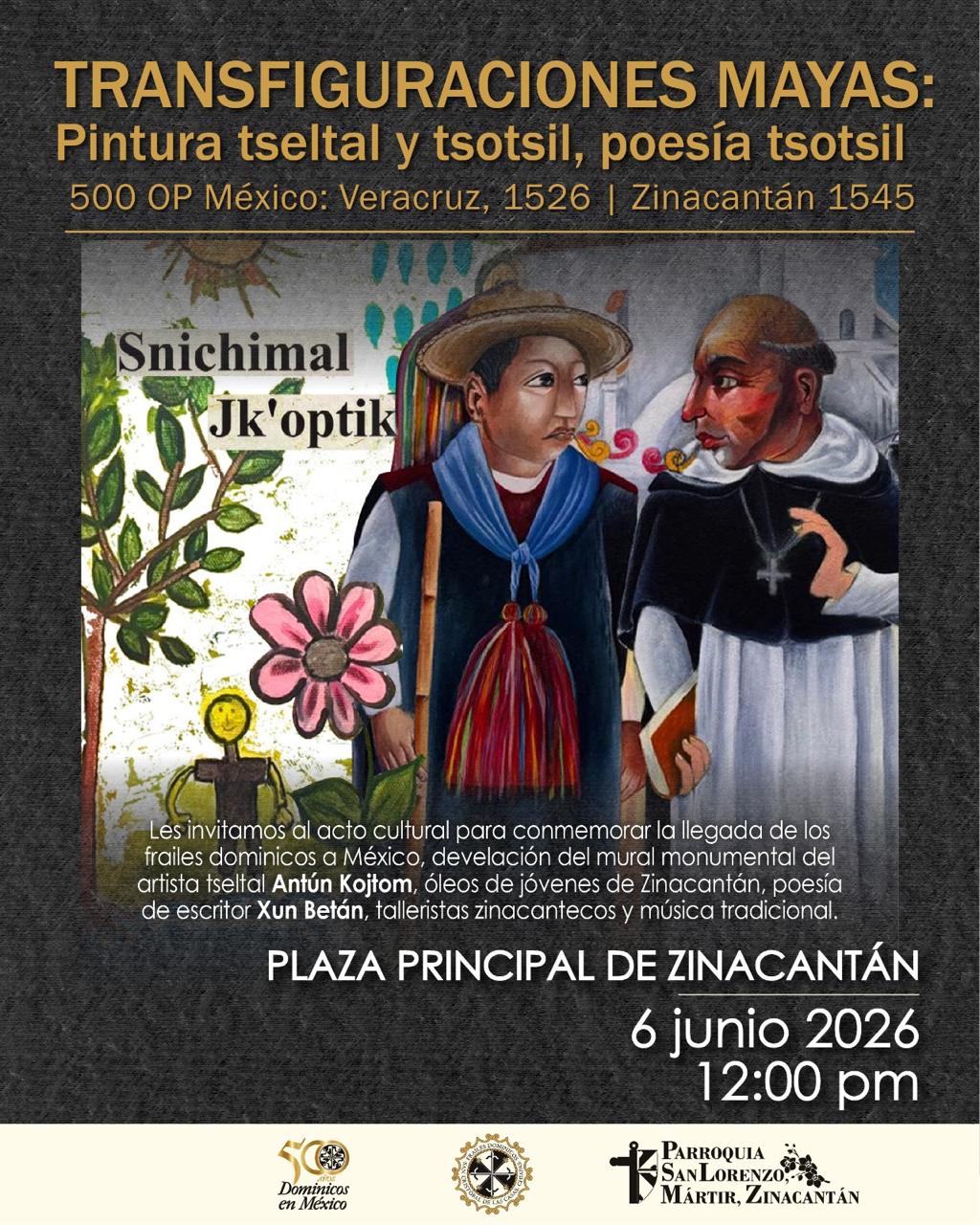
    Therefore, the commemorative narrative of these five hundred years that we are preparing in San Cristóbal de Las Casas and in Zinacantán will revolve around the mutual accompaniment between the Dominican friars and the peoples of the Highlands of Chiapas: remembering the apostolic zeal of the first missionaries, while recognizing the ancestral legacy that persists in the spiritual life of the native peoples who have inhabited these lands since ancient times.

    Guided by a young Tsotsil poet and a renowned Tseltal master painter, the youth of Zinacanteco will weave this collective memory from their present perspective. Tsotsil poetry and Tseltal painting will be at the heart of the cultural celebrations commemorating the five hundredth anniversary of the Dominicans' arrival in Mexico, which we are preparing for this year in Chiapas. In this way, next June we can joyfully and gratefully celebrate this shared journey of half a millennium, with our gaze fixed on the legacy of our ancestors, both Maya and Christian, in the manner of the Dominican friars and the people of the Chiapas Highlands. We will soon share the 500 OP – Chiapas program that we are currently preparing to celebrate the life that flourishes in these lands.

    San Cristóbal de Las Casas, January 31, 2026

    Note: I hope we can continue the conversation with your comments.

English