Category: Gender

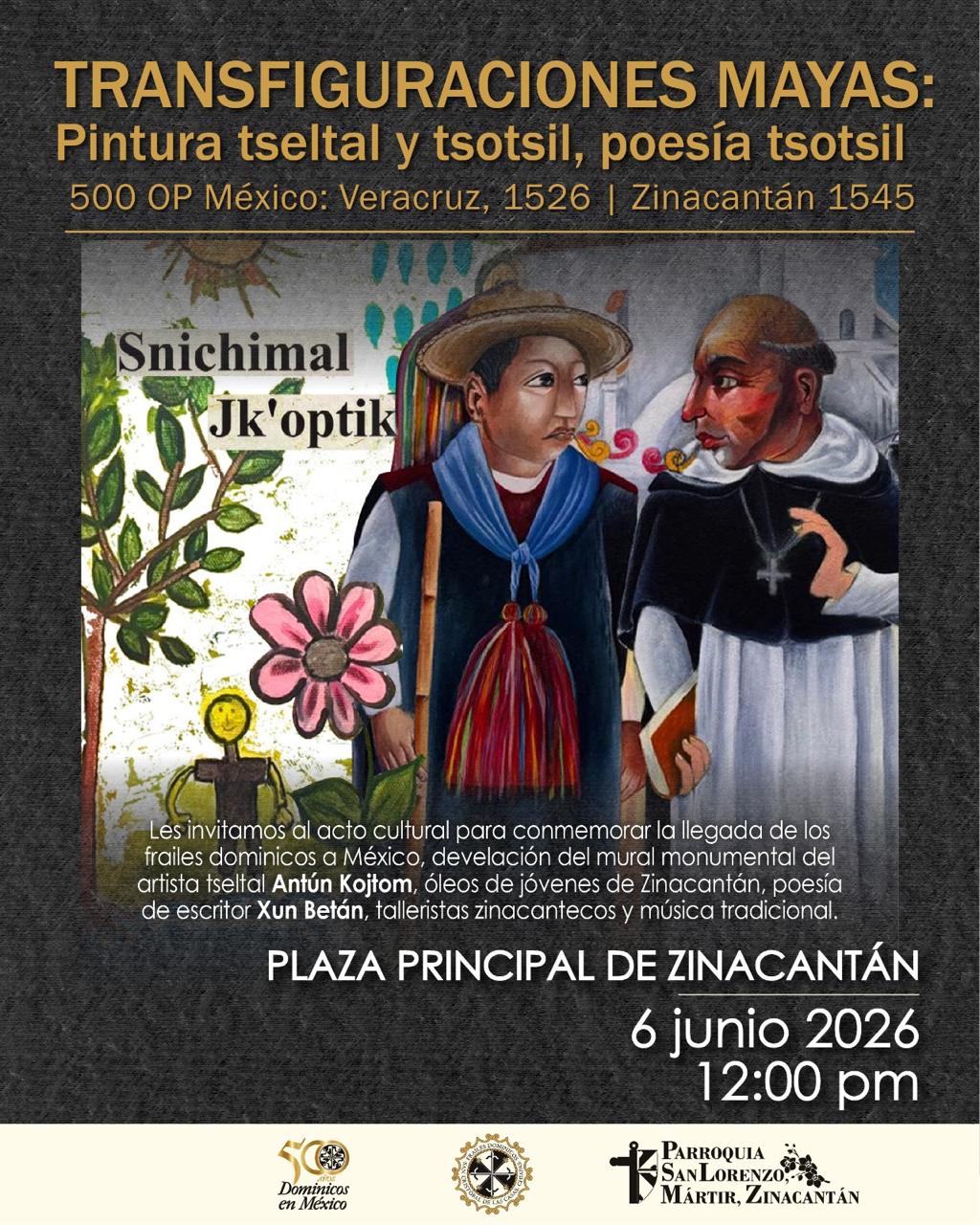
  • Transfiguraciones mayas Acto cultural de los 500 OP Chiapas

    Mayan transfigurations Cultural event of the 500 OP Chiapas

    Welcome remarks

    By Carlos Mendoza Álvarez

    Good afternoon, dear brothers and sisters:

    This cultural event in the public square of the municipality of Zinacantán is a symbol of the dialogue between faith and reason that has been at the heart of the preaching of the Gospel, from its origins in the lands of Palestine with Jesus of Nazareth, two thousand years ago, to the present day in the Highlands of Chiapas.

    Jesus of Galilee was a preacher of good news for humanity, standing up to the powerful of his time, and accompanied by his messianic community even though he was betrayed by an angry mob.

    Jesus' loving sacrifice for a humanity reconciled with itself and with Mother Earth acquires a cosmic force with his resurrection from the dead, which is the most radical good news of all time.

    God is not a God of the dead, but of the living. And that is why the God of life is always on the side of the poor, the excluded, and the vulnerable, so that from there he may call everyone—victims and executioners alike—to heal humanity's mortal wounds and lead us to his fullness of life.

    On the occasion of the arrival of the first Dominican friars to the mainland of Abya Yala of the native peoples, five centuries ago on the coasts of Veracruz in 1526, we Dominican friars of today long to make a joyful, yet critical, memory of those five centuries of encounters and disagreements with the peoples of Mexico, especially those of Chiapas.

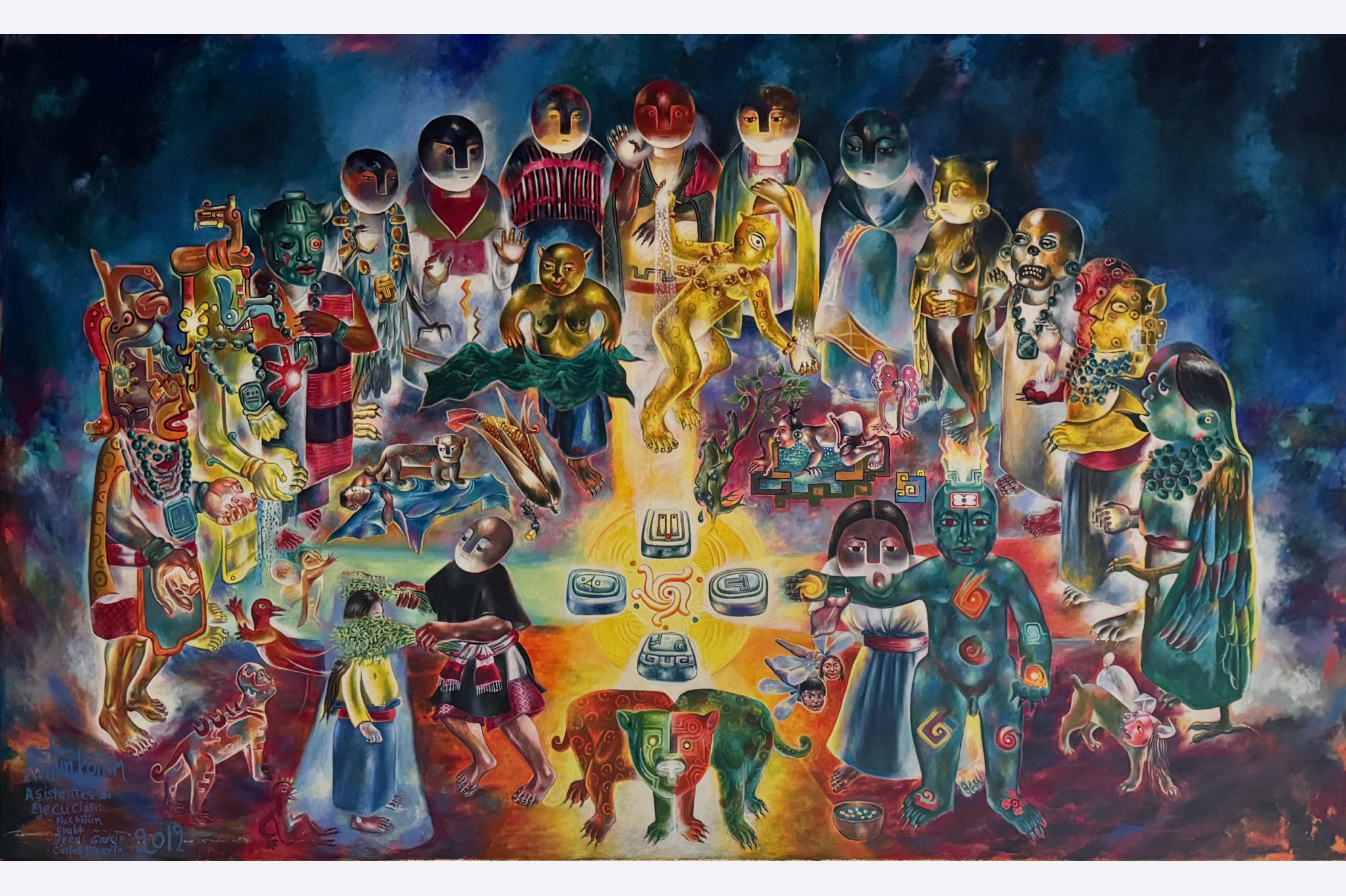
    The dialogue between faith and reason, we Dominican friars have promoted for eight centuries in spirituality, thought and the arts, always accompanied by the promotion of human dignity and its inalienable human rights, through justice and peace for all peoples and creatures, as did the first bishop of Chiapas, our brother Friar Bartolomé de Las Casas, through peaceful evangelization, and later followed in his footsteps by Friar Pedro Lorenzo de la Nada in the lands of the Pochutlas and the Lacandones, as can be seen in the mural that is about to be unveiled.

    The cultural event that brings us together today is a movement in three moments: image, word and music.

    The image

    Through murals, the Mayan peoples have long preserved their ancestral memory, the culmination of which are the murals of Bonampak. This tradition is renewed in contemporary Mayan art, such as that of the great master Antún Kojtom, a Tseltal artist from Tenejapa, who accepted the invitation of the Dominican friars to conceive, design, and paint the mural that will be unveiled in a few moments by the Provincial Prior of the Dominicans in Mexico, Friar Luis Javier Rubio Guerrero, the guest artist Antún Kojtom, and a friar representing the authorities of the San Lorenzo Mártir church.

    Next, nine paintings by young people from Zinacantán who participated in the introductory acrylic painting workshop offered by Master Antún last week will be exhibited. Their works reflect the ch'ulel, or spiritual strength, that accompanies them in their inner lives. We will then present them with certificates of recognition for their commitment.

    The word

    Since ancient times, human words have been a reflection of the divine word, especially poetry. In the second part of this cultural event, we will hear poetry from Xun Betan, a Tsotsil writer from Venustiano Carranza, and from the young people who participated in the workshop he led for several weeks in Zinacantán. We will also present certificates of recognition for their commitment.

    The music

    And to conclude, traditional music, that ancestral sound memory, will inspire us to look closely at the monumental mural by the master Antún Kojtom and the acrylics of his students. The sound waves of the traditional musicians from the Parish of San Lorenzo Mártir de Sots'leb will reach throughout the plaza, echoing in the sacred hills inhabited by the ch'ulelal, who also watch over us and accompany us today.

    We, the Dominican friars, offer this gift to the people of Zinacanteco. It was made possible thanks to the agreement of the three community authorities: the municipality, the churches, and the pastoral plan.

    A special word of gratitude to the Sertull Foundation of Mexico City for its generous support in funding this initiative, as well as to the Fray Bartolomé de Las Casas Human Rights Center for its support in educating about historical memory and the human rights of indigenous peoples.

    In conclusion, I invite the Dominican family (friars, sisters, and laity) to continue deepening, with rigor and hope, the historical memory of that complex past of the Dominicans in Chiapas, considering the challenges that lie ahead in our time:

    • to make visible the stories of women knowledgeable in ancestral Mayan spirituality and their current positions in the communities, as well as the people of the

    sexual diversity in its dignity, its rights and its community responsibility;

    • and to accompany children and young people in their processes as they passionately embrace technological modernity, with its opportunities and its serious risks of ecological, social and political devastation, in times of algorithms and artificial intelligence.

    May the contemporary Tsotsil and Tseltal art that we will contemplate in the mural and the acrylics, hear in the poems and celebrate with the traditional music allow us to celebrate the dialogue of knowledge between the peoples, with their diverse ancestral and contemporary spiritualities.

    May we continue to practice mutual listening in our times to promote the full life of the native peoples of the Highlands of Chiapas, especially the Zinacantec people.

    Welcome to this celebration of life for the people of Zinacanteco, past and present!

    Sots'leb, June 6, 2026

    Friar Carlos Mendoza Álvarez, OP

    Coordinator of cultural activities 500 OP Chiapas

  • La teología feminista como resistencia al clericalismo y reinvención de la Iglesia Sobre las voces y saberes de las mujeres sobrevivientes de abusosLolo Góngora | Women on the Front Lines | Santiago, Chile, 2020

    Feminist theology as resistance to clericalism and reinvention of the Church On the voices and knowledge of women survivors of abuse

    By Carlos Mendoza Álvarez

    Yesterday I participated in the brilliant doctoral thesis defense of María Soledad Del Villar Tagle, a Chilean feminist thinker and activist, for the award of her PhD in the Department of Theology of Boston College,, after six years of mentoring as a thesis director, along with three outstanding colleagues of international renown: Lisa Cahil, Margaret Guider and Nancy Pineda-Madrid.

    With this act I concluded my academic commitments with that American university, where I was fortunate to weave networks of critical thinking with some colleagues, especially doctoral students who are now professors at various universities around the world such as Laurel Potter, Valentina Nilo, Amirah Orozco and Maddie Jarrett, who represent the new voices of feminist theologies, queer, Latinx and disability, with a seal decolonial in their research.

    Sole's thesis topic, as her colleagues affectionately call her, was inherently complex because it touches on an open wound in the Roman Catholic Church: justice for women survivors of sexual abuse committed by clergy in recent decades, particularly in Chile. Unfortunately, sexual abuse by clergy—against adult women and mostly male minors—is a phenomenon spreading like a silent cancer in other local churches around the world, where civil and ecclesiastical commissions have been established, especially in France, Australia, Canada, and the United States. In Mexico, unfortunately, the strength of the patriarchal pact It persists. The systemic practice of sexual and moral abuse is frequently associated with male leadership as an instrument of power in other religions as well, forming a patriarchal system with clerical religious justification, as analyzed by Kochurani Abraham in India.

    And to make matters worse, sexual and moral abuse against women and vulnerable people has persisted for millennia in various institutions such as schools and the military, not to mention families, where men with toxic masculinity practices impose perverse forms of control over the bodies, minds, and desires of women and vulnerable people.

    Below, I share some of my reflections that I proposed yesterday to open the dialogue with Sole in her thesis defense, which, virtually bringing together people from the North and South, created a community of listening, excited to receive the harvest of a living feminist theological thought.

    It is a pleasure to welcome you to the thesis defense of María Soledad del Villar Tagle, which crowns a research of profound significance and long academic work that contributes to Latin American feminist theology and its connections in other cultural contexts.

    It is also an honor to preside as Advisor This academic act together with the admired colleagues Lisa Cahil, Margaret Guider and Nancy Pineda-Madrid, who make up the Academic Committee that has accompanied with a critical reading the thesis of María Soledad Del Villar Tagle, providing her with important elements to refine the argument, methodology and the theological implications of the thesis.

    The title of the dissertation is in itself eloquent and challenging: “The Sexual Abuse Crisis in the Chilean Catholic Church: Feminist Theological Reflections for Survivors and for a Wounded Church.” The candidate confronts us with a debt of epistemic justice This research focuses on adult women survivors of sexual abuse perpetrated by clergy in the Roman Catholic Church in Chile in recent decades. It is an interdisciplinary study that combines qualitative research methodology within the theoretical framework of contemporary feminism and trauma studies. Through both lenses, it is possible to analyze the reality of these women survivors in its multifaceted complexity, as well as to consider the implications for the process of personal and communal healing. A crucial part of the thesis argument is the implications for an ecclesiology that addresses the causes of gender-based violence in the Church and its relationship to clericalism as an ideology of patriarchal power that persists in this ancient institution.

    For my part, I want to begin this dialogue with you, Sole, by recalling three moments from your shared seven-year research process. Inspiring moments that, in my opinion, lie “behind the scenes” of your theological work.

    The first instance was our meeting in Leuven, during the 2019 Congress on Systematic Theology, where you first told me about your nascent research project. Even then, your Latin American and feminist approach was opening up to questions that extended to other contexts and subjectivities experiencing diverse forms of violence, beginning with women, but also connecting with other subjectivities such as migrants, LGBTQ+ communities, and people with disabilities. We explored this together in the undergraduate course "God, the Person, and Society," where you collaborated as a teaching assistant upon my arrival in BC during the harsh winter of 2021, in the midst of the pandemic. That thread of violence against vulnerable people remains present in the fabric of your dissertation.

    The second moment was the meeting with the Basic Ecclesial Communities (BECs) of El Salvador, to which Laurel Potter invited us. This meeting served as a moment to verify the results of her dissertation research on the ecclesiology of the BECs as a narrative theology of liberation, with its altars, memorials, and Sunday celebrations. In that colloquium, enriched by the visit to the site of Archbishop Romero's martyrdom, you emphasized your experience with the women's communities in Chile that embraced the see-think-act as part of their journey of following Jesus. Processes that connect you with your Chilean ancestors in the construction of a another world, Beyond patriarchy, like Gabriela Mistral and Violeta Parra in times of liberation, or Elizabeth Lira and the social workers of the Vicariate of Solidarity during the Chilean dictatorship. Another precious thread in your theological tapestry is this communal fabric of women's experience and their way of embodiment redemption through care practices through which they creatively confront the pedagogy of cruelty produced by the mandate of masculinity analyzed by Rita Segato.

    The third moment I want to evoke today was the festival encounter It re-exists. The Spirit crossing peripheries, held in Guadalajara, Mexico, in 2023. In particular, I want to recall here the clay workshop led by the ITESO student LGBTQ+ collective. We went guests to mold the reproductive organs with plasticine to then talk about our own relationship with our bodies. Then you were pregnant with Manuel and you molded your belly with the embryo inside using plasticine. The most surprising thing that afternoon was your dialogue with the Searching Mothers who mourn the absence of their children in Mexico. children. They connected with you powerfully, and you with them, through the presence—or absence—of their own motherhood experiences. Mutual care as sisterhood This translated into a memorable moment as an experience of bodies in resistance and re-existence. There I discover another precious thread in the loom of your thesis.

    With these reflections in mind, I would like to ask you to explain more clearly two elements of your thesis that are already mentioned in the last chapter, but which will undoubtedly be part of future research: What is the spirituality of resistance among abused women and survivors that not only empowers them but also allows them to connect with other subjectivities in resistance? What rituals of sisterhood Can they connect with other collectives in resistance as an expression of the Church as the wounded body of Christ in the process of resurrection?

    And then a rich dialogue ensued about the practices through which women survivors imagine and create another possible world: rituals of sisterhood, the reinterpretation of Christian sacramental celebrations by returning to their symbolic and ethical source, as well as the connection with ancestral spiritualities that keep alive the sacramentality of Mother Earth as a gift from Divinity, and many more practices.

    These questions remain open for future research. I have no doubt that feminist theology is still relevant today with a new generation of thinkers, proposing critical thought such as that of María Soledad Del Villar Tagle, thus contributing to building new expressions of a post-patriarchal Christianity as a fulfilled promise of life for everyone.

    At the conclusion of the defense, the Committee unanimously approved the brilliant thesis, recommending its publication in Spanish to return to the survivors and their collectives the knowledge gained, as well as some articles or monographs in English on the topics that intersect in this interdisciplinary fabric, such as feminism, trauma and the spiritualities of the survivors.

    Those who wish to see Sole's publications can find them here: https://psiucv.academia.edu/Mar%C3%ADaSoledadDelVillarTagle

    Boston – San Cristóbal de Las Casas – Valparaíso, March 13, 2026

  • Amores no patriarcalesComet Ludo | The struggle doesn't continue, it's ongoing | 2014

    Non-patriarchal loves

    By Carlos Mendoza Álvarez

    “The patriarchy is a judge that judges us for being born | and our punishment is the violence you see […] And it wasn’t my fault, not how I walked, not how I dressed | and it wasn’t my fault, not how I walked, not how I dressed…” Thus began the performance by the Chilean collective Las Tesis at the height of the #MeToo movement, shortly before the Covid-19 pandemic that would later ravage humanity. I remember how, in 2020, protests spread across the world like a rising tide: gatherings in public squares, clotheslines denouncing sexual harassment in universities, companies, government offices, and public parks. A green-and-black wave of women’s collective action confronting patriarchy.

    At that time, colleagues at Universidad Iberoamericana Mexico City denounced fellow students, professors, and administrators through the clothesline for acts of sexual harassment. Thanks to these protests, a formal institutional protocol for reporting harassment was later established at the university, managed by various institutional committees and commissions. A human rights culture was also promoted to combat gender violence, integrating this issue into the curriculum and establishing the Center for Critical Gender Studies and Feminisms. Years earlier, a doctoral program had been created to investigate this phenomenon in contemporary society from an interdisciplinary perspective, thus contributing to the strengthening of feminist and LGBTQ+ collectives, while also designing proposals for the establishment of public policies on gender equality. I was tasked, along with feminist and queer colleagues, with exploring the best ways to support this initiative from the Division of Humanities and Communication, where I worked as a divisional coordinator at that time with a formidable team of young colleagues, experts in philosophy, communication, graphic arts, administration, and academic management.

    During those years, there was also a surge in denunciations from public figures emerging in diverse cultural spheres, such as the artistic, academic, and religious communities, expressing the outcry of more than half the world's population, fed up with gender-based violence, primarily against women, but also against queer individuals and groups. Thanks to this collective awakening, I discovered the admirable work of the Indian theologian Kochurani Abraham with women victims of gender-based violence inflicted against them by male leaders of three traditional Indian religions: Hinduism, Islam, and Christianity. Their work consisted of making this age-old violence visible and accompanying women on their path to liberation from the patriarchal burden by inventing new forms of belonging to their spiritual tradition, nurtured by mutual care and creativity in their commitment to intertwining spirituality with social justice and gender equality.

    But there were also excesses, such as cancel culture, which destroyed, with a click, the lives and careers of people accused without evidence, sometimes as a settling of scores, other times as the rotten fruit of rivalry, and still others with sufficient grounds for an anonymous denunciation out of fear of the corruption networks that kept the patriarchal pact intact, a political phenomenon analyzed by Rita Segato as a mandate of masculinity in her work Counter-pedagogies of cruelty.

    The case of Boaventura de Sousa Santos touched me very personally because years earlier I had organized, together with my dear colleague and friend Pablo Reyna, a colloquium on his scientific and poetic work, to frame the Honorary Doctorate through which he was awarded five degrees from universities within the Jesuit University System of Mexico for his notable contributions to epistemologies of the South, the World Social Forum, and the ecology of knowledges. A group of colleagues from the Center for Social Studies (CES) at the University of Coimbra accused him of sexual harassment in a British publication, which was later retracted. The accusation abruptly ended his career. This crisis, at the same time, brought to light a hidden problem of rivalry within Portuguese academia and its global connections. Now, five years later, we know that the accusations have not been proven, although the damage has already been done, according to the recent account of the Brazilian philosopher Marilena Chaui. As part of this sad story, Maria Paula Meneses, the Mozambican academic, who was one of the people accused of covering up for the Portuguese author, has just passed away, and a farewell message she made public last July before her death can be read.

    How to maintain the relevance of a colossal work like that of Boaventura, Maria Paula and Marilena, with their network of conversations about the world with decolonial and anticolonial colleagues such as Silvia Rivera-Cusicanqui   and  Gladys Tzul Tzul struggling from below, honoring first the memory of the victims of patriarchy, as well as those trapped in the spiral of resentment and hatred that expands in diverse human collectives, while continuing to call for the necessary accountability and the challenge of the communal discovery of truth?

    This week I participated in the Seminar on non-patriarchal practices led by our dear friend and fellow anthropologist Abraham Mena at Ecosur. It was a virtual session that allowed us to include critical theology in the academic conversation in this intercultural and Indigenous city, as an interlocutor with other social sciences and the humanities, in order to reflect on paths for overcoming patriarchy and its toxic masculinities.

    In my presentation I emphasized the need for intersectionality as a method to connect the diverse forms of violence suffered by "the wretched of the earth," starting with women, but including people rendered disposable by a hegemonic, patriarchal, capitalist, classist, and white supremacist society.

    I was surprised by the online questions that focused on best practices for dismantling patriarchy. My guiding thread in the dialogue was non-patriarchal loves like a compass to escape the entanglement of hegemonic power with its many heads, like the capitalist hydra the Zapatistas warned us about some years ago.

    These non-patriarchal loves are dissident loves that dismantle the toxic way of affirming the human condition as power, control, and the mandate of masculinity. Diasporic loves of queer people, but also the love of cisgender people who embrace diversity in their own bodies, minds, and spirits. And as an expression of that love, I also emphasized the importance of ritual that collectives create in their diversity to celebrate life as survivors: the mothers of disappeared persons, the migrants facing the train of horror, not by chance named La Bestia, and the native peoples intertwining ancestral tradition with Christianities of diverse confessional tones.

    I recounted, as a reference point for these new forms, the history of feminist liturgies that recreate their own sacramentality from the passage of divinity through lives, the bodies and the struggles of women, as she has explored Marilú Rojas in her research on the feminist ecotheology of liberation. She also brought to heart the queer/cuir liturgies of LGBTQ+ collectives, which never cease to celebrate the queer God as an incarnate divinity. As Ángel Méndez points out, there is nothing more queer than a humanized God.

    Non-patriarchal loves are, ultimately, diasporic loves, that is to say, going out towards others in all their diversity. Gender-fluid loves that are constantly being reconceptualized, as analyzed by Sylvia Marcos in the case of Zapatista women. What matters are the people who risk living each human relationship and creature in the context of love that does not control, impose, or kill, but celebrates life in its amazing diversity.

    Non-patriarchal loves that must be discovered in each story of those who dare to go out and encounter others (across differences and beyond them) as gift, offering, call, caress, cry, and communion.

    San Cristóbal de Las Casas, February 14, 2026

    Note: How do you weave together non-patriarchal loves?

English