By Carlos Mendoza Álvarez
The renowned Canadian author Naomi Klein, along with Astra Taylor, has just published a provocative book on end-time fascism. In the introduction alone—the book is predicted to be a bestseller in the English-speaking world—the authors realistically lay out, with journalistic flair, the threads of fascism as an expression of minority capitalism trapped in its own contradiction: on the one hand, driven by ever-increasing wealth, and on the other, threatened by majorities staging protests in the streets in increasingly prevalent dystopian scenarios.
My friend Pablo Reyna sent me the book from Colombia with a brief message that I read as a provocation to engage with the authors in an alternative reading of the underlying theological framework, which, in my view, lies in the mobilizing role of spiritualities of resistance. Certainly, these thinkers see in the return to place, or "hereness," the key to recovering the vision of a humanity that cares for life in the here and now, contrary to the hegemonic narrative. From what I can see so far, however, they haven't yet explored the vast current of decolonial practices and thought from the epistemic South that we have been describing in our work for several years.
∂
Such is the central theme of the book that is currently in the editorial process at the prestigious publishing house Orbis Books in New York, which, for six decades, has presented the foundational works of liberation theology to the English-speaking public, publishing its main authors such as Gustavo Gutiérrez, Jon Sobrino, Leonardo Boff and their creative readers in the American context and in other latitudes such as South Africa, Korea and Palestine.
This is a collaborative work, the fruit of the colloquia I organized over five years at Boston College, under the auspices of the "Beyond Global Violence" initiative, which I proposed as a platform for my personal research in my capacity as a senior professor at that institution. From there, I was able to invite colleagues from Brazil, Mexico, England, Spain, Japan, Puerto Rico, and the United States to participate in various discussions on emerging social, philosophical, and theological thought following the collapse of the modern dream. In my previous research conducted in Mexico, Switzerland, France, and Brazil, I had been connecting the analysis of late modern phenomenology with René Girard's mimetic theory to explore subjectivity collapsed by the dream of the technoscientific ego. But it was missing the decolonial analysis inspired by Frantz Fanon and Aníbal Quijano that continued the path of Latin American liberation thought, incorporating new theoretical and practical categories to think about “coloniality” as a modern process of five centuries of extractivism of the labor, knowledge and ways of life of the subjugated peoples.
Thus arose the question of the supplanting of the divine promoted by modernity through the deification of reason, technology, the market, patriarchy, and the will to power, to mention only a few of the control mechanisms implemented by Western technoscientific rationality. Hence the need to postulate the "apophatic wellspring" of the political, appealing to "nothingness" as that which we have in common, in Matthew Kruger's apt expression, in the "here and now" of our identities of social class, race, gender, religion, and culture.
In this way, thanks to these conversations, we were able to access the wellspring of resistance and re-existence where decolonial political theology flows for times of great catastrophe. This gave rise to the idea of a collective book that would gather the intuitions and narratives we explored over five years in Massachusetts.
When I told Neto Valiente, my dear Salvadoran colleague at the Boston College School of Theology and Ministry, about the emerging decolonial political theology—going further than the first-generation liberation theology he admires and knows so well—the one that arises from the intersection of phenomenology, mimetic theory, apophatic philosophy, and decolonial thought, he looked at me incredulously. He asked, “And who has written about that?” I simply replied, “No one has until now, but we will.”.
Laurel, Sole, Matthew, Valentina, Maddie, Francis, Juan Miguel, Martín, and Amirah—among many other master's and doctoral students—who were following my postgraduate courses on liberation, decolonial, and queer theologies at Boston College, witnessed how these seemingly disparate threads were woven into a discursive loom with the plot of vulnerability-conviviality-combative hope as a rereading of the coloniality of power-knowledge-being that we analyzed in class and deepened during gatherings at Mingo and Valentina's house with the splendid Chilean hospitality, where commensality made ideas and friendship flow better.
The colleagues I invited to each colloquium on one of the theoretical sources I mentioned above readily agreed to participate, but when I spoke to them about the correlation between these approaches, many expressed skepticism, while others nodded with curiosity. And that's how the book I proposed to the New York publisher came about, after one of its editors invited me to publish some of my work during a talk at the Catholic Theological Society of America (CTSA) convention in Baltimore in June 2024. I told him I had a better idea: to propose a collaborative manuscript on political theology in times of global uncertainty. He curiously accepted the proposal I sent him, after consulting with the colleagues who had participated in the Boston colloquia to see if they would be willing to commit to writing what we had shared in person.
At that moment, we were entering the Great Catastrophe in which we find ourselves trapped today. Thus, the collective work would take shape as a collective narrative of hope amidst the rubble of the genocide in Gaza, the clandestine graves of Mexico, the fissures of the Palestinian and Afro-Brazilian diasporas, and the detention centers for undocumented immigrants in the United States, among other non-places where, paradoxically, “the political” emerges as resistance to necropower.
∂
The book is titled “Power and Potency,” a commentary on the important work of the Italian philosopher Giorgio Agamben, “Power and Glory,” where he discusses the supplanting of the divine (Glory) by modern economics and politics (power). We want to approach divine Glory, always ineffable and unmanipulable, from the peripheries of the hegemonic world, specifically, from the “potency” of the poor and excluded, as Jean Robert and Majid Rahmena pointed out, or of “the wretched of the earth,” in the words of Frantz Fanon.
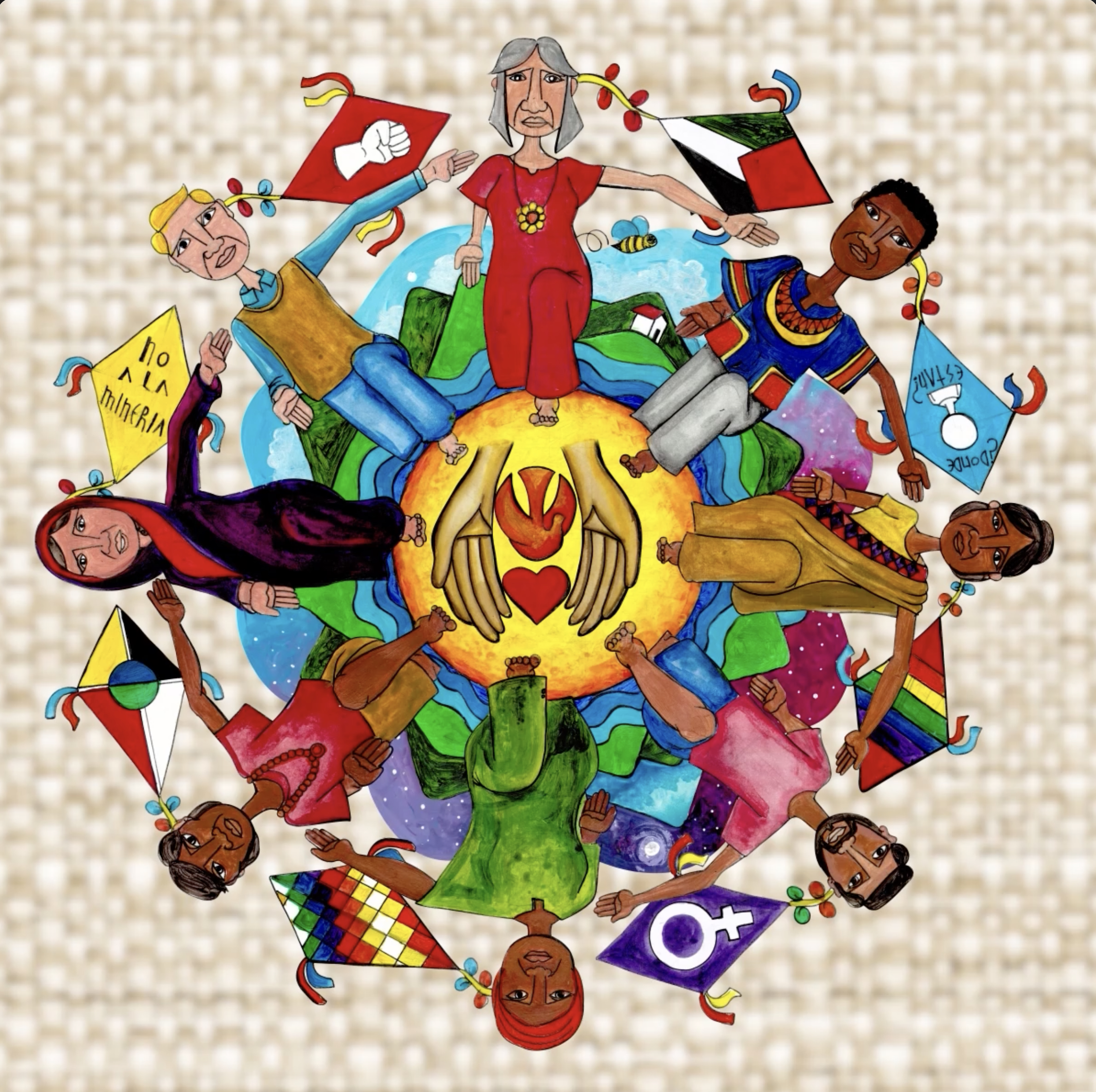
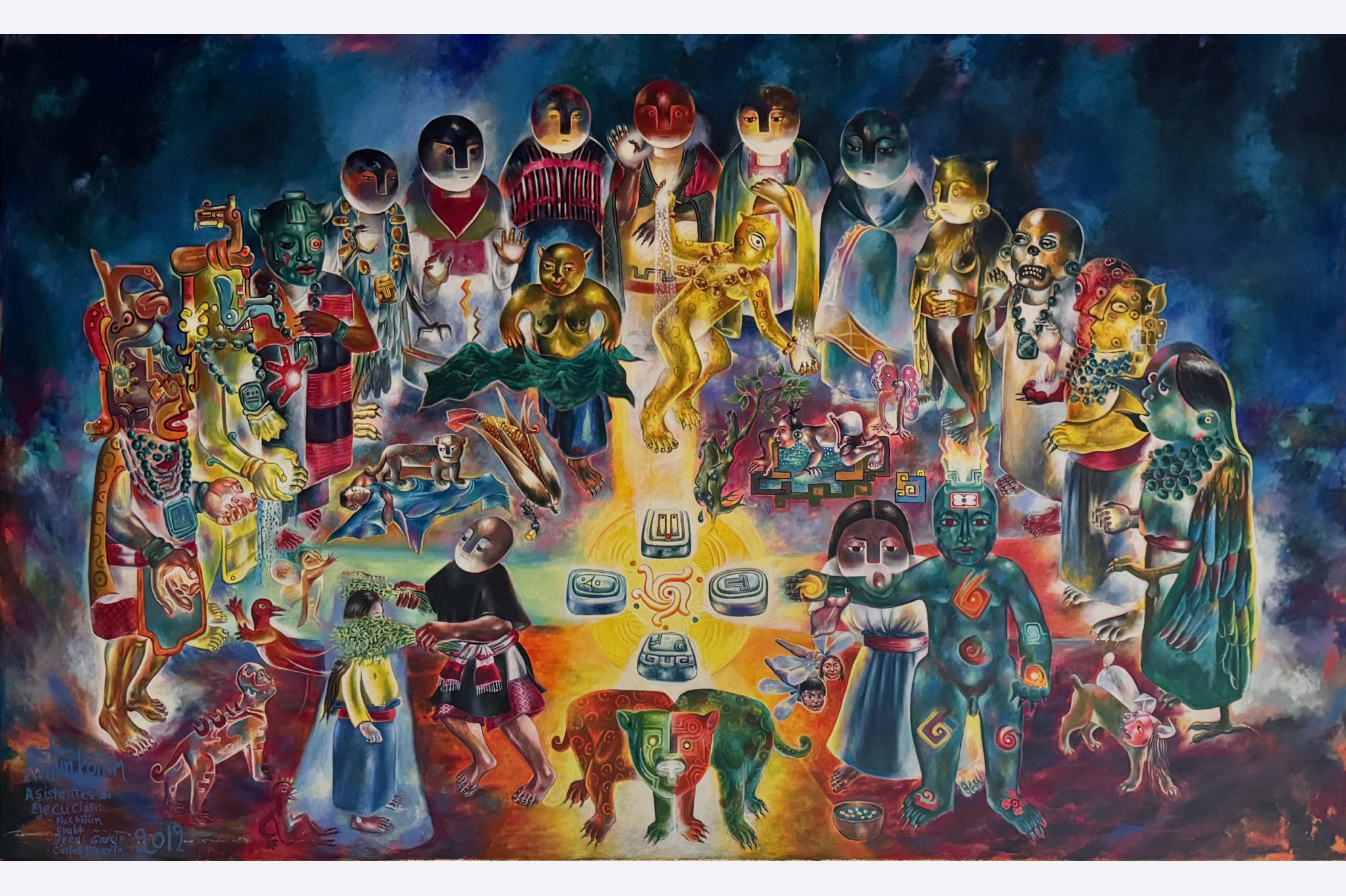
The subtitle “Political Theology in Times of Great Catastrophe” reveals the main thesis running through each chapter: that it is possible to experience and think about hope by living “the political” from its reverse side and with eschatological imagination, in its messianic source and amidst the ruins of the Nakba, as the Palestinian people do today. But now it is necessary to do so on the global scale of Great Catastrophe, as the Puerto Rican thinker Nelson Maldonado-Torres proposes in his reflections in this book. The Zapatistas in southeastern Mexico call their way of living and thinking about the political “the commons,” thus recovering their ancestral Mayan tradition of territory, which, in addition to communal lands, belongs to no one privately, but rather to the community.
The book's four sections are presented in the Introduction, which I have written. They explain the intersection of two axes: the phenomenological-anthropological and the decolonial-apophatic. The first section begins with the reflections of Viola Raheb, a Palestinian philosopher of the diaspora, amidst a decolonial political theology approach proposed by Nicolás Panotto from Chile and Argentina, analyzing evangelical Zionism as a mechanism of the coloniality of power. The second section weaves together the anthropological thread, starting with mimetic theory applied to the sacrificial context of Israeli militarism by Silvana Rabinovich, and its effects in the Trump era, analyzed with keen insight by James Alison to trace the possibility of “catholicity” in times of catastrophe; with a mystical chapter by Brian Robinette seeking the essence of “life hidden in God” amidst the extreme polarization of contemporary societies such as the United States.
The third section is a polyphony of decolonial voices from Puerto Rico, Mexico, Martinique, and Brazil. Nelson Maldonado-Torres opens with an invitation to consider the coloniality of technofascism as a Great Catastrophe, with Palestine as its epicenter; Donovan Hernández, from Mexico, proposes a “critique of the reason for war” as a leitmotif of coloniality; Andrew Prevot, a young African American theologian of the new generation, recovers the work of the Martinican poet Édouard Glissant as a provocation for thinking about the political; Cleusa Caldeira deepens her proposal of “theoquilombism” as a decolonization of thought and praxis that arises from Afro-diasporic subjectivities in Brazil; Aída Hernández, who invited her colleague Gabriela Juárez as a co-author, proposes a reading of the political from the perspective of accompanying the Searching Mothers in Mexico to explore an embodied spirituality amidst clandestine graves; And finally, Ángel Méndez-Montoya, Mexican “queer” choreographer and theologian, reflects on the queer table as a theological provocation to think about the political as “the common” that arises from the subjectivities of sex-gender dissidences.
And to open critical thinking to its pre-linguistic roots, the fourth section explores the wellspring of life and thought. Raquel Bouso, from Barcelona, recounts the philosophy of nothingness from Meister Eckhart to the Kyoto School, with its implications for thinking about the political. And Matthew Kruger, a young American thinker, delves into the abyssal thought of Nothingness as a wellspring of the political that warns us against ancient and new idolatries in political contexts that manipulate divinity as identity ideologies.
The prologue by Mark Lewis Taylor, renowned professor emeritus at Princeton, announces the urgent deconstruction of the violent sacred in times of Nakba, based on the reflections of the poet Darwish and the Cameroonian thinker Achille Mbembe, to confront the poetics of despair based on diverse resistances, such as the Palestinian Sumud.
And the Epilogue by M. Shawn Copeland, professor emerita of Boston College and renowned author of black feminist theology in the United States, calls us to “the praxis of humanity” to live amidst the rubble with hope.
The book is scheduled for release in February 2027, but it is already available for pre-order on the portal of Orbis Books. Later I will tell you about the virtual and in-person presentations that we will be organizing, together with my fellow editors and authors, of this great collective volume that wants to contribute, in a collegial and critical way, to thinking about possible hope in times of civilizational collapse.
Jobel, September 19, 2026