Tag: Timothy Radcliffe

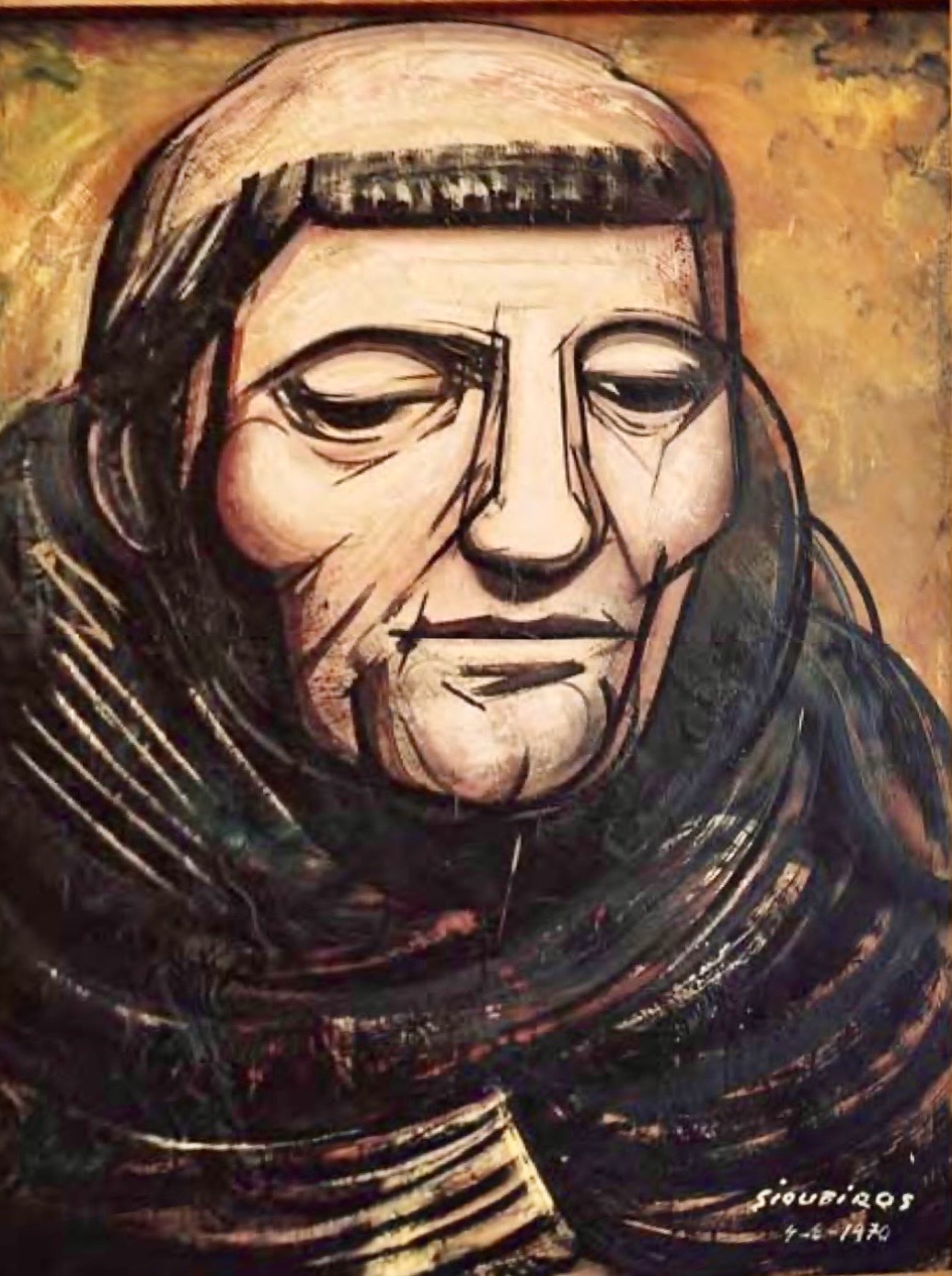
  • Dominicos en las fronteras En memoria dichosa de fray Daniel Ulloa Herrero OP (+), 1946-2026David Alfaro Siqueiros | Portrait of Saint Dominic | CUC, 1970

    Dominicans on the frontiers In blessed memory of Friar Daniel Ulloa Herrero OP (+), 1946-2026

    By Carlos Mendoza Álvarez

    Hospitality and commensality are two vital attitudes that, over the years, I have cultivated with the Dominicans since my first encounter in 1979 with Daniel Ulloa and Raúl Vera, then formators of postulants and novices respectively, on the path of initiation to charism of preaching, which has been in dialogue with diverse cultures for eight centuries, with the chiaroscuro of every century-old institution, its shadows and its great lights.

    Even during my childhood in Puebla, both virtues were present in the life of the family, around the figure of my maternal grandmother, my great-aunt, my mother and aunts, along with the uncles who made each family meeting a true celebration of flavors and dances.

    Daniel Ulloa Herrero passed away a few days ago in Cuernavaca, and today the ashes of his mortal body will be deposited in the Columbarium of the Temple of Santa María de la Anunciación, known as the University Parish, next to the National Autonomous University of Mexico in Copilco, which was founded by the Dominicans in 1963, with the spirit of the ongoing conciliar renewal, to cultivate dialogue with intellectuals, students, athletes and workers of the country's top university.

    Friar Daniel received priestly ordination there, along with Friar Miguel Concha and Friar Antonio Ramos, on July 25, 1970, from Bishop Don Sergio Méndez Arceo, who was a council father and an eminent witness of the liberating Latin American Church, against the current of the prominent groups of the Catholic hierarchy and conservative lay people of the time.

    The CUC - as the University Cultural Center Founded by the Dominicans, the university was famous in its golden age for its University Mass and its Film Club, which showcased the latest art films by unknown and even banned directors such as Pasolini, Tarkovsky, Kurosawa, Fellini, and Buñuel. The presence of the Dominicans in every faculty of the UNAM—whether as professors, students, or guest lecturers—extended beyond the university campus, fostering dialogue between faith and reason with students and professors alike.

    In that impetus, Daniel Ulloa, Raúl Vera, and Miguel Concha were trained as preaching friars by figures of the stature of Friar Alberto Escurdia, professor at the Faculty of Philosophy and Letters; Friar Agustín Desobry, who arrived from France with a great project for a cultural center as a space to promote dialogue with university students; Friar Jaime Gurza, an exquisite and cultured man, knowledgeable about the mystical and aesthetic tradition of the medieval and modern Dominicans; and Friar Julián Pablo Fernández, filmmaker and painter, friend of Don Luis Buñuel, David Alfaro Siqueiros, Juan Rulfo, Octavio Paz, Guillermina Bravo, and so many other creators of Mexican culture of the time.

    Daniel Ulloa stood out for his brilliant intelligence, which he would later cultivate as a historian, graduating from El Colegio de México with a thesis on the conflicting currents of the Dominicans upon their arrival in Tierra Firme in 1526: on the one hand, Friar Domingo de Betanzos, with a rigorous reformist spirit in convent life and doctrine, as part of the evangelization and colonization undertaken by the Spanish Crown; on the other hand, Friar Bartolomé de Las Casas, with a bold emphasis in his criticism of the ongoing coloniality, confronting the Encomienda system through the promotion of the Laws of the Indies and a method of peaceful evangelization that he had already tested for years on the coast of Venezuela and later in Verapaz in Guatemala.

    Daniel Ulloa's vibrant personality was marked by a creative sense of humor and exquisite irony that allowed him to connect immediately with young people, both in universities and in working-class neighborhoods. A notable chapter in his history as a young priest was the rock Mass that, along with a band of young people from the alleyway of Leandro Valle, a neighbor of La Lagunilla and Tepito, the "tough" neighborhoods of Mexico City's Historic Center, he enlivened on Sunday nights at the Santo Domingo church.

    Later, both of these intense experiences—his intellectual life as a historian and his pastoral accompaniment of young people from diverse urban cultures—allowed Daniel, as prior of the CUC, to propose a renewed vision of university ministry in the 1980s that emphasized the intellectual life and pastoral accompaniment of university students with their multiple identities. During his years as prior, for example, he welcomed Brothers Roberto and Benjamín Cuéllar, from the Christian Legal Aid organization founded by Archbishop Romero, who became our mentors in human rights work. This experience paved the way for the creation of the Fray Francisco de Vitoria OP Human Rights Center, the oldest civil society organization in Mexico among those that now comprise the network. All rights for all.

    The General Chapter of the Order of Preachers, held in Mexico in 1992, where I had the blessing of serving as Secretary General, elected Friar Timothy Radcliffe as Master of the Order. In his first month in office, he convened a remarkable group of friars as his close collaborators: Jean-Jacques Perennès of the Province of France as Assistant for the Apostolic Life, Guido Vergauwen of the Province of Flanders as Assistant for the Intellectual Life, and Daniel Ulloa of the Province of Mexico as Secretary of the Order. Together with other friars of this vigorous caliber—as enlightened preachers with a profound sense of thought and spirituality dedicated to justice, peace, and beauty—Friar Timothy encouraged the entire Dominican family for nine years to reclaim the prophetic spirit of “holy preaching.” This was the name of the work started by Dominic of Guzman, Bishop Diego de Osma, the sisters of Prulla and the layman Peter Ceila in Languedoc, in turbulent times of return to the radicalism of the gospel, which was shared by the mendicant movements of the time.

    Years later, Friar Daniel emigrated to the United States to continue his university ministry, first in New York, then in Brooklyn, and later in New Jersey. We Dominicans of Mexico owe him a debt of gratitude: to reclaim his legacy and renew the charism of preaching in these new theological spaces where God encounters wounded humanity seeking life, dignity, beauty, justice, and peace around the common table of divine compassion.

    More recently, on December 7, 2024, when Friar Timothy received the cardinalate from Pope Francis, many of his companions from that time gathered in Rome to celebrate this momentous occasion. In a video recorded on that day, Friar Daniel recalled that the main purpose of the gathering was to reaffirm the urgent need for the charism of preaching to proclaim the Good News amidst the turbulent times humanity is experiencing.

    To honor the legacy of that generation of preaching friars who have marked my life as a person, as a Christian, and as a Dominican, my theological work and pastoral service of several decades has sought to listen to each community and culture where I have lived: Mexico City with its disparate and diverse neighborhoods; university students in Fribourg, Switzerland, Paraná in Brazil, Paris, Mexico City, New York, Rio de Janeiro, and Boston; as well as the indigenous peoples of Oaxaca and Chiapas, from decades ago to the present day, to the Lakota and Mapuche peoples at the extreme North and South of the continent.

    Inspired by this Dominican spirit, at the confluence of faith and reason, I now participate in the development of this initiative JobeLab In San Cristóbal de Las Casas, along with friends from this city. I'll tell you more soon about this exciting network of friendship, hospitality, and budding culinary experiences.

    In the coming days, we will be holding two events here in Jobel: on Wednesday, March 25th at 5:50 pm at Belil Restaurant, a presentation about the San Cristóbal School as a breeding ground for critical thinking that emerged in Chiapas in the second half of the 20th century, with the participation of Pablo Romo, Martha Elena Welsh, and Juan Carlos L. Puente. And on Friday, March 27th, at 5 pm at the Charity Temple, we will host the event “Music for Interreligious Encounter,” together with Shaykh Yahya Rhodus and Shaykh Mudar Abdulghani from the city's Muslim community, focusing on the Sufi music and chants of Nader Khan, a Canadian believer and artist, as expressions of encountering the sacred in times of extreme violence.

    We look forward to welcoming you for an experience of hospitality and dining.

    Jobel, March 21, 2026
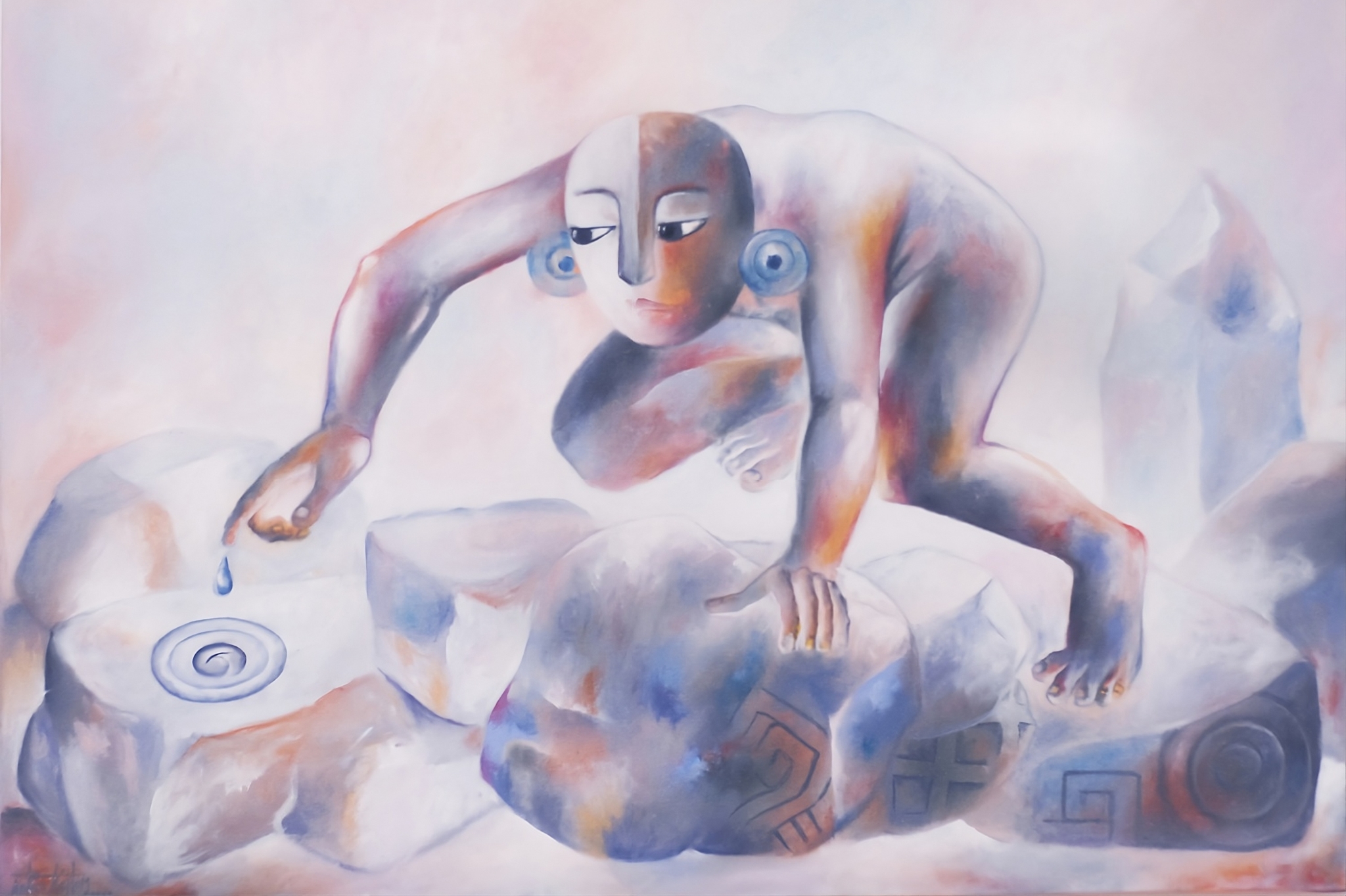
  • La llamada a la itinerancia De Boston a la Condesa y JovelAntún Kojtom | Drop of water in the navel of the earth | Tenejapa, Chiapas | 2020

    The Call to Itinerancy From Boston to La Condesa and Jovel

    By Carlos Mendoza-Álvarez

    .

    It has been seven months since I left Boston, following the unfortunate episode of academic censorship and the growing risk of criminalizing university research in the Trump era.

    Upon returning to my homeland, I had the good fortune to stay for several months at the Dominican house located in a hipster neighborhood of Mexico City. The liturgical atmosphere of Holy Week deepened the process of mourning and resurrection that such a loss entailed, creating a pause to allow my emotions to settle and prepare me for the next stage of life. The Easter Triduum helped me feel how divine Life flows in the depths of my heart. This perception grew in the following months, thanks to the company of extraordinary people and communities I was able to visit during the summer in various parts of the world as part of my theological service.

    Extraordinary scenes from that journey come to mind, like the gaze of a refugee pleading for empathy, or the sound of the waves crashing against the South African cliffs. I carry in my heart the image of the modest altar—true in its prayerful simplicity and closeness to others—of the Jesuit community in Mapuche territory. The conversations in Turkey with a handful of friars and sisters of the Dominican Order still resonate in my ears, as we searched for signs where today we might recognize the messianic times that are slow in coming. Each morning, the rituals of women healers from Malaysia, Dakota, India, and Kenya, gathered in Guadalajara, rise powerfully from the depths of my heart, with scenes that remain etched in the documentary Re-Existing 2025, lingering like flashes in the middle of the night.

    During several months spent in Mexico City, I was able to glimpse the changes taking place due to gentrification in an urban neighborhood, brought about by mobile populations—in this case, the “digital nomads” from the Global North who displace impoverished inhabitants in the South, while simultaneously enriching the local culture with new flavors and knowledge. In religious terms, as I mentioned earlier, I became aware of the fragmentation of the world of human interiority, which some call spirituality, but which designates a wellspring of transcendence that flows in every person as it evokes Lanza del Vasto in his poetry A Holy Source often desiccated by the vulgar marketing of religion. I was surprised to find in the temples a revival of popular Catholicism of devotions among young people who cling to piety without much interest in the prophetic spirit of Christianity of the conciliar renewal of more than half a century ago that placed justice linked to the experience of faith at the center of Latin American Christianity.

    .

    .

    And finally, after a wait filled with days and nights of uncertainty, I was able to travel to Chiapas to put down roots and build connections in those Mayan lands in the years to come. I was looking for a “place” to inhabit, or, as the beloved master of the Dominican order, Friar Timothy, now Cardinal Radcliffe, said in his book The fountain of hope, an “ecological niche where we can flourish”, amidst the diversity of flora and fauna of the human condition, another way of describing our similarities and oddities when it comes to living in community.

    Jovel, either land of wetlands and pastures, the valley where the colonial city of San Cristóbal de Las Casas was established, as the indigenous peoples called it, had received the Dominican novices in 1980 when we visited these lands, accompanied by our teacher, Friar Raúl Vera, who even then showed a pastoral zeal for the peasants in Amecameca and for the mayan villages from Chiapas and Guatemala. Since then, a little piece of my heart has remained here, revived by the annual visits to San Cristóbal and Ocosingo with my university classmates from Servandus Missions of the University Parish animated by the Dominicans in Mexico City.

    My several-month stay in Ocosingo in 1994, following the EZLN uprising, is an experience that has left an indelible mark on my connection to the indigenous liberation movement and the mystique that sustains it. This insurrectionary movement had found fertile ground in the work of jTatik Samuel Ruiz, the Wanderer, accompanying the indigenous and mestizo peoples of the Diocese of San Cristóbal de Las Casas since 1961. His conversion to the poor, inspired by the The Pact of the Catacombs. During the Second Vatican Council, his commitment was further solidified by his active participation in the Latin American episcopal conferences in Medellín, Puebla, Santo Domingo, and Aparecida. The Indigenous Congress of 1974 —where the Dominican friar Enrique Ruiz Maldonado actively collaborated on the occasion of the fourth centenary of the death of Friar Bartolomé de Las Casas, the first diocesan bishop of San Cristóbal— a watershed moment would be marked in the adoption of the indigenous cause as the backbone of the preferential option for the poor made by the diocese located in the Highlands of Chiapas and the Cañadas of the Lacandon Jungle. As a corollary to this path, the Third Diocesan Synod which concluded in 1999, as one of its participants, Sister Celia Rojas recounts, would ratify four decades of opting for the poor and promoting an Indian Mayan theology as the most complete expression of the inculturation of the Gospel according to the conciliar spirit.

    Returning to these lands permanently, forty-five years later, now means being prepared to face new challenges that were unforeseen in the last century. One of these is perhaps the situation of migrant Indigenous children and youth in symbiosis with urban culture and digital media, which is generating new Indigenous subjectivities caught between tradition and modernity. Thanks to dear friends like Geovanni Nájera of Semillero 259 Yara and Sebsor of Psicolexia,For example, I'm beginning to enjoy and understand a little more those other expressions of contemporary indigenous urban tribes. Through urban gardens, hip hop and rap, street art and graffiti, among other aesthetic and social expressions, the initiatives they promote are the seeds of something new.

    .

    .

    An immersion bath in the Tsotsil ecclesial community took place these days in the Parish of Saint Lawrence the Martyr, Founded by Dominican friars in 1545, this community, nearly five centuries later, boasts forty-five villages with sixty churches and chapels, a testament to the vitality of the faithful in these highlands of Chiapas. Here, catechists, extraordinary ministers of Holy Communion, and traditional authorities coexist with youth choirs and women's groups, accompanied by Dominican friars and sisters. This presence was renewed in 1961 when the Dominicans returned to this community after a long hiatus following the Reform Laws of 1857, the Revolution, and its aftermath in the first half of the 20th century, as vividly recounted by Friar Pablo Iribarren..

    A couple of days were enough to immerse myself in another world, with its vibrant symbolic and linguistic tradition. Although I had already glimpsed it as a visitor, a new horizon now opened before me, a chance to learn how to be present as part of the community of friars accompanying these communities. I felt it was a call to continue my journey in diverse ways. It is about embarking on a new path alongside these peoples, with their own unique character, their intergenerational tensions, their expressions of Catholic religious tradition, yet also ancestral, all of it shaped by the tensions between capitalist modernity and visions of other ways of life, governance, and spirituality.

    A major challenge for me will be learning the Tsotsil language and navigating amidst the powerful traditional symbols of the Zinacanteca culture, while listening with empathy to those generations of young people who are transforming the tradition of their ancestors with new ways of life.

    Another significant challenge will be the cultural life in the city of San Cristóbal, cosmopolitan and provincial at the same time, with centers of critical thought of international stature such as the Colegio de la Frontera Sur, the Universidad de la Tierra-Cideci, the Fray Bartolomé de Las Casas Chair in the Faculty of Law of the Autonomous University of Chiapas, and several centers of culture and arts.

    Some novel ideas are emerging, like sparks, to begin a dialogue with the cultures present in Jovel and Zinacantán. The traditional radio program run by the friars in recent decades reached a specific, more religiously oriented audience. But an online portal with podcasts and video clips featuring content on the mysticism of religions, their similarities and differences, or on political theology in today's world that abuses religion to justify genocide, would reach a younger and more diverse segment of the population.

    For now, the content is yet to be defined within the community to achieve the right tone and approach for a theology that is grounded in the street and born from the street,developed through dialogue with people both inside and outside of churches who are willing to discuss their deepest concerns and intuitions regarding the meaning of life, social justice, beauty in so many traditions, cultural pluralism, and the survival of our common home. I hope to soon share some of the first steps on this new path here.

    What will give strength to these dreams is undoubtedly the vitality of today's Mayan communities, in their interaction with other urban and digital cultures. Therein lies the fertile ground for them to flourish in these lands.

    The calls of itinerancy will always be uncertain, but from here I travel them confident in the knowledge of ancestral and modern peoples who will be a light on the path.

    .

    Jovel, December 6, 2025

    .

    Note: I would like to read your comments in the final section of this page.

  • Pensar el misterio de Dios desde las ruinas del imperio Sobre encuentros en tierras de Macrina y sus hermanos capadociosCarlos Mendoza | Monasteries of Göreme, Cappadocia | 2025

    Thinking about the mystery of God from the ruins of the empire About meetings in the lands of Macrina and her Cappadocian brothers

    By Carlos Mendoza-Álvarez


    Seven years ago in Toronto a theological initiative was born - during a conversation with Claudio Monge of the Dominican Study Institute (Dost-I) of Istanbul– to think together with other Dominicans about the meaning of preaching the Gospel in today’s laboratory cities, following the style of the order of preachers that for eight centuries has had as its motto “ueritas” to seek the truth wherever it is found, as did Albert the Great in the 13th century, Thomas Aquinas and later Meister Eckhart, Catherine of Siena, the School of Salamanca and Bartholomew de Las Casas in the 16th century until reaching the School of Le Saulchoir in the 20th century.

    We exchanged many emails and virtual meetings over the years, inviting Dominican friars, sisters, and lay people dedicated to theological work to share this concern. On the horizon of those years, we saw the 1700th anniversary of the First Council of Nicaea in 325 CE as a propitious occasion to meet in Istanbul, a city located in a symbolic territory of that ancient Christian past that today urgently calls us to return to the sources of faith.

    This is a very different contemporary context from that of the Emperor Constantine and the bishops of the Eastern Church gathered at the council that defined the orthodoxy of the Christian faith in a Greek key. From the ruins of the Eastern Roman Empire, which somewhat resemble the ruins of the modern West today, we perceived the call to "give an account of the hope to anyone who asks us" (1 Peter 3:15).

    Nicaea 2025 was emerging as an opportune moment to return to the sources of the living Tradition of the Christian faith in its founding event, which is the power of the love of the triune God manifested in the life and Passover of Jesus the Galilean, with the depth of the Greek categories such as person (prosopon), substance (ousia) and loving circularity (perijoresis) to spell out the mystery of the Abba heavenly revealed in Jesus Christ by the inner fire of the divine Ruah.

    Along the way, the personal and professional priorities of those who initially responded to the proposal gradually shifted, until finally, last year, a group of twelve Dominican friars and sisters from Italy, the United States, Canada, Belgium, Mexico, and India began preparing a meeting in Istanbul. This would be the starting point for a shared journey toward theology at the "frontiers" of the contemporary world, as the friars' general chapters had pointed out in the post-conciliar period; located at "the fractures of humanity," as our brother Pierre Claverie, the Bishop of Algiers, murdered along with a friend and collaborator by religious fundamentalism, said; and present as preaching communities in the heart of the laboratory cities of the global village.


    Istanbul is a multifaceted and vibrant city, the epicenter of a modern Islamic culture, traversing with difficulty and imagination the tense borders between religions, cultures, and economies in the complex geopolitical context of deglobalization. Christian communities make up less than 2% of the population. The power of Turkish-style Islam and its Ottoman past shines proudly in its mosques, universities, and bazaars. The great basilica of Hagia Sophia, which served as the seat of the Christian Patriarchate of the East for over a thousand years until the collapse of Eastern Christianity in 1453, has once again become a mosque after a brief hiatus from Turkish secularism, which is now sorely missed in the country's cultural life. The church of the Chora In a newly restored neighborhood of the city, with its splendid frescoes and icons of Christian art, it is a shining flash of that Byzantine past in the midst of the effervescent modern city.

    The "Nicea OP 2025" colloquium was a very modest gathering that built bridges with a few colleagues from Turkey interested in dialogue with the Christian West, especially through art and spirituality as a means of expression for the religions of the book (Judaism, Christianity, and Islam), such as Professor Elif Tokay, who works on these topics with her graduate students at Istanbul University.

    The program of the meeting consisted of three days of reflecting on the meaning of the Christian faith in the context of interreligious dialogue, to accompany communities of faith in living the testimony of the Eternal God amidst the ruins of modern civilization, which find in Gaza their breaking point of that "dream of reason that has produced monsters," as the Spanish engraver Francisco de Goya declared in the late 18th century.

    From three theological categories common to the religions of the Book: salvation, creation, and sanctification, we shaped our dialogue, bringing each of these words into our context to interpret them today. Salvation amidst the systemic violence that produces discrimination, exclusion, and death of the majority; Creation as a cosmology of the new creation that explores ecotheology in dialogue with modern science and ancestral knowledge; and sanctification as a process of divinization of the cosmos and humanity through the power of the Spirit of God, inspiring processes of healing, memory, justice, and reconciliation, especially for the victims of humanity's violent history.

    Following this path, each day we focused on one of these axes, starting with an initial presentation by one of the participants, and then engaging in an exchange of experiences and ideas about what the preaching of the Word of God incarnate in Jesus Christ means in each of these areas.

    The second part of the day was led by Jean-Jacques Perennès and Elif Tokay, who, listening to the initial conversation, opened up new horizons based on their experience and reflection.

    Jean-Jacques, as a French Dominican who has lived in the Arab world for more than three decades, guided us with his knowledge of Islamic cultures to think about the meaning of preaching in those worlds (Bibliography of Jean-Jacques Pérennès), very close to Pierre Claverie and the monks of Tibihrine who offered their lives in Algeria for friendship with people and communities of Islam. He worked at the Dominican Institute in Cairo (Dominican Institute of Oriental Studies), then as assistant in the apostolic life of the Dominican friars during the government of Friar Timothy Radcliffe as master of the order, and more recently as director of the Jerusalem Bible School.

    Elif, as a researcher of Byzantine and Eastern Christianity around the concept of perfection or divinization (theosis) in Christian mystical thought, helped us with her comments and questions to find common ground with the spirituality of Islam. Given her doctoral work on Gregory of Nazianzus as a father of the Anatolian Church, as well as on patristic works translated from Greek and Syriac into Arabic, she opened up a unique and valuable perspective for exploring these connections between communities of believers from diverse traditions, meeting at this common point of the divinization of the cosmos and humanity.

    A visit to the ruins of Nicaea, today Izink in Anatolia (Archaeologists Discover Tombs at the Underwater Basilica in İznik), on a rainy day before the colloquium, had already set a certain tone for the conversations. How could we connect that crucial moment in ancient Christianity to speak of the divine being as a loving communion amidst today's ruins with the challenges that arise for Christian, Jewish, and Islamic communities today in times of extreme violence?

    At the conclusion of our meeting, we agreed to continue building collaborative networks with Dominican friars, sisters, and lay people present with their preaching in today's laboratory cities and their communities of dialogue, both local and virtual, especially with the youngest members of the Dominican family, to deepen their understanding of the faith in the service of the People of God today.

    I proposed preparing the next meeting in Mexico in 2026 to continue exploring the paths of "holy preaching" in that other geography of the global and epistemic South, to search there, amidst other ruins that are those of the region of non-being and of those who dwell in the shadows of shadows, for alternative ways to live and think about the loving mystery of God from the cracks of today's hegemonic power with its idolatries and traps that have humanity and the planet in check.


    After a modest yet profound encounter with this Dominican family atmosphere, I set out to visit Cappadocia for the first time.

    The land of Basil and Gregory, the famous "Cappadocian Fathers," who made a decisive contribution in the fourth century CE to developing a theology of the Holy Spirit as the third person of the Holy Trinity. Their texts had been key sources for the patristic courses I took, first in Mexico with Friar Luis Ramos in his classes at the UNAM (National Autonomous University of Mexico), and then in Fribourg with Friar Christoph Schönborn, then a professor at that Swiss university who later served in his pastoral ministry as Cardinal of Vienna for many years.

    Although I remembered having read some reference to Macrina - the eldest sister of that illustrious Anatolian family who first suffered Roman persecution and then became a promoter of the nascent monastic life - it was by going to her land that I was able to grasp her great influence as a believing woman of her time, especially in the development of an alternative spirituality to that of the Roman Empire that her brother Naucratius also explored, together with his friend Chrysaphius, as part of the early Christian monasticism on the banks of the Iris River, today Kyzilirmark, from the Pontus region.

    Present-day Cappadocia bears no resemblance to its Hittite, Persian, Roman, Byzantine, and Ottoman past. Twenty-first-century Turkish modernity has brought modern urban centers dedicated to agriculture and mining to the region, with a powerful tourism industry catering to travelers from China, Russia, and Japan, who fill the skies of Cappadocia with hot-air balloons to fly over the archaeological sites of ancient rock-cut monasteries; or as swarms of tourists who collapse the underground cities created by its inhabitants since Hittite and Persian times to survive the intermittent wars of the rotating empires.

    In the midst of these hordes of tourists today in lands of ancient history, I took on the task of making meditative walks through these places, trying to suspend time, to reread some fragments of the history of the Cappadocian Fathers and especially the The life of Macrina and her family, told by her brother Gregory of NyssaI am left with Macrina's deathbed prayer: "You, Lord, have freed us from the fear of death. You have made the end of life here below the beginning of true life for us. You rest our bodies in sleep for a time and will awaken them again with the trumpet of the end of time."

    From their testimony, I am impressed by the depth of their hope, with an eschatological imagination for the day to come. Not scorning this world, but opening it to the perspective of the Love that never ends.

    Perhaps this is what we need today, in times of environmental and historical catastrophe, to reflect on the mystery of God amidst the ruins of the empires of yesterday and today. To open our hearts and minds to other possible worlds, emerging from the ruins with the cries of the survivors. Other worlds, too, offered by the God of life who never ceases to love all of his creation without condition or measure.


    Cappadocia, October 7, 2025

English