Tag: feminist theology

  • Noticias de WallmapuGabriel Pozo Menares | Mapuche Calendar | Wallmapu, 2011

    Wallmapu News

    By Carlos Mendoza Álvarez

    p

    The light of dusk reaches Tirúa, in Mapuche lands, while Carlos, my Jesuit host who has been here for more than fifteen years (HistoriActiva Jesuit community of Tirúa), drives along the dirt road to visit friends who have opened their homes to share life in the area for years. We arrive and are greeted by the oldest daughter, along with her cats and dogs. She briefly interrupts the work she's preparing for her last semester of high school, as after graduation she plans to enroll in university to study teaching. Life goes on simply among the families who live here. Her father spent the day growing potatoes and then dedicated the afternoon to laying the floor of a new room in the house. They offer us mate as a ritual to accompany their conversation. Before leaving, the friends exchange bird food and make plans to recycle an old wooden door that will be installed in a budding eco-spirituality center.

    Wallmapu (Declaration of the Department of History on the term Wallmapu) is the term that refers to the ancestral lands of the Mapuche people (The Indigenous World 2025: Chile). Today, they are dominated by the forestry industry, which has contaminated the territory with invasive species such as eucalyptus and pine to mass-produce cellulose for export to the global packaging market.

    The Mapuche people today are divided between the frantic integration into the modern world of consumption on the one hand and, on the other, the defense of their territory, language, and traditional medicine under the leadership of Machi women, healers and spiritual ancestors.

    On both sides of the mountain range, divided between Chile and Argentina, the Mapuche people fight for their territorial and cultural survival, in the face of the overwhelming inertia of the modern world (Chile: Resistance to the forestry model in Wallmapu, Mapuche territory). For communities assimilated into today's modern model, it seems better to eat processed foods than seaweed and shellfish as the ancients did; or to drink Coca-Cola instead of herbal teas because it gives them greater status; they prefer to be evangelical Christians or Roman Catholics rather than follow the spirituality and language of their ancestors. Ultimately, it is a matter of "integration" into the modern world, even at the price of cultural assimilation and environmental depredation, which, in its symbolic undertone, is violence against the ancestors and against Mother Earth.

    Civil society networks such as “Churches and Mining”, or the initiatives for intercultural dialogue on ancient and modern astronomy promoted by some universities in the region, are modest attempts to accompany a people torn apart by internal contradictions between modernity and tradition.

    Perhaps eco-spirituality is being an "articulation," among others of a more social and political nature, that allows for these intersections. Carlos told me the anecdote of a grandmother who, attending a workshop on traditional medicine and eco-spirituality, said she didn't understand anything about the intersections of the three bodies (personal, communal, and territorial) that the workshop presented, because she had been thinking throughout the entire meeting about the meaning of that strange word written on the invitation: "articulation." A term that the grandmother kept thinking about until she finally realized that it surely referred to the articulations of bones, when she felt something in her body was out of alignment, impeding her mobility and causing pain. So she concluded that the workshop was a path to healing her joints. And ultimately, that was the objective of the workshop! That grandmother had followed it in her own way, even though she was absent from the rest of the talks.

    p

    p

    Before arriving in Mapuche lands, I was able to speak with university students at two forums in Santiago, Chile. The first was about the work of Gustavo Gutiérrez, one of the fathers of liberation theology, on the occasion of the first anniversary of his death (Gustavo Gutiérrez International Congress). In a traditional academic format with keynote lectures and presentations, over the course of a couple of days a clearer awareness emerged among attendees about the importance of style Latin American to speak of God, intimately connected to the experience of the poor and oppressed. A wisdom that is already part of the way some Roman Catholic and Protestant Christian communities understand their faith in a liberating God and promote the transformative role of victims in their own liberation processes, leaving behind lands of slavery and embarking on paths of new life.

    But we also began to see, not without some attendees' surprise, that it is necessary to open our hearts and our eyes to other exclusions, such as those experienced by women, queer/cuir people, undocumented migrants, relatives of missing persons, Afro-diasporic peoples, and indigenous peoples, to mention those who represent today's resistance to the violence that afflicts us in so many ways, with the Palestinian people today facing the genocide perpetrated by the Israeli government and its accomplices at heart.

    During the colloquium, several initiatives emerged to keep the memory of the great Peruvian theologian's work alive, through the work of the archives that house the recordings of the summer courses Gutiérrez offered in Lima for several years, a valuable resource that will reveal another angle of the author's thinking. Likewise, some of us proposed to investigate the relationship between Gustavo's thought and the work of Aníbal Quijano, his compatriot, who represents one of the most important sources of decolonial thought today, along with Frantz Fanon. The confluence of both thought styles, along with Black, feminist, queer/cuir and Palestinian liberation theology, will provide us with a more pertinent theoretical framework for understanding the intersectionality of violence and ongoing resistance in order to create alternative ways of life, governance, and spirituality that inspire communities located at the fractures of humanity.

    p

    p

    The other meeting, held with colleagues from the Chilean Society of Theology (UCSC hosted the Annual Conference of the Chilean Theological Society), was an opportunity to think together about possible paths to hope for communities facing systemic violence.

    My contribution to that annual event brought to the table the question of thinking about hope from a perspective of "combative decoloniality," like the dignified rage practiced by the Zapatista communities, or the indignation of women who face sexual or spiritual abuse in their respective religions. Because, from my perspective, it's about dismantling a vision of hope as a flight from the world in anticipation of consolation in the afterlife of eternal life.

    Rather, it's about discovering and strengthening the hope that "emerges" from the fractures of humanity. It's where survivors paddle against the current of the history of oppression and privilege, inhabiting the world with practices of mutual care, in the pedagogy of embodiment, and collective healing with memory, truth, and justice, as we explored at the recent Re-existe 2025 gathering.

    p

    p

    The sky of Wallmapu, with the crescent moon shining brightly, is today a living metaphor for the hope that surrounds us when we hear the heartbeat of the lands and stars of the South.

    p

    Tirúa, October 25, 2025
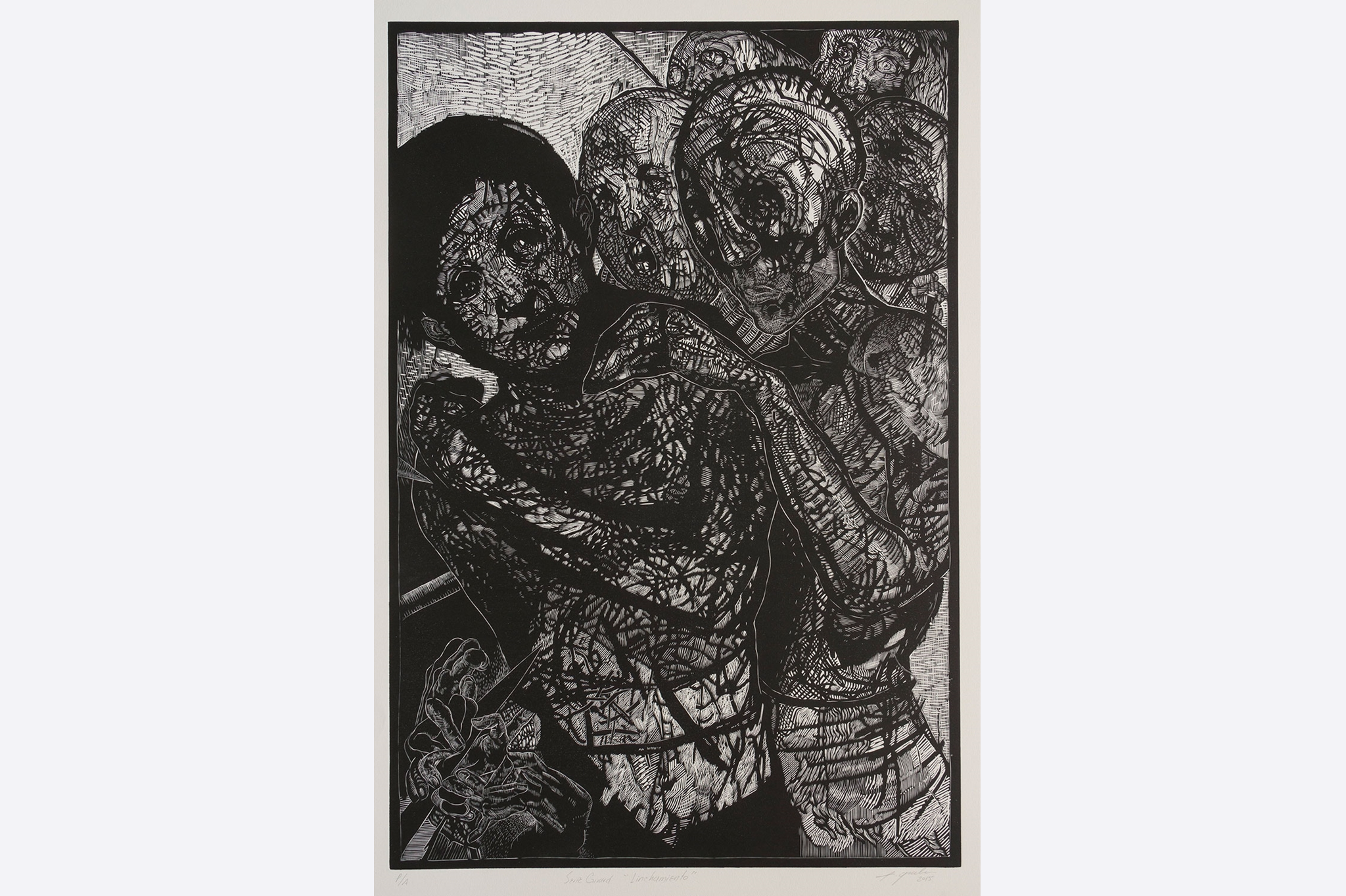
  • Violencia eclesiástica: una lectura girardianaIván Gardea, Lynching, Cuernavaca, 2020

    Ecclesiastical violence: a Girardian reading

    By Carlos Mendoza-Álvarez


    A few days ago we learned about the Father Alberto Anguiano García resigned from the rectorship of the Pontifical University of Mexico, in the second year of his second term as rector, as a protest against the “workplace harassment and institutional violence” he suffered at the hands of the Vatican Curia and the authorities of that ecclesiastical university, which has been in existence for barely forty years.

    The reasons given by the rector for his unilateral removal from office, an act that led to his resignation, are revealing, as they reveal a systemic problem in ecclesiastical institutions, which frequently act as if they had their own jurisdiction, impervious to civil jurisdiction, with labor rights at stake, as well as to public opinion in modern societies.

    While, like every educational institution in Mexico, the UPM is subject to civil law regarding labor and education, the procedures in this case reveal a systemic violence that must be addressed in order to dismantle and make way for other methods of action, in keeping with the Gospel and the freedom of individuals, especially when it concerns the common good that education represents. Even more urgently, we must reflect and act when it concerns a religious institution destined to communicate the contents of Christian revelation and the tradition that constantly arises from it. Ultimately, this is a matter of addressing the credibility crisis of the Roman Catholic Church in these dire days.


    I met Father Alberto as a student at the University of Madrid thirty years ago, when he was pursuing a postgraduate degree in theology in 1995, during a course I taught on Emmanuel Levinas and his concept of revelation rooted in the Hebrew tradition and in dialogue with "the philosophy spoken in Greek." He was the most brilliant student of those generations, not only for his high academic standing, but also for his theological ability to update the theological knowledge of the great Christian tradition in the midst of contemporary questions arising from science, psychoanalysis, and the challenges of secular culture.

    Already as rector, his first term began in 2021 It was marked by a clear project to modernize the university, both in its curricula and in the urgent strategic planning to open up to new disciplines in the civil world and not be limited solely to the clerical sphere. Ecclesiastical faculties had to overcome their ostracism and enter into dialogue with other civil disciplines. Furthermore, according to the diagnosis, it was essential to promote institutional efficiency that would make a domestic institution viable in its vision, uses, and customs, to make it a credible interlocutor in the academic and ecclesial context, both nationally and internationally.

    But internal resistance seems to have created a climate of aversion to these reforms which, due to the typical rivalry of any group protecting its interests, deployed a mechanism of expulsion against its main promoter. In order to maintain the unanimity of "all against one," proceeding like a true mimetic contagion, a typical scapegoat process was brewing. It was thought that by expelling the person singled out as the source of the collective evil from the group, the evil would be expelled from the institution, which would regain its tranquility once purified of its poison. As we can see in the engraving by Iván Gardea that accompanies this reflection (The Plot of Engraving), the talented Mexican engraver managed to masterfully capture this mechanism of rivalry, contagion and collective lynching to delineate with the force of his strokes the mimetic desire that gives rise to human culture based on sacrifices since we have historical memory as a human species.

    Unfortunately or fortunately, depending on how the crisis is resolved, we know that the victimizing mechanism is the satanic lie that hides "things hidden since the foundation of the world," as René Girard said (Things hidden since the foundation of the world) quoting the Gospel of Matthew: “That it might be fulfilled which was spoken through the prophet, saying, I will open my mouth in parables, and will utter things hidden since the foundation of the world” (Matthew 13:35). The parables of the Reign of God that Jesus told in Galilee evoked ways to overcome the violence that lurks in the human heart precisely as a mimetic desire that engenders rivalry and fratricide. If the community involved does not internally dismantle the mechanism of rivalry and hatred, the poison will continue to infect its internal relationships and will continue to create new processes of self-protection, unanimity of all against one, expulsion and lies, producing new victims.

    From this fund anthropological that appears as a cause systemic Of the institutional violence suffered by Father Alberto, what is important now is to emphasize the need for accountability from ecclesiastical institutions, both internally and externally. Moving forward, a process of collective healing of memory will be necessary, with justice and truth first for the victims, and with accountability for the perpetrators.

    Unfortunately, given the prevailing clericalism, as a structure systemic which is perpetuated precisely by making victims invisible, it is necessary to bring this institutional distortion into the public sphere so that paths of memory can emerge, with justice and truth, that restore the scant credibility of a university institution founded in 1982 to serve the Roman Catholic Church in Mexico and Mexican society as a whole.


    The institutional complicity that led to Father Alberto's expulsion is similar to other instances of clerical violence in today's world.

    Such systemic clerical violence can be traced to similar crises, such as that of the Roman Catholic Church in Chile, which has produced victims of sexual abuse committed by clergy against adult women and minors for half a century. They have been subjected for decades to systemic psychological, sexual, and spiritual violence, which has left its mark on the victims and has protected the perpetrators of these crimes from impunity, protected by what Rita Segato (The war against women) called it "the masculinity pact." There's talk of reparation, but it revictimizes the victims and leaves no substantial changes in institutional life such as schools, religious congregations, parishes, and dioceses.

    A brilliant doctoral thesis in progress on this topic, prepared by Soledad del Villar Tagle (Abuses in the Church. Concilium. International Journal of Theology, (402)), will document with compelling testimonies and a rigorous interdisciplinary analysis, this abuse of clerical power that requires, of course, restorative justice for victims and survivors, along with a new theology of the Church. This feminist theology from women survivors of sexual and spiritual abuse by clergy will shed light on promoting the necessary changes to overcome this systemic violence characteristic of patriarchy, in its version of clericalism, as a religious expression of the war against women.

    The feminist theology that emerges from the abuse crisis proposes a spirituality that springs from the wounds of Christ's wounded social body, going beyond pious considerations that venerate the wounds of the Crucified One but render invisible the victims of yesterday and today, desecrated in their bodies, minds, and souls by this systemic clerical violence.

    Pope Francis' invitation to live a Holy Year in 2025 (Do not confuse. Bull of Invocation of the Ordinary Jubilee of the Year 2025) in order to learn to be pilgrims of hope in times of despair, addresses the Roman Catholic Church. Throughout the year, Pope Leo XIV has continued this initiative, particularly calling young people to be part of this journey of conversion to sow hope in today's world.

    But these calls will only make sense if they are rooted in attentive listening to survivors of any systemic violence, including ecclesiastical violence, which unfortunately continues to wield its predatory power as a religious caste of clericalism, unsustainable in our times.


    Mexico City, July 26, 2025

English