Tag: liberation theology

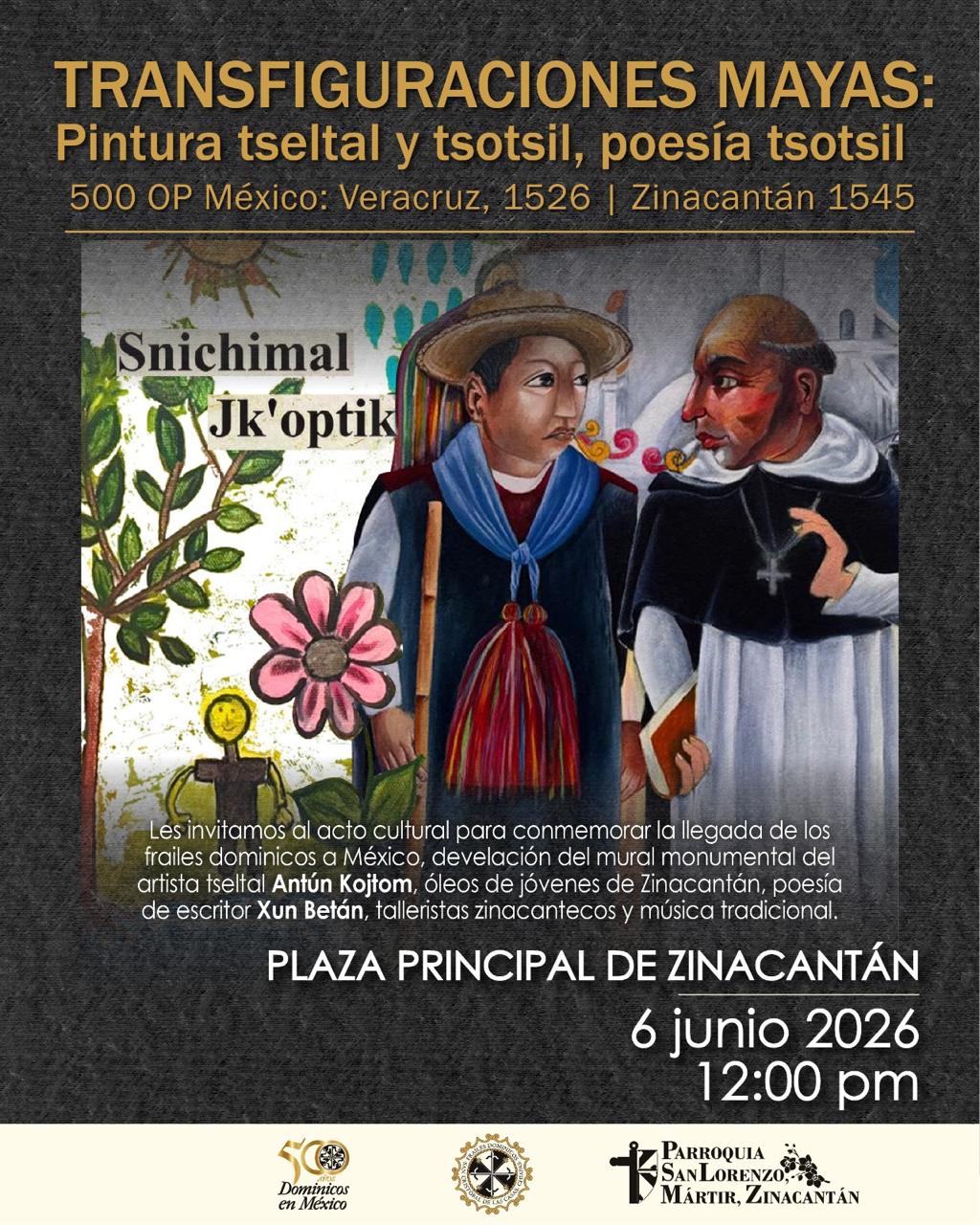
  • Transfiguraciones mayas Acto cultural de los 500 OP Chiapas

    Mayan transfigurations Cultural event of the 500 OP Chiapas

    Welcome remarks

    By Carlos Mendoza Álvarez

    Good afternoon, dear brothers and sisters:

    This cultural event in the public square of the municipality of Zinacantán is a symbol of the dialogue between faith and reason that has been at the heart of the preaching of the Gospel, from its origins in the lands of Palestine with Jesus of Nazareth, two thousand years ago, to the present day in the Highlands of Chiapas.

    Jesus of Galilee was a preacher of good news for humanity, standing up to the powerful of his time, and accompanied by his messianic community even though he was betrayed by an angry mob.

    Jesus' loving sacrifice for a humanity reconciled with itself and with Mother Earth acquires a cosmic force with his resurrection from the dead, which is the most radical good news of all time.

    God is not a God of the dead, but of the living. And that is why the God of life is always on the side of the poor, the excluded, and the vulnerable, so that from there he may call everyone—victims and executioners alike—to heal humanity's mortal wounds and lead us to his fullness of life.

    On the occasion of the arrival of the first Dominican friars to the mainland of Abya Yala of the native peoples, five centuries ago on the coasts of Veracruz in 1526, we Dominican friars of today long to make a joyful, yet critical, memory of those five centuries of encounters and disagreements with the peoples of Mexico, especially those of Chiapas.

    The dialogue between faith and reason, we Dominican friars have promoted for eight centuries in spirituality, thought and the arts, always accompanied by the promotion of human dignity and its inalienable human rights, through justice and peace for all peoples and creatures, as did the first bishop of Chiapas, our brother Friar Bartolomé de Las Casas, through peaceful evangelization, and later followed in his footsteps by Friar Pedro Lorenzo de la Nada in the lands of the Pochutlas and the Lacandones, as can be seen in the mural that is about to be unveiled.

    The cultural event that brings us together today is a movement in three moments: image, word and music.

    The image

    Through murals, the Mayan peoples have long preserved their ancestral memory, the culmination of which are the murals of Bonampak. This tradition is renewed in contemporary Mayan art, such as that of the great master Antún Kojtom, a Tseltal artist from Tenejapa, who accepted the invitation of the Dominican friars to conceive, design, and paint the mural that will be unveiled in a few moments by the Provincial Prior of the Dominicans in Mexico, Friar Luis Javier Rubio Guerrero, the guest artist Antún Kojtom, and a friar representing the authorities of the San Lorenzo Mártir church.

    Next, nine paintings by young people from Zinacantán who participated in the introductory acrylic painting workshop offered by Master Antún last week will be exhibited. Their works reflect the ch'ulel, or spiritual strength, that accompanies them in their inner lives. We will then present them with certificates of recognition for their commitment.

    The word

    Since ancient times, human words have been a reflection of the divine word, especially poetry. In the second part of this cultural event, we will hear poetry from Xun Betan, a Tsotsil writer from Venustiano Carranza, and from the young people who participated in the workshop he led for several weeks in Zinacantán. We will also present certificates of recognition for their commitment.

    The music

    And to conclude, traditional music, that ancestral sound memory, will inspire us to look closely at the monumental mural by the master Antún Kojtom and the acrylics of his students. The sound waves of the traditional musicians from the Parish of San Lorenzo Mártir de Sots'leb will reach throughout the plaza, echoing in the sacred hills inhabited by the ch'ulelal, who also watch over us and accompany us today.

    We, the Dominican friars, offer this gift to the people of Zinacanteco. It was made possible thanks to the agreement of the three community authorities: the municipality, the churches, and the pastoral plan.

    A special word of gratitude to the Sertull Foundation of Mexico City for its generous support in funding this initiative, as well as to the Fray Bartolomé de Las Casas Human Rights Center for its support in educating about historical memory and the human rights of indigenous peoples.

    In conclusion, I invite the Dominican family (friars, sisters, and laity) to continue deepening, with rigor and hope, the historical memory of that complex past of the Dominicans in Chiapas, considering the challenges that lie ahead in our time:

    • to make visible the stories of women knowledgeable in ancestral Mayan spirituality and their current positions in the communities, as well as the people of the

    sexual diversity in its dignity, its rights and its community responsibility;

    • and to accompany children and young people in their processes as they passionately embrace technological modernity, with its opportunities and its serious risks of ecological, social and political devastation, in times of algorithms and artificial intelligence.

    May the contemporary Tsotsil and Tseltal art that we will contemplate in the mural and the acrylics, hear in the poems and celebrate with the traditional music allow us to celebrate the dialogue of knowledge between the peoples, with their diverse ancestral and contemporary spiritualities.

    May we continue to practice mutual listening in our times to promote the full life of the native peoples of the Highlands of Chiapas, especially the Zinacantec people.

    Welcome to this celebration of life for the people of Zinacanteco, past and present!

    Sots'leb, June 6, 2026

    Friar Carlos Mendoza Álvarez, OP

    Coordinator of cultural activities 500 OP Chiapas

  • Noticias de WallmapuGabriel Pozo Menares | Mapuche Calendar | Wallmapu, 2011

    Wallmapu News

    By Carlos Mendoza Álvarez

    p

    The light of dusk reaches Tirúa, in Mapuche lands, while Carlos, my Jesuit host who has been here for more than fifteen years (HistoriActiva Jesuit community of Tirúa), drives along the dirt road to visit friends who have opened their homes to share life in the area for years. We arrive and are greeted by the oldest daughter, along with her cats and dogs. She briefly interrupts the work she's preparing for her last semester of high school, as after graduation she plans to enroll in university to study teaching. Life goes on simply among the families who live here. Her father spent the day growing potatoes and then dedicated the afternoon to laying the floor of a new room in the house. They offer us mate as a ritual to accompany their conversation. Before leaving, the friends exchange bird food and make plans to recycle an old wooden door that will be installed in a budding eco-spirituality center.

    Wallmapu (Declaration of the Department of History on the term Wallmapu) is the term that refers to the ancestral lands of the Mapuche people (The Indigenous World 2025: Chile). Today, they are dominated by the forestry industry, which has contaminated the territory with invasive species such as eucalyptus and pine to mass-produce cellulose for export to the global packaging market.

    The Mapuche people today are divided between the frantic integration into the modern world of consumption on the one hand and, on the other, the defense of their territory, language, and traditional medicine under the leadership of Machi women, healers and spiritual ancestors.

    On both sides of the mountain range, divided between Chile and Argentina, the Mapuche people fight for their territorial and cultural survival, in the face of the overwhelming inertia of the modern world (Chile: Resistance to the forestry model in Wallmapu, Mapuche territory). For communities assimilated into today's modern model, it seems better to eat processed foods than seaweed and shellfish as the ancients did; or to drink Coca-Cola instead of herbal teas because it gives them greater status; they prefer to be evangelical Christians or Roman Catholics rather than follow the spirituality and language of their ancestors. Ultimately, it is a matter of "integration" into the modern world, even at the price of cultural assimilation and environmental depredation, which, in its symbolic undertone, is violence against the ancestors and against Mother Earth.

    Civil society networks such as “Churches and Mining”, or the initiatives for intercultural dialogue on ancient and modern astronomy promoted by some universities in the region, are modest attempts to accompany a people torn apart by internal contradictions between modernity and tradition.

    Perhaps eco-spirituality is being an "articulation," among others of a more social and political nature, that allows for these intersections. Carlos told me the anecdote of a grandmother who, attending a workshop on traditional medicine and eco-spirituality, said she didn't understand anything about the intersections of the three bodies (personal, communal, and territorial) that the workshop presented, because she had been thinking throughout the entire meeting about the meaning of that strange word written on the invitation: "articulation." A term that the grandmother kept thinking about until she finally realized that it surely referred to the articulations of bones, when she felt something in her body was out of alignment, impeding her mobility and causing pain. So she concluded that the workshop was a path to healing her joints. And ultimately, that was the objective of the workshop! That grandmother had followed it in her own way, even though she was absent from the rest of the talks.

    p

    p

    Before arriving in Mapuche lands, I was able to speak with university students at two forums in Santiago, Chile. The first was about the work of Gustavo Gutiérrez, one of the fathers of liberation theology, on the occasion of the first anniversary of his death (Gustavo Gutiérrez International Congress). In a traditional academic format with keynote lectures and presentations, over the course of a couple of days a clearer awareness emerged among attendees about the importance of style Latin American to speak of God, intimately connected to the experience of the poor and oppressed. A wisdom that is already part of the way some Roman Catholic and Protestant Christian communities understand their faith in a liberating God and promote the transformative role of victims in their own liberation processes, leaving behind lands of slavery and embarking on paths of new life.

    But we also began to see, not without some attendees' surprise, that it is necessary to open our hearts and our eyes to other exclusions, such as those experienced by women, queer/cuir people, undocumented migrants, relatives of missing persons, Afro-diasporic peoples, and indigenous peoples, to mention those who represent today's resistance to the violence that afflicts us in so many ways, with the Palestinian people today facing the genocide perpetrated by the Israeli government and its accomplices at heart.

    During the colloquium, several initiatives emerged to keep the memory of the great Peruvian theologian's work alive, through the work of the archives that house the recordings of the summer courses Gutiérrez offered in Lima for several years, a valuable resource that will reveal another angle of the author's thinking. Likewise, some of us proposed to investigate the relationship between Gustavo's thought and the work of Aníbal Quijano, his compatriot, who represents one of the most important sources of decolonial thought today, along with Frantz Fanon. The confluence of both thought styles, along with Black, feminist, queer/cuir and Palestinian liberation theology, will provide us with a more pertinent theoretical framework for understanding the intersectionality of violence and ongoing resistance in order to create alternative ways of life, governance, and spirituality that inspire communities located at the fractures of humanity.

    p

    p

    The other meeting, held with colleagues from the Chilean Society of Theology (UCSC hosted the Annual Conference of the Chilean Theological Society), was an opportunity to think together about possible paths to hope for communities facing systemic violence.

    My contribution to that annual event brought to the table the question of thinking about hope from a perspective of "combative decoloniality," like the dignified rage practiced by the Zapatista communities, or the indignation of women who face sexual or spiritual abuse in their respective religions. Because, from my perspective, it's about dismantling a vision of hope as a flight from the world in anticipation of consolation in the afterlife of eternal life.

    Rather, it's about discovering and strengthening the hope that "emerges" from the fractures of humanity. It's where survivors paddle against the current of the history of oppression and privilege, inhabiting the world with practices of mutual care, in the pedagogy of embodiment, and collective healing with memory, truth, and justice, as we explored at the recent Re-existe 2025 gathering.

    p

    p

    The sky of Wallmapu, with the crescent moon shining brightly, is today a living metaphor for the hope that surrounds us when we hear the heartbeat of the lands and stars of the South.

    p

    Tirúa, October 25, 2025

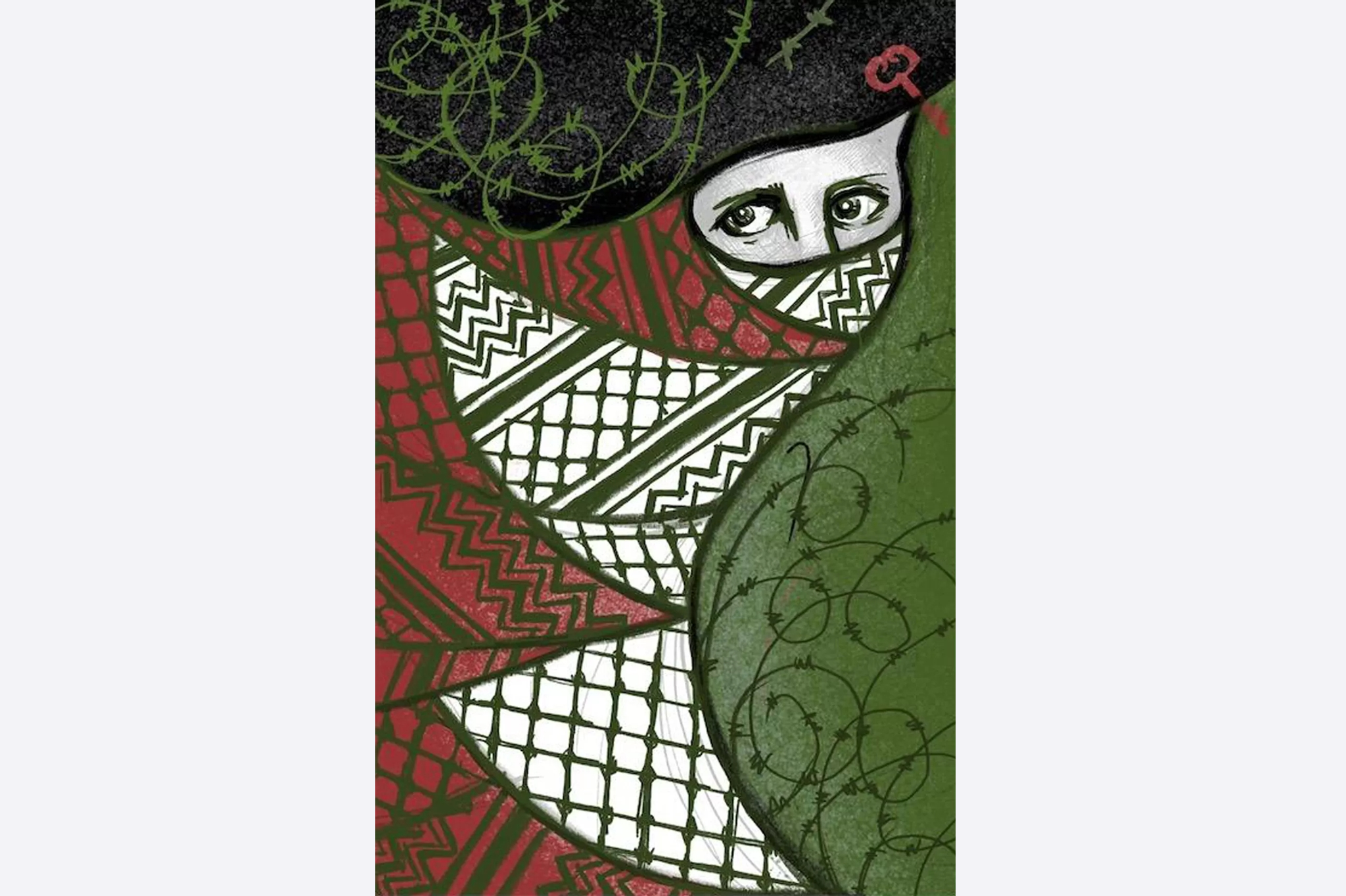
  • Las paces desde abajoTings Chak, “Palestine Will Be Free,” 2023 (courtesy of the artist).

    Peace from below

    By Carlos Mendoza Álvarez

    Two years after the ongoing genocide in Gaza, Trump recently "decreed" his peace plan for Palestine, with the submissive presence of an international "negotiation" group made up of Egypt, Qatar, and Turkey, with the complicity of European political leaders from Italy, Great Britain, and Spain who claim to "seek peace for the region."

    That plan, of course, fails to address justice for the Palestinian victims of the genocide, much less reparations for the economic and cultural devastation wreaked by Netanyahu's Israeli government. With criminal cynicism, Trump visited Israel to reaffirm his alliance with the Israeli prime minister and try to shield him from the accountability to which all war criminals must be held, a project promoted by a minority group of Israeli citizens with a handful of allies in the government.

    The international community now faces the most radical challenge since World War II: to promote a trial for crimes against humanity against Netanyahu and other Israeli military personnel, along with their accomplices from other complicit states, such as Trump and leaders of the European Union. This will involve judging a systematic war against the Palestinian people that began in 1947, when the Nakba or catastrophe that to this day is taking the extermination of the Palestinian people in the Gaza Strip and the West Bank to extremes.

    The accusation of war crimes against Israel filed by South Africa more than a year ago was only the beginning of a long process of international diplomacy that could one day lead to the creation of an international trial similar to that of Nuremberg in the last century to judge the crimes of the Nazi regime.

    But there are other "peaces" (plural: peace) that are worth keeping in mind, located at the bottom of the world of imperial domination, because they are the ones that endure over time and are rooted in the lives of communities.

    We are referring to those that were built against the current of hatred from political leaders by collectives of Palestinian and Jewish women, who organized communal events before the attacks of October 8, 2023, only to be later banned by the Israeli government. But there are also the "peaces" that Kurdish women forge in the face of the violence of the Turkish state. And those that Zapatista women build day by day to reclaim their bodies and territories in Chiapas.

    Carmenmargarita Sánchez de León just presented a few months ago at the Ibero-American University in Mexico City a doctoral thesis in critical gender studies about the resistance of Puerto Rican women creating on many fronts the construction of peace for their people colonized by the US government since 1952, when it was incorporated as a free associated state, a recent mode of colonization of territory within the parameters of modern law. These other peaces are woven body to body, in the mutual care of those who know they are vulnerable but powerful when they connect their wounds. The Ilé Collective in Puerto Rico that analyzes this doctoral thesis, as well as other decolonial feminist collectives such as the Feminist Collective under Construction, they reclaim urban spaces on the island, criticize the public debt of the state of Puerto Rico imposed by the US federal administration, but they also weave sisterhood among women racialized by the white patriarchy through collaborative networks in the production of goods and the formation of decolonial feminist thinking.

    The Women's Pacific Route In Colombia, it represents another attempt to weave peace from below, not from agreements between the actors in the massacres, which were the paramilitaries, the army and the Colombian state, but rather the peace that emerges from listening carefully to the victims and some executioners who seek to acknowledge their guilt, to move towards justice, reparation and thus perhaps one day receive the gift of reconciliation for the wounded social body.

    A paradoxical but significant example of these other ways of building peace is that of the families of missing persons who, upon arriving in a town or city, plant a "tree of memory" with photos of their missing loved ones and a few banners asking for empathy and solidarity from the community they are visiting. They also seek to weave threads of peace with the mailbox they place in the plaza where people can anonymously write information to help them find their missing relatives. Through this means, it has been possible to find clandestine graves, brothels, forced labor farms producing poppies, or drug labs, where their children may be, alive or dead. The searching mothers don't primarily ask for justice or revenge, but rather for information. In this way, they humanize the perpetrators by creating search spaces to find "their treasures," asking for clues that may lead to the whereabouts of their loved ones.

    These are the peace that matters because they are slowly woven by people and communities in resistance, especially by women who deconstruct patriarchy.

    Precisely there, in the cracks of those walls of hatred, other ways of existing with justice and dignity are woven, where peace gradually takes root.

    And what can we do to create peace for the Palestinian people and the other Semitic peoples who have shared the same land for thousands of years?

    To begin, we must stay informed from credible sources about what is happening in Palestine and then connect virtually or in person with a Palestinian community in resistance in those lands, or in the diaspora, to promote listening and person-to-person dialogue. A second step is to better understand the Jewish communities that closely support the cause of the Palestinian people and their right to live in that land. It is important to remember that there are Palestinians and Jews in the diaspora who share a love for the land of Palestine and a desire to find ways for brotherly peoples to once again live together in the same land.

    Perhaps many years will have to pass before there is peace in Palestine, until the sister peoples descended from Abraham, Sarah, and Hagar —yes, all three and their descendants— recognize their shared right to inhabit the same land. In the meantime, building peace will be the task of all communities, wherever they may be.

    Because Palestine is the compass of humanity, divided today, hopefully also in the process of conversion. Let us make peace possible for the Palestinian people, together with their sister nations, by weaving "peaces" where each of us lives. Only in this way can we continue to imagine a future as a human species before we fall into the abyss.

    This morning I arrived in the southern lands that rise between the majestic Andes mountain range and the Pacific Ocean, where the Mapuche and Chilean peoples inhabit the same territory with many barriers that even the democratic governments of recent decades have been unable to tear down. I have come here to discuss with university colleagues the validity and limits of liberation theology, on the occasion of the first anniversary of the death of Gustavo Gutiérrez (Gustavo Gutiérrez International Congress)I will also be able to talk with colleagues from the Chilean Theological Society about the difficult hope in times of catastrophe. And I am very excited to be able to visit Mapuche territory for the first time to hear about the resistance these communities have created to confront so many forms of colonialism, both old and new.Mapuche thought, autonomy and colonialism in Chile).

    In the next post I will be able to tell you some of these stories.

    Santiago, Chile, October 19, 2025

English