By Carlos Mendoza Álvarez
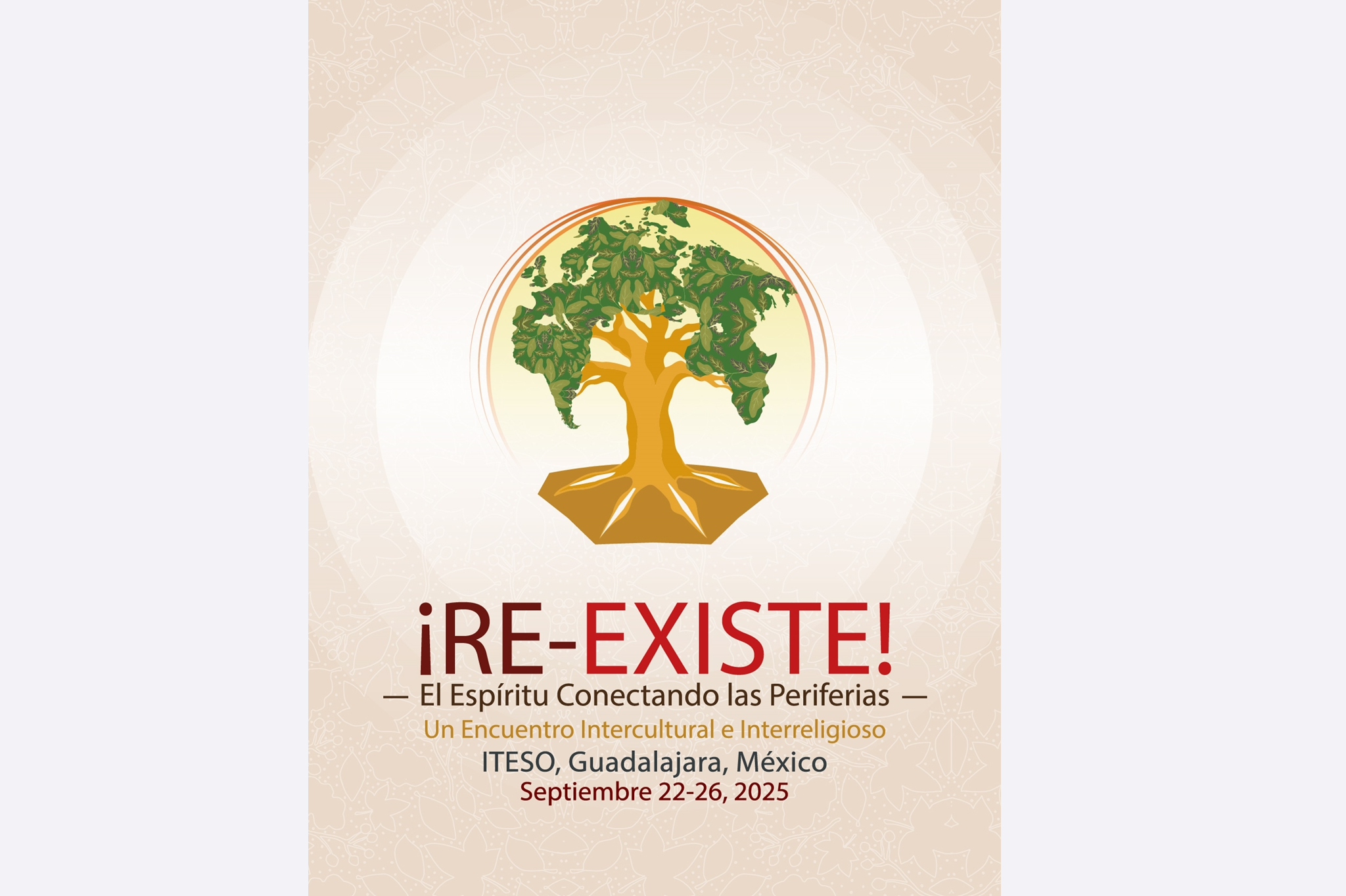
At the end of September, more than eighty people from survivor groups around the world gathered for a meeting of mutual listening, deepened by attentive dialogues with university students and nourished by provocations from artist groups. We were received with the magnificent hospitality of the Jorge Manzano Chair from ITESO that became home for a few days.
We began by celebrating the resistances that transform what seems like waste through love, inspired during the opening ceremony by the renowned Catalan singer Lídia Pujol who whispered that “from the compost that is rottenness, the flower can emerge” (Babel). She had discovered this wisdom in the poetry of her 12th-century countryman Ramon Llull, who recounted that “having found a friend who was dying without love, when he asked him why he was dying without love, he replied that no one had made him know about love or had taught him to be a lover.”
Angelica, from the lands of Malaysia, scattered grains of rice and Himalayan salt as an offering during the inaugural ritual, during which we prepared to listen attentively to the otherness that welcomes us as Mother Earth and inhabits us as Divinity that animates us with its ineffable breath of life.
Five tables, each with representatives from six collectives, divided into Spanish and English language groups, were the place where we listened to each other each morning, exchanging experiences to awaken, heal, and embrace each other, drawing on the inner vulnerability of each person and collective. Each table had two listeners, who identified the similarities and differences between the experiences described, thus weaving together a mutual accompaniment of solidarity and hope to confront the local and global horror we were describing. Raúl, a young Mayan popular educator through hip hop in Chiapas, commented that "no one had ever sat at a table to listen to my knowledge." Nancy, a Latina feminist theologian from the United States, along with Bosque, a biologist and environmental-spiritual activist from Cuernavaca, were tasked, like other members of academia and organized civil society present at the meeting, with cultivating this attentive listening to weave a common narrative amidst the differences of each experience and context.
Thus, we respectfully explored the sacred ground of resistance and re-existence. First, by approaching the horror, which we named according to the stories each person told. Sofía, for example, shared her experience as a young Ecuadorian migrant lawyer in Barcelona, where for several years she has worked with undocumented domestic workers in a feminist "coalition" that led them to form a union to strengthen them in the fight for their rights as migrant women while allowing them to develop artisanal skills to support their cause. Sofía's reflection echoed that of Alex, a graphic designer and popular artist who accompanies the Ecclesial Base Communities of El Salvador in the face of President Bukele's state of emergency. Now in its fourth year under an authoritarian leader, this regime of exception produces a filthy life for poor youth in the Salvadoran peripheries accused of criminality to whitewash a regime that has been colluding with criminal mafias for years. The resistance of both groups, in Catalonia and El Salvador, exuded an "interiority" that inspires them in their daily struggles. Christian spirituality in the Salvadoran case and feminist sorority in the Catalan case.
But it wasn't just about sharing the spoken word; it was about exploring other languages through workshops on body language and sound expression, or through the Jauja dance in the Peruvian Andean highlands as a path of resistance for a people, thus discovering other modes of communication between the seeking mothers and the healing companions who came from South Dakota or Malaysia. These other languages allowed us to overcome language barriers and helped us create powerful nonverbal communication bonds.
And to tie knots in the fabric of the threads intertwined in each day, the performances, like the one prepared with much love and talent by a Portland collective to celebrate the water that makes us up, thus helping us feel that we are water. To the rhythm of hip hop and rap as an alternative urban art proposal, the Mayan collectives of Chiapas that educate children threatened by drug cartels in the outskirts of cities in the mountains of southeastern Mexico, turned out to be a balm to heal wounds still open from other violence. Like that narrated by Vero looking for her son Diego, missing for ten years, or the violence against girls in Pakistan that Sabine recounted in her Support work in working-class neighborhoods of Faisalabad, in the Punjab region of PakistanThanks to this rapper performance, we all joined in the dance, while drawing symbols on the mural painted by Yara as part of a performance also dedicated to the water being killed in the planet's rivers, lakes, and seas.
We concluded each day with a harvest moment, where the popular narrative of Blessed Mixture, formed by young people from the Ecclesial Base Communities of Our America, helped us celebrate what we heard and shared through symbols, songs, and rituals. The guiding figures were the bees, a symbol of Mother Earth's resilience, which we welcomed with a wax candle produced by them, burning their flame in the palm of our hand to feel the pain of endangered species. This gesture was accompanied by a drop of honey poured into the other hand to give us a taste of their sweetness as survivors.
Then came the little house of Acteal, which was placed in the center of the circle of participants to remind us of the martyrdom of some human bees. pacifist collective of Las Abejas linked to the Zapatista bases, opting for the path of active non-violence in their shared struggle with justice and dignity for the indigenous peoples, suffered the murder of 45 of its members, among them four pregnant women, who were massacred on December 22, 1997 in Chiapas in the community hermitage while they were praying for peace, a crime perpetrated by paramilitaries with the complicity of the federal army (Acteal Massacre, Chiapas. Serious human rights violations by the Mexican State in 1997). His memory continues to sting like a splinter that hurts the lives of the indigenous peoples who seek other possible worlds.
We closed those moments of harvest by making kites with messages of peace for women violated by patriarchy and for the Palestinian people resisting the ongoing genocide by the Israeli state. These artifacts helped us direct our hearts and gaze toward a future with dignity and hope for the people in resistance.
∂
The visit to the community of El Salto, in the suburbs of Guadalajara, led us to cross the abysmal line of the ongoing ecocide that the environmental collective that received us on the “Tour of Horror” (A Leap of Life) describes itself as “an industrial paradise with an environmental hell.” The Lerma-Santiago River basin, which runs 708 kilometers across western Mexico, is an open wound for Mexican territory and for the animal and plant species and people who inhabit it. Since the post-war industrial boom of the last century, polluting industry has spread across this vast region like a social and environmental virus. To date, more than 90 highly toxic pollutants have been identified, many of them carcinogenic, of which only a few, more visible, are treated with a couple of treatment plants. Sofía and Pedro, young environmentalists from the area, tell us that the transnational corporations established in this basin, such as Nestlé, Toyota, IBM, and many others, claim to be green companies today, when in reality, their local parts suppliers are the ones producing the most pollution because they do not comply with current national and international regulations.15 transnational corporations pollute the Santiago River, according to an international report.). ITESO is part of a network of universities in the region that study the water problem (Industry and nature in conflict: will there be a
future for water in Lerma-Chapala?) in constant collaboration with the collectives of residents and environmentalists who seek to save the watershed with its inhabitants of diverse species.
Among the members of the group welcoming us is Emmanuel, a little boy of barely ten years old. Wearing cowboy boots and a cowboy hat, he leads his mother's hand as they show us the polluted wetlands, filled with the fetid odor of the city's sewage and the invasive species that inhabit them, such as tilapia, a contaminated fish sold in many markets across the country. The ecological present for this little boy from Guadalajara is catastrophic, but a possible future is beginning to emerge with community organizing.
∂
One of the morning rituals was presided over by Cecelia Firethunder, a Lakota grandmother who told us about her people's long journey of healing their wounds in resistance in the United States. Her experience as a child in a sunflower field that welcomed her in a dance of dignity and strength when she faced discrimination at school has continued to inspire her ever since, as she accompanies her people in awakening from centuries-old segregation, to heal their wounded memories by recovering their language, their knowledge, and their ancestral rituals. It is then possible to walk forward creating new ways of eating, like the initiative shared by her compatriot Nick Hernández to recover lands and methods of communal organization and indigenous Lakota agriculture (Makoce. Agricultural Development) in the heart of the Indian reservations, which have been territories controlled by the US government for two hundred and fifty years.
∂
From the compost that is rotten, the flower can emerge, as Lídia Pujol said.
But for that moment to arrive in our time of environmental collapse, it is necessary to first recycle the waste produced by extractive, racist, and patriarchal capitalism to recover the organic essence of the resistance of communities of survivors, including Mother Earth.
At the end of the meeting, we each returned to our places of origin and life choices, certain that as long as there is resistance, there will be hope, because there, in the midst of catastrophe, the lilies of re-existence sprout.
Guadalajara, September 28, 2025