Tag: Netanyahu

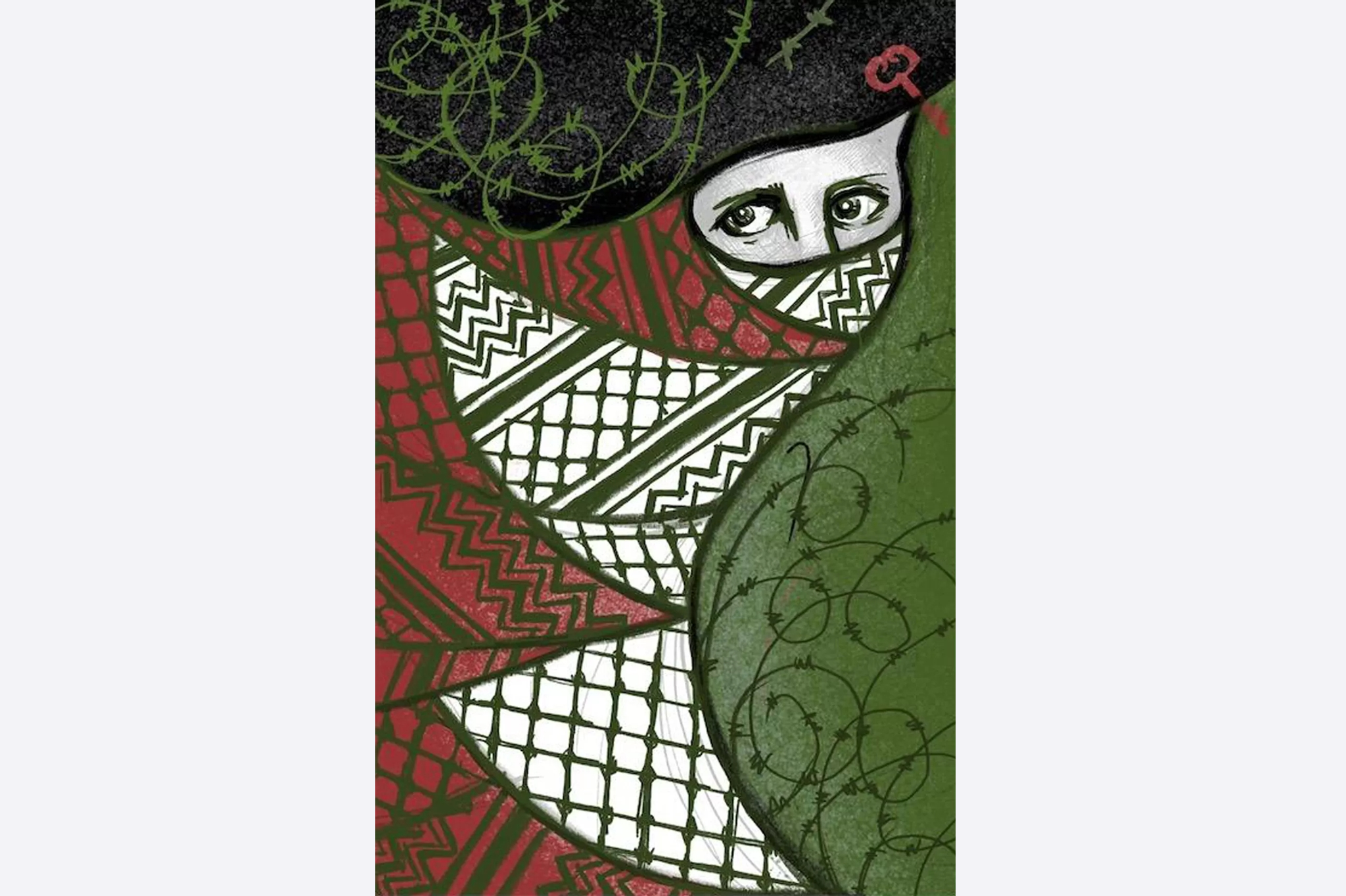
  • Las paces desde abajoTings Chak, “Palestine Will Be Free,” 2023 (courtesy of the artist).

    Peace from below

    By Carlos Mendoza Álvarez

    Two years after the ongoing genocide in Gaza, Trump recently "decreed" his peace plan for Palestine, with the submissive presence of an international "negotiation" group made up of Egypt, Qatar, and Turkey, with the complicity of European political leaders from Italy, Great Britain, and Spain who claim to "seek peace for the region."

    That plan, of course, fails to address justice for the Palestinian victims of the genocide, much less reparations for the economic and cultural devastation wreaked by Netanyahu's Israeli government. With criminal cynicism, Trump visited Israel to reaffirm his alliance with the Israeli prime minister and try to shield him from the accountability to which all war criminals must be held, a project promoted by a minority group of Israeli citizens with a handful of allies in the government.

    The international community now faces the most radical challenge since World War II: to promote a trial for crimes against humanity against Netanyahu and other Israeli military personnel, along with their accomplices from other complicit states, such as Trump and leaders of the European Union. This will involve judging a systematic war against the Palestinian people that began in 1947, when the Nakba or catastrophe that to this day is taking the extermination of the Palestinian people in the Gaza Strip and the West Bank to extremes.

    The accusation of war crimes against Israel filed by South Africa more than a year ago was only the beginning of a long process of international diplomacy that could one day lead to the creation of an international trial similar to that of Nuremberg in the last century to judge the crimes of the Nazi regime.

    But there are other "peaces" (plural: peace) that are worth keeping in mind, located at the bottom of the world of imperial domination, because they are the ones that endure over time and are rooted in the lives of communities.

    We are referring to those that were built against the current of hatred from political leaders by collectives of Palestinian and Jewish women, who organized communal events before the attacks of October 8, 2023, only to be later banned by the Israeli government. But there are also the "peaces" that Kurdish women forge in the face of the violence of the Turkish state. And those that Zapatista women build day by day to reclaim their bodies and territories in Chiapas.

    Carmenmargarita Sánchez de León just presented a few months ago at the Ibero-American University in Mexico City a doctoral thesis in critical gender studies about the resistance of Puerto Rican women creating on many fronts the construction of peace for their people colonized by the US government since 1952, when it was incorporated as a free associated state, a recent mode of colonization of territory within the parameters of modern law. These other peaces are woven body to body, in the mutual care of those who know they are vulnerable but powerful when they connect their wounds. The Ilé Collective in Puerto Rico that analyzes this doctoral thesis, as well as other decolonial feminist collectives such as the Feminist Collective under Construction, they reclaim urban spaces on the island, criticize the public debt of the state of Puerto Rico imposed by the US federal administration, but they also weave sisterhood among women racialized by the white patriarchy through collaborative networks in the production of goods and the formation of decolonial feminist thinking.

    The Women's Pacific Route In Colombia, it represents another attempt to weave peace from below, not from agreements between the actors in the massacres, which were the paramilitaries, the army and the Colombian state, but rather the peace that emerges from listening carefully to the victims and some executioners who seek to acknowledge their guilt, to move towards justice, reparation and thus perhaps one day receive the gift of reconciliation for the wounded social body.

    A paradoxical but significant example of these other ways of building peace is that of the families of missing persons who, upon arriving in a town or city, plant a "tree of memory" with photos of their missing loved ones and a few banners asking for empathy and solidarity from the community they are visiting. They also seek to weave threads of peace with the mailbox they place in the plaza where people can anonymously write information to help them find their missing relatives. Through this means, it has been possible to find clandestine graves, brothels, forced labor farms producing poppies, or drug labs, where their children may be, alive or dead. The searching mothers don't primarily ask for justice or revenge, but rather for information. In this way, they humanize the perpetrators by creating search spaces to find "their treasures," asking for clues that may lead to the whereabouts of their loved ones.

    These are the peace that matters because they are slowly woven by people and communities in resistance, especially by women who deconstruct patriarchy.

    Precisely there, in the cracks of those walls of hatred, other ways of existing with justice and dignity are woven, where peace gradually takes root.

    And what can we do to create peace for the Palestinian people and the other Semitic peoples who have shared the same land for thousands of years?

    To begin, we must stay informed from credible sources about what is happening in Palestine and then connect virtually or in person with a Palestinian community in resistance in those lands, or in the diaspora, to promote listening and person-to-person dialogue. A second step is to better understand the Jewish communities that closely support the cause of the Palestinian people and their right to live in that land. It is important to remember that there are Palestinians and Jews in the diaspora who share a love for the land of Palestine and a desire to find ways for brotherly peoples to once again live together in the same land.

    Perhaps many years will have to pass before there is peace in Palestine, until the sister peoples descended from Abraham, Sarah, and Hagar —yes, all three and their descendants— recognize their shared right to inhabit the same land. In the meantime, building peace will be the task of all communities, wherever they may be.

    Because Palestine is the compass of humanity, divided today, hopefully also in the process of conversion. Let us make peace possible for the Palestinian people, together with their sister nations, by weaving "peaces" where each of us lives. Only in this way can we continue to imagine a future as a human species before we fall into the abyss.

    This morning I arrived in the southern lands that rise between the majestic Andes mountain range and the Pacific Ocean, where the Mapuche and Chilean peoples inhabit the same territory with many barriers that even the democratic governments of recent decades have been unable to tear down. I have come here to discuss with university colleagues the validity and limits of liberation theology, on the occasion of the first anniversary of the death of Gustavo Gutiérrez (Gustavo Gutiérrez International Congress)I will also be able to talk with colleagues from the Chilean Theological Society about the difficult hope in times of catastrophe. And I am very excited to be able to visit Mapuche territory for the first time to hear about the resistance these communities have created to confront so many forms of colonialism, both old and new.Mapuche thought, autonomy and colonialism in Chile).

    In the next post I will be able to tell you some of these stories.

    Santiago, Chile, October 19, 2025

  • La Biblia como arma de genocidio o casa de vidaSliman Mansour. Revolution was the beginning (2016), oil on canvas, 200 x 500 cm

    The Bible as a weapon of genocide or a house of life

    By Carlos Mendoza-Álvarez


    The State of Israel began this week a new phase of the strategy of control of the territory of Palestine (Israel approves controversial West Bank settlement project). Israeli settler settlements in the West Bank will expand to divide the territory, which was the result of the 1993 Oslo Accords to relocate Palestinian residents into two isolated groups, leaving only one outlet to the Jordan River on the Jericho side.


    Christ at the Checkpoint, August 21, 2025   


    The ultimate goal is the creation of Greater Israel, once the possibility of a Palestinian state has been destroyed because, as Israeli Finance Minister Bezalel Smotrich said this week, “there is nothing to recognize, and no one to recognize” (Israel approves illegal settlement plan that would split occupied West Bank) once the genocide of the Palestinian people has been consummated.

    This plan of contemporary Israeli expansionism "after Gaza" suggests at least two main objectives: the first is the isolation of Palestinians in apartheid zones, in addition to the invasion of the Gaza Strip, with the goal of their expulsion or subsequent extermination; and the second is the control of the Jordan River as a strategic source of water resources for times of global scarcity.


    But this is not merely the military strategy of a rampaging Zionist state supported by global capitalism, particularly the governments of the United States and the United Kingdom. The ongoing Zionist plan demonstrates the perversity of an ideology of genocide that manipulates the Bible to justify the supremacy of one state over others, subordinating peoples of diverse ethnic and religious origins to a selective process of annihilation in the name of a supposed divine promise.

    Both Jewish and Christian Zionism, in fact, are the modern version of the manipulation of the biblical promises recounted by the saga of Abraham and Sarah as ancestors of the believers of the three monotheistic religions. The biblical account, in fact, tells us that God the Eternal promised the primordial couple offspring "as numerous as the stars of the sky and the sand on the seashore" (Gen 22:17). Hebrew Talmudic and ancient Christian commentaries saw in this double metaphor of the heavens and the earth the proclamation of the universality of the promise: the stars of the sky evoking the daughters and sons of Israel, and the sand on the seashore representing all the nations of the earth.

    The ideology of the “chosen people” was later developed in the Bible by a religious movement that perverted the announcement of the promise of the land, focusing it on the conquest of a territory as an exclusive monopoly of one people over other Semitic peoples. This “political theology” was devised by an interpretation of messianism in a Davidic key, present in the Bible since the time of the judges of Israel, which is called the “Joshua factor” by the Palestinian Lutheran theologian Mitri Raheb (Imperial Theology, Colonization, Settler Colonialism, and the Struggle for Decolonization: A Review Essay) as a source of the theology of empire.

    But the prophets of Israel, from Moses to John the Baptist—and Jesus of Nazareth and his community who were part of that lineage—were always critical of the powers that be, which have sought to supplant divine glory under various masks. Theology prophetic It is found at the origin of the Abrahamic faith as a universal vision of the promise and the land that includes all peoples. As the French Dominican biblical scholar Philippe Lefebvre (Conference: Jésus et le pouvoir – P. Lefebvre), prophetic messianism is present like an underground river throughout the Bible, from the book of Genesis to its fulfillment in the Passover of Jesus of Nazareth.

    And the Jesus movement in Galilee takes up this prophetic vein to radicalize it with the innovation of a messianism scatological, as another Dominican, José Luis Espinel, commented a few decades ago in Salamanca (Eschatological Messianism of Jesus from his prophetic actions). A prophetic tradition that announces the fulfillment of the promise for all peoples as a call to the universal love that flows from the wounds of a crucified Messiah.


    Palestinian Christians, as the Palestinian Lutheran theologian Munther Isaac (Faith, the Bible, and the Genocide in Gaza) call us today to decolonize the Bible, which has become the weapon of war of Israeli and Christian Zionism against the Palestinian people. There is no chosen people to conquer a land in the name of God, stealing it from its original inhabitants, from the ancient Canaanites and Jebusites to the Palestinians of today. Nor is there a promise of the land that justifies, in the name of God, an Israeli state imposed by war on territories inhabited by Semitic peoples for millennia.

    Christian churches of all denominations, as well as universities and political movements that appeal to the Bible as their source, face a grave dilemma: either continue to justify the genocide of the Palestinian people in the name of the God of Israel, or decolonize the Bible to recover the messianic and prophetic spirit of the divine and human word that frees all peoples from the slavery of earthly powers that supplant divine glory, with their current avatars, such as Trump and Netanyahu, or Milei and Bolsonaro, who are today's false messiahs.

    The promise of the land that Abraham and Sarah received in that story of origins when they left Ur in Sumeria in search of the Eternal One – as the Jewish thinker from Strasbourg André Neher says in his book The essence of prophecy – is only fulfilled in the silence symbolized by the desert as a land of incessant search for the Covenant.

    Hence, Christianity drinks from that source of original Hebrew prophecy to announce the arrival of “the new heavens and the new earth,” as the book of Revelation (21: 1) said in the context of the devastation of the old, idolatrous Roman imperial world and the Temple religion that perverted the divine promise.

    This radical critique of all imperial theology stemming from a prophetic and eschatological messianism that heralds the end of the corrupt world has been rejected by both old and new earthly powers that seek to continue domesticating the divine promise.

    But from the rubble of Gaza, the promise of the land emerges today, with renewed vigor, summoning all peoples of humanity and compelling all spiritual traditions to care for the lives of the innocent victims and their survivors. It calls us to continue searching for the promised land as a utopia in the midst of dystopia. It invites us to cultivate hope as a promise of life that emerges amid the threat of imminent death, like that experienced by Gazans today and other peoples threatened by necropower.

    The Bible is not a weapon of war but “the house of the people,” as Carlos Mesters said in Brazil in his beautiful and powerful parable (The parable of the house of the people of God). A house we are invited to inhabit, to recognize in our own stories the spring of life that emerges like living water gifted by God from the ruins of the power that kills.

    Let us reread and inhabit these messianic and prophetic testimonies of the promise of the land and the choice of divine love for all peoples, so that we may be inspired by the consolation that comes from God to the victims and their survivors, as a moving promise that is happening in the silence of the desert.


    Mexico City, August 24, 2025

  • El fuego de DiosKim en Joong OP, La Pentecôte, Saint Genès, 2012

    The fire of God

    By Carlos Mendoza-Álvarez


    Israeli missiles, drones, and snipers are ravaging Gaza and the West Bank today, aiming to complete the total destruction of the Palestinian people.

    It's been 77 years now Nakba or catastrophe, which began in 1948 with the creation of the State of Israel and the expulsion of the Palestinian people from their territory. The Israeli army gives biblical names to this new artillery of annihilation, conceived by the human mind but executed with precision by artificial intelligence. A recent example was the "Gideon's Chariots" operation announced by President Netanyahu to attack the terrorist group Hamas, implemented in 2025 by the Israeli army. This name recalls the battle of a Hebrew peasant who gathered 300 men to wage war on the Midianites in the name of God to occupy a territory "promised by God" as the ideology of the time. This story from more than three thousand years ago, recounted in the Book of Judges (6-7), is now evoked by Israeli power to justify the ongoing genocide.

    As an expression of this control of the imagination of the Jewish people today, we can see the videos circulating on social networks, showing Israeli soldiers and settlers playing at killing Palestinian children as if it were a video game. millennialsPerhaps those actors of today's horror grew up from childhood in that artificial world of wars where the victor lives in the aseptic space of a digital screen. To top it all off, today's horror takes on a festive, "messianic" appearance, as it is a "holy war," accompanied by Hebrew choirs and traditional Jewish dances of those who mock the filth that represents the enemy. This people must be annihilated to liberate the land of Israel (Eretz Yisrael) from their invaders. The Bible already told this story when a people enslaved in Egypt created the story of the divine promise that would give them “a land flowing with milk and honey” (Exodus 3:17), interpreting a symbolic message as a mandate to conquer territory.

    A similar version of military colonialism with a religious ideological cloak gave birth to the United States in modern times. English settlers fleeing religious wars and famine arrived in the lands of the Powhatan and Massachusetts people on the East Coast with "messianic" rhetoric, seeking to seize those lands with God's supposed blessing. The speeches of the Founding Fathers are inspired by biblical quotations, as are Trump's current incendiary speeches, especially after the 2024 attack, when the White House resident openly claims to have been sent by God to "save the free world." Bolsonaro expressed this same religious delirium in Brazil a few years ago to justify a racist regime with hate speech.

    And so the supposed divine fire that inspires the Zionist state, the US government, and many of today's populist leaders launches "flames of fire" to annihilate anyone who opposes its divine mission, which, in reality, masks today's colonialism in its most brutal and cynical form.


    But the Bible tells others Stories of God's fire. Over thousands of years, the Hebrew people first and the early Christian community later discerned between the warring fire of false gods and the divine fire of the Eternal One, which prophets and poets, healers and apostles received, addressing the people in the name of God, healing their wounds, and announcing nonviolent messianic hope amidst the horror.

    This divine fire is a flame that does not destroy, but rather builds from within, an experience initiated by the prophets of Israel, from Elijah to Jeremiah. This inner fire is like a spark that shares in the flame of the Eternal, where women and men in trance, illuminated by this divine light, announce new things for an oppressed and hopeless people. This fire is not military, but divine. It enables those who receive it to see and act with boldness, creative imagination, and loving compassion.

    A fire different from that of the drones becomes light, splendor and strength, as in the story of Jesus the Galilean, who "transfigures" himself on the mountain to reveal his deepest being, preparing to go to Jerusalem at a critical moment of his mission, the center of religious power of his time, to bear witness there, in the heart of the empire, to the glory (קבֹד kabod) of your Abba. Glory is not power, but life.

    That divine fire inspired Jesus and his community to weave a liberating and loving closeness with the invisible people of his time: the poor, women, strangers, and the sick. It also enabled them to denounce the corruption taking place, especially the perversion of the religion of the Temple and, later, of the Pharisees who called themselves teachers of the Torah.

    A fire another world that, after the atrocious execution of Jesus on a Roman cross with the complicity of the angry mob and some religious authorities, settled on the head of the community terrified by the fear of suffering the same mockery as his RabbiAfter a time of mourning and fear, that fire opened their minds and hearts to understand what was happening. The crucified One was back, alive. otherwiseHe had awakened and was following his steps, babbling another message with his disciples and apostles, performing signs of new life in the midst of new communities, both within and beyond the borders of the Hebrew people. These communities in the diaspora recognized him as the crucified Messiah by rereading the Hebrew Scriptures and breaking bread in his memory, symbolic acts to continue the work of divine redemption in the hearts of suffering and hopeful peoples.

    This divine fire is not exclusive to any nation, nor is it a monopoly of any sacred institution, whether secular or religious. Nor does it justify wars of conquest and colonization. Much less is it a destructive fire that annihilates other nations.

    That fire is harvest retireThis is the powerful symbolism of the fifty-day cycle of the Hebrew and Christian calendar. The Hebrew Jubilee Year, which every fifty years forgives debts, lets the land rest, and frees the captives to make way for God's glory. Fifty days after Jesus' Passover, the Christian community celebrates God's loving abundance, which does not launch drones or missiles to destroy his enemies, but communicates flames of divine fire to "raise the humble of the earth from the mire," as Hannah and Mary sang in both Testaments (1 Samuel 2:10 and Luke 1:52).

    Divine fire recreates the face of the earth from the survivors of the horror story, who interweave life with memory, dignity, and mutual care, amidst the death that surrounds them.

    Blessed feast of Pentecost.


    Mexico City

    June 7, 2025

English