
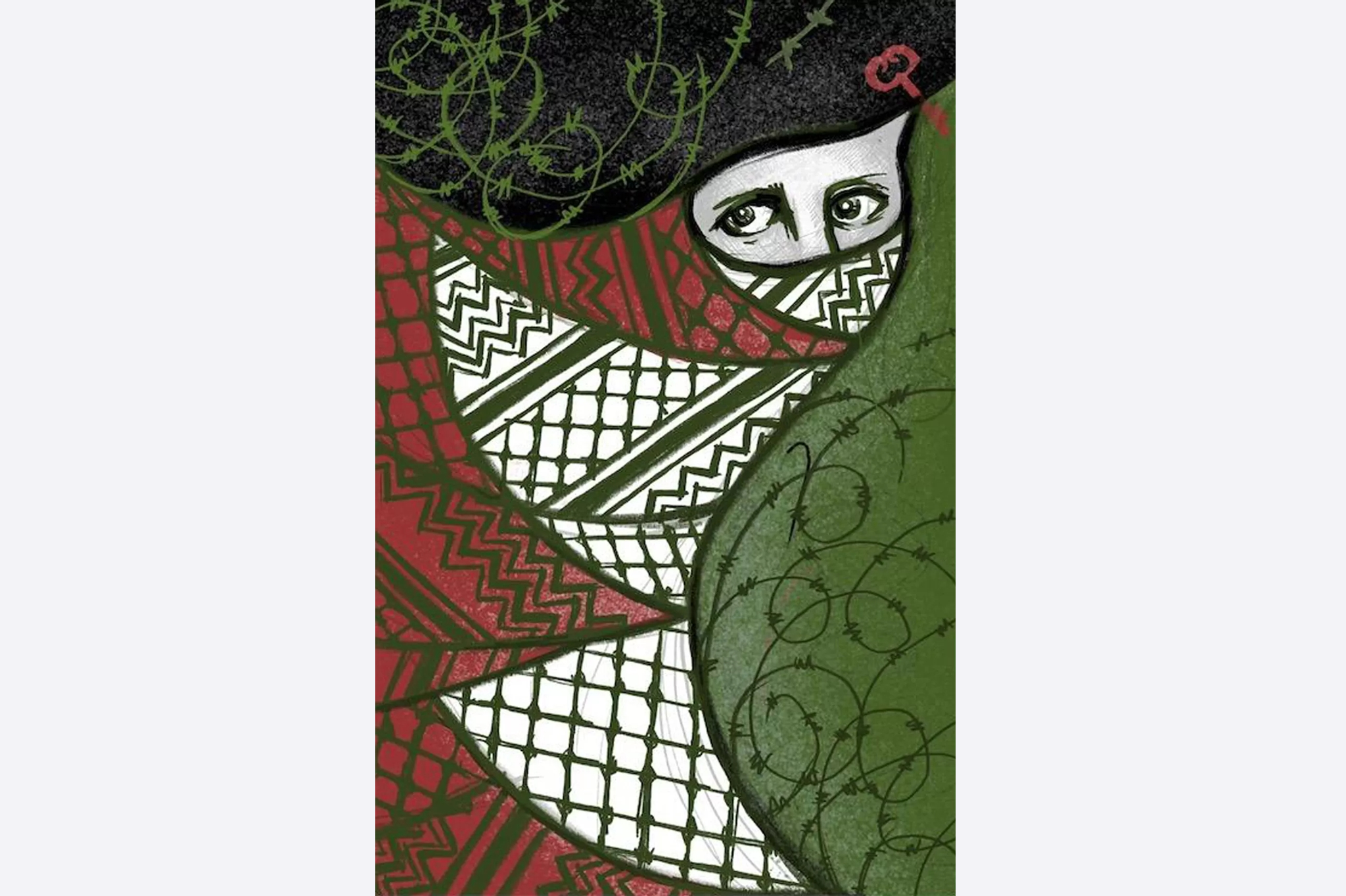
By Carlos Mendoza Álvarez
Two years after the ongoing genocide in Gaza, Trump recently "decreed" his peace plan for Palestine, with the submissive presence of an international "negotiation" group made up of Egypt, Qatar, and Turkey, with the complicity of European political leaders from Italy, Great Britain, and Spain who claim to "seek peace for the region."
That plan, of course, fails to address justice for the Palestinian victims of the genocide, much less reparations for the economic and cultural devastation wreaked by Netanyahu's Israeli government. With criminal cynicism, Trump visited Israel to reaffirm his alliance with the Israeli prime minister and try to shield him from the accountability to which all war criminals must be held, a project promoted by a minority group of Israeli citizens with a handful of allies in the government.
The international community now faces the most radical challenge since World War II: to promote a trial for crimes against humanity against Netanyahu and other Israeli military personnel, along with their accomplices from other complicit states, such as Trump and leaders of the European Union. This will involve judging a systematic war against the Palestinian people that began in 1947, when the Nakba or catastrophe that to this day is taking the extermination of the Palestinian people in the Gaza Strip and the West Bank to extremes.
The accusation of war crimes against Israel filed by South Africa more than a year ago was only the beginning of a long process of international diplomacy that could one day lead to the creation of an international trial similar to that of Nuremberg in the last century to judge the crimes of the Nazi regime.
∂
But there are other "peaces" (plural: peace) that are worth keeping in mind, located at the bottom of the world of imperial domination, because they are the ones that endure over time and are rooted in the lives of communities.
We are referring to those that were built against the current of hatred from political leaders by collectives of Palestinian and Jewish women, who organized communal events before the attacks of October 8, 2023, only to be later banned by the Israeli government. But there are also the "peaces" that Kurdish women forge in the face of the violence of the Turkish state. And those that Zapatista women build day by day to reclaim their bodies and territories in Chiapas.
Carmenmargarita Sánchez de León just presented a few months ago at the Ibero-American University in Mexico City a doctoral thesis in critical gender studies about the resistance of Puerto Rican women creating on many fronts the construction of peace for their people colonized by the US government since 1952, when it was incorporated as a free associated state, a recent mode of colonization of territory within the parameters of modern law. These other peaces are woven body to body, in the mutual care of those who know they are vulnerable but powerful when they connect their wounds. The Ilé Collective in Puerto Rico that analyzes this doctoral thesis, as well as other decolonial feminist collectives such as the Feminist Collective under Construction, they reclaim urban spaces on the island, criticize the public debt of the state of Puerto Rico imposed by the US federal administration, but they also weave sisterhood among women racialized by the white patriarchy through collaborative networks in the production of goods and the formation of decolonial feminist thinking.
The Women's Pacific Route In Colombia, it represents another attempt to weave peace from below, not from agreements between the actors in the massacres, which were the paramilitaries, the army and the Colombian state, but rather the peace that emerges from listening carefully to the victims and some executioners who seek to acknowledge their guilt, to move towards justice, reparation and thus perhaps one day receive the gift of reconciliation for the wounded social body.
A paradoxical but significant example of these other ways of building peace is that of the families of missing persons who, upon arriving in a town or city, plant a "tree of memory" with photos of their missing loved ones and a few banners asking for empathy and solidarity from the community they are visiting. They also seek to weave threads of peace with the mailbox they place in the plaza where people can anonymously write information to help them find their missing relatives. Through this means, it has been possible to find clandestine graves, brothels, forced labor farms producing poppies, or drug labs, where their children may be, alive or dead. The searching mothers don't primarily ask for justice or revenge, but rather for information. In this way, they humanize the perpetrators by creating search spaces to find "their treasures," asking for clues that may lead to the whereabouts of their loved ones.
These are the peace that matters because they are slowly woven by people and communities in resistance, especially by women who deconstruct patriarchy.
Precisely there, in the cracks of those walls of hatred, other ways of existing with justice and dignity are woven, where peace gradually takes root.
∂
And what can we do to create peace for the Palestinian people and the other Semitic peoples who have shared the same land for thousands of years?
To begin, we must stay informed from credible sources about what is happening in Palestine and then connect virtually or in person with a Palestinian community in resistance in those lands, or in the diaspora, to promote listening and person-to-person dialogue. A second step is to better understand the Jewish communities that closely support the cause of the Palestinian people and their right to live in that land. It is important to remember that there are Palestinians and Jews in the diaspora who share a love for the land of Palestine and a desire to find ways for brotherly peoples to once again live together in the same land.
Perhaps many years will have to pass before there is peace in Palestine, until the sister peoples descended from Abraham, Sarah, and Hagar —yes, all three and their descendants— recognize their shared right to inhabit the same land. In the meantime, building peace will be the task of all communities, wherever they may be.
Because Palestine is the compass of humanity, divided today, hopefully also in the process of conversion. Let us make peace possible for the Palestinian people, together with their sister nations, by weaving "peaces" where each of us lives. Only in this way can we continue to imagine a future as a human species before we fall into the abyss.
∂
This morning I arrived in the southern lands that rise between the majestic Andes mountain range and the Pacific Ocean, where the Mapuche and Chilean peoples inhabit the same territory with many barriers that even the democratic governments of recent decades have been unable to tear down. I have come here to discuss with university colleagues the validity and limits of liberation theology, on the occasion of the first anniversary of the death of Gustavo Gutiérrez (Gustavo Gutiérrez International Congress)I will also be able to talk with colleagues from the Chilean Theological Society about the difficult hope in times of catastrophe. And I am very excited to be able to visit Mapuche territory for the first time to hear about the resistance these communities have created to confront so many forms of colonialism, both old and new.Mapuche thought, autonomy and colonialism in Chile).
In the next post I will be able to tell you some of these stories.
Santiago, Chile, October 19, 2025