
By Carlos Mendoza Álvarez
Last Thursday, the JobeLab collective —formed by friends and colleagues from the city to promote open conversations about issues that matter to the quality of life of diverse communities— brought us together at the La Madriguera bookstore, in the Guadalupe neighborhood of the city of Jobel, the indigenous name of San Cristóbal de Las Casas, to talk about Artificial Intelligence (AI).
The topic brought together nearly fifty people from diverse generations, backgrounds, and interests, drawn from the world of social activism, academia, the Church, and the arts. The pretext was to propose various interpretations of Pope Leo XIV's encyclical "Magnifica Humanitas," published on May 15th, the centenary of his predecessor Leo XIII's encyclical "Rerum Novarum," or "On New Things," written when the Roman Catholic Church was grappling with the challenges of industrialization.
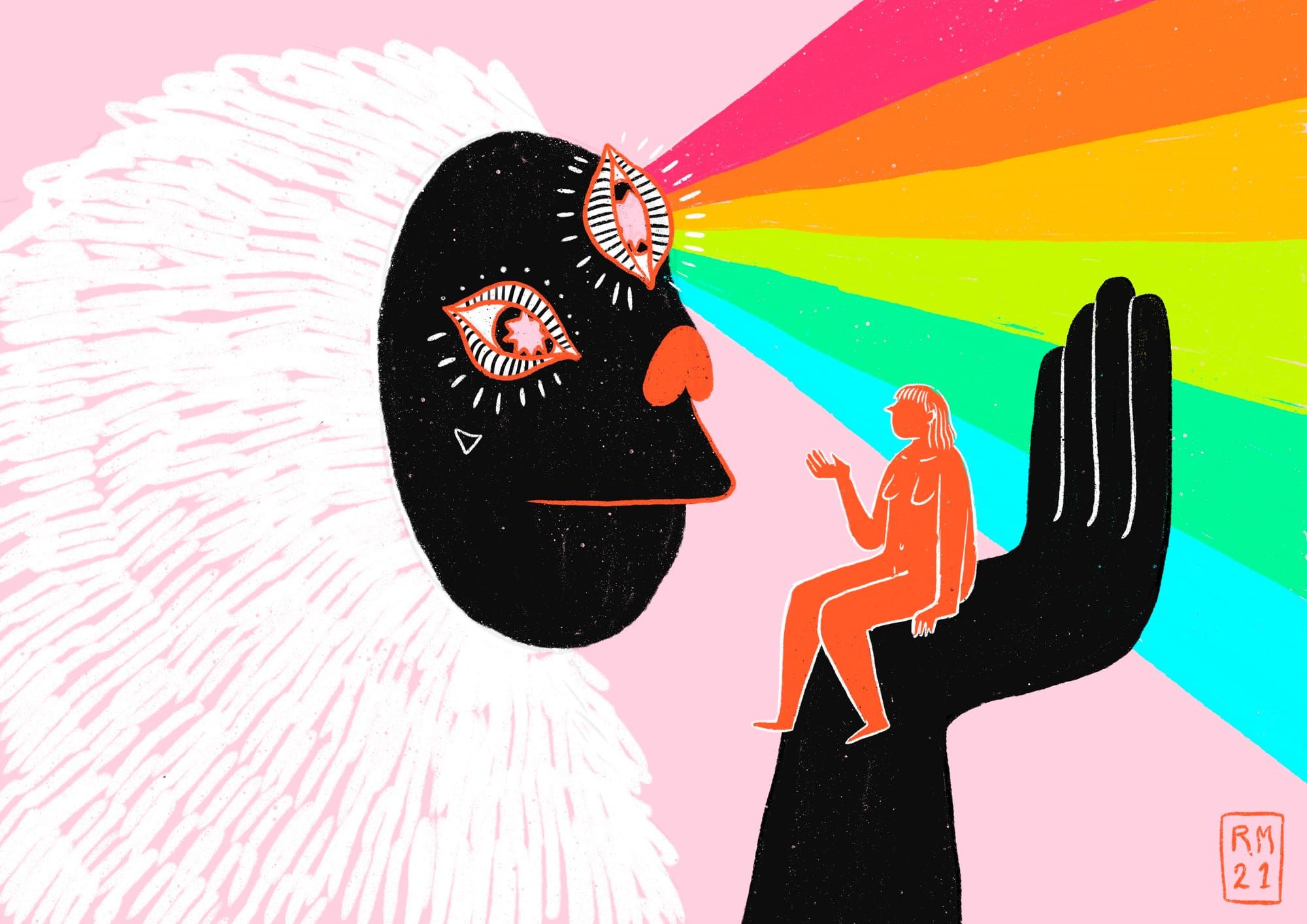
The fundamental question, however, was not merely technical or pastoral: it was a question about the very soul of our time. How can we safeguard the magnificence and vulnerability of humanity when machines promise efficiency, calculation, and memory without wounds? How can we recognize, amidst the digital dazzle, that our greatness lies not in becoming invulnerable, but in learning to inhabit fragility (vulnerabilis humanitas) as a place of encounter, discernment, and human-divine communion?
Today, digitalization has brought about an unprecedented cultural transformation. Data, algorithms, and prompts —those instructive teachers designed on databases— exert an omnipresent influence through our cell phones, tablets and computers that, as Abraham Mena commented, are applied with increasing sophistication to all spheres of social life: the economy, science, technology, the arts, sexuality, education and religion.
It is a “machine” that is not intelligent, argued Kathia Loyzaga, but one whose mechanisms we must learn to understand and manage: exploring its possibilities, recognizing its limitations, and always maintaining, as Leo XIV emphasized, the primacy of the human, with its creativity and unique talents as the image of God. This irreplaceable core is the human heart, which João Almeida reminded us is the center of the religious message of Christianity and other spiritual traditions of humanity. This reality of being in relation to others is part of our path to humanization and liberation, as Paulo Freire observed.
In addition to recognizing the opportunities that AI offers for the development of science and technology, with an immediate impact on our lives, we must also consider the risks posed by the misuse of this technology when it falls into the hands of governments, militaries, and transnational corporations that profit from machine learning for their own benefit.
When addressing the ethical dimension of AI, the topic I was assigned to discuss in the talk, I wanted to recall Ivan Illich's warning about the age of systems: a time when humans have become replaceable subsystems, at any moment, by robots and algorithmic decisions under the command of a "handful of oligarchs," as Pope Leo said on his recent trip to Cameroon, referring to the masters of Silicon Valley.
Magnificent and vulnerable humanity before the warlords
Pope Leo XIV's theoretical framework allows him to move with ease within a vision of the human person as a relational being, exploring the intricacies of subjectivity masterfully narrated by Saint Augustine sixteen hundred years ago in his theological works and in his monastic rule of life. From this perspective, Leo XIV speaks of the Intimacy of Humanity to praise "magnificent humanity," which has received from God the indelible mark of his love, while at the same time recognizing the limits it cannot transgress under penalty of becoming a source of moral chaos. Leo therefore emphasizes that, while humanity is "magnificent" because it is the image of divinity, it is also "vulnerable" because it is a finite creature: a subjectivity that explores its limits, recognizes them, and discovers them as a place of encounter with others, with the cosmos, and with God.
Some voices within the global theological community propose continuing to critically examine how to approach AI, while still acknowledging its potential benefits for humanity and the planet. One provocative voice is that of Paolo Gamberini, an Italian Jesuit philosopher, who envisions a papal encyclical on this topic within the theoretical framework of Teilhard de Chardin's cosmic Christ, the great 20th-century scientist and mystic. In his cosmology, humanity appears intimately linked to the evolution of species and the cosmos from the Christic Alpha, including new creatures—such as AI—all assumed by Divine Wisdom in the movement toward the Omega, where the total Christ will be all in all.
The discussion yielded diverse perspectives. For example, a young sculptor distanced himself from AI because, in his view, it cannot replace the human genius of artistic creation. Another voice came from a leader defending the Jobel wetlands, a land of reeds and waterways now threatened by real estate development, urban chaos, and the apathy of a population that pollutes its waterways with garbage, while the municipal government proves incapable of regulating the urban disorder. How can AI be a useful tool for urban planning that doesn't displace residents as active participants in caring for Mother Earth?
New discussions about AI are being organized in various forums: in schools throughout the city and in communities in Zinacantán, the neighboring city, where younger generations live with AI daily and often use it naively or indiscriminately. The goal is to generate collective reflection on how to "disarm" AI of its serious risks and dangers, and how to "recover the human element" in this new digital age for Indigenous peoples, mestizo communities, and multicultural cities. This is a shared task that urges us to promote the dignity of all human beings, along with the species with which we share this "place," where life flourishes in diverse ways, in new and surprising forms of "the vernacular"—that connection to the land so dear to Illich as a place of conviviality because only there do we flourish as individuals and as a human species in harmony with the vital environment that sustains us.
But the recovery of our humanity isn't decreed from a room, nor is it exhausted by the analysis of an encyclical. It needs to be embodied in connections, territories, shared memories, and small fires that withstand the wind. That's why, upon leaving the discussion, the question of AI began to resonate with other names: wetland, volcano, cabin, breath, community. There, in those cracks where life persists, resisting so much violence, reflection became a path to learning how to be different.
∂
In honor of Ivan Illich's legacy, and as part of the numerous events commemorating the centenary of his death, the JobeLab collective is organizing the presentation of the book "Hosting the World: Thinking with Ivan Illich Under One Common Roof" by Elías González and Carlos Tornel, next Saturday, July 18th, at 5 pm, at Belil Restaurant in our city. The authors will be present, and Irene Ragzzini, Fabio Ceballos, and I will offer commentary. It will undoubtedly be an opportunity to share valuable insights and reflect together on our local context.
From the algorithm to the campfire: the triangle-volcano and the magma
After my trip to the land of the volcanoes in the Puebla-Tlaxcala Valley, which I recounted here last week, the echoes of my story resonated as far as Kerala, India, where Kochurani Abraham, a beloved feminist theologian, wrote to me with emotion about that shared yearning for a “Cosmic Home” where countless micro-planets and mini-stars can be lovingly cared for with the radiance of the divine Ruah. A hut-home that illuminates the path, like straw beginning to burn in the hollow of a fire already prepared by its inhabitants, who fan the flames with their breath and with the help of a “tlatecuinaltiani,” or palm-leaf blower in Nahuatl.
Echoes of mutual support also arrived from Oregon, with Juan Carlos and Carolina dreaming of a shared “place” where we can meet for periods of time, open to the embodied spirituality of the ancestral Peruvian Quechua in communion with the ancestral Mexican Andean highlands. And from Minnesota, in the Twin Cities, Laurel sent reminiscences of her time in Puebla and its northern highlands when she was an exchange student: a journey that later led her to El Salvador to walk with the Basic Ecclesial Communities of that sister Central American country. Other echoes also arrived from Soweto, Wallmapu, and Dakota, from friends with whom I have shared memorable moments of spirituality rooted in diverse sacred lands, with vernacular thought and artistic creation that allow us to always celebrate life on the borders of death.
For three decades, I have been weaving networks of thought, activism, and spirituality within the cracks of hegemonic worlds, alongside colleagues and comrades from diverse collectives and communities in resistance, where we learn to be. From this emerged processes such as Mutual Spiritual and Theological Accompaniment, which brings together around a hundred people each year in virtual homes facilitated by a chef, culminating in an annual retreat, either virtual or in person, visiting territories of resistance. Also born along this path are the Resiste/Re-existe festival-gatherings, with dozens of social movements from the epistemic South engaging in dialogue with academics and artists to strengthen our diverse spiritualities, our mutual solidarity, and our developing decolonial thought. And as the third vertex of the triangle, thought itself: the intersection of postmodern phenomenology, mimetic theory, decolonial thought and apophatic philosophy, enriched with new approaches thanks to an exciting generation of colleagues such as Cleusa Caldeira and Pedro Igor Leite da Silva in Brazil, Laurel Potter in the United States and El Salvador, Juan Carlos La Puente in Oregon and Peru, Juan Jesús Vázquez in Mexico, and Soledad del Villar, Valentina Nilo and Martín Aguilera in Chile.
As a collective of decolonial philosophical and theological thought, we will meet in March of next year in Cholula, Puebla, as the ancestral homeland of the volcano-triangle, to share intuitions, findings, and proposals for thought and life, with the aim of continuing to walk with our communities of belonging by choice in the construction of other possible worlds, encouraged by the incandescent magma of the divine Ruah in the cracks of being.
Jobel, July 11, 2026