Tag: Searching mothers

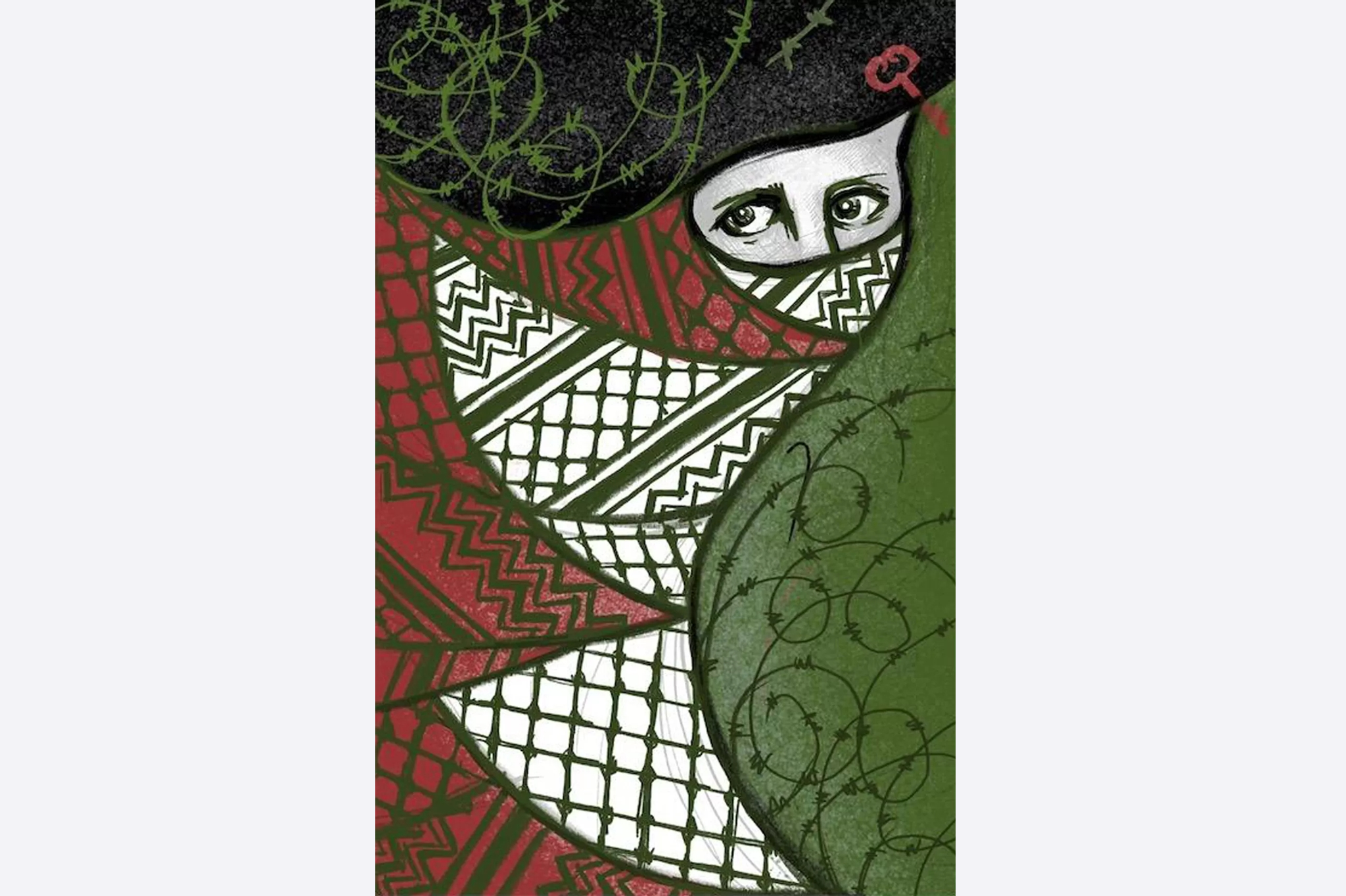
  • El clamor de lo (post) humanoAnonymous | Watercolor of the Montesinos monument | Dominican Republic, 2020

    The cry of the (post)human

    By Carlos Mendoza-Álvarez

    .

    In 1511, Friar Antón de Montesinos, along with a handful of Dominican friars who had recently landed in Quisqueya, the Taíno word for the mother of all lands, uttered a cry that still resonates in the Western conscience: “Are these not men?” He was referring to the original inhabitants of that Caribbean island—later known as Hispaniola, where the modern states of Haiti and the Dominican Republic were established—who had been subjected by Spanish soldiers in the name of the Crowns of Castile and Aragon to harsh servitude and slavery. In the sermon for the Fourth Sunday of Advent on December 21 of that year, with the central figure of John the Baptist announcing the urgency of preparing the way for the coming Messiah, Friar Antón became a prophetic voice to counterbalance the nascent coloniality of power. According to this concept of the Peruvian Aníbal Quijano (Coloniality of power, Eurocentrism and Latin AmericaIt is possible to explain from our time the logic of power that led Europe to dominate the modern world, from the Renaissance to the Enlightenment, with its later avatars of American and Russian imperialism that we know today.

    More than five centuries have passed. Now, this enterprise of coloniality is acquiring global dimensions in our time with the extractive capitalist model that is expanding across the world, like a many-headed hydra, according to the Zapatista narrative that emerged in 1994 in southeastern Mexico. Three decades later, new ways of naming the diverse resistances to this lethal force that dominates the world will be heard in the seedbed « Of pyramids, of stories, of love and, of course, heartbreak » which will take place at CIDECI-Unitierra at the end of December.

    The question surrounding humanity may seem rhetorical, but it becomes more urgent when we consider the landscape of exclusion based on class, gender, ethnicity, and cultural identity that entire nations suffer today. The collapse of the international order we knew in modern times leaves us exposed. The foundations of that shared world were laid by the School of Salamanca with the Ius Gentium or the law of nations in the 16th century, with Friar Francisco de Vitoria at the forefront in dialogue with Friar Bartolomé de Las Casas from Chiapas and Guatemala, as analyzed by Enrique Dussel. It was one of the cornerstones of the model of Christendom created to justify the expansion of the earthly city in the image of the City of God under the tutelage of the Spanish Crown. Subsequently, this interpretation was transformed into an internationalist model, beginning with the Enlightenment, with a rationalist foundation of a contractual nature, making international law a pact between sovereign states, without an ultimate foundation in a metaphysical order that had its sustenance in God (Ancient and contemporary law of nations).

    .

    .

    Beyond the theoretical discussions about the transition from the Salamanca model to the Germanic model of international law, what is important to highlight here are the internal contradictions of the modern social contract that is collapsing before our eyes. Today we are witnessing the return of authoritarian regimes based on religious fundamentalisms with messianic pretensions (The United States is a messianic state), as is the case with US imperialism and Israeli Zionism. In the name of what ethical-political principle or source do today's powers justify their mechanisms of domination, neocolonialism, and the elimination of entire peoples? What limits are there to the power deployed by this unbridled new geopolitical “order”?

    But it is necessary to go beyond the catastrophic scenario described so far to recognize the role of peoples and the spiritual traditions of humanity in strengthening communal life among nations. How can we understand and promote the autonomy of individuals, peoples, and territories today in order to preserve what is human How can we cope with the threats of the system that already dominates us, encompassing both traditional and digital territories?

    In this context, Montesinos' sermon acquires remarkable relevance since it expands the question of mutual recognition of the human and the creature to all the victims of systemic violence that is leading humanity and the entire planet to the precipice (International treaties on biodiversity (SCJN)Are the nations and species that inhabit the face of the Earth not creatures with rights? In the post-human world, as it is called today, it is essential to develop a critical way of thinking that affirms the dignity of every creature in the cosmos in its profound dignity linked to the loving mystery of reality.

    It is no longer just about reaffirming the historical strength of indigenous peoples confronting the Eurocentric colonialism of five hundred years ago, but about the subaltern peoples who are disposable in the planetary war economy of the Trump Era, as he comments Leonardo Boff. Latin America and the Caribbean, as evidenced by the US invasion of international waters in the Caribbean Sea, are now a battleground for the war waged by the Southern Command of that neighboring country. Unfortunately, we will soon witness the full extent of this new model of imperial interventionism through the selective occupation of territories, the control of local governments aligned with the interests of the necrostate, and surgical strikes against the “enemies” of US national security.

    Nor is the cry for the dignity of humanity enough if it is dissociated from the cry of the Earth, “the poorest of the poor,” as Leonardo Boff also called it. That “escalation to extremes” conceived by Girard in 2007 based on the phenomenon of terrorism seems like child’s play today in the face of current wars whose objective is the blatant domination of entire populations in order to control their territories as objects of predatory enrichment of ecosystems.

    .

    .

    For this reason, it is more urgent than ever to recognize the new Montesinos who, with their outcry, appeal to the common humanity that unites us as individuals and peoples, with its mystical source that gives strength and opens horizons of life for all, in order to reverse those processes of necropower that claim more and more victims every day.

    But today it is urgent to move beyond the anthropocentric paradigm, transitioning towards an "ecocentric" one (Anthropocentrism and ecocentrism in the jurisprudence of the Inter-American Court of Human Rights) that promotes the dignity of Mother Earth, who is also subjugated by the dominant model of extractive society and economy. «Rethinking as a human species,» according to the proposal of political ecology promoted by Víctor Toledo and a significant network of scientists worldwide (Political ecology is here to stay) is a key step to regain our course as humanity inhabiting the Common Home that has been given to us by the Giver of Life.

    The green martyrs, the searching mothers, and the indigenous peoples in rebellion are some of the voices that have sounded the alarm about the devastating situation that has already reached us. Listening to their denunciations is a beginning of ethical and mystical conversion, but it is not enough. We must join those processes of subjective, territorial, and spiritual autonomy carried out by those who have said enough to necropower.

    .

    .

    Perhaps the most inspiring way for believing communities to celebrate the approaching Christmas is by honoring the memory of Montesinos and all the prophetic voices of yesterday and today.

    Preparing the way for the arrival of the messiah is not, after all, an act of Christmas folklore, but a change of course in our ways of life with ethical-political, practical and mystical decisions, such as recycling garbage, reforesting forests, and including the vulnerable at our tables as gestures of celebrating life amidst the ruins of the present world.

    As I mentioned some years ago (Messianic time and narrative for a theological interpretation of the narrative practices of victims) it is urgent and a priority that we pave the way to messianic times through our acts of resistance to necropower, promoting communities where we learn to spell anew, with imagination and vigor, the humanity and creatureliness that unites us, all drinking from the inexhaustible source of Life.

    .

    Jobel, December 20, 2025

    .

    Note: I would like to read your comments in the final section of this page.
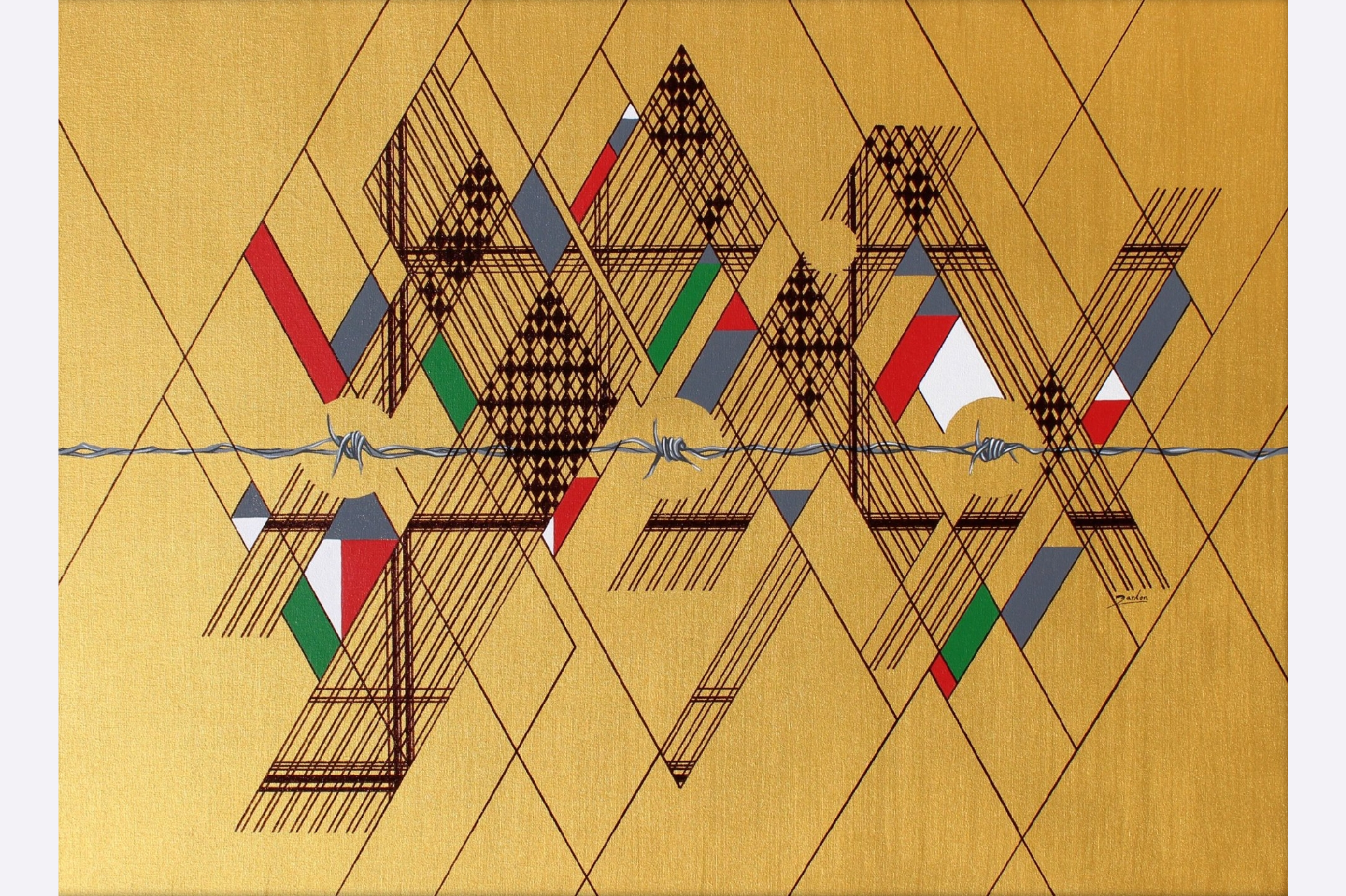
  • Cuando la verdad sí importaMarlon Puac | Decolonial Weaving | Sololá, Guatemala, 2022

    When the truth does matter

    By Carlos Mendoza-Álvarez

    The assassination of the mayor of Uruapan, Carlos Manzo, in the Mexican state of Michoacán, on November 1st, is an atrocious example of the “pedagogy of terror” whose objective, according to Rita Segato, is to “show that there are powers that are sovereign in the most absolute impunity, as a pedagogy of territorial control of sovereignty” (Counter-pedagogies of crueltyThis is a strategy used by criminal organizations to paralyze the population, eliminate politicians who disobey them, and control their territories. The crime was committed in a public square on the eve of the Day of the Dead, when the community was celebrating, according to the tradition of candles, the passage of the souls of the departed. Accompanied by his wife Grecia and their two young children, the founder of the “Hat Movement” was gunned down by a minor, apparently in collusion with two other individuals, entangled in the machinery of drug cartels that are destroying the lives of young people worldwide with the mirage of power and money that they kill.

    Just five days later, Carlos Manzo's widow took office as mayor of the city with a speech punctuated by anger, desolation and indignation that now places her at the epicenter of a seismic movement shaking Mexican society. Grecia Quiroz in her first speech As mayor, she said something that has resonated in my memory: “Today, Carlos Manzo is stronger than ever. This legacy, this Hat Movement, they did not silence. And they will not silence it because I remain here, firm with the unwavering conviction he taught me […] Let it be heard loud and clear: Carlos Manzo’s legacy will continue. Even though they have silenced his voice. Even though [to] those who gave the order to take his life in the cruellest way, [I say] this will continue, this will go on. The Hat Movement will not stop.” As an independent candidate, her husband defeated the candidate of the ruling party in the last election. After seven years, the ruling party has not only failed to pacify the country, but on the contrary, has been losing more and more control over the national territory. And now Grecia takes up the banner of citizens fed up with the failed state that continues to produce more and more wasteful living conditions.

    President Sheinbaum's initial statements were regrettable, as well as belated, blaming "the right wing" for the violence in Michoacán stemming from the war on drugs launched in 2006, almost twenty years ago, by then-President Felipe Calderón, of the right-wing party that governed the country for two six-year terms with disastrous results. But Mexico's path as a sovereign nation remains adrift. The seven years that the current "left-wing" party has governed Mexico represent the failure of the Fourth Transformation initiated by leader López Obrador. The president's pacification plan is late, does not originate from the communities themselves, and fails to address the systemic causes of this spiral of violence. The truth doesn't matter to her or her party. What matters is controlling the narrative in the media to keep pushing forward with the "second tier" of this ill-fated Fourth Transformation.

    In this atmosphere of national unrest, organized civil society has an urgent role to play in saving the country from collapse. Initiatives such as Reinsert To rescue children living in precarious conditions caused by violence in the country, there are clues to the projects that can be imagined and created in each region, although many of them depend on the whims of the companies or governments that fund them. Therefore, only the creativity of collectives, communities, and peoples will have the necessary strength to persist in this life-or-death struggle.

    Universities are also being called upon by a wounded society to understand the intricacies of the systemic violence that afflicts us. Churches have begun to emerge from their lethargy to participate in collective healing processes, drawing on their spiritual heritage. In recent years, the initiative of [unclear] was born within church circles. National Dialogue for Peace following the murder of the Jesuits of Cerocahui in the Sierra Tarahumara three years ago, and prepares for its second meeting in January 2026 in Guadalajara. It represents an attempt by the Roman Catholic Church to take up the mantle of the Movement for Peace with Justice and Dignity, initiated by Javier Sicilia and the victims of violence in Mexico in 2011 (“The peace movement is a moral reference point”: Sicilia), which was first co-opted by the governments of Felipe Calderón of the PAN and Enrique Peña Nieto of the PRI, then scorned by the government of Andrés Manuel López Obrador of Morena.

    What is the truth of the victims? How is that truth heard and acknowledged in the narrative of society and the current government? What does Grecia Quiroz's outrage in Uruapan tell us as Mexican citizens? How does the monstrosity of Víctor Manuel Ubaldo, the underage hitman killed after committing the crime, challenge us? How can we dismantle the network of necropolitical criminality that controls Mexico today? How did we reach this point of corruption within our nation's social fabric, and what collective processes can we promote in each place to escape this barbarity that is leading us to the abyss?

    While watching the videos in amazement and reading the news about the tragic events in Michoacán, I was able to attend the congress “Heteronomies of Justice” (3rd International Colloquium: Justice of the Other), organized at the Institute of Philological Research of the UNAM by our dear colleague Silvana Rabinovich. The presentations by young researchers revolved around the question of how to decolonize discourse and praxis for justice, based on conversations between diverse cultures, for example, between the Jewish philosophy of Herman Cohen and Emmanuel Levinas in the 20th century with the philosophy of liberation of Enrique Dussel in Latin America and the Caribbean; or between the feminist thought of María Isasi Díaz, a womanist author in the United States, and the historical realism of Ignacio Ellacuría in El Salvador, committed as rector of the UCA to the poor and justice in times of military power.

    The university also opened a dialogue to consider the connections and differences between Ernst Bloch's philosophy of hope in Germany during the Nazi regime and the thought of Enrique Dussel in Argentina and Mexico during times of dictatorship and resistance. These exchanges took place on the occasion of the second anniversary of the death of the great Argentine-Mexican thinker.

    A tasty outcome of this colloquium was focusing on the problem of messianic core of history, where the resistance of the people generates changes in the history of oppression, sowing stories of liberation and ethical and political redemption, with a mystical wellspring. Following the intuitions of Professor Dussel, ethics reveals itself as the primary politics, open to messianic anticipations of transcendence. All these deliberations were not unrelated to the question of hope that arises from the victims in Gaza, or from the Searching Mothers in Mexico, as our hostess reminded us time and again.

    We closed the day with the pre-premiere of the documentary “Dussel: Philosophy Is a Gift for a Meaningless World,” by Argentine filmmaker Cecilia Fiel. For over an hour and a half, the documentary explores the life of Dussel, his story of exile, his library, his students, and his vision of the history of colonialism inherent in Eurocentric modernity and the resistance it faced. It highlights the narrative beauty of scenes of the lucid old man, Dussel, walking through emblematic sites of Mexico-Tenochtitlan, such as the Zócalo in the heart of Mexico City and the Plaza de las Tres Culturas in Tlatelolco, where the liberation theorist, in the twilight of his life, delivers a masterclass on the role of philosophy in the search for meaning. sense of history.

    Those exchanges at UNAM made me think about another version of the truth. When the truth truly matters, it's possible to dismantle the fallacies created by the powerful, whether they be the governments in power, corrupt religions, or criminal organizations.

    How can we break free from this growing spiral of hatred in Mexico, Palestine, and Mexico? A first step is to return to the importance of truth. Not as a weapon of war to tell the version of the powerful or the perpetrators, but to listen to the victims and survivors.

    Daring to converse with others in order to search together for the meaning of life in the utopia of a “we-others” as the seed of redemption is the beginning of an (im)possible hope.

    Because the truth does matter when we want to heal wounded humanity so that one day we can all enjoy Life.

    Mexico City, November 8, 2025

    Note: I look forward to your comments at the end of this page.

  • Las paces desde abajoTings Chak, “Palestine Will Be Free,” 2023 (courtesy of the artist).

    Peace from below

    By Carlos Mendoza Álvarez

    Two years after the ongoing genocide in Gaza, Trump recently "decreed" his peace plan for Palestine, with the submissive presence of an international "negotiation" group made up of Egypt, Qatar, and Turkey, with the complicity of European political leaders from Italy, Great Britain, and Spain who claim to "seek peace for the region."

    That plan, of course, fails to address justice for the Palestinian victims of the genocide, much less reparations for the economic and cultural devastation wreaked by Netanyahu's Israeli government. With criminal cynicism, Trump visited Israel to reaffirm his alliance with the Israeli prime minister and try to shield him from the accountability to which all war criminals must be held, a project promoted by a minority group of Israeli citizens with a handful of allies in the government.

    The international community now faces the most radical challenge since World War II: to promote a trial for crimes against humanity against Netanyahu and other Israeli military personnel, along with their accomplices from other complicit states, such as Trump and leaders of the European Union. This will involve judging a systematic war against the Palestinian people that began in 1947, when the Nakba or catastrophe that to this day is taking the extermination of the Palestinian people in the Gaza Strip and the West Bank to extremes.

    The accusation of war crimes against Israel filed by South Africa more than a year ago was only the beginning of a long process of international diplomacy that could one day lead to the creation of an international trial similar to that of Nuremberg in the last century to judge the crimes of the Nazi regime.

    But there are other "peaces" (plural: peace) that are worth keeping in mind, located at the bottom of the world of imperial domination, because they are the ones that endure over time and are rooted in the lives of communities.

    We are referring to those that were built against the current of hatred from political leaders by collectives of Palestinian and Jewish women, who organized communal events before the attacks of October 8, 2023, only to be later banned by the Israeli government. But there are also the "peaces" that Kurdish women forge in the face of the violence of the Turkish state. And those that Zapatista women build day by day to reclaim their bodies and territories in Chiapas.

    Carmenmargarita Sánchez de León just presented a few months ago at the Ibero-American University in Mexico City a doctoral thesis in critical gender studies about the resistance of Puerto Rican women creating on many fronts the construction of peace for their people colonized by the US government since 1952, when it was incorporated as a free associated state, a recent mode of colonization of territory within the parameters of modern law. These other peaces are woven body to body, in the mutual care of those who know they are vulnerable but powerful when they connect their wounds. The Ilé Collective in Puerto Rico that analyzes this doctoral thesis, as well as other decolonial feminist collectives such as the Feminist Collective under Construction, they reclaim urban spaces on the island, criticize the public debt of the state of Puerto Rico imposed by the US federal administration, but they also weave sisterhood among women racialized by the white patriarchy through collaborative networks in the production of goods and the formation of decolonial feminist thinking.

    The Women's Pacific Route In Colombia, it represents another attempt to weave peace from below, not from agreements between the actors in the massacres, which were the paramilitaries, the army and the Colombian state, but rather the peace that emerges from listening carefully to the victims and some executioners who seek to acknowledge their guilt, to move towards justice, reparation and thus perhaps one day receive the gift of reconciliation for the wounded social body.

    A paradoxical but significant example of these other ways of building peace is that of the families of missing persons who, upon arriving in a town or city, plant a "tree of memory" with photos of their missing loved ones and a few banners asking for empathy and solidarity from the community they are visiting. They also seek to weave threads of peace with the mailbox they place in the plaza where people can anonymously write information to help them find their missing relatives. Through this means, it has been possible to find clandestine graves, brothels, forced labor farms producing poppies, or drug labs, where their children may be, alive or dead. The searching mothers don't primarily ask for justice or revenge, but rather for information. In this way, they humanize the perpetrators by creating search spaces to find "their treasures," asking for clues that may lead to the whereabouts of their loved ones.

    These are the peace that matters because they are slowly woven by people and communities in resistance, especially by women who deconstruct patriarchy.

    Precisely there, in the cracks of those walls of hatred, other ways of existing with justice and dignity are woven, where peace gradually takes root.

    And what can we do to create peace for the Palestinian people and the other Semitic peoples who have shared the same land for thousands of years?

    To begin, we must stay informed from credible sources about what is happening in Palestine and then connect virtually or in person with a Palestinian community in resistance in those lands, or in the diaspora, to promote listening and person-to-person dialogue. A second step is to better understand the Jewish communities that closely support the cause of the Palestinian people and their right to live in that land. It is important to remember that there are Palestinians and Jews in the diaspora who share a love for the land of Palestine and a desire to find ways for brotherly peoples to once again live together in the same land.

    Perhaps many years will have to pass before there is peace in Palestine, until the sister peoples descended from Abraham, Sarah, and Hagar —yes, all three and their descendants— recognize their shared right to inhabit the same land. In the meantime, building peace will be the task of all communities, wherever they may be.

    Because Palestine is the compass of humanity, divided today, hopefully also in the process of conversion. Let us make peace possible for the Palestinian people, together with their sister nations, by weaving "peaces" where each of us lives. Only in this way can we continue to imagine a future as a human species before we fall into the abyss.

    This morning I arrived in the southern lands that rise between the majestic Andes mountain range and the Pacific Ocean, where the Mapuche and Chilean peoples inhabit the same territory with many barriers that even the democratic governments of recent decades have been unable to tear down. I have come here to discuss with university colleagues the validity and limits of liberation theology, on the occasion of the first anniversary of the death of Gustavo Gutiérrez (Gustavo Gutiérrez International Congress)I will also be able to talk with colleagues from the Chilean Theological Society about the difficult hope in times of catastrophe. And I am very excited to be able to visit Mapuche territory for the first time to hear about the resistance these communities have created to confront so many forms of colonialism, both old and new.Mapuche thought, autonomy and colonialism in Chile).

    In the next post I will be able to tell you some of these stories.

    Santiago, Chile, October 19, 2025

English