Tag: justice

  • La Biblia como arma de genocidio o casa de vidaSliman Mansour. Revolution was the beginning (2016), oil on canvas, 200 x 500 cm

    The Bible as a weapon of genocide or a house of life

    By Carlos Mendoza-Álvarez


    The State of Israel began this week a new phase of the strategy of control of the territory of Palestine (Israel approves controversial West Bank settlement project). Israeli settler settlements in the West Bank will expand to divide the territory, which was the result of the 1993 Oslo Accords to relocate Palestinian residents into two isolated groups, leaving only one outlet to the Jordan River on the Jericho side.


    Christ at the Checkpoint, August 21, 2025   


    The ultimate goal is the creation of Greater Israel, once the possibility of a Palestinian state has been destroyed because, as Israeli Finance Minister Bezalel Smotrich said this week, “there is nothing to recognize, and no one to recognize” (Israel approves illegal settlement plan that would split occupied West Bank) once the genocide of the Palestinian people has been consummated.

    This plan of contemporary Israeli expansionism "after Gaza" suggests at least two main objectives: the first is the isolation of Palestinians in apartheid zones, in addition to the invasion of the Gaza Strip, with the goal of their expulsion or subsequent extermination; and the second is the control of the Jordan River as a strategic source of water resources for times of global scarcity.


    But this is not merely the military strategy of a rampaging Zionist state supported by global capitalism, particularly the governments of the United States and the United Kingdom. The ongoing Zionist plan demonstrates the perversity of an ideology of genocide that manipulates the Bible to justify the supremacy of one state over others, subordinating peoples of diverse ethnic and religious origins to a selective process of annihilation in the name of a supposed divine promise.

    Both Jewish and Christian Zionism, in fact, are the modern version of the manipulation of the biblical promises recounted by the saga of Abraham and Sarah as ancestors of the believers of the three monotheistic religions. The biblical account, in fact, tells us that God the Eternal promised the primordial couple offspring "as numerous as the stars of the sky and the sand on the seashore" (Gen 22:17). Hebrew Talmudic and ancient Christian commentaries saw in this double metaphor of the heavens and the earth the proclamation of the universality of the promise: the stars of the sky evoking the daughters and sons of Israel, and the sand on the seashore representing all the nations of the earth.

    The ideology of the “chosen people” was later developed in the Bible by a religious movement that perverted the announcement of the promise of the land, focusing it on the conquest of a territory as an exclusive monopoly of one people over other Semitic peoples. This “political theology” was devised by an interpretation of messianism in a Davidic key, present in the Bible since the time of the judges of Israel, which is called the “Joshua factor” by the Palestinian Lutheran theologian Mitri Raheb (Imperial Theology, Colonization, Settler Colonialism, and the Struggle for Decolonization: A Review Essay) as a source of the theology of empire.

    But the prophets of Israel, from Moses to John the Baptist—and Jesus of Nazareth and his community who were part of that lineage—were always critical of the powers that be, which have sought to supplant divine glory under various masks. Theology prophetic It is found at the origin of the Abrahamic faith as a universal vision of the promise and the land that includes all peoples. As the French Dominican biblical scholar Philippe Lefebvre (Conference: Jésus et le pouvoir – P. Lefebvre), prophetic messianism is present like an underground river throughout the Bible, from the book of Genesis to its fulfillment in the Passover of Jesus of Nazareth.

    And the Jesus movement in Galilee takes up this prophetic vein to radicalize it with the innovation of a messianism scatological, as another Dominican, José Luis Espinel, commented a few decades ago in Salamanca (Eschatological Messianism of Jesus from his prophetic actions). A prophetic tradition that announces the fulfillment of the promise for all peoples as a call to the universal love that flows from the wounds of a crucified Messiah.


    Palestinian Christians, as the Palestinian Lutheran theologian Munther Isaac (Faith, the Bible, and the Genocide in Gaza) call us today to decolonize the Bible, which has become the weapon of war of Israeli and Christian Zionism against the Palestinian people. There is no chosen people to conquer a land in the name of God, stealing it from its original inhabitants, from the ancient Canaanites and Jebusites to the Palestinians of today. Nor is there a promise of the land that justifies, in the name of God, an Israeli state imposed by war on territories inhabited by Semitic peoples for millennia.

    Christian churches of all denominations, as well as universities and political movements that appeal to the Bible as their source, face a grave dilemma: either continue to justify the genocide of the Palestinian people in the name of the God of Israel, or decolonize the Bible to recover the messianic and prophetic spirit of the divine and human word that frees all peoples from the slavery of earthly powers that supplant divine glory, with their current avatars, such as Trump and Netanyahu, or Milei and Bolsonaro, who are today's false messiahs.

    The promise of the land that Abraham and Sarah received in that story of origins when they left Ur in Sumeria in search of the Eternal One – as the Jewish thinker from Strasbourg André Neher says in his book The essence of prophecy – is only fulfilled in the silence symbolized by the desert as a land of incessant search for the Covenant.

    Hence, Christianity drinks from that source of original Hebrew prophecy to announce the arrival of “the new heavens and the new earth,” as the book of Revelation (21: 1) said in the context of the devastation of the old, idolatrous Roman imperial world and the Temple religion that perverted the divine promise.

    This radical critique of all imperial theology stemming from a prophetic and eschatological messianism that heralds the end of the corrupt world has been rejected by both old and new earthly powers that seek to continue domesticating the divine promise.

    But from the rubble of Gaza, the promise of the land emerges today, with renewed vigor, summoning all peoples of humanity and compelling all spiritual traditions to care for the lives of the innocent victims and their survivors. It calls us to continue searching for the promised land as a utopia in the midst of dystopia. It invites us to cultivate hope as a promise of life that emerges amid the threat of imminent death, like that experienced by Gazans today and other peoples threatened by necropower.

    The Bible is not a weapon of war but “the house of the people,” as Carlos Mesters said in Brazil in his beautiful and powerful parable (The parable of the house of the people of God). A house we are invited to inhabit, to recognize in our own stories the spring of life that emerges like living water gifted by God from the ruins of the power that kills.

    Let us reread and inhabit these messianic and prophetic testimonies of the promise of the land and the choice of divine love for all peoples, so that we may be inspired by the consolation that comes from God to the victims and their survivors, as a moving promise that is happening in the silence of the desert.


    Mexico City, August 24, 2025
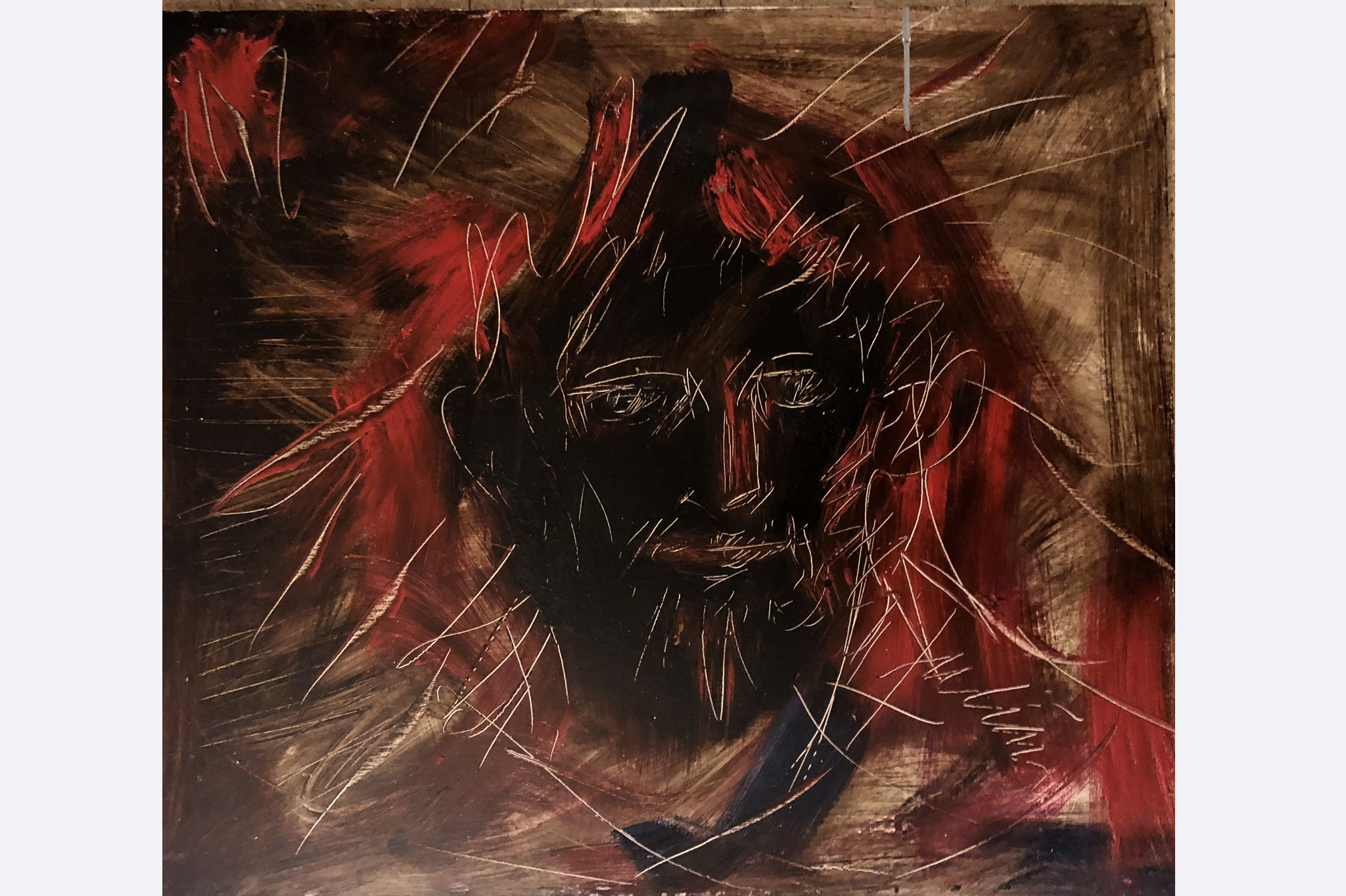
  • El emperador o las sombrasJulián Pablo, Apophatic Christ, oil on canvas, 2014

    The Emperor or the Shadows

    By Carlos Mendoza-Álvarez OP


    The story goes that 1,700 years ago, Constantine I, Emperor of the Eastern Roman Empire, tired of the quarrels among his Christian subjects, called them to settle their differences over the identity of the founder of their movement, Jesus the Galilean, executed in the year 30 of the Common Era in a distant province of the Roman Empire.

    Three centuries had passed since a group of women disciples testified that they had seen Rabbi Jesus again, after his bloody murder on the outskirts of Jerusalem, returning with his wounded but luminous body, reuniting with them in a garden or on the beach, rereading together the stories of their ancestors with new eyes, their hearts burning as they remembered his sayings and gestures around a bit of bread or fish shared with him.

    At least five generations of Christian communities, scattered throughout Asia Minor on the fringes of the Roman Empire, had passed until the moment when the emperor took that initiative. These communities had followed the path opened by some of Jesus' closest friends, such as Peter and James, or those who had only heard of him, such as Paul of Tarsus. Each one told his story of a life change, after having welcomed into his heart the teachings of Rabbi Jesus, so ancient and so new in the lineage of his Hebrew ancestors, about the generous love of his Abba and the strength of his Ruah or Spirit given to those who follow him.

    Throughout those years, lived by the first Christian communities in the diaspora, some didn't fully understand who the Galilean was. For all, he was an exceptional person who had marked their lives in unusual ways, sometimes experiencing his extraordinary power through miraculous acts that made him appear as an angel, not a human. Other times, the memory of his words and deeds left them with a new life lesson, like the great rabbi of the one God, whose absence left them orphaned. A good man, a prophet, an angel of God, an extraordinary being. But they couldn't quite work out who Jesus was.

    Long ago, second- and third-generation Christians, who kept alive the memory of Jesus' beloved disciple in Ephesus, for example, preserved poems that sang of Jesus' life as the divine Logos who "existed from the beginning with God and was God" (Jn 1:1). Other inspired hymns had been collected by Paul of Tarsus, Priscilla, Lydia, and Phoebe during their time in communities in Asia Minor, later including them in letters, rituals, and Gospels to celebrate Jesus as "the one who did not boast about his status as God," in Paul's letter to the community of Philippi (Phil 2:6), or as "the firstborn from the dead," in his letter to the community of Colossae (Col 1:18). Those early second- and third-generation Christian communities recognized Jesus as the Son of Man, the firstborn of the dead, the Alpha and Omega of the new creation, as well as many other titles that expressed the human and messianic condition of the Nazarene.

    Until the time came, at the beginning of the 4th century of the Common Era, when some experts in the Hebrew Scriptures and in the letters and stories of Jesus' friends - most of them monks and bishops from North Africa and Asia Minor, including some from Hispania, that distant Roman province - began to write treatises unleashing a polemic to name the novelty of the Galilean's being. Most of these learned masters in the philosophy of the time chose Greek words to name that intimate communion of Jesus with his heavenly Abba, among which stood out that of homoousious or “of the same being”, to designate that Jesus shares from all eternity the same “substance” or being as his Abba.

    And so was born the declaration of the bishops gathered in Nicaea, convened by the Emperor Constantine in 325, which gave rise to the Creed of the Church that we still profess every Sunday at the Eucharist: “I believe in one Lord, Jesus Christ, the only Son of God, born of the Father before all ages: God from God, Light from Light, true God from true God, begotten, not made, in the same way.” substance that the Father, through whom all things were made.”


    Although this expression is a treasure in the memory of the primitive community that is already part of the DNA of the Christian faith, over the centuries in the Mediterranean basin this expression was clothed with an imperial aura to designate the divine being as the "power" of God the creator and of his Son. Pantocrator or almighty.

    These divine names later justified a model of Eurocentric imperial Christianity that was imposed on other cultures and other ways of approaching the divine mystery that were colonized, most of the time destroyed, in the name of that idea of a God-substance that is the principle and foundation of the civilizing order that expanded throughout the globe, claiming to be the most complete form of human culture.

    But today it is necessary to recover those voices denied by imperial Christianity as part of the symphony of the faith of the peoples. How can we express with new words and symbols the faith of the people of God that celebrates the intimacy of the divine Ruah that Jesus shares with his Abba? Returning to the ancient faith of the Church that confesses that Jesus is a true human being and true God, we can reread his humanity through the lens of the desire that constitutes us as beings in relationship, in order to experience and understand that which unites Jesus with his Abba: both share the same loving desire to give life to the other, which is another way of stammering the strength or dynamis divine which is the Holy Spirit.

    In this way, confessing that Christ lives the same desire as his Abba, opening space for a third person who is precisely the divine Ruah, also touches us intimately, including every creature in the cosmos, to be wrapped in the loving embrace of Trinitarian life. A dance that is an incessant gift of loving superabundance, accompanying the entire creation.


    This same loving desire animates the kenosis or self-emptying of the divine Word that the Christian faith affirms is the heart of redemption. Through the Incarnation, God "migrates" from full being to the realm of non-being to rescue those who live "in darkness and in the shadow of death," as the elderly Zechariah, one of the anawin or poor of Yahweh, celebrating his son John who would precede the steps of the Messiah.

    Because Jesus shares in the same desire as his Abba, as the Messiah of God, he crosses the abyss to go from the light to the shadows of the shadows of the shadows. To share in the same being as his Abba means, on the path of cosmic and human redemption, to descend to the Sheol or place of the ancestors, as an act of radical solidarity with the entire creation and with the victims of violent history in order to, from non-being, bring forth life as a messianic insurrection.

    He Apophatic Christ The extraordinary canvas by Julián Pablo, which accompanies today's reflection, painted in his studio at the Santo Domingo Convent in Mexico City a decade ago, emerges like a flash of light amidst the shadows, precisely from the realm of non-being, as an affirmation of life amidst death. This painting is a contemporary visual representation of the mystery of redemption "in the negative," that is, from the reverse side of violent history, where God brings about universal redemption.

    May the commemoration of the 1700th anniversary of the Council of Nicaea be a propitious occasion for us to cross the abyss and encounter those who today cry out for life from the realms of non-being produced by systemic violence. These survivors, with dignified rage and eschatological imagination, participate in the divine-human communion as an anticipation of the new world that has come from God, and they call upon the entire human species to celebrate God-with-us.


    Puebla de los Ángeles, August 3, 2025

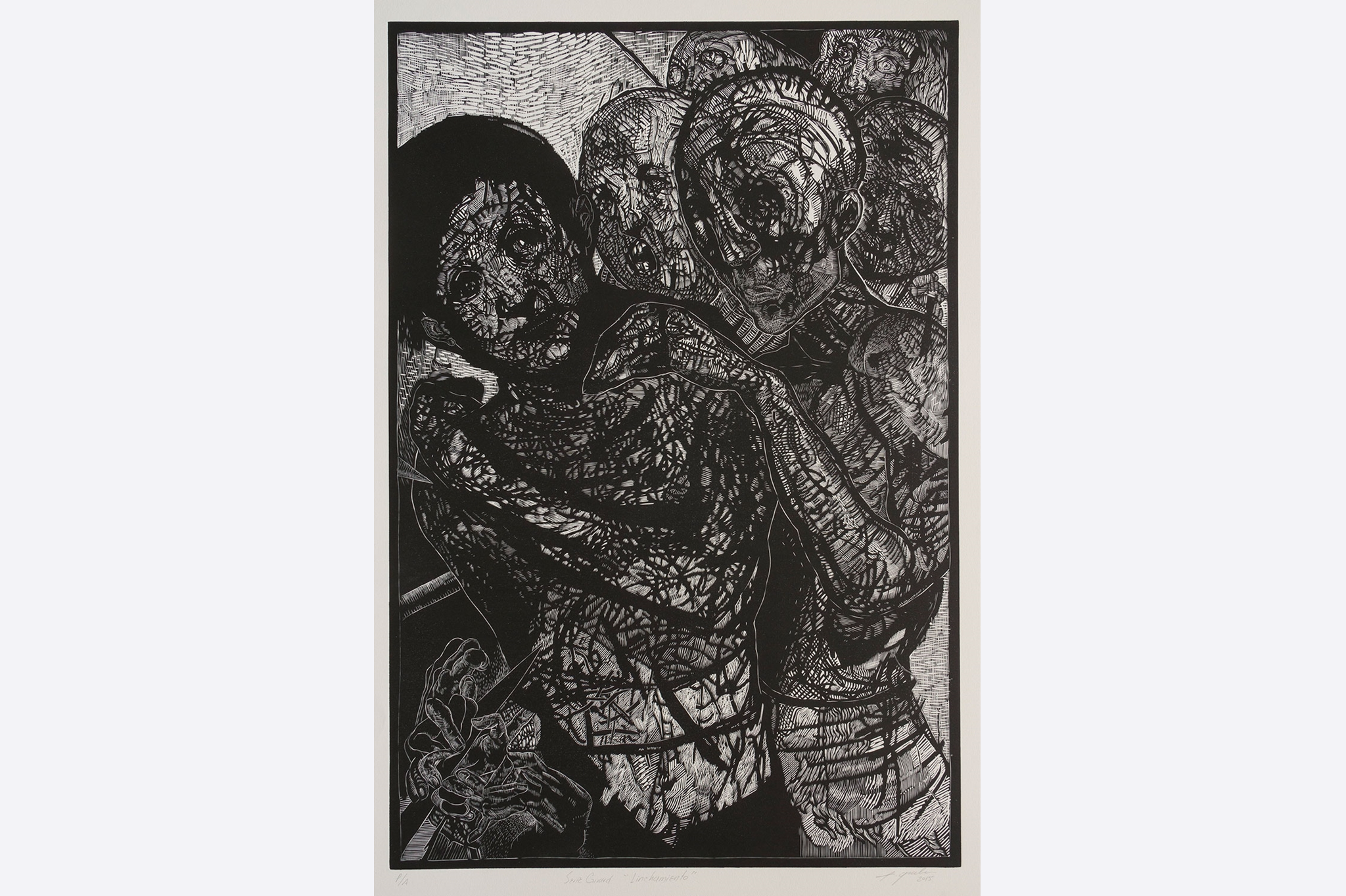
  • Violencia eclesiástica: una lectura girardianaIván Gardea, Lynching, Cuernavaca, 2020

    Ecclesiastical violence: a Girardian reading

    By Carlos Mendoza-Álvarez


    A few days ago we learned about the Father Alberto Anguiano García resigned from the rectorship of the Pontifical University of Mexico, in the second year of his second term as rector, as a protest against the “workplace harassment and institutional violence” he suffered at the hands of the Vatican Curia and the authorities of that ecclesiastical university, which has been in existence for barely forty years.

    The reasons given by the rector for his unilateral removal from office, an act that led to his resignation, are revealing, as they reveal a systemic problem in ecclesiastical institutions, which frequently act as if they had their own jurisdiction, impervious to civil jurisdiction, with labor rights at stake, as well as to public opinion in modern societies.

    While, like every educational institution in Mexico, the UPM is subject to civil law regarding labor and education, the procedures in this case reveal a systemic violence that must be addressed in order to dismantle and make way for other methods of action, in keeping with the Gospel and the freedom of individuals, especially when it concerns the common good that education represents. Even more urgently, we must reflect and act when it concerns a religious institution destined to communicate the contents of Christian revelation and the tradition that constantly arises from it. Ultimately, this is a matter of addressing the credibility crisis of the Roman Catholic Church in these dire days.


    I met Father Alberto as a student at the University of Madrid thirty years ago, when he was pursuing a postgraduate degree in theology in 1995, during a course I taught on Emmanuel Levinas and his concept of revelation rooted in the Hebrew tradition and in dialogue with "the philosophy spoken in Greek." He was the most brilliant student of those generations, not only for his high academic standing, but also for his theological ability to update the theological knowledge of the great Christian tradition in the midst of contemporary questions arising from science, psychoanalysis, and the challenges of secular culture.

    Already as rector, his first term began in 2021 It was marked by a clear project to modernize the university, both in its curricula and in the urgent strategic planning to open up to new disciplines in the civil world and not be limited solely to the clerical sphere. Ecclesiastical faculties had to overcome their ostracism and enter into dialogue with other civil disciplines. Furthermore, according to the diagnosis, it was essential to promote institutional efficiency that would make a domestic institution viable in its vision, uses, and customs, to make it a credible interlocutor in the academic and ecclesial context, both nationally and internationally.

    But internal resistance seems to have created a climate of aversion to these reforms which, due to the typical rivalry of any group protecting its interests, deployed a mechanism of expulsion against its main promoter. In order to maintain the unanimity of "all against one," proceeding like a true mimetic contagion, a typical scapegoat process was brewing. It was thought that by expelling the person singled out as the source of the collective evil from the group, the evil would be expelled from the institution, which would regain its tranquility once purified of its poison. As we can see in the engraving by Iván Gardea that accompanies this reflection (The Plot of Engraving), the talented Mexican engraver managed to masterfully capture this mechanism of rivalry, contagion and collective lynching to delineate with the force of his strokes the mimetic desire that gives rise to human culture based on sacrifices since we have historical memory as a human species.

    Unfortunately or fortunately, depending on how the crisis is resolved, we know that the victimizing mechanism is the satanic lie that hides "things hidden since the foundation of the world," as René Girard said (Things hidden since the foundation of the world) quoting the Gospel of Matthew: “That it might be fulfilled which was spoken through the prophet, saying, I will open my mouth in parables, and will utter things hidden since the foundation of the world” (Matthew 13:35). The parables of the Reign of God that Jesus told in Galilee evoked ways to overcome the violence that lurks in the human heart precisely as a mimetic desire that engenders rivalry and fratricide. If the community involved does not internally dismantle the mechanism of rivalry and hatred, the poison will continue to infect its internal relationships and will continue to create new processes of self-protection, unanimity of all against one, expulsion and lies, producing new victims.

    From this fund anthropological that appears as a cause systemic Of the institutional violence suffered by Father Alberto, what is important now is to emphasize the need for accountability from ecclesiastical institutions, both internally and externally. Moving forward, a process of collective healing of memory will be necessary, with justice and truth first for the victims, and with accountability for the perpetrators.

    Unfortunately, given the prevailing clericalism, as a structure systemic which is perpetuated precisely by making victims invisible, it is necessary to bring this institutional distortion into the public sphere so that paths of memory can emerge, with justice and truth, that restore the scant credibility of a university institution founded in 1982 to serve the Roman Catholic Church in Mexico and Mexican society as a whole.


    The institutional complicity that led to Father Alberto's expulsion is similar to other instances of clerical violence in today's world.

    Such systemic clerical violence can be traced to similar crises, such as that of the Roman Catholic Church in Chile, which has produced victims of sexual abuse committed by clergy against adult women and minors for half a century. They have been subjected for decades to systemic psychological, sexual, and spiritual violence, which has left its mark on the victims and has protected the perpetrators of these crimes from impunity, protected by what Rita Segato (The war against women) called it "the masculinity pact." There's talk of reparation, but it revictimizes the victims and leaves no substantial changes in institutional life such as schools, religious congregations, parishes, and dioceses.

    A brilliant doctoral thesis in progress on this topic, prepared by Soledad del Villar Tagle (Abuses in the Church. Concilium. International Journal of Theology, (402)), will document with compelling testimonies and a rigorous interdisciplinary analysis, this abuse of clerical power that requires, of course, restorative justice for victims and survivors, along with a new theology of the Church. This feminist theology from women survivors of sexual and spiritual abuse by clergy will shed light on promoting the necessary changes to overcome this systemic violence characteristic of patriarchy, in its version of clericalism, as a religious expression of the war against women.

    The feminist theology that emerges from the abuse crisis proposes a spirituality that springs from the wounds of Christ's wounded social body, going beyond pious considerations that venerate the wounds of the Crucified One but render invisible the victims of yesterday and today, desecrated in their bodies, minds, and souls by this systemic clerical violence.

    Pope Francis' invitation to live a Holy Year in 2025 (Do not confuse. Bull of Invocation of the Ordinary Jubilee of the Year 2025) in order to learn to be pilgrims of hope in times of despair, addresses the Roman Catholic Church. Throughout the year, Pope Leo XIV has continued this initiative, particularly calling young people to be part of this journey of conversion to sow hope in today's world.

    But these calls will only make sense if they are rooted in attentive listening to survivors of any systemic violence, including ecclesiastical violence, which unfortunately continues to wield its predatory power as a religious caste of clericalism, unsustainable in our times.


    Mexico City, July 26, 2025

English