By Carlos Mendoza-Álvarez
One of the advantages of being retired from academic life now is having free time that flows by day, like a trickle of water that runs down the mountain and becomes a stream until one day it becomes a river.
The uncertainty of seeing time pass at the beginning of a new stage in life can be uncomfortable because it is accompanied by questions about the purpose of life, especially of each day. I no longer have to prepare the night before to have the next day's course updated, with the necessary teaching materials and the attire to wear for the classroom ritual. Time is measured in advance, minute by minute, in the time that will later pass in the classroom to ensure efficiency and the success of the program, as happened in my last years of teaching in Boston.
Now I finally have time to think, read, and write. However, the ideas flow with astonishing slowness at times, suddenly untimely in the early morning.
I no longer have to worry about having my PowerPoint presentation ready with clear ideas, essential quotes, and suggestive images to literally “capture” the attention of students, who were increasingly distracted by the virtual world and demanding the services of the “instructor.” Although they called me “teacher” when addressing me ceremoniously, they were actually demanding duties worthy of a gym instructor. It's no coincidence that this is what the experts in school education called us: “instructors.” This teaching service was an expectation that made itself felt with all its weight in the hundreds of emails each month that had to be answered to clarify questions about classes, authors, and assignments; or to send reports to school services requesting information on how we were handling students with mental illnesses, depression, syndromes I had never heard of, as well as special attention to people with motor, visual, or hearing disabilities. As never before in my thirty years of teaching, the most recurring problem to address in Boston College, It was depression, associated with anxiety, particularly during periods of midterm exams and especially finals.
And now that I no longer have to live with the urge to jump between the classroom and the cubicle, time stretches out and deflates, with the impression of not moving anymore.
∂
There are other new activities in this "retirement" stage. Not because I'm always filled with joy, although there are certainly moments of great joy, but because I have to relearn how to live with time. I usually wake up early in the morning as before, but now without rushing, leisurely enjoying the time to meditate in silence and set off for my morning walk. I continue the day with the ritual of espresso and the latest news on the internet, checking a diary while I savor my coffee, which fortunately is no longer filled with appointments one after another. Now there's enough space and time to "do nothing." Which means I have to get down to the task of taste those hours of the day in the leisure.
I fondly remember the classes of Father Ángel Melcón, a noted Thomist philosopher who was our formator during the Dominican novitiate in Agua Viva at the foot of the volcanoes. He insisted, following the Desert Fathers like Evagrius Ponticus, on the importance of re-educating ourselves during this time of initiation to move from "negotium" to "otium," as a countercultural act because business denies leisure. Thus, he invited us to discover, as novices, the time of pause in life, of silence, of learning to do nothing.
Today we value similar teachings from the “desert mothers and fathers” (The Apophthegms of the Mothers and Fathers of the Desert), as the spiritual sources of early Christian monastic life in North Africa and the Middle East are known in theology, with its aphorisms or sayings of spiritual wisdom that express the ancient practice of leisure. Business is the worldly hustle and bustle that prevents the silence and contemplation that are precisely the substance of leisure, allowing us to live in inner freedom, confront evil and practice good.
But how difficult it is to practice this art again, after decades of academic and religious activity. This "second novitiate" will be useful to me as a watershed to enter a new stage of life in the leisure of contemplation, now located in the silence of being and its shadows.
∂
Sara del Carmen, a dear reader friend from Coyoacán, gave me the novel a few days ago The Spinoza enigma Written by Irvin D. Yalom, the Stanford psychiatrist. I placed it on my desk for when I finished reading another novel which is the third part of the saga that began with The cathedral of the sea, written by the famous Spanish lawyer Ildefonso Falcones, following the story of an Aragonese soldier and aristocrat in Naples in the 14th century (In Love and War. The Cathedral of the Sea 3). While this novel fascinated me for the way it recounted the wars and loves that gave rise to Latin Europe, which later undertook the conquest of the New World, moving on to the other novel connecting the life of a philosopher excommunicated by the Jewish community of Amsterdam in the 17th century with the traumas of Hitler's ideologue and his aversion to Jews in the midst of the Nazi regime, brought me to the heart of a question that today lacerates my conscience about the perversion of the Jewish and Christian religion turned into a weapon of war.
In recent years, the Palestinian question It has been deepening in my mind and heart like a cry of today's victims where questions about God, the world and myself arise with greater radicality that I cannot answer. Obviously the Jewish religion perverted by Zionism, both Christian and Jewish in our days, provokes in me a frank rejection because a century after the Shoah The Israeli state reproduces the same monstrosity, in the name of God and with the complicity of far-right Christian Zionism, to annihilate a brother Semitic people.
The leisure time I enjoy now allows me to tie up the loose ends of the emotions, ideas, and stories that have surfaced in my life over recent years, revealing their intimate connection. Spinoza suffered excommunication from his Jewish community in Amsterdam with an Epicurean ataraxia that helps me understand the vocation that other free thinkers have followed, with its reverberations in my own life and in those of us who live on the peripheries of systems.
The famous expression Deus sive Natura, God or Nature, proposed by Spinoza perhaps summarizes the daemon or modern genius that we urgently need to recover today. Boaventura de Sousa Santos told me this in a personal exchange, when I invited him to write an article on God as a critique of the Cartesian idea, which unfortunately could not be published in the issue of the magazine Concilium Divine Providence: Beyond the Paradigm of Omnipotence because it had already been shared on the network (The end of the confinement of the Cartesian God). The excesses of religion have made God a transcendent being, as an omnipotent imperial substance associated with the powers of this world, when in reality he is immanent to the world, Spinoza argued. Pantheism in the eyes of the inquisitors of yesterday and today. “Pan-en-theism” as a philosophical current that runs through the history of the West, as described by the Stanford Encyclopedia of Philosophy. But according to the most daring theologians and mystics of the Christian tradition, such as Meister Eckhart, Teilhard and Panikkar, what we call today “pan-en-theism” is in reality what they perceived and thought as the unity of reality that arises because everything real is theological core. That is to say, all reality is imbued with “the improvident divine providence,” as the French philosopher Emmanuel Falque says in the aforementioned issue of the magazine Concilium that I had to prepare.
What does Spinoza's God have to do with the ongoing genocide of the Palestinian people? Perhaps this catastrophe, unpunished to this day, is supposed to be justified precisely by the idea of a God. religious who chooses a people, to give it a land and becomes his Warrior defender. Nothing could be further from reason, the excommunicated Jew would say. An idol that is not God, the apophatic mystics would say. And nothing could be further from the faith in the Messiah who comes as a gift to redeem the world from hatred, according to the radical vision of Jesus in Galilee and his itinerant community.
∂
Leisure in this new stage of life opens up a new perspective for exploring my own faith as a silence amidst the rubble of modernity. And thus, I learn to distinguish true religion, which is the contemplation of superabundant Love, which is not a being as an object, but the source of being that animates and sustains everything, and, in extreme cases, those who live in the shadows of non-being.
However, to access this world of mysterion divine, cosmic and human, it is necessary to dismantle the pseudo-divine avatars that with destructive force control minds, institutions and ritual practices full of arrogance, fear and violent segregation of what is different.
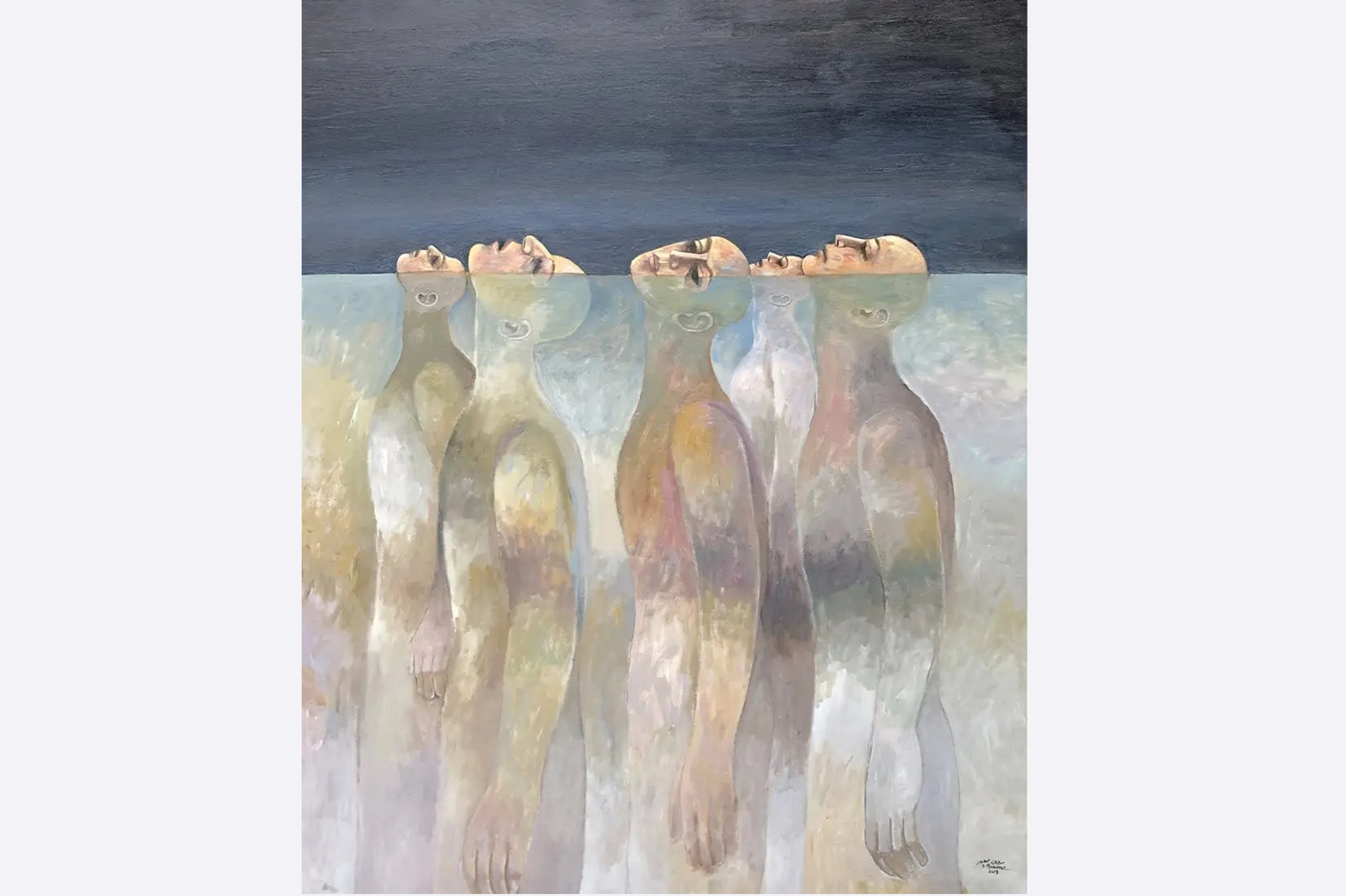
I cannot forget the main lesson I learned from my stay in South Africa last summer, which will serve as a beacon for years to come: the invitation to cultivate the ability to listen to the cries, whispers, and screams of those who dwell in the shadows of non-being, which is like an anticipated death. And even less do I wish to forget the most unexpected and hopeful thing that emerges in this desert of desolation: the knowledge of the peoples who resist violence as provocations of those lives that return from death, summoning us all. Ancestors. Remnants. Survivors. Their silence is the most eloquent language of the human, the cosmic, and the divine, to contemplate in leisure time and walk with them.
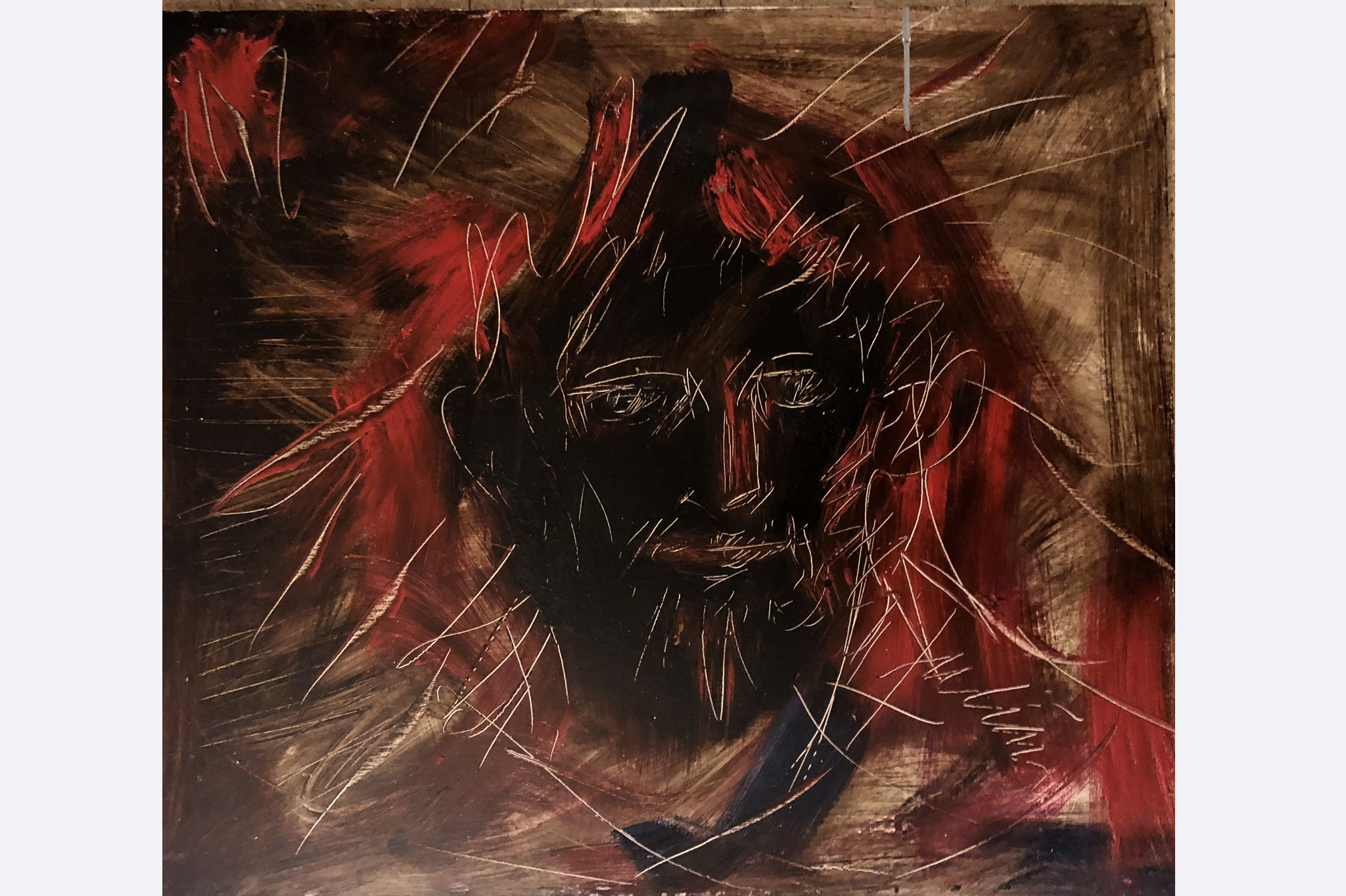
Making room for leisure requires silence. An experience of the suspension of the senses, like an implosion of appearances that gives way to the appearance of true faces. And with that silence emerges the eloquence of the gaze, the power of the caress, the rebellion of the liberated body, the hope of those who have left us but live on in divine memory.
In the “tough times” to come, as Teresa of Avila said, I am preparing to go beyond the business from life in the university and in the temple, even in the public square and social networks.
Inhabiting everyday reality differently, in the cracks and silences, mine and others', some murmur of life will rise to heaven. From the cracked earth and from the rubble of the collapsing world and from my shattered ego, a radiance of being appears.
Mexico City, August 30, 2025