Tag: Eco-spirituality

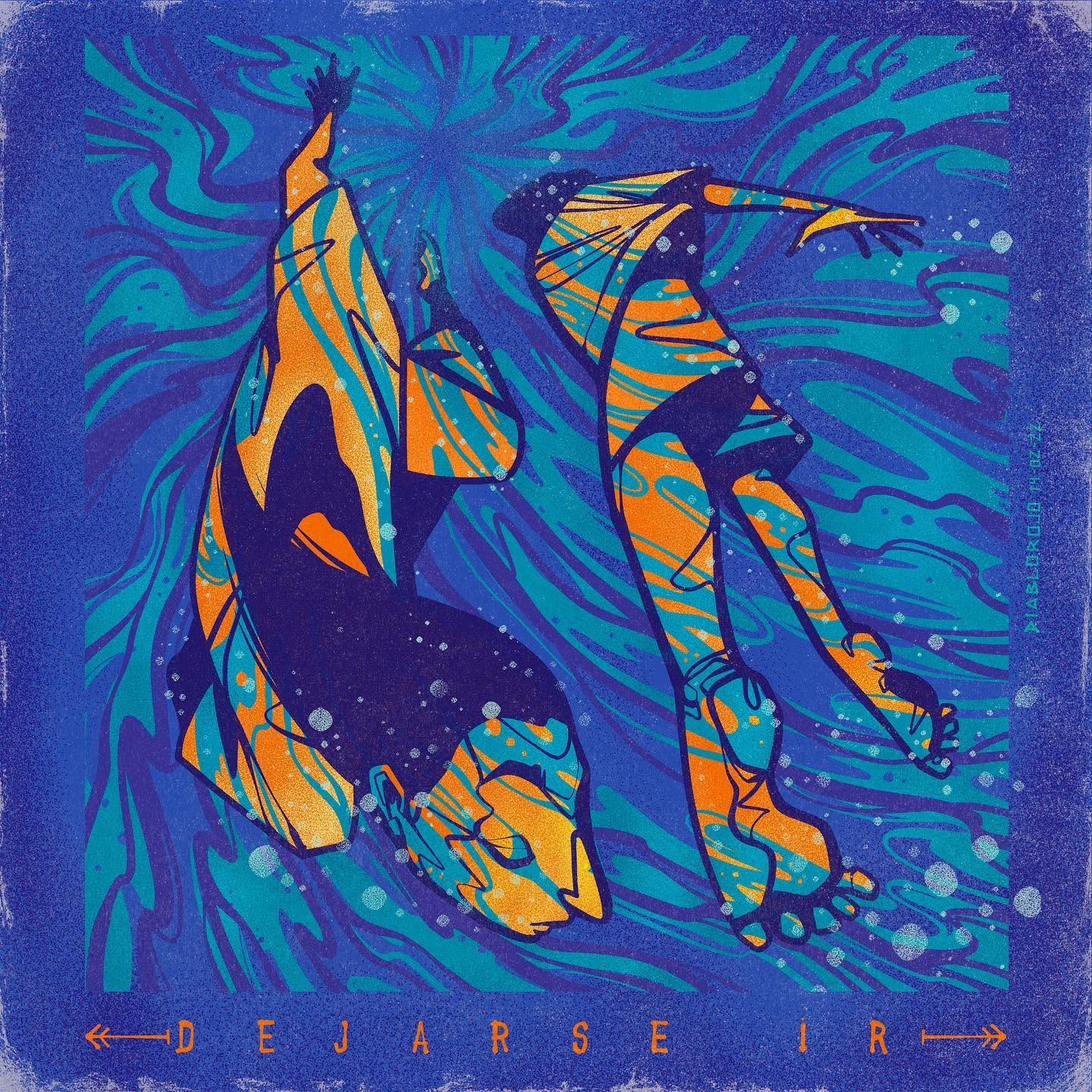
  • Historias del agua Sobre los clamores de un lago y una cuenca de los valles en MéxicoPablo de la Fuente | Diablo Rojo Graphics | Letting Go | Santiago, Chile, 2022

    Water Stories On the cries of a lake and a basin of valleys in Mexico

    By Carlos Mendoza Álvarez

    “Un Salto por la Vida” (A Leap for Life) is a civil society collective from El Salto, a municipality in the state of Jalisco, which we visited a year ago as participants in the Re-existe festival at ITESO University in Guadalajara, Mexico. Its residents and activists had foreseen the contaminated water crisis that erupted last Sunday in Guadalajara for years. The brutal pollution and growing shortages have been caused by the industrial mirage of the so-called Mexican Silicon Valley, an environmental aberration continued to be promoted by governments and companies in the region, leaving a trail of environmental and social destruction that has been documented by residents, organized civil society, and universities in Western Mexico.

    Gradually, the outcry from families—with children and the elderly sickened by the devastating impact of chemicals in "drinking" water—gave way to resistance from civil society. Scientific studies provided the foundation for social activism to promote the right to water as a priority in the struggle for human rights at a time when modern society seems unwilling to awaken from the nightmare of development.

    “The wars of the future will be wars over water,” I recall a historian predicting at the beginning of the millennium. And what seemed like a distant dystopia a quarter of a century ago has become everyday reality in every corner of the planet, from Gaza and the West Bank in Palestine to Wallmapu in the southern tip of the American continent.

    In Mexico, Lake Texcoco and the Lerma-Santiago River basin have become a painful thorn in the side, especially due to the voraciousness of the megacities that devour everything in their path. But at the same time, both territories have become breeding grounds for rebellion when their inhabitants put their finger on the wound and begin a painful but hopeful path of socio-environmental intervention to save a lake with an ancient history and a vital basin in the central-western part of Mexico.

    The “Charter of Lake Texcoco” was an initiative proposed a decade ago by the People’s Front in Defense of the Land and the residents of Atenco, along with their students, activists, and artists, to sing an elegy to water that would give voice to their struggle and make their vision of the territory visible. The poet, academic, and activist Al-Dabi Olvera paved the way for me years ago to understand this poetic-political resistance through the narrative practices we carried out under his guidance at the Ibero-American University in Mexico City with the research project called Narratives of Resistance. That Charter begins by saying:

    “I’ve known about the lake since I was born; it’s my parents’ legacy,

    It's the life we have, the one we want our grandchildren to live.

    Anáhuac is to be between waters,

    fish, frogs and axolotls, ducks, chichicuilotes and swallows.

    There was no shortage of quelites, quintoniles, and purslane.

    The people knew how to live with the waters,

    collecting the ahuautle, the tequesquite.

    That lake is called freedom.”.

    It was an elegy to lost water and a song to water regained. Years later, that lake has finally been declared a nature reserve by the federal government, and its wetlands are being restored thanks to the arduous and constant work of the community, in partnership with the current government, which we hope will continue in the years to come, beyond today's partisan political interests.

    ∂

    In our age of Artificial Intelligence, water is being transformed into a coveted commodity. An indispensable "product" for the digital industry because data centers require it: a single standard data center consumes 25 million liters of this vital liquid annually to cool the computers that power "the cloud." A cloud that is more of a hellscape of semiconductors and digital networks at the service of the powerful. Indeed, ecological devastation is already occurring alarmingly in areas of Texas and Ohio, and is multiplying from China to Argentina, wherever the lords of the digital super-industry need it to establish their data businesses where water is plentiful. In these territories, Israeli power is strategically expanding to sell technology, replicating its voracious business and its power over local governments in the name of supposed progress and water security.

    The water sequestered by fracking is yet another contradiction of this extractive economy. To extract gas from increasingly deeper underground regions, it is necessary to inject unprecedented quantities of water. The life force of water is transformed into a weapon of death at the service of the devastating oil and gas energy industry, which is currently controlled by the United States, China, and Russia across the globe.

    And to make matters worse, the water used by the soft drink industry is another head of the capitalist hydra, as the Zapatistas call it, which transforms a precious resource into poison with every soda placed on the tables of the poor. Mexico is the world's largest consumer of soft drinks, and, as a sad example, Chiapas, the state with the highest poverty rate, is also where soft drink consumption is highest, leading to malnutrition and disease. This is a lamentable example of the Illichian principle of counterproductivity: it takes wasting two hundred liters of water—in the entire water chain, from sugarcane or corn cultivation for processing to the production of the soft drink—to put a single bottle of Coca-Cola on the market. The city of San Cristóbal de Las Casas carries water in its soul, with its Tsotsil name Jobel or land of wetlands: bodies of water that still survive despite the exploitation of springs and the terrible public administration that privatizes wells, monopolized today by Coca Cola, and urbanizes those bodies of water inhabited by reeds, birds and increasingly rare amphibians.

    To complete this picture of the environmental horror that has water held hostage in our time, it is necessary to mention the sewage from the drains of the world's metropolises, which have transformed rivers and basins—once home to wetlands, streams, and rivers—into channels of chemical, organic, and energy waste from the plastics, steel, and semiconductor industries. But the most macabre aspect of these flows is that they have also become receptacles for the human remains of people disappeared by criminal organizations, thus becoming rivers of iniquity.

    Thus we find ourselves thrown into socio-environmental chaos by the machine civilization, now disguised as an algorithm of voracious power.

    ∂

    And amidst so many painful splinters in the body of Mother Earth and our people, where are there signs of comfort and hope to rescue and heal this wounded socio-environmental body?

    The resistance of the people of Atenco in Texcoco and El Salto in Jalisco is like spores spreading through valleys and canyons around the world, giving rise to new organisms in their wake. They do so on a small scale, but a real one. Their methods of organization, their protest marches, their rituals of caring for Mother Earth and the most vulnerable people and creatures in the community are already signs of another way of being, one that transcends greed.

    Without romanticizing these movements, knowing that they also experience tensions over power, control of the narrative, and obtaining resources from the state and international solidarity funds, we recognize that other languages are being babbled there with their decolonial verbs: eating, learning, organizing… and waiting.

    Now it's up to each of us, individuals and communities, to live and tell our own stories of resistance. What is your water story?

    Jobel, October 17, 2026

  • Donde comienza el desierto del Pacífico Sobre los cruces del Mutuo Acompañamiento Espiritual y TeológicoRoberto Mamani | Ari Kepay | Tarija, Bolivia, 2020

    Where the Pacific Desert begins On the intersections of Mutual Spiritual and Theological Accompaniment


    By Carlos Mendoza Álvarez

    The “Huaca Mach'ay” is the ancestral sacred cave carved from sillar, the name given to ignimbrite, a volcanic rock found in the highlands of Arequipa, Peru. For thousands of years, pilgrims have venerated these places as the womb of Mother Earth, coming here to experience the birth of new life. As a community of friends, we have traveled from the north and south to Arequipa, the Castilian name for Ari Kepay, which in Quechua means “here we stay.”.

    That cosmic womb welcomes us one sunny morning in the Andean highlands, accompanied by Fiorella as our guide. With her activism in defense of the Chili River and its valley, threatened by the hydroelectric and real estate industries, she listens to our questions and other ways of being visitors in her territory. We are a group of companions from the Mutual Spiritual and Theological Accompaniment who, over the course of eleven years, have shared the emotion of telling our stories of vulnerability, righteous anger, and hope, learning from individuals and collectives resisting diverse forms of violence in Oregon and Chiapas, Arequipa and Barcelona, Monterrey and Lima.

    As the start of our annual in-person gathering, Belissa welcomes us to her hometown, “the white city,” so named for the volcanic stone that adorns its houses with facades sculpted with baroque flourishes, a reminder of its colonial and racist past, as it was a city built for Spanish colonizers. We didn't come for cultural tourism or to kayak the rapids of the Chili River. We arrived here after monthly meetings in “virtual homes” over a four-month cycle, where we shared our stories of vulnerability and resilience, of awakening with diverse commitments to life. Each of us was invited by a loved one who had already experienced the power of a spirituality rooted in our own wounds, open to those of other individuals and groups, with whom it is possible to weave threads of hope. Adrián, as a companion to young day laborers and queer people on the West Coast of the United States; Bosque, as an activist for deliberative democracy on environmental justice issues in Monterrey; Belissa as a doctor walking with health collectives for the care of neurodivergent children in vulnerable situations in Arequipa; Rachel as a pastor exploring new pastoral ministries for queer communities in Oregon.

    ∂

    The Apus are the guardian mountains of the memory of this place where the Pacific Desert begins, stretching from Arequipa in Peru to Atacama in Chile. Misti, Chachani, and Pichu Pichu are the three silent witnesses to the stories of the Inca and mestizo peoples who coexist with the creatures of the ravines: birds, reptiles, and endemic cacti of this remarkable ecological niche. Modern exploitation is causing the glaciers to melt, and the rivers are being turned into irrigation ditches. We witness the socio-environmental devastation accelerated by the impoverishment of the lives of internally migrating peasant communities from remote provinces in the Andes Mountains, drawn by the mirage of the modern city that expels them from the highlands to the outskirts of beautiful Arequipa.

    The river is the lifeblood of the Andean spine, formed by rocks that descend from the volcano, explains Jorge, an anthropologist from Arequipa who calls himself a “Renaissance man” as he recounts his struggle to defend the territory as a member, along with Fiorella, of the citizen initiative “Save the Chilina Valley.” His aspiration as a young ecotourism entrepreneur is centered on protecting the legacy of his ancestors, confronting the mafias that seek to control the territory with their tentacles extended into the real estate industry, local and regional governments, and the indifference of the local population. A coalition of several civil society organizations has so far managed to halt the construction of a sixth hydroelectric plant in the river canyon, a project that lacks environmental planning and is the spearhead of a land-use change across the entire valley to build resorts for extreme sports tourism. The value of this civil society initiative lies in the recovery of the social fabric of the Arequipa community to mobilize it to take charge of the care of its territory, with the tremendous challenge of weaving a common cause amidst perverse private interests.

    At the end of the visit, we perform our traditional ritual of gratitude for what we have learned from our hosts. The veneration of the sacred place and its ancestors is followed by a blessing from everyone gathered in a circle around those who opened their hearts and shared their struggles with us, thus connecting who we are with our hosts and supporting each other in our resistance and new ways of re-existing.

    ∂

    “Mothering” is an intimate act, but also a collective one. It represents a new dimension for me, ever since Kochurani helped me perceive in my own life the reality of giving birth to life. It's a capacity we rarely acknowledge, yet it's a source of life and dignity. It's not an experience exclusive to women when they conceive the offspring of the human species. It's an act of conceiving and giving birth that celibate women also experience through processes and acts of bringing life into the world in any of its forms: caring for our grandparents, for example; or protecting a territory from extractive mining companies; and even giving birth to new forms of communal governance in small pockets of resistance. That's why men are also called to “mother,” thus empowering the feminine dimension of our deepest being.

    Fiorella shuddered when, in the ritual of gratitude, I thanked her for her diverse motherhood, which ranges from caring for her young son to the community care of the threatened river.

    May these encounters where the Pacific desert begins, with the Apus as guardians of our intersecting paths, be a propitious occasion to be reborn wherever we find ourselves, putting down roots to stay wherever we arrive.


    Ari Kepay, October 3, 2026

  • El mutuo acompañamiento como camino de espiritualidad descolonial Exploraciones desde el “más acá” de la religiónPaulo Medina | Cosmos | Chihuahua, 2020

    Mutual accompaniment as a path of decolonial spirituality Explorations from the "here and now" of religion

    By Carlos Mendoza Álvarez

    The spring that nourishes the valley of re-existences is, without a doubt, spirituality or that inner strength that arises from shared vulnerability to resist and re-exist.

    When a victim of any kind of violence simply freezes, licking their wounds, they risk becoming trapped in their pain, with little chance of healing the trauma and loss, and without the possibility of grieving. But when they allow themselves to be touched by the wounds of another person or group, they begin to realize that their pain and anger connect them to others. And from there, paradoxically, emerges a power to discover themselves, alongside others, no longer isolated, but capable of confronting the trauma and creating new ways of life that will allow them to exist again.

    That is why the Searching Mothers in Mexico represent an ethical, political, and spiritual compass in this uncertain time for the world, helping us keep hope alive. Mutual care emerges here as a way of inhabiting, with others, the cracks in the narratives imposed by the oppressors, whether they be mafiosos or well-meaning people who wield toxic power that stifles life. It is about, day by day, experiencing in solitude the pain that no one can truly feel except in their own flesh, but with hope when one opens oneself to the pain of other people and families, while simultaneously exploring new territories to inhabit with "others," against the grain of the hegemonic narrative, wherever we may find ourselves.

    ∂

    I discovered this wellspring of spirituality through mutual accompaniment with my Peruvian friend Juan Carlos La Puente more than twenty years ago in Santiago, Chile, during a period of community study with lay people, friars and sisters of the Dominican family, students, and advisors, sharing a roof, food, prayer, and leisure time together. We sought to go beyond the traditional frameworks of spirituality, especially in the case of Christianity and the centuries-old religious orders that had given way to a vertical style of “spiritual authority,” with a certain modern Jesuit influence, leading to the exercise of control over people's lives and consciences. Due to family tradition and as a young friar, I never had that experience, but my friend did, which allowed him to realize that this path was not the one that helped him flow in the life of the Divine Spirit. Juan Carlos longed to explore, like a condor of his land, that flapping that teaches us to "be moved and let ourselves be moved," as he recounts in the book "Mutual accompaniment in the divine Ruah" that we published together, during the Covid19 pandemic, in 2022.

    A few years earlier, in 2016, we had the opportunity to drink from the same well in San Juan, Puerto Rico, along with two young Lutheran pastors, Melisa and Ron, who, with the support of David, their bishop in Portland, Oregon, were seeking to connect their Protestant spirituality of "sola fides" or "faith alone saves"—which had borne so much fruit over recent centuries—with the liberation and decolonial theologies emerging in the Global South. Months after that encounter, we met in a cabin in Oregon, the Green State of the United States, a group of about fifteen people, mostly young Lutheran pastors like Tayler, Lauren (now a bishop), Erika, and others, along with Saúl, Héctor, and me—three Mexicans who were then, though unknowingly, walking from our own vulnerability—David, a Lutheran bishop, and a "wounded Catholic," as Juan Carlos already described himself at that time. In Portland, he collaborated with migrant collectives, homeless people, and Latinx artists who, through their aesthetic work, accompanied the paths of dignity for these people and communities in resistance.

    Thus, we began exploring a path of “mutual spiritual and theological accompaniment” that, since then, has brought together sixty or more people each year, eager to explore this “alternative” path of embodied and diverse spirituality, often outside the religious institutions that arose from this search but which, over time, became lost in the minutiae of controlling bodies and minds, and “hijacked spirituality,” as Carmenmargarita Sánchez de León likes to say, in the straitjacket of a belief system. We thus discovered the power of decolonial spirituality that emerges on the margins of the hegemonic system. This mutual accompaniment takes place through virtual and in-person meetings: five monthly online sessions, where we begin with personal accounts of our own vulnerability, precisely where we learn to “awaken,” with intuitions of life, dignity, rebellion, and resistance. We read each other's stories to find common threads and differences, which intertwine into a multicolored tapestry that adorns the table in our little house. There, a chef helps us cook together these shared narratives, built with words, symbols, and rituals that each of us creates, sometimes in the intimacy of our own homes, and sometimes together. At the end of each year, we gather for a virtual retreat "in the cloud," where we share with friends from other little houses the beautiful plants and delicious fruits we have sown and harvested "together." To conclude the year, those who are able to meet in person travel to a territory where a fellow member lives with their community of belonging and resistance. There, we celebrate our liberating intuitions, sharing the paths that have led us there, and celebrating in community with symbols and rituals what we see the Ruah (Spirit) moving us to experience.

    ∂

    This experience of more than a decade of exploration gives us clues in diverse contexts - from the working-class neighborhoods of Arequipa and Nairobi, between lands of resistance in Catalonia and Chiapas, through homes of re-existence in Kerala and Portland, connecting artists with social activists, Lutheran pastors and Roman Catholic laypeople or freethinkers, all seeking inner life beyond religions - where we cultivate mutual support to give each other strength on the exciting path of re-existing amidst the growing violence of this world.

    There, the other stream that feeds the valley of resistance and re-existence is born. The Resiste and Re-existe gatherings, which also emerged more than a decade ago at the Universidad Iberoamericana, where I spent twenty years, were inspired by the vision of figures like Gustavo Esteva, Boaventura de Sousa Santos, David Fernández, and Pablo Reyna. This path was illuminated by the proven wisdom of Raúl Zibechi, Rita Segato, Aída Hernández, Lorena Cabnal, Daniela Rea, and so many other "wise" individuals, situated in the cracks of global and local necropower, to tell and think about "other possible worlds | where many worlds fit," as we connect the dreams of the World Social Forum and the Zapatista movement in the mountains and jungles of southeastern Mexico.

    But it must be said that the “collective awakening” came, with the force of a tide of life, from the social movements that envision and work, day after day, on the “change of world” that we all long for.

    But that's another story that awaits us next week.

    San Cristóbal de Las Casas, September 6, 2026

English