Tag: Decoloniality

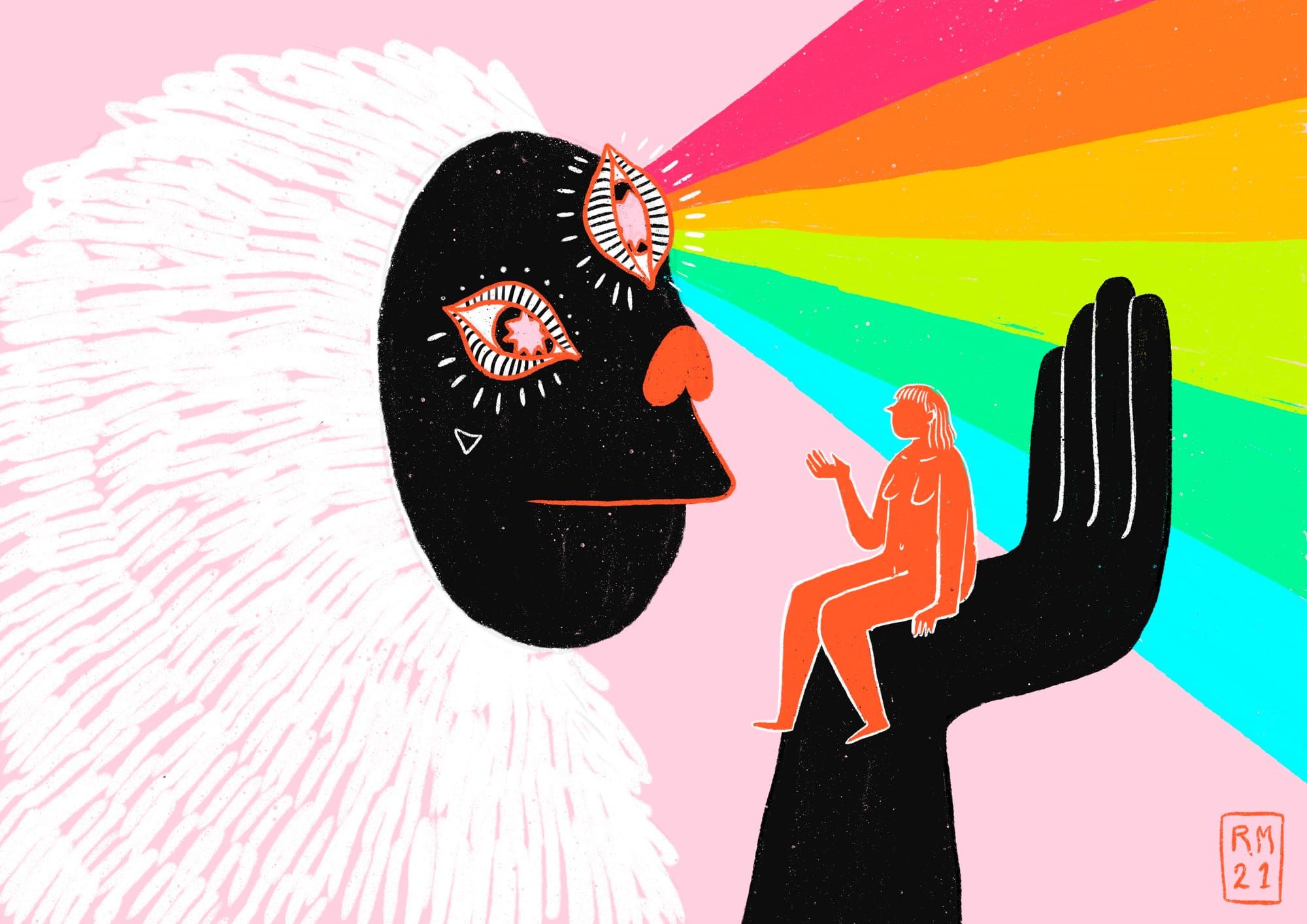
  • Alégrate, humanidad desoladaAntún Kojtom | Guardian of Mirrors | Tenejapa, Chiapas | 2021

    Rejoice, desolate humanity

    By Carlos Mendoza Álvarez

    In the era of the Monroe Doctrine 2.0, launched last week for the “Western Hemisphere” by the global despot as National Security Strategy From the United States, it seems foolish to talk about joy.

    Some analysts, such as Michel Ignatieff, predict the end of the West along with the the civilizational erasure of Europe. Today, something is at stake. global geopolitical strategy With areas of power divided among the three dominant military and economic powers—the United States, China, and Russia—each brazenly administering a region of the planet for its own benefit, the military intelligence apparatuses of the United States and the other powers are already in operation to control entire populations and their territories through a vast military-digital system, subjugating individuals and nations that choose to oppose the might of the Maga empire and its counterparts.

    The creation of Western Hemisphere Command The deployment of the U.S. military, announced by the Trump administration this week, is part of a geopolitical strategy that has already declared war on mass immigration within its borders. It is also worth highlighting the war already underway against drug cartels, which are portrayed as terrorist groups threatening U.S. security, regardless of the civilian "collateral damage" that this new colonialism will cause, as the Israeli state has already demonstrated in Palestine before the astonished eyes of the world. The strategy of constantly threatening new tariffs that Trump has used in his first year in office has been another attempt to promote a new mode of deglobalization which seeks to subordinate the economies of its "backyard" now called the "western hemisphere" to the interests of the transnational corporations that sustain its wealth.

    The nations that for centuries were swallowed up in the Western Hemisphere during early modernity will now be trapped in the web of the voracious monster's hegemonic power. But that giant has feet of clay and one day it will fall. Until then, the destruction it leaves in its wake will be a cause of desolation on a planetary scale. Such a scenario is what Nelson Maldonado-Torres calls the Great Catastrophe —a concept I develop in a collective book on political philosophy and theology that I am currently preparing for an American publisher— seems unrelated to a reflection on the joy What could humanity expect in this hour of global misfortune? But it is precisely the only place where it is possible to speak of a meaning that transcends the apparent immeasurability of the evil that stalks us.

    Tomorrow, Christian communities will celebrate the third Sunday of Advent, known as Gaudete. The name comes from a poem by an anonymous disciple of the prophet Isaiah in Babylon, announcing to Jerusalem, the desolate city, that the time of its liberation after the exile had arrived: Gaudete Ierusalem,Rejoice, Jerusalem! (Isaiah 66:10). Like echoes of that ancient voice of resistance, the same song could also resonate in today's exiles, with new melodies according to the genius of each era and culture, as in the case of the Palestinian people, whom we will evoke at the end of these lines.

    Christianity discovered centuries later the radical motive and scope of the joy of the messianic proclamation, extending God's closeness not only to the desolate Hebrew city, but to all. messianic communities scattered throughout the Roman diaspora of that time, who have now entered the new era thanks to faith in the redeeming God, according to the words of the apostle Paul (Philippians 4:4-7):

    Rejoice in the Lord always. I will say it again: Rejoice!

    Let your kindness be evident to all.

    The Lord is near.

    Don't worry about anything […].

    And the peace of God, which surpasses all understanding,

    He will guard their hearts and their thoughts in the Messiah Jesus.

    It is about God's consolation for the little ones of the Kingdom of Heaven. They live in the interrupted time Precisely at the heart of the catastrophe. A way of existing that the dispossessed of the earth experience in their lives in a way messianic, That is, as a power to untie the knots of hatred and resentment in their bodies and territories. It is possible to perceive that murmur of a peaceful present amidst desolation in the Gregorian chant antiphon for this third Sunday of Advent, which is known precisely as Rejoice in the Lord.

    But let's turn to our own time. Who can proclaim such hope today amidst global desolation? Paradoxically, it is the victims themselves who possess that hope. power. Something that executioners will never have because their hearts have been paralyzed and are incapable of opening to joy until they reach the depths of their own desolation and annihilation. This is how Daniela Rea and Pablo Ferri describe it in the book The Troop: Why Does a Soldier Kill? by interviewing hitmen in Mexico who have come to terms with their crimes. In a collective way, the Houses of Memory which promoted in recent years in Colombia the Truth Commission They bear witness to that complex process of moving from violence to peace, based on the strength of the victims summoning the perpetrators, in order to open paths to transitional justice in a country that suffered more than thirty years of war, with four hundred and fifty thousand dead and almost eight hundred thousand internally displaced persons.

    In such experiences of transforming systemic violence from the margins of society, thanks to the persistence of individuals and communities of survivors, it is possible to receive the good news of Sunday. Gaudete from Christian liturgy as a call to learn to live an ethic of care and a summons to cultivate a spirituality of mutual accompaniment among survivors, both processes enriching each other to pave the way for fighting hope.

    Therefore, there is a change in tone in the hopelessness. From the purple of Advent, which symbolizes desolation, we move today to pink, the luminosity of consolation that emerges from the shadows like a small but real spark, illuminating everyone, like the painting by the Mayan artist Antún Kojtom that accompanies this post. other tonality, typical of messianic times, arises thanks to the victims who establish the sorry, That is, the overabundance of the gift. A realistic hope that does not mean blindness to evil and its perpetrators, nor a renunciation of accountability and justice, but rather a reinvention of violent history based on the overabundance of love that recreates the world.

    A new way of existing which is no longer just desolation. Nor mere resistance. But the creation of something new, Amid the ruins, from the scars left by violence, but which are transfigured as a glimmer of hope and joy: “After two hundred and fifty years of the occupation of the white settlers we are still here and that is why there is hope,” said smiling Cecelia Firethunder, shaman and historian of the Lakota people, at the past Re-existe 2025 meeting in Guadalajara.

    It is a joy that also arises as rebellious imagination from the rubble turned into a home by the Sumud or the creative resistance experienced by the Palestinian people who never tire of waiting, as the Tunisian artist sings. Emel Mathlouthi walking through the streets of an occupied Palestine:

    Broken hope

    deep

    furious

    friendly

    deceptive

    that penetrates arduous times

    eternal

    happy

    unwavering

    new

    A hope that fills my life and renews it.

    Thanks to the acts of resistance of the victims to the violence of today's global power, we can say with profound joy, without triumphalism, and with great courage: Rejoice, Gaza! Rejoice, desolate humanity! For the day of our liberation is near.

    Zinacantán, December 13, 2025

    Note: I look forward to reading your comments about possible hope today in the section below this post.

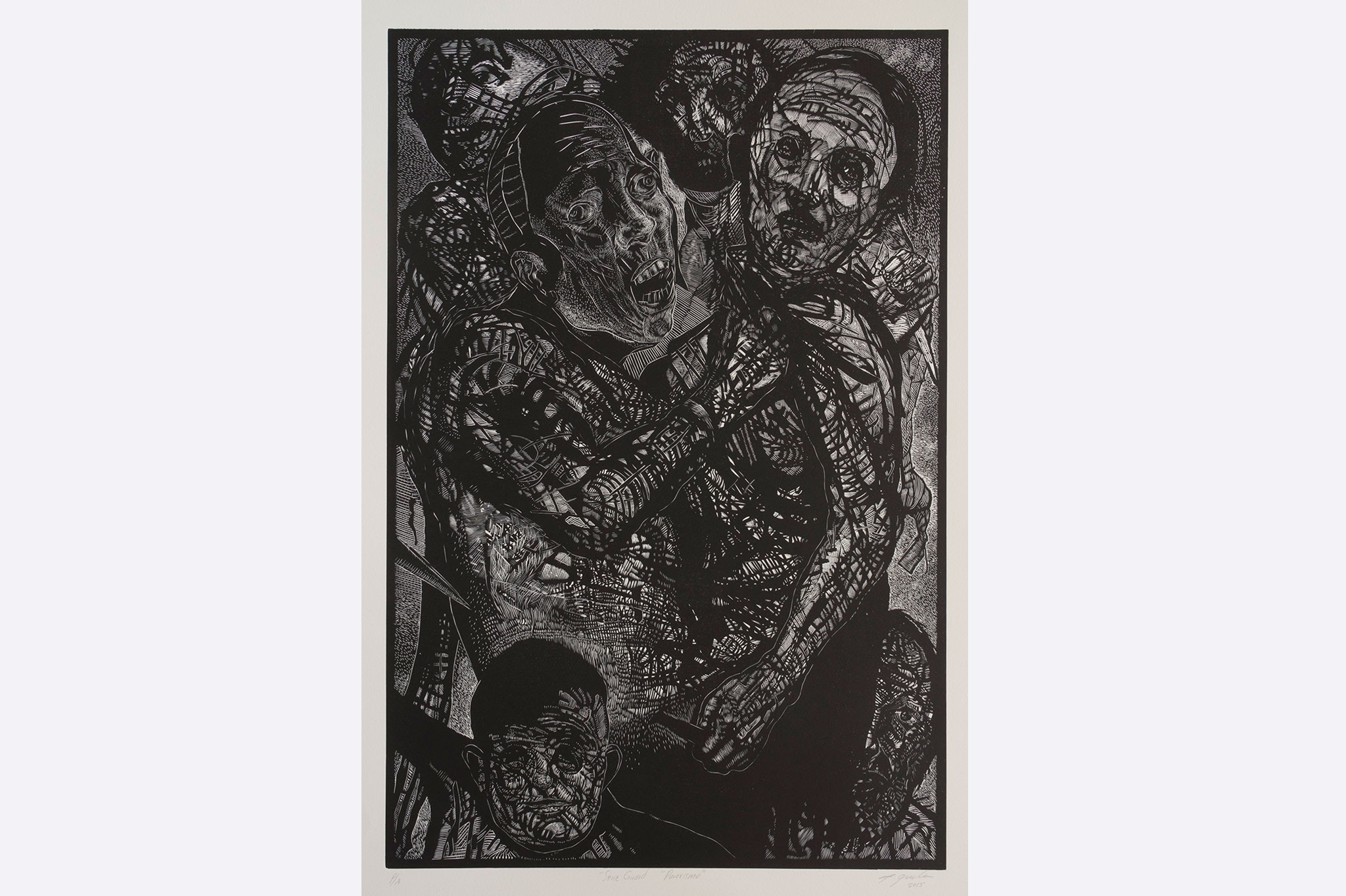
  • La monstruosidad de la religión Sobre un debate moderno en curso“Paroxysm,” Iván Gardea, etching, Cuernavaca, 2019

    The monstrosity of religion On an ongoing modern debate

    By Carlos Mendoza-Álvarez


    This week I was invited to the presentation in Cuernavaca of a book that contains a failed conversation between John Milbank, a British Anglican theologian, and Slavo Žižek, a Slovenian atheist philosopher, about the monstrosity of Christ (The monstrosity of Christ: paradox or dialectic?). The Spanish translation was published by the Universidad Iberoamericana in Mexico City, at the initiative of Ángel Méndez Montoya, as part of an innovative publishing program to offer readers in Mexico and the Spanish-speaking world current theological debates surrounding God as an ontological problem, as a source of ethical meaning in a modern civilization shaken to its foundations, and as a political problem.


    Before attending the presentation at the Miguel Salinas Gallery Library of the Autonomous University of the State of Morelos, located in the historic center of the city in an old house restored as a cultural center, I had the fortune of talking with the Juarez artist Iván Gardea, when visiting his exhibition at the Borda Garden which is open to the public until the end of September.

    Maestro Gardea, in addition to being an impressive engraver in the most rigorous Mexican tradition of printmaking that dates back to Posadas and the Taller de Gráfica Colectiva a century ago, is a born thinker, well-versed in literature, music, philosophy, and theology. We met in his studio six years ago to prepare for the exhibition of his series of prints on violence inspired by the thought of René Girard. We held this exhibition at the Andrea Pozzo Gallery of the Universidad Iberoamericana in Mexico City in 2019, on the occasion of the international conference "Resist! Violence, Resistance, and Spiritualities," organized jointly by the Jesuit university and the International Journal of Theology Concilium, where I had the opportunity to serve on the board of directors and editorial board for eight years.

    During our conversation in the bright colonial courtyard of the Jardín Borda, Iván told me stories about his ongoing artwork, a series of prints specifically about the monstrosity of the sacred in today's society, lost between Western liberalism, "devoid of any belief," and the materialistic atheisms that abound in both academic and social circles. In Iván's opinion, although I correctly interpret it, this monstrosity has many facets, among them nihilism as a way of life without hope. I was greatly surprised to hear his reflections, since that same afternoon we were to discuss the "monstrosity" of Christ in the Žižek-Milbank debate.

    So I briefly summarized the ideas I would later express regarding that book, alternating with my beloved colleagues Sylvia Marcos, a renowned gender anthropologist in Mesoamerica who met Žižek in Slovenia; Ángel Méndez, a queer theologian who worked on his doctoral thesis on the theology of food under Milbank's supervision; and Nicolás Panotto, an Argentine Protestant theologian with whom I share projects in the "Theology After Gaza" group convened two years ago by Mitri Raheb to rethink political theology.

    In the cloister of the Borda Garden, I commented to Iván that, in my opinion, the monstrosity that was important to discern today was that of the religion that perverts the sacred, expressed as Jewish and Christian Zionism, associated with far-right movements around the world that, in the name of God, not only pervert the Bible in their theology of election and promise, but also incite genocidal violence by manipulating the religious sentiment of entire communities. Another example is the case of televangelist Paula White in the White House advising Trump, his vice president Vince, and Secretary of State Rubio in a crusade to bring their country "back to Christian values."

    Another emblematic example of the monstrosity of religion within religious institutions are the criminal cases of manipulation of religion by corrupt leaders, creating financial empires based on boundless ambition and controlling the dormant masses. This phenomenon has produced corruption among political, social, and religious elites in various parts of the world, accompanied by sexual and spiritual abuse, and the trafficking of political and financial privileges by perverse religious figures such as Marcial Maciel and Naasón García in Mexico, Fernando Karadima in Chile, and the leaders of the Sodalicio in Peru.

    This monstrosity of religion is what matters most to analyze from a critical perspective in order to contribute to dismantling its power networks in society. It is urgent to do so through investigative journalism like that of Emiliano Ruiz Parra (Emiliano Ruiz Parra: HBO series, massive vehicle for the demystification of Marcial Maciel), of truth commissions such as the one proposed by then-candidate Borič in Chile (which, incidentally, was never implemented), to ensure accountability to society as an obligation of the secular state and, above all, to guarantee restorative justice for victims.

    Ivan called these religious groups of today a parody of religion and, at the same time, another version of modernity that is collapsing in our times.


    Inspired by this fascinating conversation, I decided to share my thoughts at the book launch at the event organized by the UAEM School of Psychology, in conjunction with the Jean Robert and Sylvia Marcos Double Legacy Chair. I summarize what I presented at that discussion.

    The first thing was to underline the importance of approaching the book as a theological provocation from our Latin American and Caribbean context, so that it is possible to make a critical reading of the European authors of the book, closely following their argumentation and highlighting other intercultural perspectives of approaching the mysterion of the real that religions call God.

    Then, it is worth remembering that the meaning of Christ for humanity in times of civilizational collapse that we are experiencing today seems an irrelevant issue in the face of the exponential increase in violence under a new figure that some call, following René Girard, the "escalation to the extremes of the annihilation of the other." It does not seem relevant to discuss a religious figure who was trapped by a religion that domesticated his universal love. It seems even less important to get lost in the debate between a Slovenian philosopher and a British theologian when we find ourselves in the midst of the desolation of wars of genocide in Gaza, of extermination in Congo and South Sudan, of forced disappearances in Mexico, where the urgent thing is to stop the spiral of hatred if we wish to speak of the ethos political and spiritual possible for humanity in this uncertain hour.

    And it is precisely here that the question of the experience of Jesus of Nazareth in the first century CE, facing hatred in his own body, may be relevant to us today.

    Academic debates often stray into the realm of ideas, no matter how grounded they may be. Defending or accusing Hegel of various solutions to the dialectic of history to justify theological materialism, as Žižek does, or promoting Milbank's radical orthodoxy as a guardian of the City of God, seem secondary when it comes to confronting another monstrosity, one that has many heads, like the one of hatred and death produced by the capitalist, patriarchal, and white, Western hegemonic hydra.

    Even defending or accusing Meister Eckhart - or better yet the former Dominican friar Rainer Schürmann (The Principle of Anarchy: Heidegger and the Question of Action), one of its modern interpreters, often cited by Žižek, for his interpretation of the negativity of divine being as the antecedent of the moment of negativity of the Hegelian dialectic seems like straw when the priority is to think about the negativity of those who inhabit “the region of non-being,” as Fanon said, and are being reduced to nothing.

    I then proposed a decolonial approach to the book The Monstrosity of Christ: Paradox or DialecticA scholarly book that will generate much ink in the academic world, whether to validate Žižek's theological agnosticism or to confirm Milbank's theological philosophy. The crucial question the book poses lies in the impasse of reason in the face of the mystery of being. However, what is worth exploring is a different ontological approach, one that conceives of "being that ages and dies," as Levinas said.

    To do so, it is necessary to turn to the Bible as the original source of this understanding of the paradox of being, and then to apophatic philosophy to spell out the intelligibility of the absurd when Christianity announces a "crucified Messiah" as the meaning of history. Following this route, it will be possible to cross the abyss to think about the monstrosity of being, but as the radiance of the messianic moment in which history seems to open like a recess of "hope against all hope" through "the wounds that heal."

    Thus, another way of speaking about the critical link between philosophy, theology and politics emerges, not as an idea or as potestas politics, but as a messianic knot, that is, resistance to violence woven by those who live in “the shadows of the shadows of the shadows.”


    "By his wounds we shall be healed," says the oxymoron from the book of Isaiah (53:5), written by a disciple of the prophet during his people's exile in Babylon. This is perhaps the pinnacle of Old Testament revelation and one of the most radical truths about the human condition, politics, and hope. It is in this light, of course, that the torture and execution of Jesus of Nazareth by the Roman authorities, in complicity with the authorities of the Temple of Jerusalem and the enraged mob, will be read centuries later.


    Exile was a spiritual and theological place for the disciple of the prophet, as it was for John the Baptist and so many prophets throughout history, "whose voice cries in the wilderness" (John 1:23). Until we reach the voice of Munther Isaac in the 2021 Christmas sermon in Bethlehem, Palestine. The Babylonian exile signified a contradiction for the expatriated people: on the one hand, the pain of being torn from their homeland; on the other, the recognition that they have only been able to live off the crumbs of Nebuchadnezzar II, the Babylonian king. And yet, in the four poems preserved in the Book of Isaiah, the true source of life will be the disciple-people. Babylonian power crushed Davidic power. But the people survived by virtue of their fidelity to the first covenant, if not all, at least a few. Tzadikkim or just people in history. And so, that suffering people is the source of "another way of being," beyond the essence of Babylonian power, in the power of those who resist. They are the servant of Yhwh.


    Following this spark from the anonymous disciple of Isaiah, we can then reread the history of "the cursed of the earth," yesterday and today. In particular, the history of the Palestinian people, who, in the depths of their pain from the genocide they suffered, allow us all to heal from their wounds if we open our lives and actions to this cry. A slogan of the Global Sumud Flotilla says precisely this: "They wanted to erase Palestine, and now Palestine sails all the seas."


    Faced with the monstrosity of the exile in Babylon, the Hebrew people of the anawin, from the poor of God, brings forth the beauty of Sumud or resistance to the catastrophe that has befallen them.


    What dialectic of history in the Hegelian reading recreated by Žižek governs history? That of opposites that annihilate each other in search of a supposed synthesis of Aufhebung or overcoming this rivalry that only prolongs the death throes of humanity with the triumph of the executioners.

    Nor is the philosophy of the City of God, yearned for by John Milbank as a return to theocracy, overcoming the narrow limits of modern autonomy that became a nightmare, capable of crossing the abysmal line that separates privilege from desolation.

    Are both authors in this fictitious dialogue right in raising the alternative between the dialectic of Holy Saturday that annihilates the weak in the Sheol and the paradox of Easter Sunday, which is announced as the triumph of the victims over the executioners?


    Neither paradox nor dialectic, but messianic contraction of the being that ages and dies.

    Eckhart warned us about figures and idols (deitas) that replace the ineffable God (diuinitas). They can be religious or political idols. What is crucial in the life of the Spirit is, therefore, for the German Dominican, detachment (Gellasenheit) as a form of apophatic or negative, non-dialectical negation of the impersonations of Divinity.

    Pseudo-Dionysius had previously explored this path of overcoming the ego, giving rise to the experience of the Mothers and Fathers of the desert in their confrontation with the demons before arriving at the contemplation of the mysterion of the living God.

    Therefore, today, apophatic theology is a companion to the political theory of the commons, proposed by collectives and subjectivities located on the peripheries of the hegemonic world, but rooted in the world of the vital connection between the human, the cosmic, and the divine.

    By listening to the outcry, indignation, and hope of today's most vulnerable, we can then access the apparent monstrosity of Christ, which then becomes the beauty of the forgotten who re-exist when they say enough to the violence of the imperial being that kills.


    Puebla, September 14, 2025

  • La Biblia como arma de genocidio o casa de vidaSliman Mansour. Revolution was the beginning (2016), oil on canvas, 200 x 500 cm

    The Bible as a weapon of genocide or a house of life

    By Carlos Mendoza-Álvarez


    The State of Israel began this week a new phase of the strategy of control of the territory of Palestine (Israel approves controversial West Bank settlement project). Israeli settler settlements in the West Bank will expand to divide the territory, which was the result of the 1993 Oslo Accords to relocate Palestinian residents into two isolated groups, leaving only one outlet to the Jordan River on the Jericho side.


    Christ at the Checkpoint, August 21, 2025   


    The ultimate goal is the creation of Greater Israel, once the possibility of a Palestinian state has been destroyed because, as Israeli Finance Minister Bezalel Smotrich said this week, “there is nothing to recognize, and no one to recognize” (Israel approves illegal settlement plan that would split occupied West Bank) once the genocide of the Palestinian people has been consummated.

    This plan of contemporary Israeli expansionism "after Gaza" suggests at least two main objectives: the first is the isolation of Palestinians in apartheid zones, in addition to the invasion of the Gaza Strip, with the goal of their expulsion or subsequent extermination; and the second is the control of the Jordan River as a strategic source of water resources for times of global scarcity.


    But this is not merely the military strategy of a rampaging Zionist state supported by global capitalism, particularly the governments of the United States and the United Kingdom. The ongoing Zionist plan demonstrates the perversity of an ideology of genocide that manipulates the Bible to justify the supremacy of one state over others, subordinating peoples of diverse ethnic and religious origins to a selective process of annihilation in the name of a supposed divine promise.

    Both Jewish and Christian Zionism, in fact, are the modern version of the manipulation of the biblical promises recounted by the saga of Abraham and Sarah as ancestors of the believers of the three monotheistic religions. The biblical account, in fact, tells us that God the Eternal promised the primordial couple offspring "as numerous as the stars of the sky and the sand on the seashore" (Gen 22:17). Hebrew Talmudic and ancient Christian commentaries saw in this double metaphor of the heavens and the earth the proclamation of the universality of the promise: the stars of the sky evoking the daughters and sons of Israel, and the sand on the seashore representing all the nations of the earth.

    The ideology of the “chosen people” was later developed in the Bible by a religious movement that perverted the announcement of the promise of the land, focusing it on the conquest of a territory as an exclusive monopoly of one people over other Semitic peoples. This “political theology” was devised by an interpretation of messianism in a Davidic key, present in the Bible since the time of the judges of Israel, which is called the “Joshua factor” by the Palestinian Lutheran theologian Mitri Raheb (Imperial Theology, Colonization, Settler Colonialism, and the Struggle for Decolonization: A Review Essay) as a source of the theology of empire.

    But the prophets of Israel, from Moses to John the Baptist—and Jesus of Nazareth and his community who were part of that lineage—were always critical of the powers that be, which have sought to supplant divine glory under various masks. Theology prophetic It is found at the origin of the Abrahamic faith as a universal vision of the promise and the land that includes all peoples. As the French Dominican biblical scholar Philippe Lefebvre (Conference: Jésus et le pouvoir – P. Lefebvre), prophetic messianism is present like an underground river throughout the Bible, from the book of Genesis to its fulfillment in the Passover of Jesus of Nazareth.

    And the Jesus movement in Galilee takes up this prophetic vein to radicalize it with the innovation of a messianism scatological, as another Dominican, José Luis Espinel, commented a few decades ago in Salamanca (Eschatological Messianism of Jesus from his prophetic actions). A prophetic tradition that announces the fulfillment of the promise for all peoples as a call to the universal love that flows from the wounds of a crucified Messiah.


    Palestinian Christians, as the Palestinian Lutheran theologian Munther Isaac (Faith, the Bible, and the Genocide in Gaza) call us today to decolonize the Bible, which has become the weapon of war of Israeli and Christian Zionism against the Palestinian people. There is no chosen people to conquer a land in the name of God, stealing it from its original inhabitants, from the ancient Canaanites and Jebusites to the Palestinians of today. Nor is there a promise of the land that justifies, in the name of God, an Israeli state imposed by war on territories inhabited by Semitic peoples for millennia.

    Christian churches of all denominations, as well as universities and political movements that appeal to the Bible as their source, face a grave dilemma: either continue to justify the genocide of the Palestinian people in the name of the God of Israel, or decolonize the Bible to recover the messianic and prophetic spirit of the divine and human word that frees all peoples from the slavery of earthly powers that supplant divine glory, with their current avatars, such as Trump and Netanyahu, or Milei and Bolsonaro, who are today's false messiahs.

    The promise of the land that Abraham and Sarah received in that story of origins when they left Ur in Sumeria in search of the Eternal One – as the Jewish thinker from Strasbourg André Neher says in his book The essence of prophecy – is only fulfilled in the silence symbolized by the desert as a land of incessant search for the Covenant.

    Hence, Christianity drinks from that source of original Hebrew prophecy to announce the arrival of “the new heavens and the new earth,” as the book of Revelation (21: 1) said in the context of the devastation of the old, idolatrous Roman imperial world and the Temple religion that perverted the divine promise.

    This radical critique of all imperial theology stemming from a prophetic and eschatological messianism that heralds the end of the corrupt world has been rejected by both old and new earthly powers that seek to continue domesticating the divine promise.

    But from the rubble of Gaza, the promise of the land emerges today, with renewed vigor, summoning all peoples of humanity and compelling all spiritual traditions to care for the lives of the innocent victims and their survivors. It calls us to continue searching for the promised land as a utopia in the midst of dystopia. It invites us to cultivate hope as a promise of life that emerges amid the threat of imminent death, like that experienced by Gazans today and other peoples threatened by necropower.

    The Bible is not a weapon of war but “the house of the people,” as Carlos Mesters said in Brazil in his beautiful and powerful parable (The parable of the house of the people of God). A house we are invited to inhabit, to recognize in our own stories the spring of life that emerges like living water gifted by God from the ruins of the power that kills.

    Let us reread and inhabit these messianic and prophetic testimonies of the promise of the land and the choice of divine love for all peoples, so that we may be inspired by the consolation that comes from God to the victims and their survivors, as a moving promise that is happening in the silence of the desert.


    Mexico City, August 24, 2025

English