Tag: colonialism

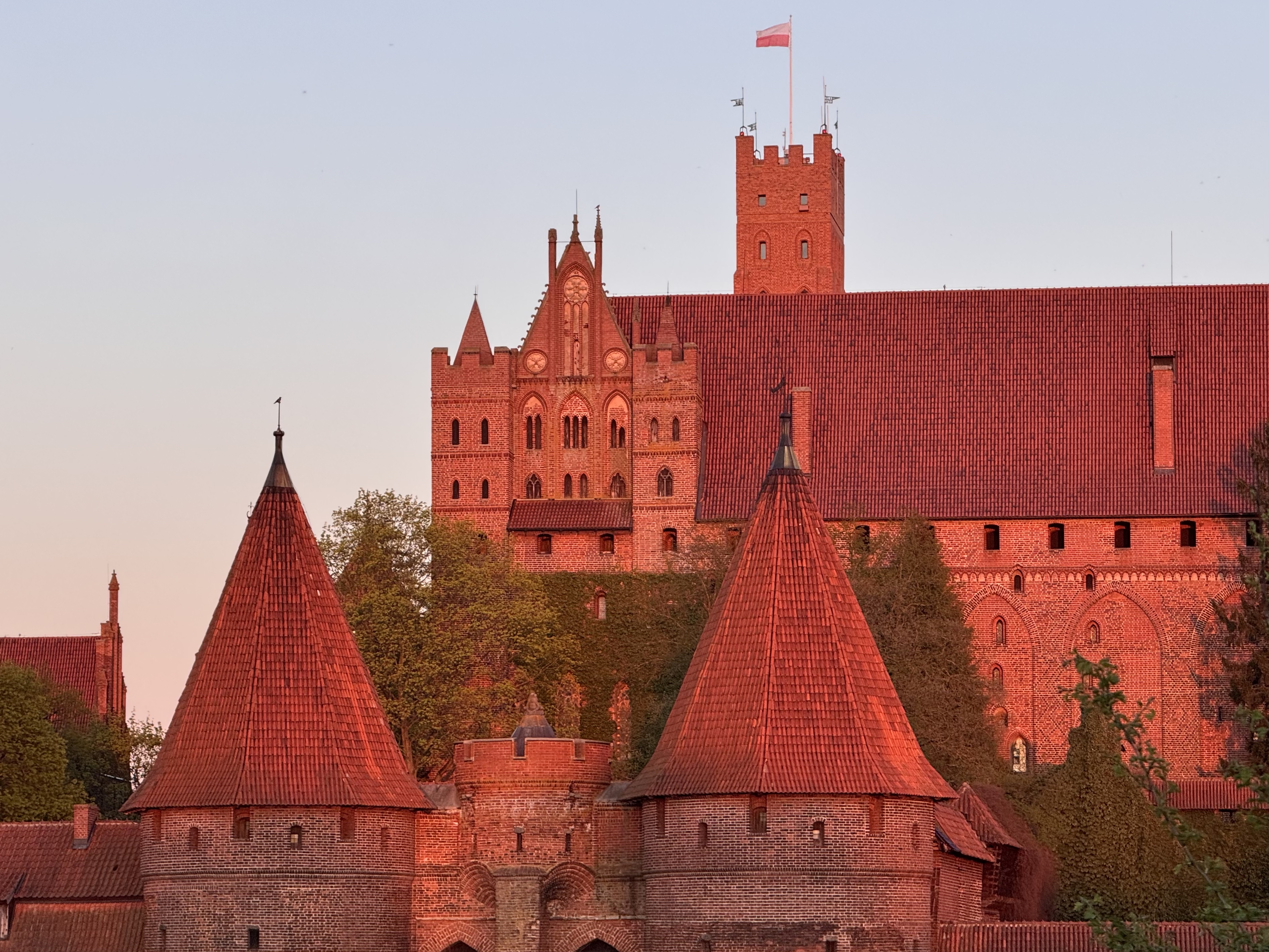
  • La otra Europa Relatos entre Baviera y la costa del mar BálticoCarlos Mendoza | Malbork Castle, Pomerania, Poland | 2026

    The other Europe Stories between Bavaria and the Baltic Sea coast

    By Carlos Mendoza-Álvarez

    I am in Europe for a few weeks, enjoying time to read and write, fundamental acts of culture, so sorely missed in Boston and now in Chiapas. I am able to enjoy this time thanks to the hospitality of a good colleague and friend, Professor Martin Kirschner, and this space of studium, which offers me the opportunity to give some classes and lectures at this university in the interior of Bavaria.

    For years, my friend Piotr, originally from Silesia in southern Poland, had invited me to visit him and his family in Pomerania. I had no idea where this place was, with a name that reminded me of the novel The Lord of the Rings, until a few weeks ago when I was preparing my trip from Eichstätt.

    A long weekend during the German stay provided the perfect opportunity to travel to the Baltic Sea coast, landing in Gdansk, a port that symbolizes the modern-day labor movement. Solidarność led by Lech Walesa, which initiated the collapse of the Iron Curtain, with the manipulation of the famous Wojtyla-Regan-Thatcher trinity, which took advantage of that historical juncture of the crack opened by the Polish working class to advance its geopolitical agenda.

    Having just arrived in this coastal land, a stroll through the historic center was a must. Piotr took great care in recounting the history of the Teutonic Knights who ruled and administered these lands from the 13th century, as a precursor to the Prussian Empire which, later, in modern times, would command its armies to extend its power over all the Slavic nations, from Poland and the Czech Republic to Hungary. After the failure of their mission to guard the Holy Land, this militia of medieval and early modern Christendom transitioned to a far-reaching territorial power until the beginning of the 15th century, when it moved to Königsberg and then to Austria during the Prussian era. Europe's largest castle is located in Pomerania, in the city of Malbork, with its red bricks typical of Baltic Gothic architecture that, at sunset in spring, shine like fire on the banks of the Nogat River, a tributary of the Vistula, which runs from south to north through all of Poland, from Silesia to the Baltic.

    For Poles today, those Gothic roots are part of their cultural identity, although they maintain a distance from neighboring and wealthy Germany, as well as from Imperial Russia, which is once again a real threat of war and invasion in the region.

    I also sensed that fear of war in my conversations with colleagues in Eichstätt, both because of the Russian threat and Trump's unbridled power. The complicit silence of the European Union and NATO in supporting the US and Israeli arms industries during this time of genocide in Gaza and the West Bank, the invasion of Lebanon, and the war with Iran will soon bear bitter fruit for Europe. What worries those most aware of the current civilizational crisis is the dismantling of international law being carried out by that "handful of tyrants," as Pope Leo XIV called them, who control the world through global war.

    Once in Pomerania, I had the opportunity to visit some inland villages which, according to my hosts Piotr and Aga, are in the poorest region of present-day Poland. Peasant farms are scattered across rolling hills, where grains, potatoes, and fodder for livestock are grown in spring and summer. There are also small towns with good roads and urban planning. A strong agricultural culture is evident, blended with a rural atmosphere, where the arts and sports are integral to the daily lives of families.

    Aga is a painter who has opened her studio-gallery, Ligo, in the barn of the old farmhouse, where she presents exhibitions of her paintings once a year. These exhibitions primarily feature nudes and portraits with a somewhat Impressionist, colorful, and naive style. When we visited the beach in the famous resort town of Sopot, on the shores of the Baltic Sea, I could see how much the whole family, including her three intelligent and beautiful daughters, enjoyed the sea in springtime. I sensed there a kind of poetic recreation that springs from the Baltic soul.

    During a conversation with friends of Piotr and Aga, particularly with a psychotherapist from Gdansk, the topic arose of the vulnerability of rural Polish youth to the uncertainty of work and war, which contributes to a growing social isolation, with the inability to form personal bonds beyond their virtual circle.

    I perceived other faces of Europe in Pomerania, today marked by uncertainty and the still-present trauma of the war.

    I've been discussing this other Europe with my friend Martin for at least five years, ever since he first invited me to Eichstätt in 2021 to talk about political theology for Europe in times of increasing polarization. In that discussion, at the beginning of the COVID-19 pandemic, the conversation revolved around how to improve the conditions for democratic life in this region of the world, with the unquestionable value, at that time, of international law and human rights as a universal framework for coexistence among nations. Five years later, politics seems to be playing out on an even more fundamental level: that of survival in a context of global war, facing lethal transnational networks.

    Next week I will participate, together with my German friend, in an international colloquium organized by my Austrian colleague Isabella Bruckner, at the Anselmian Athenaeum of the Benedictines in Rome, on the theological legacy of Ivan Illich, on the centenary of his birth.

    As in many places around the world, people from academia and social movements are now rereading his work to find light in the darkness of this civilizational crisis that we are going through as humanity.

    I became acquainted with Illich's work thanks to Javier Sicilia and Jean Robert, who, since 1996 in the Bajo el Volcán bookstore, were discussing my doctoral thesis Deus Liberans —where I traced a genealogy of modernity as a denial of the other, the Indian, following Las Casas and Dussel in discussion with Levinas and Ricoeur—both mentioned the urgency of returning to Illich because of his devastating critique of the era of systems. Since then, I have continued reading the Austrian thinker, participated in colloquia in Cuernavaca, and organized roundtables on his legacy, first at the Universidad Iberoamericana in Mexico City and later at Boston College.

    Illich is almost always read as a critical thinker of instrumental reason, but without considering his theological background. This was the astute approach of Gustavo Esteva, for whom Illich's contribution stood on its own as a philosophy of proximity and critique of systems, but without its connection to Christianity. Gustavo disagreed with this approach during our conversations in Santa Fe.

    That is why the Rome colloquium seems so relevant to me today, because it is about seeking the source. theological From Illich's critique of modernity, to enrich the analysis arising from secularized thought. In this way, it will be possible, in my view, to contribute to making visible and promoting the spiritualities of resistance, those woven by the victims of the systems age as survivors of the logic of the machine and the algorithm. We will discuss experiences of conviviality in Germany during COVID-19, resistances of autonomy of bodies and territories in Mexico, as well as forms of proximity, the recovery of the vernacular, and the radical nature of care as clues to confronting the systemic violence that often overwhelms us.

    In the next post I will tell you my impressions about that meeting that will take place on the Aventine Hill in Rome.

    Koślinka and Eichstätt, May 8, 2026

  • La Biblia como arma de genocidio o casa de vidaSliman Mansour. Revolution was the beginning (2016), oil on canvas, 200 x 500 cm

    The Bible as a weapon of genocide or a house of life

    By Carlos Mendoza-Álvarez


    The State of Israel began this week a new phase of the strategy of control of the territory of Palestine (Israel approves controversial West Bank settlement project). Israeli settler settlements in the West Bank will expand to divide the territory, which was the result of the 1993 Oslo Accords to relocate Palestinian residents into two isolated groups, leaving only one outlet to the Jordan River on the Jericho side.


    Christ at the Checkpoint, August 21, 2025   


    The ultimate goal is the creation of Greater Israel, once the possibility of a Palestinian state has been destroyed because, as Israeli Finance Minister Bezalel Smotrich said this week, “there is nothing to recognize, and no one to recognize” (Israel approves illegal settlement plan that would split occupied West Bank) once the genocide of the Palestinian people has been consummated.

    This plan of contemporary Israeli expansionism "after Gaza" suggests at least two main objectives: the first is the isolation of Palestinians in apartheid zones, in addition to the invasion of the Gaza Strip, with the goal of their expulsion or subsequent extermination; and the second is the control of the Jordan River as a strategic source of water resources for times of global scarcity.


    But this is not merely the military strategy of a rampaging Zionist state supported by global capitalism, particularly the governments of the United States and the United Kingdom. The ongoing Zionist plan demonstrates the perversity of an ideology of genocide that manipulates the Bible to justify the supremacy of one state over others, subordinating peoples of diverse ethnic and religious origins to a selective process of annihilation in the name of a supposed divine promise.

    Both Jewish and Christian Zionism, in fact, are the modern version of the manipulation of the biblical promises recounted by the saga of Abraham and Sarah as ancestors of the believers of the three monotheistic religions. The biblical account, in fact, tells us that God the Eternal promised the primordial couple offspring "as numerous as the stars of the sky and the sand on the seashore" (Gen 22:17). Hebrew Talmudic and ancient Christian commentaries saw in this double metaphor of the heavens and the earth the proclamation of the universality of the promise: the stars of the sky evoking the daughters and sons of Israel, and the sand on the seashore representing all the nations of the earth.

    The ideology of the “chosen people” was later developed in the Bible by a religious movement that perverted the announcement of the promise of the land, focusing it on the conquest of a territory as an exclusive monopoly of one people over other Semitic peoples. This “political theology” was devised by an interpretation of messianism in a Davidic key, present in the Bible since the time of the judges of Israel, which is called the “Joshua factor” by the Palestinian Lutheran theologian Mitri Raheb (Imperial Theology, Colonization, Settler Colonialism, and the Struggle for Decolonization: A Review Essay) as a source of the theology of empire.

    But the prophets of Israel, from Moses to John the Baptist—and Jesus of Nazareth and his community who were part of that lineage—were always critical of the powers that be, which have sought to supplant divine glory under various masks. Theology prophetic It is found at the origin of the Abrahamic faith as a universal vision of the promise and the land that includes all peoples. As the French Dominican biblical scholar Philippe Lefebvre (Conference: Jésus et le pouvoir – P. Lefebvre), prophetic messianism is present like an underground river throughout the Bible, from the book of Genesis to its fulfillment in the Passover of Jesus of Nazareth.

    And the Jesus movement in Galilee takes up this prophetic vein to radicalize it with the innovation of a messianism scatological, as another Dominican, José Luis Espinel, commented a few decades ago in Salamanca (Eschatological Messianism of Jesus from his prophetic actions). A prophetic tradition that announces the fulfillment of the promise for all peoples as a call to the universal love that flows from the wounds of a crucified Messiah.


    Palestinian Christians, as the Palestinian Lutheran theologian Munther Isaac (Faith, the Bible, and the Genocide in Gaza) call us today to decolonize the Bible, which has become the weapon of war of Israeli and Christian Zionism against the Palestinian people. There is no chosen people to conquer a land in the name of God, stealing it from its original inhabitants, from the ancient Canaanites and Jebusites to the Palestinians of today. Nor is there a promise of the land that justifies, in the name of God, an Israeli state imposed by war on territories inhabited by Semitic peoples for millennia.

    Christian churches of all denominations, as well as universities and political movements that appeal to the Bible as their source, face a grave dilemma: either continue to justify the genocide of the Palestinian people in the name of the God of Israel, or decolonize the Bible to recover the messianic and prophetic spirit of the divine and human word that frees all peoples from the slavery of earthly powers that supplant divine glory, with their current avatars, such as Trump and Netanyahu, or Milei and Bolsonaro, who are today's false messiahs.

    The promise of the land that Abraham and Sarah received in that story of origins when they left Ur in Sumeria in search of the Eternal One – as the Jewish thinker from Strasbourg André Neher says in his book The essence of prophecy – is only fulfilled in the silence symbolized by the desert as a land of incessant search for the Covenant.

    Hence, Christianity drinks from that source of original Hebrew prophecy to announce the arrival of “the new heavens and the new earth,” as the book of Revelation (21: 1) said in the context of the devastation of the old, idolatrous Roman imperial world and the Temple religion that perverted the divine promise.

    This radical critique of all imperial theology stemming from a prophetic and eschatological messianism that heralds the end of the corrupt world has been rejected by both old and new earthly powers that seek to continue domesticating the divine promise.

    But from the rubble of Gaza, the promise of the land emerges today, with renewed vigor, summoning all peoples of humanity and compelling all spiritual traditions to care for the lives of the innocent victims and their survivors. It calls us to continue searching for the promised land as a utopia in the midst of dystopia. It invites us to cultivate hope as a promise of life that emerges amid the threat of imminent death, like that experienced by Gazans today and other peoples threatened by necropower.

    The Bible is not a weapon of war but “the house of the people,” as Carlos Mesters said in Brazil in his beautiful and powerful parable (The parable of the house of the people of God). A house we are invited to inhabit, to recognize in our own stories the spring of life that emerges like living water gifted by God from the ruins of the power that kills.

    Let us reread and inhabit these messianic and prophetic testimonies of the promise of the land and the choice of divine love for all peoples, so that we may be inspired by the consolation that comes from God to the victims and their survivors, as a moving promise that is happening in the silence of the desert.


    Mexico City, August 24, 2025

  • Voces del extremo sur de ÁfricaJane Tully Heath, Still Life. National Gallery of South Africa, 1998

    Voices from the southern tip of Africa

    By Carlos Mendoza Álvarez


    Nora is a migrant woman from eSwatini, the former kingdom of Swaziland, which was a British protectorate until 1968 for the "legalized" exploitation of minerals, and later became a post-colonial kingdom. She had to flee her homeland after leaving her husband, who humiliated her. Due to the tradition of the Swazi people, once she separated, her family abandoned her to her fate, and she would be unable to remarry if she ever wanted to return to her homeland. Her only option would be to return to her husband and ask for his forgiveness. Nora represents hundreds of thousands of refugees in South Africa fleeing a variety of forms of violence; in her case, it wasn't war or famine, but what they call "domestic violence" here. In our brief but intense conversation, I told her something I learned from the African-American poet and musician Mykki Blanco (Queer black french dance empowerment feat. poetry by Mykki Blanco) about how queer communities live vulnerability with dignity and hope, beginning each day singing: “I am strong because I have no choice, but I am fragile.” Nora cries inconsolably because, in addition to the pain of having lost her baby a few months ago, her sorrow is even deeper because she hasn't been able to bury her in her homeland, as is the custom of the Suasi people. In the middle of our conversation, I share some bread with her, and she sobs in thanks. I tell her to take it on behalf of the people of Mexico, who also know about this and other forms of violence. And I say goodbye with a hug, telling her that something good will come from that open wound in her heart, especially if it opens to the wounds of other women, who for thousands of years have woven networks of mutual care.

    A different story in today's world, coming from refugees who, in the shadows of the shadows of the shadows, reinvent their lives.


    During that same visit to the Suasi kingdom, ruled by a king with many wives and numerous children, a custom persisted that left me speechless. Women must serve food by kneeling before their husbands while serving at the table. A middle-aged woman I met during a meal, a spiritual leader in the community that hosted us, told us that sometimes she herself has to play this role when visiting her husband's family, because if she betrayed this custom, it would be perceived as contempt and would exclude her from the family. During our conversation, I noticed that another younger woman remained silent, smiling skeptically, but without saying a word. And then another diner commented that there is a social movement in the Suasi nation seeking to transition to a republic, to overcome these and other customs that denigrate people, but it has suffered repression. At that same table, I perceived three different perspectives on domestic traditions. Perspectives that are also political and spiritual. Everyone survives as best they can, and there are some forms of resistance that persist without changing the age-old patriarchy, while others resist by overcoming fear and dreaming of other "possible worlds." I then think of our America and its resistances of yesterday and today.

    The next day, when I presented my talk on collective healing and possible hope in times of catastrophe to a large and diverse audience, I carried the stories I had heard the day before in my mind and heart. But, in order to avoid passing judgment on a reality I don't understand and only grasped in glimpses, I mentioned the importance of listening to those who live in the shadows today to discover their power, moving from being victims to survivors, as a key criterion for collective healing.

    The silence I perceived in the audience regarding the public naming of these acts of violence revealed to me a degree of fear, perhaps prudence and ancient wisdom to resist, but creating paths to freedom in secret. The public comments were general. Then, in private, some attendees pointed out to me that the Suasi people know what they face and what they want for their nation. Others came forward at the end to share personal stories of grievance due to sexual discrimination, like micro-stories of vulnerability and resistance.

    Some seeds of hope planted in a small kingdom in the far south of Africa.


    After a month-long stay in South Africa and Swaziland, visiting six cities in both countries, I gradually discovered another face of Mother Africa. Many years earlier, I had visited countries in the north of the continent, with a different demographic profile and social challenges more closely linked to religious violence than interethnic violence. A couple of years ago in Kenya, I met for the first time Black Africans with a living memory of the burden of modern slavery created by European colonial metropolises that built wealthy and powerful empires through genocide and cultural plunder, such as that carried out by the Belgian empire in the Congo.

    But these subjugated peoples fought to free themselves in the 20th century until they achieved political independence, but not autonomy from the coloniality of power-knowledge-being that the great Peruvian Aníbal Quijano analyzed (Coloniality of power, Eurocentrism and Latin America). Unfortunately, many post-colonial states remain subject, as is the case with the rest of the countries in the Global South, to the economic colonialism of the powers in power in their extractive capitalist form.

    Thus, in the far south of the African continent, listening to and conversing with heterogeneous groups of people of various ages, made up of Black, white, and "people of color"—as they call what we in Mexico call mestizos, who are a minority in these lands—I have many stories to continue telling in my travel notes. These are communities that still suffer the scourge of segregation, even after their independence. In South Africa, for example, the communities I visited are aware of the challenge of moving from the process that overthrew apartheid to one day achieving nations of coexistence with an independent and pluralistic state.

    Internal migration within the subcontinent today is massive, driven by wars, famine, and social, ideological, and religious repression, not to mention gender-based violence against queer people, whose lives remain criminalized. As Achille Mbembe recalled a few years ago in Cologne (Bodies and Borders) when talking about deglobalizationThe challenge of the Africanization of the world lies, among other factors, in helping the planet's youngest population transition to democratic, just, and egalitarian societies.

    In my opinion, one of the long-range challenges that Mother Africa gives us today lies in exploring new ways to unite the spiritual tradition of the ancestors and the wisdom of Ubuntu as proposed by Professor Jacob Mokhutso (Ubuntu is under siege: a reflection on the challenges of South Africa then and now) with the predominant Western world. It is about creating other modernities that make room for a ecology of knowledge, according to Boaventura de Sousa Santos's classic decolonial expression. In the midst of these resistances, new forms of Christianity and Islam, Judaism and Hinduism, ancestral religions and queer spiritualities will emerge, beyond their current ideological avatars that produce the annihilation of the different other, such as the Zionism we discussed earlier.


    Following a similar route, next August the Zapatista communities (Call for the meeting of resistances and rebellions "Some parts of the whole") from Chiapas, in southeastern Mexico, call us together to tell each other stories of rebellion against the crumbling hegemonic world system. But above all, to think together about how to build the pyramid of resistance that has homeland, heart, dignified rage, and the imagination of new katuns or cosmic temporality of the Mayan world.

    There I will undoubtedly find a challenging moment to continue “weaving voices for the common home”, as we dreamed of with Pablo Reyna, inspired by the vibrant thought of Gustavo Esteva (Weaving voices). Since then, we began to explore the process of decolonizing the university, thanks to the action promoted in those years by David Fernández at the Universidad Iberoamericana in Mexico City.

    And next September, I'll tell you other stories from an intercultural and interreligious meeting to be held in Guadalajara. This time, it was organized by a group of colleagues from Africa, Asia, Europe, and the Americas who are working with collectives in resistance and hope amidst contexts of systemic violence against women, people in forced migration, families of missing persons, and indigenous peoples in defense of Mother Earth. The name of the event, “Re-exists: The Spirit connecting peripheries”, summarizes our way of contributing to sowing seeds and reaping fruits of resistance that have been nourished by a powerful spiritual and political background as spiritualities of the peoples.

    As I conclude this series on the South African journey, I once again thank you, Mother Africa, for continuing to give birth to new worlds.


    Mexico City, July 19, 2025


English