Tag: Chiapas

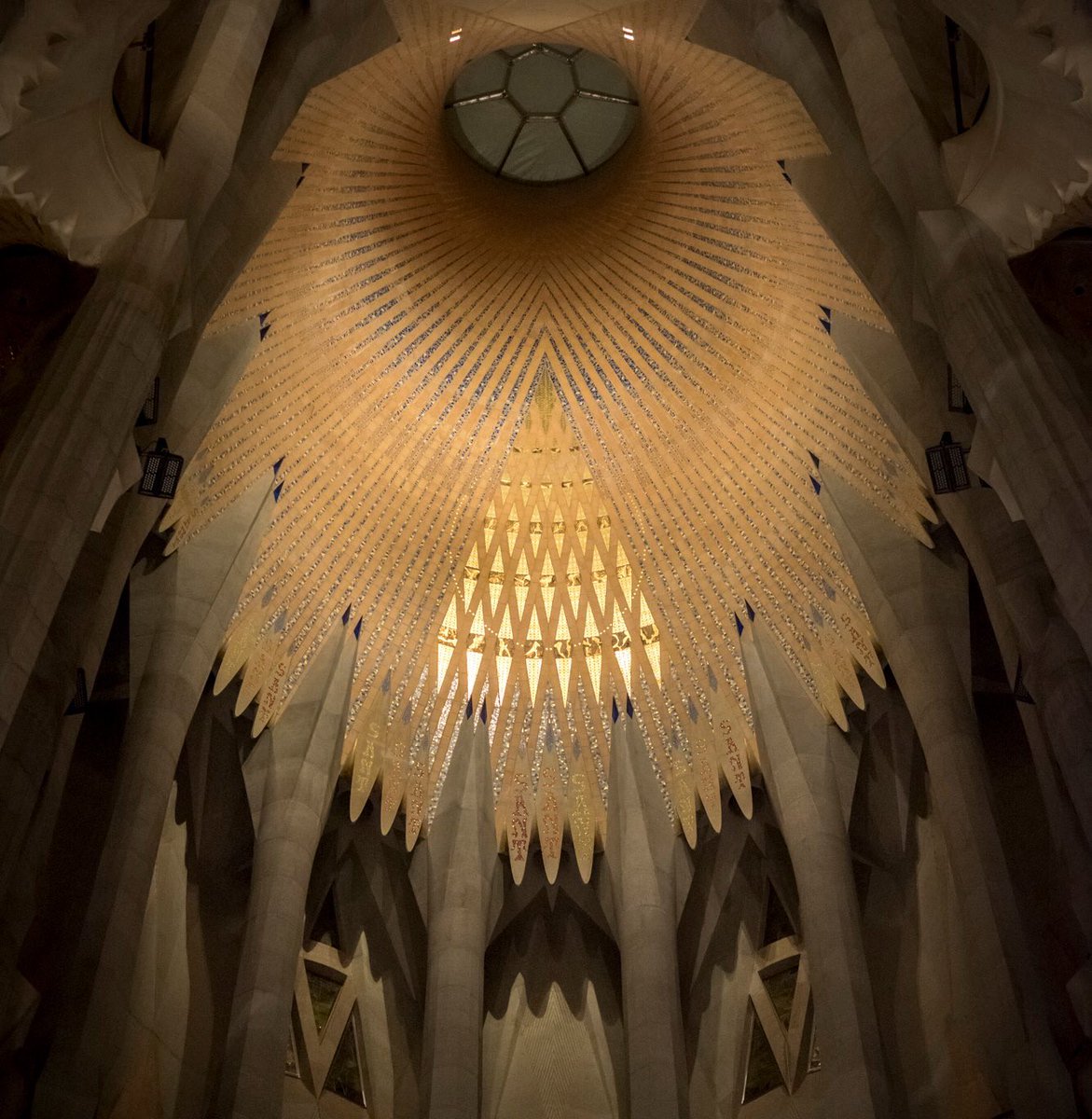
  • De pirámides y autonomías Sobre la geometría política de “el Común” para el año que comienzaGaudí | Sagrada Familia, Barcelona | Hyperboloid, 2025

    Of pyramids and autonomies On the political geometry of “the Commons” for the coming year

    By Carlos Mendoza-Álvarez

    The pyramids above and below

    A few days ago, Cideci-Unitierra was the epicenter of the seedbed Of pyramids, of stories, of love and, of course, heartbreak, dedicated to discussing, in my opinion, the old topic of the libido dominandi Or the desire for power that has resided in the human heart since the dawn of recorded history. Although, in reality, the reflections revolved around the recent history of the Mayan peoples of the Chiapas Highlands, who four decades ago decided to put an end to the power of local strongmen, landowners, and the corrupt mestizo government that imposed its rule upon them in modern times.

    On the occasion of the 32nd anniversary of the Zapatista Army of National Liberation's armed uprising, more than 1,300 participants—first at the Jacinto Canek Caracol, located in a working-class neighborhood in the northern part of the city of Jobel, and later at the Oventik Caracol—gathered to hear trusted figures from the rebel movement speak about the lust for power that opposes "the common good" by constructing pyramids of privilege and domination. The discussions focused, for example, on analyzing with Barbara Zamora The legal strategies of the Mexican state to consolidate private land ownership, dispossessing indigenous peoples of their territories with legal tricks, including the mega-projects of the Fourth Transformation.

    But there was also courageous discussion about the small and large pyramids of power built by left-wing revolutionary movements from the second half of the 20th century to the present to protect their privileges once they had seized political power. The persistence of these power pyramids in modern governments and state administrations seems to be a constant, unfolding on different scales in right-wing and left-wing political models, always at the mercy of the tyrannies in power.

    The self-criticism that the EZLN has shown regarding its own control and decision-making practices is, in the opinion of Raúl Zibechi, This is unprecedented in modern leftist movements. In a fascinating presentation dedicated to tracing the uses and abuses of power in the Latin American left that won political power—especially in Nicaragua, El Salvador, and Bolivia—the Uruguayan sociologist, who has worked alongside guerrilla movements first and social movements later for half a century, posed a crucial question to the Zapatista comrades, as well as to those of us who are attentive to the path they are forging: Are pyramids of power necessary and inevitable? What are their organizational and temporal limits to prevent them from becoming new strongman regimes and tyrannies?

    Between avant-gardes and rearguards

    I was surprised that this think tank didn't emphasize critical thinking, which half a century ago had already warned us about the risks of leftist revolutions becoming new tyrannies. Specifically, decolonial thought has for years been proposing the urgent need to overcome the complex of the vanguards typical of the left in the last century, who lost their way in the whim of speaking on behalf of the masses. corset Marxist class struggle, with its organic intellectuals, especially in its version of proletarian revolution to overthrow the bourgeois state, has been challenged and surpassed by the voices and practices of subaltern groups who no longer need a privileged caste to speak on their behalf. Indigenous peoples, women's collectives, and LGBTQ+ communities, among other subjectivities in resistance, construct their own thought through their ways of life and organization based on mutual care, imbued with ethical, political, and spiritual strength. Today, it is impossible to deny their knowledge and their forms of communal organization, through which they have resisted diverse forms of oppression for centuries.

    It is necessary to dismantle this will to dominate on all fronts where it manifests itself by building pyramids at the top and bottom. It is about going “to the rearguard of social movements,” as Boaventura de Sousa Santos said, to learn from them as experts in the resistance they have faced for centuries, especially Indigenous peoples. Feminisms community like the one from Lorena Cabnal In Guatemala, they emerge as a critical voice against the prominence of academia. extractivist Made by white, urban, and privileged women. These feminisms are linked as an instance of critical reflection alongside women's collectives confronting patriarchy, now opening their networks of care and thought to the mothers of disappeared persons searching for their loved ones, as well as to indigenous women in resistance.

    I was surprised that the "Of Pyramids, of Stories, of Loves and, of course, Heartbreaks" seedbed didn't put at the center these voices that have been clamoring for other ways of for decades. horizontality of power.

    The inevitable shift: from the pyramids of autonomies to the hyperbolic dimension of heteronomies

    A significant change in the perception of the construction of "the common" that Commander Moisés put on the table was that of the generational changes that the Zapatista bases experience in their youth.

    The insurgent-militiaman-Zapatista base triad that shaped the Zapatista movement four decades ago no longer accounts for the other forms of belonging expressed by the generations born in the Caracoles of the autonomous territories. Now, young Zapatista subjectivities are discovering new ways of building resistance and rebellions of righteous anger in the arts, health, and communications, among other fields. Radiologists, theater artists, dentists, and documentary filmmakers are already actively participating as voices of resistance in the autonomous territories, now surrounded not by the federal army but by other ways of life offered by the government and criminal mafias, each in their own way, to win over and buy the attention of Indigenous youth, including the Zapatistas.

    The narrative of the autonomous communities It was of paramount importance in confronting the capitalist hydra thirty-two years ago to underscore the strategy of resistance, creating other processes of caring for life such as eat, learn and live, Following the narrative of Gustavo Esteva's "revolutionary verbs," the Zapatistas are now identifying pyramids at the bottom that require a radical change in narrative.

    Within this same framework, critical thinking is currently moving towards... heteronomies, such as the proposal of Silvana Rabinovich Rooted in the Hebrew philosophy of Emmanuel Levinas in fruitful dialogue with Enrique Dussel, this approach seeks to understand "the commons" in its genesis, from the asymmetry of intersubjective relations—that is, from the difference of each subjectivity and collective. It is not to deny autonomies but to explain their conditions of possibility. It is a commitment to preventing the dominance of power pyramids in order to give way to relations of diversity where [the concept of "commons" persists]. a surplus of the difference that sustains life.

    It is a philosophical concept that has some relation to the scientific theory of baryogenesis that particle physics, along with the Big Bang theory, proposes to explain the asymmetric origin of the universe between matter and antimatter. One of the spatial figures of this primordial cosmological phenomenon would be hyperboloid, like a saddle, where the asymmetry of the expanding universe prevails.

    In its philosophical sense, heteronomy is the ethics of otherness. The face of the other is the source of heteronomous ethics, that is, a way of being that has its own nomos or law in the other, especially, the other vulnerable. This relationship of openness to otherness brings with it a critical principle for power relations where the “autonomous” subject, individual or collective, is decentered and the possibility of “the common” as a source of “the political” is opened thanks to the recognition of that otherness which is a clamor or a caress.

    Christian theology has since anciently quenched its thirst for mystery in a loving divine communion with the divinity. triuna. Community in difference It is the oxymoron (or apparent contradiction) of faith in a child messiah who will defy the pyramids of his time, both those of the Roman Empire and those of the sacrificial religion of the Temple of Jerusalem. Perhaps it was not by chance that Gaudí designed the basilica of the Holy Family In Barcelona, his emblematic work, following the hyperboloid shape of the asymmetry in motion, generating a powerful sacred space that brings us into communion in diversity.

    Perhaps the new Zapatista subjectivities, born of the autonomies, are now opening up to the horizon of affirming the differences that unite us in the common responsibility of creating those other worlds., where other worlds fit. An alternative space with smaller, provisional pyramids, but with hyperbolic worlds that preserve and enhance "the common good" amidst diverse lifestyles. These young people will also create their own spiritualities to symbolize and celebrate the source of "the common good" that fuels the fire of rebellion and righteous anger.

    Many other subjectivities in resistance thus open paths of hope for us from their struggle for "the common" that includes diversity as a route to travel in the year that begins.

    The Highlands of Chiapas, January 3, 2026

    Note: What do you think about the autonomies and heteronomies to be built in our time?

  • Navidad en lo secretoCarlos Mendoza | Tsotsil birthplace | Nachig, Chiapas | 2025

    Secret Christmas

    By Carlos Mendoza-Álvarez

    Christmas Eve was shaping up to be different this year, a stark contrast to the frigid weather of Boston, which gave way to the cool but sunny days of the Chiapas Highlands. Of course, it wasn't just a difference in climate, but above all, a shift in cultural perspective. The chants of the Episcopalian monks from Cambridge, in Massachusetts, which I had enjoyed for several years, now gave way to prayers of forgiveness and reconciliation according to the traditional Tsotsil rite of the Chiapas Highlands, led by one of the catechists or Eucharistic ministers.

    During these days, the Tsotsil communities of the Zinacantán parish adorn their chapels with thousands of flowers. Sunflowers, birds of paradise, roses, and gladioli surround the birth of the Christ Child, especially the bromeliad or flower of Niluyarilo. This species, endemic to the Chiapas Highlands, is now endangered due to its overuse in some religious festivals in the Chiapa de Corzo area. The Nativity scene is adorned with garlands of seeds and fruits, representing an explosion of life from Mother Earth, who gives thanks for the arrival of the Christ Child. Bananas, tangerines, pears, oranges, pomegranates, and lemons hang from bowers as if falling from the sky. Paradoxically, the world above blossoms and rains down delicious fruits to nourish the community gathered around the newborn Messiah.

    Joseph and Mary inhabit that sacred green cave, dressed in traditional Tsotsil clothing. He is wearing the Pok'u'ul or a pink poncho embroidered with flowers, carrying a leather satchel on his shoulder and huaraches on his feet. She, adorned with her il chil k'uk'umal or the feathered huipil, also replete with embroidery of flowers and birds. Life flourishes everywhere in these communities, although they face new problems such as the growing presence of drug trafficking and criminal gangs. The historical strength of these Mayan peoples is community unity, although division now appears within the communities between groups that only want to follow the Bible and others that keep the traditions of their ancestors alive, for example, the processions to sacred hills, like the community of Pinar Salinas, which keeps their ancestral traditions alive. These communities have a dynamic cultural identity that, with each new generation, acquires its own unique characteristics. Such is the case of church choirs that now prefer to play instruments from norteño bands, such as the tololoche for strings and the snare drum for percussion, instead of the drum and chirimía of the ancestral music they keep alive for pilgrimages to the hills of the Chiapas Highlands and, every year, in their pilgrimage to Tepeyac in the Valley of Anáhuac.

    My surprise was great when Petul, the catechist and interpreter, during Christmas Mass, translated my very brief biblical reflections into lengthy descriptions of what I was saying about the story of Mary, the child, and the shepherds in the Gospel of Matthew. I had no choice but to trust his skill as an interpreter, glancing at the congregation to nod whenever I recognized a word in the catechist's voice. My intention was to emphasize the importance of the angels' message to the shepherds in Bethlehem: “Glory to God in the highest, and on earth peace to those on whom his favor rests” (Luke 2:14), which invites us to do something similar. Let us learn to be like the shepherds—I would say to the congregation with emphatic gestures—who became a mirror reflecting God's glory through peace here on earth, so threatened by wars. The sermon concluded by reminding the assembled community that this message was even more urgent today because Bethlehem is in Palestine, besieged by a cruel war waged in the name of God. The community responded with a resounding “Long live the Christ Child born in Palestine!” followed by the traditional reveille, sung with gusto by the choir.

    Is there anything to celebrate on the fringes of the privileged world? In what places does God draw near to us to be a spark of light illuminating the nations? Who can help us see those sparks amidst the long night that humanity is traversing?

    The first thing that comes to mind is that reflection by Hannah Arendt in her book The Human Condition, pointing out that in every human birth there is a promise of a future for all humanity. The thinker drew from the wellspring of her Hebrew tradition to speak of the future as something to be fulfilled through justice, as an interruption of evil in history. But perhaps she overlooked the heart of the promise God made to Abraham and Sarah in its spiritual sense, which consists of the promise being a gift from the Eternal, offering His very being to wounded humanity. It is no coincidence that this promise has a name, the one that Hebrew and Christian faith call "Messiah": the one anointed by the divine Ruah to console the suffering people. A Messiah who is slow in coming, who makes the wait long, and, paradoxically, who is already present "in secret," inviting us to enter that space of redemption "through the narrow gate." What does this metaphor mean? This thought takes on even greater significance when we celebrate the birth of a Galilean child two thousand years ago in Palestine.

    The birth of Mary's son in Bethlehem of Palestine, as recounted by the Synoptic Gospels, is a sign worth following as a guiding light in the darkness. That Hebrew child, son of migrants fleeing Roman power represented by Herod and seeking refuge in Egypt, is the promise fulfilled of messianic times. Those who arrive with birth pangs in the most fragile part of the human condition, exposed to so much violence, both ancient and new. His childhood, recounted in retrospect by the evangelists, will unfold over time, especially during the brief period of barely three years he lived as an itinerant preacher in Galilee. He announced the fulfillment of the new times that we will be able to recognize in the present time when “the blind see, the deaf hear, and good news is announced to the poor” (Luke 7:22).

    We are invited to pass through the narrow gate of the Messiah, which is the gate of humility: “You must become like a child to enter the kingdom of heaven” (Matthew 18:3), said Jesus, the Galilean. The Bible is full of stories from this other perspective, as Anna sang in the book of Samuel: “He raises the poor from the dust and lifts the needy from the ash heap, to make them sit with princes and inherit a throne of glory.” Or also the hymn of Jesus that praises his heavenly Abba because “he has hidden the things of the kingdom from the wise and understanding and revealed them to little children,” the nepioi from the Gospel of Luke in Greek (10:21).

    The arrival of the Messiah subverts the logic of the powerful and builds a new world from the perspective of those who live amidst the ruins. Like in Gaza and the Highlands of Chiapas.

    My first few weeks in Tsotsil lands have allowed me to reconnect with the Ch'ulel, This spiritual force, with its multiple meanings, is what I discovered forty-five years ago in these communities, when we visited as Dominican novices with Friar Raúl Vera. It is the spirit of the Chiapas Highlands, manifest in its hills, forests, and mist, its animals and naguales, that inspires the communities to flourish and prosper. Since then, I have returned at least once a year to the Chiapas Highlands and the canyons of Ocosingo to continue exploring the faith of the Mayan peoples, with their ancestral spirituality nourished by faith in Jesus of Nazareth as Messiah and Son of God.

    Now I am about to explore and enjoy, for an extended period, the faith-based life of these communities, with its new expressions in spirituality and art, as well as its struggle for justice against the necropower groups that have reached even here with their tentacles of corruption, easy money, and the false illusion of happiness based on armed force, drugs, alcohol, and criminal pacts. A few days ago, Angélica, a dear friend from Ecosur, told me that there are several ongoing sociological and anthropological research projects on urban Indigenous children and youth in Jobel. These are supported by initiatives from civil society and churches, such as Melel Xojobal to provide alternatives for education, social life, and recreation to this population highly vulnerable to the criminal networks that take over the northern area of this city, which has the largest indigenous population in Mexico.

    Celebrating Christmas in this land is a call to return to the margins of my motherland to relearn the language of the little ones of the Kingdom. In the heart of my longings I seek to return to the sources of faith, that which I inherited from my ancestors of blood and spirit in the order of preachers.

    A quiet Christmas. A time of grace and truth thanks to the child messiah, adorned with flowers and song, tears and whispers of life, who does not surrender to evil in this remote region in the mountains of southeastern Mexico. Communities that, in secret, transform adversity into gifts of life.

    Jobel, December 27, 2025

    Note: Comment below what Christmas means to you.

  • Alégrate, humanidad desoladaAntún Kojtom | Guardian of Mirrors | Tenejapa, Chiapas | 2021

    Rejoice, desolate humanity

    By Carlos Mendoza Álvarez

    In the era of the Monroe Doctrine 2.0, launched last week for the “Western Hemisphere” by the global despot as National Security Strategy From the United States, it seems foolish to talk about joy.

    Some analysts, such as Michel Ignatieff, predict the end of the West along with the the civilizational erasure of Europe. Today, something is at stake. global geopolitical strategy With areas of power divided among the three dominant military and economic powers—the United States, China, and Russia—each brazenly administering a region of the planet for its own benefit, the military intelligence apparatuses of the United States and the other powers are already in operation to control entire populations and their territories through a vast military-digital system, subjugating individuals and nations that choose to oppose the might of the Maga empire and its counterparts.

    The creation of Western Hemisphere Command The deployment of the U.S. military, announced by the Trump administration this week, is part of a geopolitical strategy that has already declared war on mass immigration within its borders. It is also worth highlighting the war already underway against drug cartels, which are portrayed as terrorist groups threatening U.S. security, regardless of the civilian "collateral damage" that this new colonialism will cause, as the Israeli state has already demonstrated in Palestine before the astonished eyes of the world. The strategy of constantly threatening new tariffs that Trump has used in his first year in office has been another attempt to promote a new mode of deglobalization which seeks to subordinate the economies of its "backyard" now called the "western hemisphere" to the interests of the transnational corporations that sustain its wealth.

    The nations that for centuries were swallowed up in the Western Hemisphere during early modernity will now be trapped in the web of the voracious monster's hegemonic power. But that giant has feet of clay and one day it will fall. Until then, the destruction it leaves in its wake will be a cause of desolation on a planetary scale. Such a scenario is what Nelson Maldonado-Torres calls the Great Catastrophe —a concept I develop in a collective book on political philosophy and theology that I am currently preparing for an American publisher— seems unrelated to a reflection on the joy What could humanity expect in this hour of global misfortune? But it is precisely the only place where it is possible to speak of a meaning that transcends the apparent immeasurability of the evil that stalks us.

    Tomorrow, Christian communities will celebrate the third Sunday of Advent, known as Gaudete. The name comes from a poem by an anonymous disciple of the prophet Isaiah in Babylon, announcing to Jerusalem, the desolate city, that the time of its liberation after the exile had arrived: Gaudete Ierusalem,Rejoice, Jerusalem! (Isaiah 66:10). Like echoes of that ancient voice of resistance, the same song could also resonate in today's exiles, with new melodies according to the genius of each era and culture, as in the case of the Palestinian people, whom we will evoke at the end of these lines.

    Christianity discovered centuries later the radical motive and scope of the joy of the messianic proclamation, extending God's closeness not only to the desolate Hebrew city, but to all. messianic communities scattered throughout the Roman diaspora of that time, who have now entered the new era thanks to faith in the redeeming God, according to the words of the apostle Paul (Philippians 4:4-7):

    Rejoice in the Lord always. I will say it again: Rejoice!

    Let your kindness be evident to all.

    The Lord is near.

    Don't worry about anything […].

    And the peace of God, which surpasses all understanding,

    He will guard their hearts and their thoughts in the Messiah Jesus.

    It is about God's consolation for the little ones of the Kingdom of Heaven. They live in the interrupted time Precisely at the heart of the catastrophe. A way of existing that the dispossessed of the earth experience in their lives in a way messianic, That is, as a power to untie the knots of hatred and resentment in their bodies and territories. It is possible to perceive that murmur of a peaceful present amidst desolation in the Gregorian chant antiphon for this third Sunday of Advent, which is known precisely as Rejoice in the Lord.

    But let's turn to our own time. Who can proclaim such hope today amidst global desolation? Paradoxically, it is the victims themselves who possess that hope. power. Something that executioners will never have because their hearts have been paralyzed and are incapable of opening to joy until they reach the depths of their own desolation and annihilation. This is how Daniela Rea and Pablo Ferri describe it in the book The Troop: Why Does a Soldier Kill? by interviewing hitmen in Mexico who have come to terms with their crimes. In a collective way, the Houses of Memory which promoted in recent years in Colombia the Truth Commission They bear witness to that complex process of moving from violence to peace, based on the strength of the victims summoning the perpetrators, in order to open paths to transitional justice in a country that suffered more than thirty years of war, with four hundred and fifty thousand dead and almost eight hundred thousand internally displaced persons.

    In such experiences of transforming systemic violence from the margins of society, thanks to the persistence of individuals and communities of survivors, it is possible to receive the good news of Sunday. Gaudete from Christian liturgy as a call to learn to live an ethic of care and a summons to cultivate a spirituality of mutual accompaniment among survivors, both processes enriching each other to pave the way for fighting hope.

    Therefore, there is a change in tone in the hopelessness. From the purple of Advent, which symbolizes desolation, we move today to pink, the luminosity of consolation that emerges from the shadows like a small but real spark, illuminating everyone, like the painting by the Mayan artist Antún Kojtom that accompanies this post. other tonality, typical of messianic times, arises thanks to the victims who establish the sorry, That is, the overabundance of the gift. A realistic hope that does not mean blindness to evil and its perpetrators, nor a renunciation of accountability and justice, but rather a reinvention of violent history based on the overabundance of love that recreates the world.

    A new way of existing which is no longer just desolation. Nor mere resistance. But the creation of something new, Amid the ruins, from the scars left by violence, but which are transfigured as a glimmer of hope and joy: “After two hundred and fifty years of the occupation of the white settlers we are still here and that is why there is hope,” said smiling Cecelia Firethunder, shaman and historian of the Lakota people, at the past Re-existe 2025 meeting in Guadalajara.

    It is a joy that also arises as rebellious imagination from the rubble turned into a home by the Sumud or the creative resistance experienced by the Palestinian people who never tire of waiting, as the Tunisian artist sings. Emel Mathlouthi walking through the streets of an occupied Palestine:

    Broken hope

    deep

    furious

    friendly

    deceptive

    that penetrates arduous times

    eternal

    happy

    unwavering

    new

    A hope that fills my life and renews it.

    Thanks to the acts of resistance of the victims to the violence of today's global power, we can say with profound joy, without triumphalism, and with great courage: Rejoice, Gaza! Rejoice, desolate humanity! For the day of our liberation is near.

    Zinacantán, December 13, 2025

    Note: I look forward to reading your comments about possible hope today in the section below this post.

English