By Carlos Mendoza-Álvarez
.
In 1511, Friar Antón de Montesinos, along with a handful of Dominican friars who had recently landed in Quisqueya, the Taíno word for the mother of all lands, uttered a cry that still resonates in the Western conscience: “Are these not men?” He was referring to the original inhabitants of that Caribbean island—later known as Hispaniola, where the modern states of Haiti and the Dominican Republic were established—who had been subjected by Spanish soldiers in the name of the Crowns of Castile and Aragon to harsh servitude and slavery. In the sermon for the Fourth Sunday of Advent on December 21 of that year, with the central figure of John the Baptist announcing the urgency of preparing the way for the coming Messiah, Friar Antón became a prophetic voice to counterbalance the nascent coloniality of power. According to this concept of the Peruvian Aníbal Quijano (Coloniality of power, Eurocentrism and Latin AmericaIt is possible to explain from our time the logic of power that led Europe to dominate the modern world, from the Renaissance to the Enlightenment, with its later avatars of American and Russian imperialism that we know today.
More than five centuries have passed. Now, this enterprise of coloniality is acquiring global dimensions in our time with the extractive capitalist model that is expanding across the world, like a many-headed hydra, according to the Zapatista narrative that emerged in 1994 in southeastern Mexico. Three decades later, new ways of naming the diverse resistances to this lethal force that dominates the world will be heard in the seedbed « Of pyramids, of stories, of love and, of course, heartbreak » which will take place at CIDECI-Unitierra at the end of December.
The question surrounding humanity may seem rhetorical, but it becomes more urgent when we consider the landscape of exclusion based on class, gender, ethnicity, and cultural identity that entire nations suffer today. The collapse of the international order we knew in modern times leaves us exposed. The foundations of that shared world were laid by the School of Salamanca with the Ius Gentium or the law of nations in the 16th century, with Friar Francisco de Vitoria at the forefront in dialogue with Friar Bartolomé de Las Casas from Chiapas and Guatemala, as analyzed by Enrique Dussel. It was one of the cornerstones of the model of Christendom created to justify the expansion of the earthly city in the image of the City of God under the tutelage of the Spanish Crown. Subsequently, this interpretation was transformed into an internationalist model, beginning with the Enlightenment, with a rationalist foundation of a contractual nature, making international law a pact between sovereign states, without an ultimate foundation in a metaphysical order that had its sustenance in God (Ancient and contemporary law of nations).
.
∂
.
Beyond the theoretical discussions about the transition from the Salamanca model to the Germanic model of international law, what is important to highlight here are the internal contradictions of the modern social contract that is collapsing before our eyes. Today we are witnessing the return of authoritarian regimes based on religious fundamentalisms with messianic pretensions (The United States is a messianic state), as is the case with US imperialism and Israeli Zionism. In the name of what ethical-political principle or source do today's powers justify their mechanisms of domination, neocolonialism, and the elimination of entire peoples? What limits are there to the power deployed by this unbridled new geopolitical “order”?
But it is necessary to go beyond the catastrophic scenario described so far to recognize the role of peoples and the spiritual traditions of humanity in strengthening communal life among nations. How can we understand and promote the autonomy of individuals, peoples, and territories today in order to preserve what is human How can we cope with the threats of the system that already dominates us, encompassing both traditional and digital territories?
In this context, Montesinos' sermon acquires remarkable relevance since it expands the question of mutual recognition of the human and the creature to all the victims of systemic violence that is leading humanity and the entire planet to the precipice (International treaties on biodiversity (SCJN)Are the nations and species that inhabit the face of the Earth not creatures with rights? In the post-human world, as it is called today, it is essential to develop a critical way of thinking that affirms the dignity of every creature in the cosmos in its profound dignity linked to the loving mystery of reality.
It is no longer just about reaffirming the historical strength of indigenous peoples confronting the Eurocentric colonialism of five hundred years ago, but about the subaltern peoples who are disposable in the planetary war economy of the Trump Era, as he comments Leonardo Boff. Latin America and the Caribbean, as evidenced by the US invasion of international waters in the Caribbean Sea, are now a battleground for the war waged by the Southern Command of that neighboring country. Unfortunately, we will soon witness the full extent of this new model of imperial interventionism through the selective occupation of territories, the control of local governments aligned with the interests of the necrostate, and surgical strikes against the “enemies” of US national security.
Nor is the cry for the dignity of humanity enough if it is dissociated from the cry of the Earth, “the poorest of the poor,” as Leonardo Boff also called it. That “escalation to extremes” conceived by Girard in 2007 based on the phenomenon of terrorism seems like child’s play today in the face of current wars whose objective is the blatant domination of entire populations in order to control their territories as objects of predatory enrichment of ecosystems.
.
∂
.
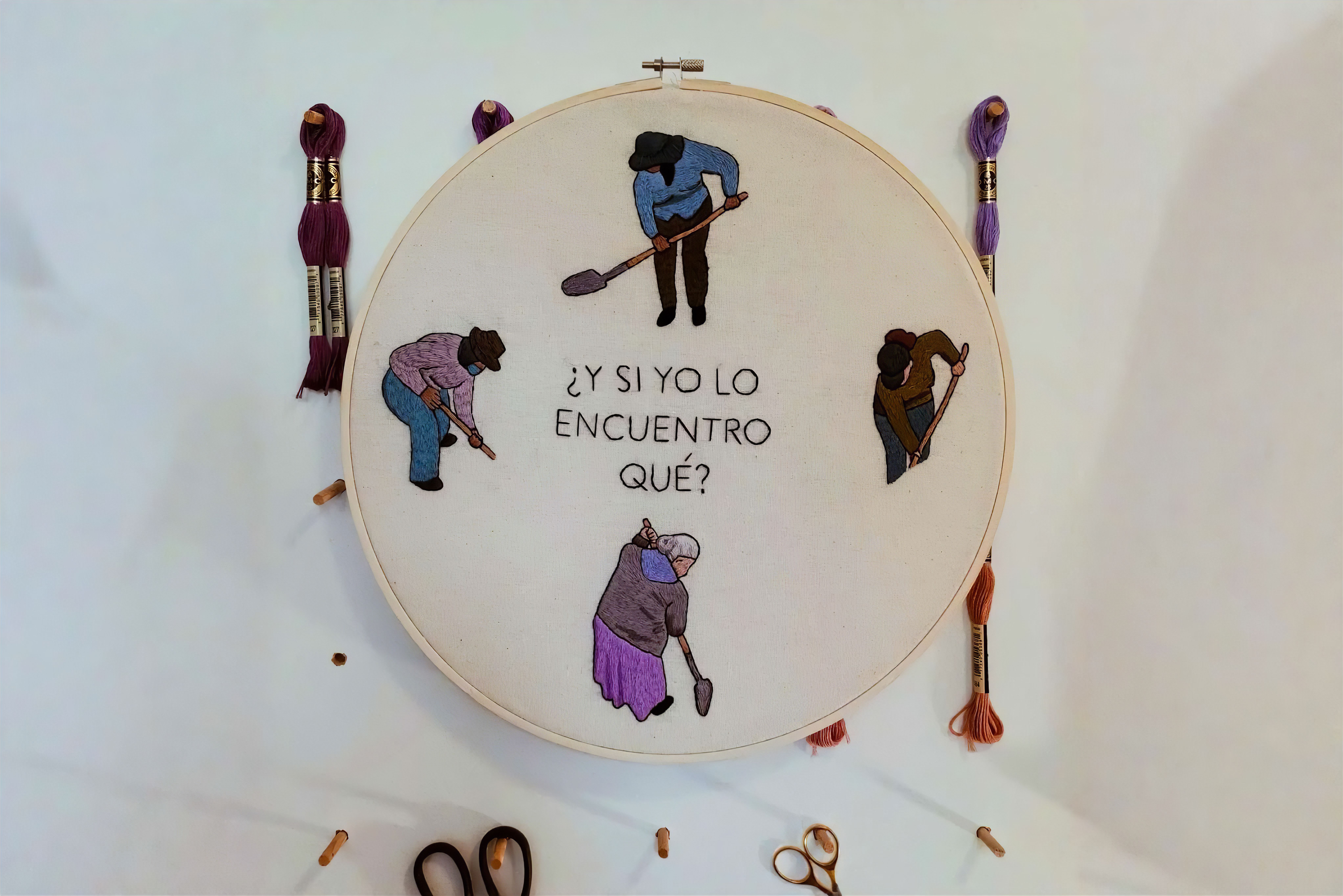
For this reason, it is more urgent than ever to recognize the new Montesinos who, with their outcry, appeal to the common humanity that unites us as individuals and peoples, with its mystical source that gives strength and opens horizons of life for all, in order to reverse those processes of necropower that claim more and more victims every day.
But today it is urgent to move beyond the anthropocentric paradigm, transitioning towards an "ecocentric" one (Anthropocentrism and ecocentrism in the jurisprudence of the Inter-American Court of Human Rights) that promotes the dignity of Mother Earth, who is also subjugated by the dominant model of extractive society and economy. «Rethinking as a human species,» according to the proposal of political ecology promoted by Víctor Toledo and a significant network of scientists worldwide (Political ecology is here to stay) is a key step to regain our course as humanity inhabiting the Common Home that has been given to us by the Giver of Life.
The green martyrs, the searching mothers, and the indigenous peoples in rebellion are some of the voices that have sounded the alarm about the devastating situation that has already reached us. Listening to their denunciations is a beginning of ethical and mystical conversion, but it is not enough. We must join those processes of subjective, territorial, and spiritual autonomy carried out by those who have said enough to necropower.
.
∂
.
Perhaps the most inspiring way for believing communities to celebrate the approaching Christmas is by honoring the memory of Montesinos and all the prophetic voices of yesterday and today.
Preparing the way for the arrival of the messiah is not, after all, an act of Christmas folklore, but a change of course in our ways of life with ethical-political, practical and mystical decisions, such as recycling garbage, reforesting forests, and including the vulnerable at our tables as gestures of celebrating life amidst the ruins of the present world.
As I mentioned some years ago (Messianic time and narrative for a theological interpretation of the narrative practices of victims) it is urgent and a priority that we pave the way to messianic times through our acts of resistance to necropower, promoting communities where we learn to spell anew, with imagination and vigor, the humanity and creatureliness that unites us, all drinking from the inexhaustible source of Life.
.
Jobel, December 20, 2025
.
Note: I would like to read your comments in the final section of this page.