Tag: Bartolomé de Las Casas

  • El clamor de lo (post) humanoAnonymous | Watercolor of the Montesinos monument | Dominican Republic, 2020

    The cry of the (post)human

    By Carlos Mendoza-Álvarez

    .

    In 1511, Friar Antón de Montesinos, along with a handful of Dominican friars who had recently landed in Quisqueya, the Taíno word for the mother of all lands, uttered a cry that still resonates in the Western conscience: “Are these not men?” He was referring to the original inhabitants of that Caribbean island—later known as Hispaniola, where the modern states of Haiti and the Dominican Republic were established—who had been subjected by Spanish soldiers in the name of the Crowns of Castile and Aragon to harsh servitude and slavery. In the sermon for the Fourth Sunday of Advent on December 21 of that year, with the central figure of John the Baptist announcing the urgency of preparing the way for the coming Messiah, Friar Antón became a prophetic voice to counterbalance the nascent coloniality of power. According to this concept of the Peruvian Aníbal Quijano (Coloniality of power, Eurocentrism and Latin AmericaIt is possible to explain from our time the logic of power that led Europe to dominate the modern world, from the Renaissance to the Enlightenment, with its later avatars of American and Russian imperialism that we know today.

    More than five centuries have passed. Now, this enterprise of coloniality is acquiring global dimensions in our time with the extractive capitalist model that is expanding across the world, like a many-headed hydra, according to the Zapatista narrative that emerged in 1994 in southeastern Mexico. Three decades later, new ways of naming the diverse resistances to this lethal force that dominates the world will be heard in the seedbed « Of pyramids, of stories, of love and, of course, heartbreak » which will take place at CIDECI-Unitierra at the end of December.

    The question surrounding humanity may seem rhetorical, but it becomes more urgent when we consider the landscape of exclusion based on class, gender, ethnicity, and cultural identity that entire nations suffer today. The collapse of the international order we knew in modern times leaves us exposed. The foundations of that shared world were laid by the School of Salamanca with the Ius Gentium or the law of nations in the 16th century, with Friar Francisco de Vitoria at the forefront in dialogue with Friar Bartolomé de Las Casas from Chiapas and Guatemala, as analyzed by Enrique Dussel. It was one of the cornerstones of the model of Christendom created to justify the expansion of the earthly city in the image of the City of God under the tutelage of the Spanish Crown. Subsequently, this interpretation was transformed into an internationalist model, beginning with the Enlightenment, with a rationalist foundation of a contractual nature, making international law a pact between sovereign states, without an ultimate foundation in a metaphysical order that had its sustenance in God (Ancient and contemporary law of nations).

    .

    .

    Beyond the theoretical discussions about the transition from the Salamanca model to the Germanic model of international law, what is important to highlight here are the internal contradictions of the modern social contract that is collapsing before our eyes. Today we are witnessing the return of authoritarian regimes based on religious fundamentalisms with messianic pretensions (The United States is a messianic state), as is the case with US imperialism and Israeli Zionism. In the name of what ethical-political principle or source do today's powers justify their mechanisms of domination, neocolonialism, and the elimination of entire peoples? What limits are there to the power deployed by this unbridled new geopolitical “order”?

    But it is necessary to go beyond the catastrophic scenario described so far to recognize the role of peoples and the spiritual traditions of humanity in strengthening communal life among nations. How can we understand and promote the autonomy of individuals, peoples, and territories today in order to preserve what is human How can we cope with the threats of the system that already dominates us, encompassing both traditional and digital territories?

    In this context, Montesinos' sermon acquires remarkable relevance since it expands the question of mutual recognition of the human and the creature to all the victims of systemic violence that is leading humanity and the entire planet to the precipice (International treaties on biodiversity (SCJN)Are the nations and species that inhabit the face of the Earth not creatures with rights? In the post-human world, as it is called today, it is essential to develop a critical way of thinking that affirms the dignity of every creature in the cosmos in its profound dignity linked to the loving mystery of reality.

    It is no longer just about reaffirming the historical strength of indigenous peoples confronting the Eurocentric colonialism of five hundred years ago, but about the subaltern peoples who are disposable in the planetary war economy of the Trump Era, as he comments Leonardo Boff. Latin America and the Caribbean, as evidenced by the US invasion of international waters in the Caribbean Sea, are now a battleground for the war waged by the Southern Command of that neighboring country. Unfortunately, we will soon witness the full extent of this new model of imperial interventionism through the selective occupation of territories, the control of local governments aligned with the interests of the necrostate, and surgical strikes against the “enemies” of US national security.

    Nor is the cry for the dignity of humanity enough if it is dissociated from the cry of the Earth, “the poorest of the poor,” as Leonardo Boff also called it. That “escalation to extremes” conceived by Girard in 2007 based on the phenomenon of terrorism seems like child’s play today in the face of current wars whose objective is the blatant domination of entire populations in order to control their territories as objects of predatory enrichment of ecosystems.

    .

    .

    For this reason, it is more urgent than ever to recognize the new Montesinos who, with their outcry, appeal to the common humanity that unites us as individuals and peoples, with its mystical source that gives strength and opens horizons of life for all, in order to reverse those processes of necropower that claim more and more victims every day.

    But today it is urgent to move beyond the anthropocentric paradigm, transitioning towards an "ecocentric" one (Anthropocentrism and ecocentrism in the jurisprudence of the Inter-American Court of Human Rights) that promotes the dignity of Mother Earth, who is also subjugated by the dominant model of extractive society and economy. «Rethinking as a human species,» according to the proposal of political ecology promoted by Víctor Toledo and a significant network of scientists worldwide (Political ecology is here to stay) is a key step to regain our course as humanity inhabiting the Common Home that has been given to us by the Giver of Life.

    The green martyrs, the searching mothers, and the indigenous peoples in rebellion are some of the voices that have sounded the alarm about the devastating situation that has already reached us. Listening to their denunciations is a beginning of ethical and mystical conversion, but it is not enough. We must join those processes of subjective, territorial, and spiritual autonomy carried out by those who have said enough to necropower.

    .

    .

    Perhaps the most inspiring way for believing communities to celebrate the approaching Christmas is by honoring the memory of Montesinos and all the prophetic voices of yesterday and today.

    Preparing the way for the arrival of the messiah is not, after all, an act of Christmas folklore, but a change of course in our ways of life with ethical-political, practical and mystical decisions, such as recycling garbage, reforesting forests, and including the vulnerable at our tables as gestures of celebrating life amidst the ruins of the present world.

    As I mentioned some years ago (Messianic time and narrative for a theological interpretation of the narrative practices of victims) it is urgent and a priority that we pave the way to messianic times through our acts of resistance to necropower, promoting communities where we learn to spell anew, with imagination and vigor, the humanity and creatureliness that unites us, all drinking from the inexhaustible source of Life.

    .

    Jobel, December 20, 2025

    .

    Note: I would like to read your comments in the final section of this page.
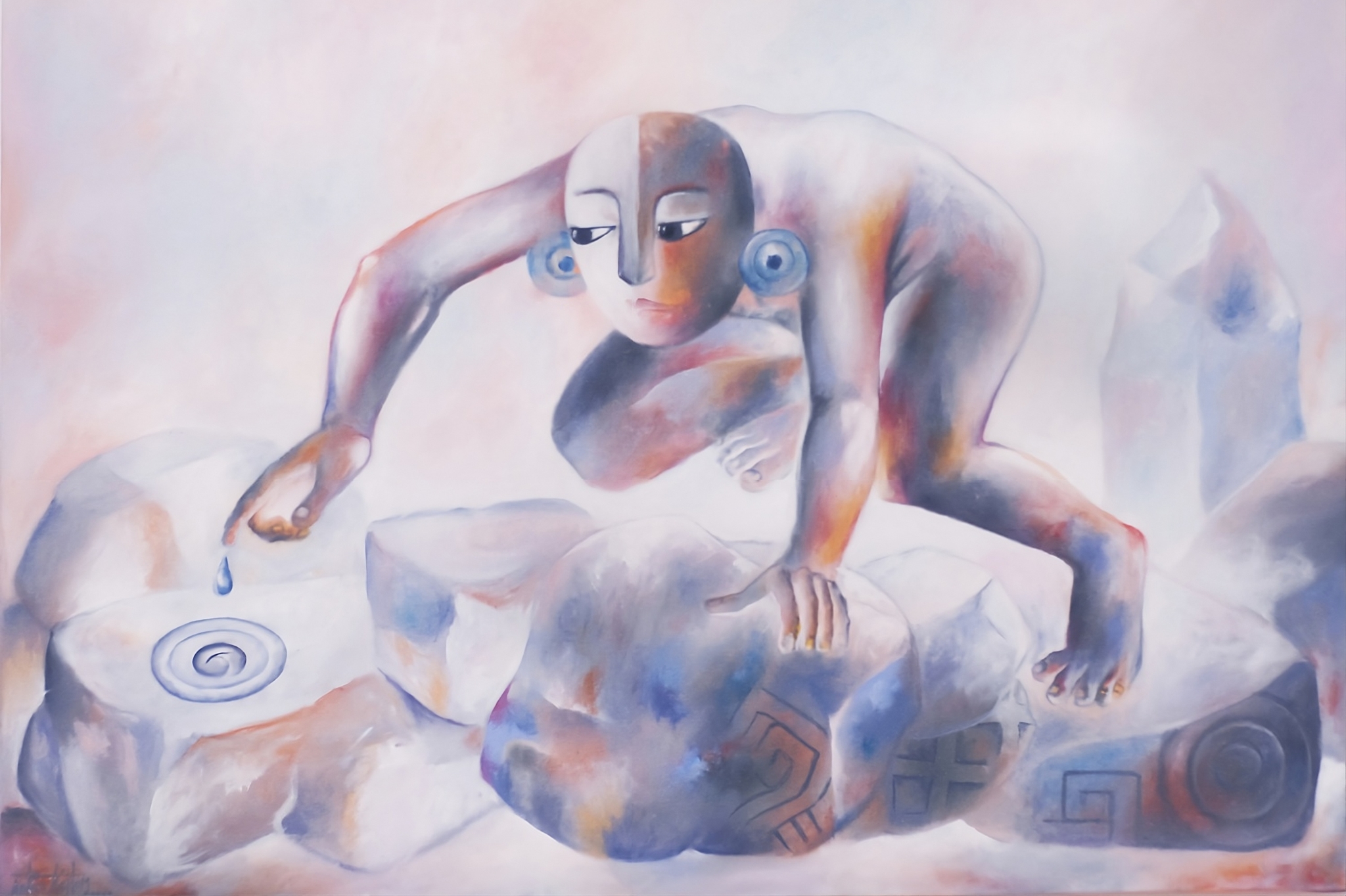
  • La llamada a la itinerancia De Boston a la Condesa y JovelAntún Kojtom | Drop of water in the navel of the earth | Tenejapa, Chiapas | 2020

    The Call to Itinerancy From Boston to La Condesa and Jovel

    By Carlos Mendoza-Álvarez

    .

    It has been seven months since I left Boston, following the unfortunate episode of academic censorship and the growing risk of criminalizing university research in the Trump era.

    Upon returning to my homeland, I had the good fortune to stay for several months at the Dominican house located in a hipster neighborhood of Mexico City. The liturgical atmosphere of Holy Week deepened the process of mourning and resurrection that such a loss entailed, creating a pause to allow my emotions to settle and prepare me for the next stage of life. The Easter Triduum helped me feel how divine Life flows in the depths of my heart. This perception grew in the following months, thanks to the company of extraordinary people and communities I was able to visit during the summer in various parts of the world as part of my theological service.

    Extraordinary scenes from that journey come to mind, like the gaze of a refugee pleading for empathy, or the sound of the waves crashing against the South African cliffs. I carry in my heart the image of the modest altar—true in its prayerful simplicity and closeness to others—of the Jesuit community in Mapuche territory. The conversations in Turkey with a handful of friars and sisters of the Dominican Order still resonate in my ears, as we searched for signs where today we might recognize the messianic times that are slow in coming. Each morning, the rituals of women healers from Malaysia, Dakota, India, and Kenya, gathered in Guadalajara, rise powerfully from the depths of my heart, with scenes that remain etched in the documentary Re-Existing 2025, lingering like flashes in the middle of the night.

    During several months spent in Mexico City, I was able to glimpse the changes taking place due to gentrification in an urban neighborhood, brought about by mobile populations—in this case, the “digital nomads” from the Global North who displace impoverished inhabitants in the South, while simultaneously enriching the local culture with new flavors and knowledge. In religious terms, as I mentioned earlier, I became aware of the fragmentation of the world of human interiority, which some call spirituality, but which designates a wellspring of transcendence that flows in every person as it evokes Lanza del Vasto in his poetry A Holy Source often desiccated by the vulgar marketing of religion. I was surprised to find in the temples a revival of popular Catholicism of devotions among young people who cling to piety without much interest in the prophetic spirit of Christianity of the conciliar renewal of more than half a century ago that placed justice linked to the experience of faith at the center of Latin American Christianity.

    .

    .

    And finally, after a wait filled with days and nights of uncertainty, I was able to travel to Chiapas to put down roots and build connections in those Mayan lands in the years to come. I was looking for a “place” to inhabit, or, as the beloved master of the Dominican order, Friar Timothy, now Cardinal Radcliffe, said in his book The fountain of hope, an “ecological niche where we can flourish”, amidst the diversity of flora and fauna of the human condition, another way of describing our similarities and oddities when it comes to living in community.

    Jovel, either land of wetlands and pastures, the valley where the colonial city of San Cristóbal de Las Casas was established, as the indigenous peoples called it, had received the Dominican novices in 1980 when we visited these lands, accompanied by our teacher, Friar Raúl Vera, who even then showed a pastoral zeal for the peasants in Amecameca and for the mayan villages from Chiapas and Guatemala. Since then, a little piece of my heart has remained here, revived by the annual visits to San Cristóbal and Ocosingo with my university classmates from Servandus Missions of the University Parish animated by the Dominicans in Mexico City.

    My several-month stay in Ocosingo in 1994, following the EZLN uprising, is an experience that has left an indelible mark on my connection to the indigenous liberation movement and the mystique that sustains it. This insurrectionary movement had found fertile ground in the work of jTatik Samuel Ruiz, the Wanderer, accompanying the indigenous and mestizo peoples of the Diocese of San Cristóbal de Las Casas since 1961. His conversion to the poor, inspired by the The Pact of the Catacombs. During the Second Vatican Council, his commitment was further solidified by his active participation in the Latin American episcopal conferences in Medellín, Puebla, Santo Domingo, and Aparecida. The Indigenous Congress of 1974 —where the Dominican friar Enrique Ruiz Maldonado actively collaborated on the occasion of the fourth centenary of the death of Friar Bartolomé de Las Casas, the first diocesan bishop of San Cristóbal— a watershed moment would be marked in the adoption of the indigenous cause as the backbone of the preferential option for the poor made by the diocese located in the Highlands of Chiapas and the Cañadas of the Lacandon Jungle. As a corollary to this path, the Third Diocesan Synod which concluded in 1999, as one of its participants, Sister Celia Rojas recounts, would ratify four decades of opting for the poor and promoting an Indian Mayan theology as the most complete expression of the inculturation of the Gospel according to the conciliar spirit.

    Returning to these lands permanently, forty-five years later, now means being prepared to face new challenges that were unforeseen in the last century. One of these is perhaps the situation of migrant Indigenous children and youth in symbiosis with urban culture and digital media, which is generating new Indigenous subjectivities caught between tradition and modernity. Thanks to dear friends like Geovanni Nájera of Semillero 259 Yara and Sebsor of Psicolexia,For example, I'm beginning to enjoy and understand a little more those other expressions of contemporary indigenous urban tribes. Through urban gardens, hip hop and rap, street art and graffiti, among other aesthetic and social expressions, the initiatives they promote are the seeds of something new.

    .

    .

    An immersion bath in the Tsotsil ecclesial community took place these days in the Parish of Saint Lawrence the Martyr, Founded by Dominican friars in 1545, this community, nearly five centuries later, boasts forty-five villages with sixty churches and chapels, a testament to the vitality of the faithful in these highlands of Chiapas. Here, catechists, extraordinary ministers of Holy Communion, and traditional authorities coexist with youth choirs and women's groups, accompanied by Dominican friars and sisters. This presence was renewed in 1961 when the Dominicans returned to this community after a long hiatus following the Reform Laws of 1857, the Revolution, and its aftermath in the first half of the 20th century, as vividly recounted by Friar Pablo Iribarren..

    A couple of days were enough to immerse myself in another world, with its vibrant symbolic and linguistic tradition. Although I had already glimpsed it as a visitor, a new horizon now opened before me, a chance to learn how to be present as part of the community of friars accompanying these communities. I felt it was a call to continue my journey in diverse ways. It is about embarking on a new path alongside these peoples, with their own unique character, their intergenerational tensions, their expressions of Catholic religious tradition, yet also ancestral, all of it shaped by the tensions between capitalist modernity and visions of other ways of life, governance, and spirituality.

    A major challenge for me will be learning the Tsotsil language and navigating amidst the powerful traditional symbols of the Zinacanteca culture, while listening with empathy to those generations of young people who are transforming the tradition of their ancestors with new ways of life.

    Another significant challenge will be the cultural life in the city of San Cristóbal, cosmopolitan and provincial at the same time, with centers of critical thought of international stature such as the Colegio de la Frontera Sur, the Universidad de la Tierra-Cideci, the Fray Bartolomé de Las Casas Chair in the Faculty of Law of the Autonomous University of Chiapas, and several centers of culture and arts.

    Some novel ideas are emerging, like sparks, to begin a dialogue with the cultures present in Jovel and Zinacantán. The traditional radio program run by the friars in recent decades reached a specific, more religiously oriented audience. But an online portal with podcasts and video clips featuring content on the mysticism of religions, their similarities and differences, or on political theology in today's world that abuses religion to justify genocide, would reach a younger and more diverse segment of the population.

    For now, the content is yet to be defined within the community to achieve the right tone and approach for a theology that is grounded in the street and born from the street,developed through dialogue with people both inside and outside of churches who are willing to discuss their deepest concerns and intuitions regarding the meaning of life, social justice, beauty in so many traditions, cultural pluralism, and the survival of our common home. I hope to soon share some of the first steps on this new path here.

    What will give strength to these dreams is undoubtedly the vitality of today's Mayan communities, in their interaction with other urban and digital cultures. Therein lies the fertile ground for them to flourish in these lands.

    The calls of itinerancy will always be uncertain, but from here I travel them confident in the knowledge of ancestral and modern peoples who will be a light on the path.

    .

    Jovel, December 6, 2025

    .

    Note: I would like to read your comments in the final section of this page.

English