
By Carlos Mendoza-Álvarez
The pyramids above and below
A few days ago, Cideci-Unitierra was the epicenter of the seedbed Of pyramids, of stories, of love and, of course, heartbreak, dedicated to discussing, in my opinion, the old topic of the libido dominandi Or the desire for power that has resided in the human heart since the dawn of recorded history. Although, in reality, the reflections revolved around the recent history of the Mayan peoples of the Chiapas Highlands, who four decades ago decided to put an end to the power of local strongmen, landowners, and the corrupt mestizo government that imposed its rule upon them in modern times.
On the occasion of the 32nd anniversary of the Zapatista Army of National Liberation's armed uprising, more than 1,300 participants—first at the Jacinto Canek Caracol, located in a working-class neighborhood in the northern part of the city of Jobel, and later at the Oventik Caracol—gathered to hear trusted figures from the rebel movement speak about the lust for power that opposes "the common good" by constructing pyramids of privilege and domination. The discussions focused, for example, on analyzing with Barbara Zamora The legal strategies of the Mexican state to consolidate private land ownership, dispossessing indigenous peoples of their territories with legal tricks, including the mega-projects of the Fourth Transformation.
But there was also courageous discussion about the small and large pyramids of power built by left-wing revolutionary movements from the second half of the 20th century to the present to protect their privileges once they had seized political power. The persistence of these power pyramids in modern governments and state administrations seems to be a constant, unfolding on different scales in right-wing and left-wing political models, always at the mercy of the tyrannies in power.
The self-criticism that the EZLN has shown regarding its own control and decision-making practices is, in the opinion of Raúl Zibechi, This is unprecedented in modern leftist movements. In a fascinating presentation dedicated to tracing the uses and abuses of power in the Latin American left that won political power—especially in Nicaragua, El Salvador, and Bolivia—the Uruguayan sociologist, who has worked alongside guerrilla movements first and social movements later for half a century, posed a crucial question to the Zapatista comrades, as well as to those of us who are attentive to the path they are forging: Are pyramids of power necessary and inevitable? What are their organizational and temporal limits to prevent them from becoming new strongman regimes and tyrannies?
Between avant-gardes and rearguards
I was surprised that this think tank didn't emphasize critical thinking, which half a century ago had already warned us about the risks of leftist revolutions becoming new tyrannies. Specifically, decolonial thought has for years been proposing the urgent need to overcome the complex of the vanguards typical of the left in the last century, who lost their way in the whim of speaking on behalf of the masses. corset Marxist class struggle, with its organic intellectuals, especially in its version of proletarian revolution to overthrow the bourgeois state, has been challenged and surpassed by the voices and practices of subaltern groups who no longer need a privileged caste to speak on their behalf. Indigenous peoples, women's collectives, and LGBTQ+ communities, among other subjectivities in resistance, construct their own thought through their ways of life and organization based on mutual care, imbued with ethical, political, and spiritual strength. Today, it is impossible to deny their knowledge and their forms of communal organization, through which they have resisted diverse forms of oppression for centuries.
It is necessary to dismantle this will to dominate on all fronts where it manifests itself by building pyramids at the top and bottom. It is about going “to the rearguard of social movements,” as Boaventura de Sousa Santos said, to learn from them as experts in the resistance they have faced for centuries, especially Indigenous peoples. Feminisms community like the one from Lorena Cabnal In Guatemala, they emerge as a critical voice against the prominence of academia. extractivist Made by white, urban, and privileged women. These feminisms are linked as an instance of critical reflection alongside women's collectives confronting patriarchy, now opening their networks of care and thought to the mothers of disappeared persons searching for their loved ones, as well as to indigenous women in resistance.
I was surprised that the "Of Pyramids, of Stories, of Loves and, of course, Heartbreaks" seedbed didn't put at the center these voices that have been clamoring for other ways of for decades. horizontality of power.
The inevitable shift: from the pyramids of autonomies to the hyperbolic dimension of heteronomies
A significant change in the perception of the construction of "the common" that Commander Moisés put on the table was that of the generational changes that the Zapatista bases experience in their youth.
The insurgent-militiaman-Zapatista base triad that shaped the Zapatista movement four decades ago no longer accounts for the other forms of belonging expressed by the generations born in the Caracoles of the autonomous territories. Now, young Zapatista subjectivities are discovering new ways of building resistance and rebellions of righteous anger in the arts, health, and communications, among other fields. Radiologists, theater artists, dentists, and documentary filmmakers are already actively participating as voices of resistance in the autonomous territories, now surrounded not by the federal army but by other ways of life offered by the government and criminal mafias, each in their own way, to win over and buy the attention of Indigenous youth, including the Zapatistas.
The narrative of the autonomous communities It was of paramount importance in confronting the capitalist hydra thirty-two years ago to underscore the strategy of resistance, creating other processes of caring for life such as eat, learn and live, Following the narrative of Gustavo Esteva's "revolutionary verbs," the Zapatistas are now identifying pyramids at the bottom that require a radical change in narrative.
Within this same framework, critical thinking is currently moving towards... heteronomies, such as the proposal of Silvana Rabinovich Rooted in the Hebrew philosophy of Emmanuel Levinas in fruitful dialogue with Enrique Dussel, this approach seeks to understand "the commons" in its genesis, from the asymmetry of intersubjective relations—that is, from the difference of each subjectivity and collective. It is not to deny autonomies but to explain their conditions of possibility. It is a commitment to preventing the dominance of power pyramids in order to give way to relations of diversity where [the concept of "commons" persists]. a surplus of the difference that sustains life.
It is a philosophical concept that has some relation to the scientific theory of baryogenesis that particle physics, along with the Big Bang theory, proposes to explain the asymmetric origin of the universe between matter and antimatter. One of the spatial figures of this primordial cosmological phenomenon would be hyperboloid, like a saddle, where the asymmetry of the expanding universe prevails.
In its philosophical sense, heteronomy is the ethics of otherness. The face of the other is the source of heteronomous ethics, that is, a way of being that has its own nomos or law in the other, especially, the other vulnerable. This relationship of openness to otherness brings with it a critical principle for power relations where the “autonomous” subject, individual or collective, is decentered and the possibility of “the common” as a source of “the political” is opened thanks to the recognition of that otherness which is a clamor or a caress.
∂
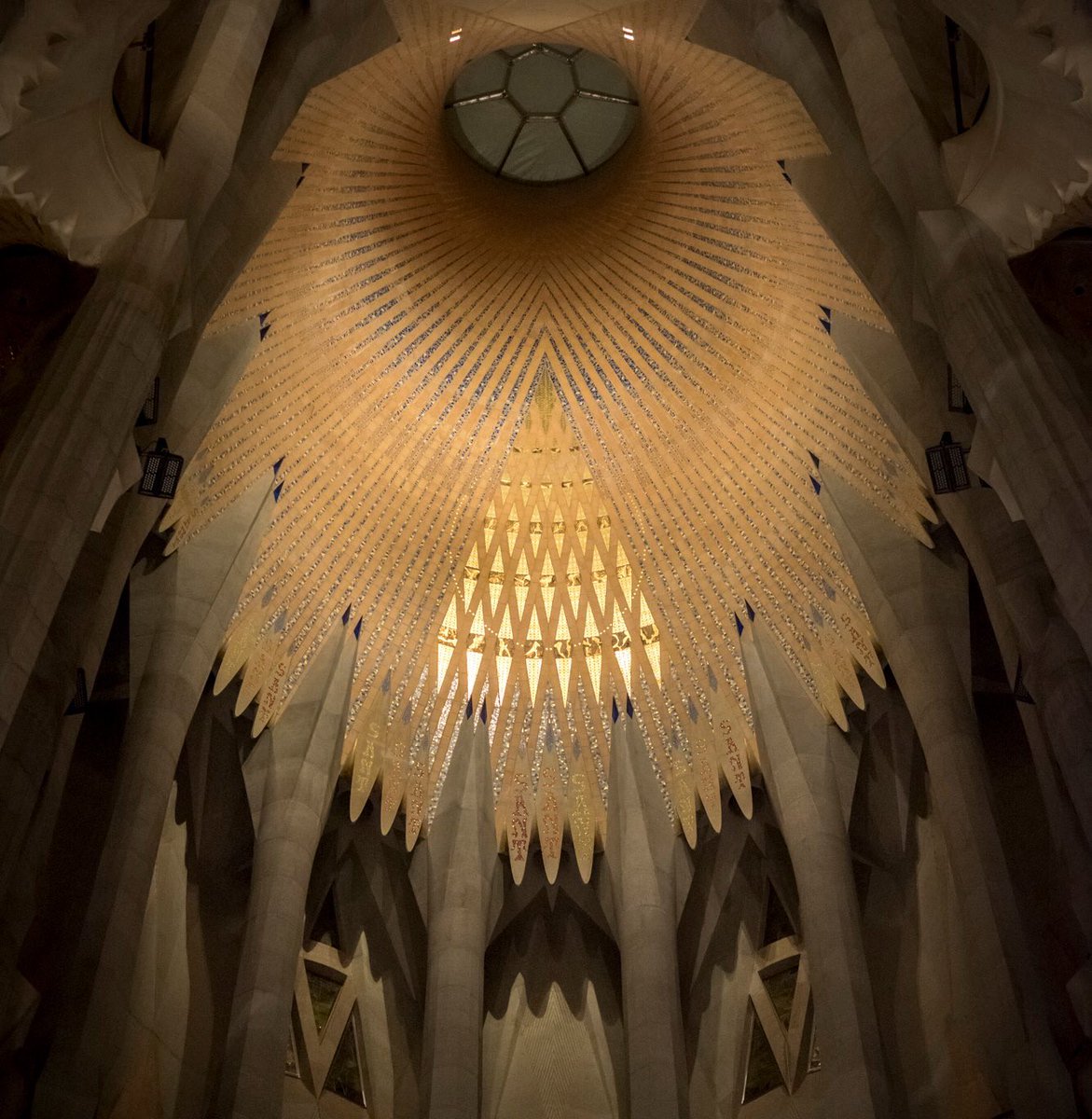
Christian theology has since anciently quenched its thirst for mystery in a loving divine communion with the divinity. triuna. Community in difference It is the oxymoron (or apparent contradiction) of faith in a child messiah who will defy the pyramids of his time, both those of the Roman Empire and those of the sacrificial religion of the Temple of Jerusalem. Perhaps it was not by chance that Gaudí designed the basilica of the Holy Family In Barcelona, his emblematic work, following the hyperboloid shape of the asymmetry in motion, generating a powerful sacred space that brings us into communion in diversity.
Perhaps the new Zapatista subjectivities, born of the autonomies, are now opening up to the horizon of affirming the differences that unite us in the common responsibility of creating those other worlds., where other worlds fit. An alternative space with smaller, provisional pyramids, but with hyperbolic worlds that preserve and enhance "the common good" amidst diverse lifestyles. These young people will also create their own spiritualities to symbolize and celebrate the source of "the common good" that fuels the fire of rebellion and righteous anger.
Many other subjectivities in resistance thus open paths of hope for us from their struggle for "the common" that includes diversity as a route to travel in the year that begins.
The Highlands of Chiapas, January 3, 2026
Note: What do you think about the autonomies and heteronomies to be built in our time?