Category: Resistances

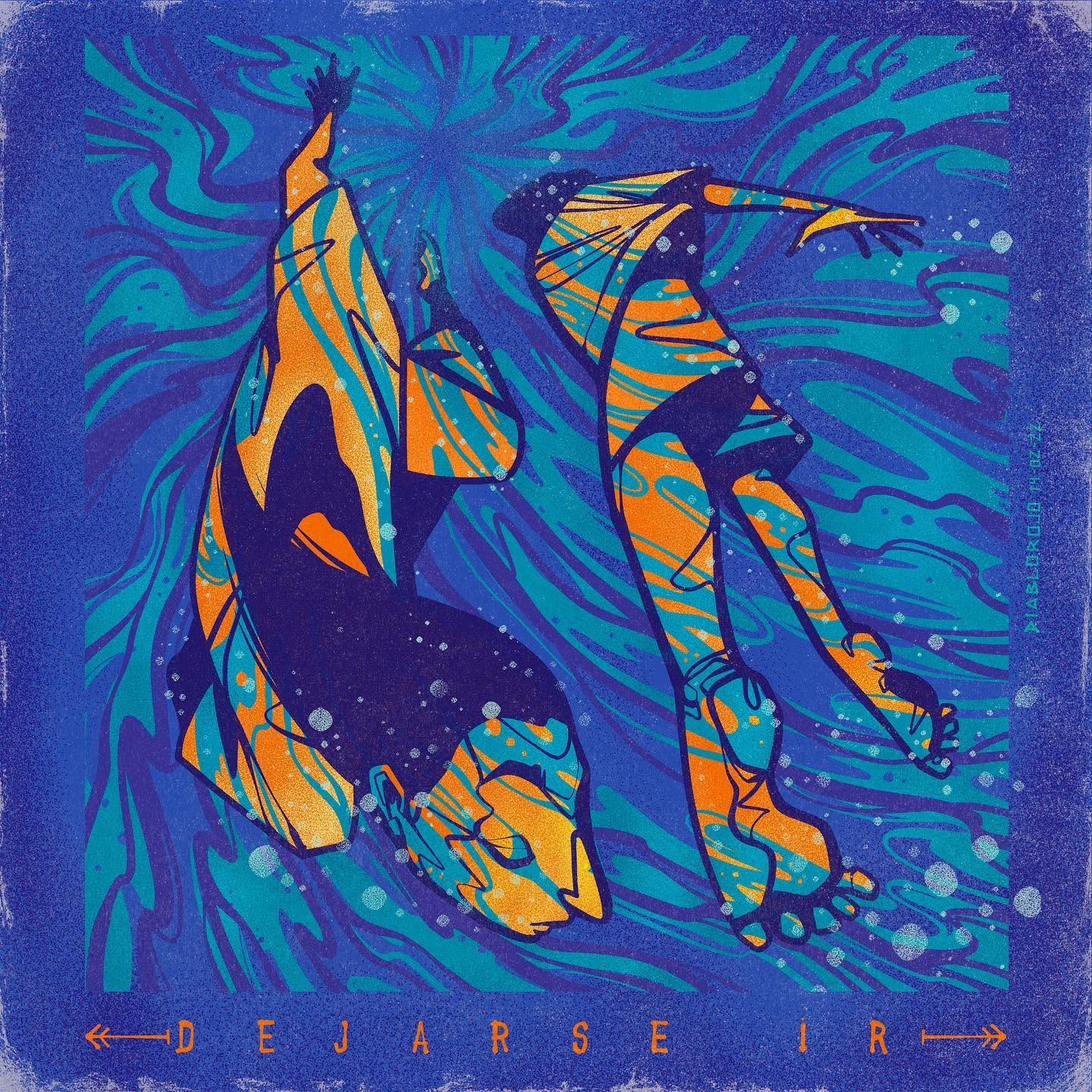
  • Historias del agua Sobre los clamores de un lago y una cuenca de los valles en MéxicoPablo de la Fuente | Diablo Rojo Graphics | Letting Go | Santiago, Chile, 2022

    Water Stories On the cries of a lake and a basin of valleys in Mexico

    By Carlos Mendoza Álvarez

    “Un Salto por la Vida” (A Leap for Life) is a civil society collective from El Salto, a municipality in the state of Jalisco, which we visited a year ago as participants in the Re-existe festival at ITESO University in Guadalajara, Mexico. Its residents and activists had foreseen the contaminated water crisis that erupted last Sunday in Guadalajara for years. The brutal pollution and growing shortages have been caused by the industrial mirage of the so-called Mexican Silicon Valley, an environmental aberration continued to be promoted by governments and companies in the region, leaving a trail of environmental and social destruction that has been documented by residents, organized civil society, and universities in Western Mexico.

    Gradually, the outcry from families—with children and the elderly sickened by the devastating impact of chemicals in "drinking" water—gave way to resistance from civil society. Scientific studies provided the foundation for social activism to promote the right to water as a priority in the struggle for human rights at a time when modern society seems unwilling to awaken from the nightmare of development.

    “The wars of the future will be wars over water,” I recall a historian predicting at the beginning of the millennium. And what seemed like a distant dystopia a quarter of a century ago has become everyday reality in every corner of the planet, from Gaza and the West Bank in Palestine to Wallmapu in the southern tip of the American continent.

    In Mexico, Lake Texcoco and the Lerma-Santiago River basin have become a painful thorn in the side, especially due to the voraciousness of the megacities that devour everything in their path. But at the same time, both territories have become breeding grounds for rebellion when their inhabitants put their finger on the wound and begin a painful but hopeful path of socio-environmental intervention to save a lake with an ancient history and a vital basin in the central-western part of Mexico.

    The “Charter of Lake Texcoco” was an initiative proposed a decade ago by the People’s Front in Defense of the Land and the residents of Atenco, along with their students, activists, and artists, to sing an elegy to water that would give voice to their struggle and make their vision of the territory visible. The poet, academic, and activist Al-Dabi Olvera paved the way for me years ago to understand this poetic-political resistance through the narrative practices we carried out under his guidance at the Ibero-American University in Mexico City with the research project called Narratives of Resistance. That Charter begins by saying:

    “I’ve known about the lake since I was born; it’s my parents’ legacy,

    It's the life we have, the one we want our grandchildren to live.

    Anáhuac is to be between waters,

    fish, frogs and axolotls, ducks, chichicuilotes and swallows.

    There was no shortage of quelites, quintoniles, and purslane.

    The people knew how to live with the waters,

    collecting the ahuautle, the tequesquite.

    That lake is called freedom.”.

    It was an elegy to lost water and a song to water regained. Years later, that lake has finally been declared a nature reserve by the federal government, and its wetlands are being restored thanks to the arduous and constant work of the community, in partnership with the current government, which we hope will continue in the years to come, beyond today's partisan political interests.

    ∂

    In our age of Artificial Intelligence, water is being transformed into a coveted commodity. An indispensable "product" for the digital industry because data centers require it: a single standard data center consumes 25 million liters of this vital liquid annually to cool the computers that power "the cloud." A cloud that is more of a hellscape of semiconductors and digital networks at the service of the powerful. Indeed, ecological devastation is already occurring alarmingly in areas of Texas and Ohio, and is multiplying from China to Argentina, wherever the lords of the digital super-industry need it to establish their data businesses where water is plentiful. In these territories, Israeli power is strategically expanding to sell technology, replicating its voracious business and its power over local governments in the name of supposed progress and water security.

    The water sequestered by fracking is yet another contradiction of this extractive economy. To extract gas from increasingly deeper underground regions, it is necessary to inject unprecedented quantities of water. The life force of water is transformed into a weapon of death at the service of the devastating oil and gas energy industry, which is currently controlled by the United States, China, and Russia across the globe.

    And to make matters worse, the water used by the soft drink industry is another head of the capitalist hydra, as the Zapatistas call it, which transforms a precious resource into poison with every soda placed on the tables of the poor. Mexico is the world's largest consumer of soft drinks, and, as a sad example, Chiapas, the state with the highest poverty rate, is also where soft drink consumption is highest, leading to malnutrition and disease. This is a lamentable example of the Illichian principle of counterproductivity: it takes wasting two hundred liters of water—in the entire water chain, from sugarcane or corn cultivation for processing to the production of the soft drink—to put a single bottle of Coca-Cola on the market. The city of San Cristóbal de Las Casas carries water in its soul, with its Tsotsil name Jobel or land of wetlands: bodies of water that still survive despite the exploitation of springs and the terrible public administration that privatizes wells, monopolized today by Coca Cola, and urbanizes those bodies of water inhabited by reeds, birds and increasingly rare amphibians.

    To complete this picture of the environmental horror that has water held hostage in our time, it is necessary to mention the sewage from the drains of the world's metropolises, which have transformed rivers and basins—once home to wetlands, streams, and rivers—into channels of chemical, organic, and energy waste from the plastics, steel, and semiconductor industries. But the most macabre aspect of these flows is that they have also become receptacles for the human remains of people disappeared by criminal organizations, thus becoming rivers of iniquity.

    Thus we find ourselves thrown into socio-environmental chaos by the machine civilization, now disguised as an algorithm of voracious power.

    ∂

    And amidst so many painful splinters in the body of Mother Earth and our people, where are there signs of comfort and hope to rescue and heal this wounded socio-environmental body?

    The resistance of the people of Atenco in Texcoco and El Salto in Jalisco is like spores spreading through valleys and canyons around the world, giving rise to new organisms in their wake. They do so on a small scale, but a real one. Their methods of organization, their protest marches, their rituals of caring for Mother Earth and the most vulnerable people and creatures in the community are already signs of another way of being, one that transcends greed.

    Without romanticizing these movements, knowing that they also experience tensions over power, control of the narrative, and obtaining resources from the state and international solidarity funds, we recognize that other languages are being babbled there with their decolonial verbs: eating, learning, organizing… and waiting.

    Now it's up to each of us, individuals and communities, to live and tell our own stories of resistance. What is your water story?

    Jobel, October 17, 2026

  • Donde comienza el desierto del Pacífico Sobre los cruces del Mutuo Acompañamiento Espiritual y TeológicoRoberto Mamani | Ari Kepay | Tarija, Bolivia, 2020

    Where the Pacific Desert begins On the intersections of Mutual Spiritual and Theological Accompaniment


    By Carlos Mendoza Álvarez

    The “Huaca Mach'ay” is the ancestral sacred cave carved from sillar, the name given to ignimbrite, a volcanic rock found in the highlands of Arequipa, Peru. For thousands of years, pilgrims have venerated these places as the womb of Mother Earth, coming here to experience the birth of new life. As a community of friends, we have traveled from the north and south to Arequipa, the Castilian name for Ari Kepay, which in Quechua means “here we stay.”.

    That cosmic womb welcomes us one sunny morning in the Andean highlands, accompanied by Fiorella as our guide. With her activism in defense of the Chili River and its valley, threatened by the hydroelectric and real estate industries, she listens to our questions and other ways of being visitors in her territory. We are a group of companions from the Mutual Spiritual and Theological Accompaniment who, over the course of eleven years, have shared the emotion of telling our stories of vulnerability, righteous anger, and hope, learning from individuals and collectives resisting diverse forms of violence in Oregon and Chiapas, Arequipa and Barcelona, Monterrey and Lima.

    As the start of our annual in-person gathering, Belissa welcomes us to her hometown, “the white city,” so named for the volcanic stone that adorns its houses with facades sculpted with baroque flourishes, a reminder of its colonial and racist past, as it was a city built for Spanish colonizers. We didn't come for cultural tourism or to kayak the rapids of the Chili River. We arrived here after monthly meetings in “virtual homes” over a four-month cycle, where we shared our stories of vulnerability and resilience, of awakening with diverse commitments to life. Each of us was invited by a loved one who had already experienced the power of a spirituality rooted in our own wounds, open to those of other individuals and groups, with whom it is possible to weave threads of hope. Adrián, as a companion to young day laborers and queer people on the West Coast of the United States; Bosque, as an activist for deliberative democracy on environmental justice issues in Monterrey; Belissa as a doctor walking with health collectives for the care of neurodivergent children in vulnerable situations in Arequipa; Rachel as a pastor exploring new pastoral ministries for queer communities in Oregon.

    ∂

    The Apus are the guardian mountains of the memory of this place where the Pacific Desert begins, stretching from Arequipa in Peru to Atacama in Chile. Misti, Chachani, and Pichu Pichu are the three silent witnesses to the stories of the Inca and mestizo peoples who coexist with the creatures of the ravines: birds, reptiles, and endemic cacti of this remarkable ecological niche. Modern exploitation is causing the glaciers to melt, and the rivers are being turned into irrigation ditches. We witness the socio-environmental devastation accelerated by the impoverishment of the lives of internally migrating peasant communities from remote provinces in the Andes Mountains, drawn by the mirage of the modern city that expels them from the highlands to the outskirts of beautiful Arequipa.

    The river is the lifeblood of the Andean spine, formed by rocks that descend from the volcano, explains Jorge, an anthropologist from Arequipa who calls himself a “Renaissance man” as he recounts his struggle to defend the territory as a member, along with Fiorella, of the citizen initiative “Save the Chilina Valley.” His aspiration as a young ecotourism entrepreneur is centered on protecting the legacy of his ancestors, confronting the mafias that seek to control the territory with their tentacles extended into the real estate industry, local and regional governments, and the indifference of the local population. A coalition of several civil society organizations has so far managed to halt the construction of a sixth hydroelectric plant in the river canyon, a project that lacks environmental planning and is the spearhead of a land-use change across the entire valley to build resorts for extreme sports tourism. The value of this civil society initiative lies in the recovery of the social fabric of the Arequipa community to mobilize it to take charge of the care of its territory, with the tremendous challenge of weaving a common cause amidst perverse private interests.

    At the end of the visit, we perform our traditional ritual of gratitude for what we have learned from our hosts. The veneration of the sacred place and its ancestors is followed by a blessing from everyone gathered in a circle around those who opened their hearts and shared their struggles with us, thus connecting who we are with our hosts and supporting each other in our resistance and new ways of re-existing.

    ∂

    “Mothering” is an intimate act, but also a collective one. It represents a new dimension for me, ever since Kochurani helped me perceive in my own life the reality of giving birth to life. It's a capacity we rarely acknowledge, yet it's a source of life and dignity. It's not an experience exclusive to women when they conceive the offspring of the human species. It's an act of conceiving and giving birth that celibate women also experience through processes and acts of bringing life into the world in any of its forms: caring for our grandparents, for example; or protecting a territory from extractive mining companies; and even giving birth to new forms of communal governance in small pockets of resistance. That's why men are also called to “mother,” thus empowering the feminine dimension of our deepest being.

    Fiorella shuddered when, in the ritual of gratitude, I thanked her for her diverse motherhood, which ranges from caring for her young son to the community care of the threatened river.

    May these encounters where the Pacific desert begins, with the Apus as guardians of our intersecting paths, be a propitious occasion to be reborn wherever we find ourselves, putting down roots to stay wherever we arrive.


    Ari Kepay, October 3, 2026

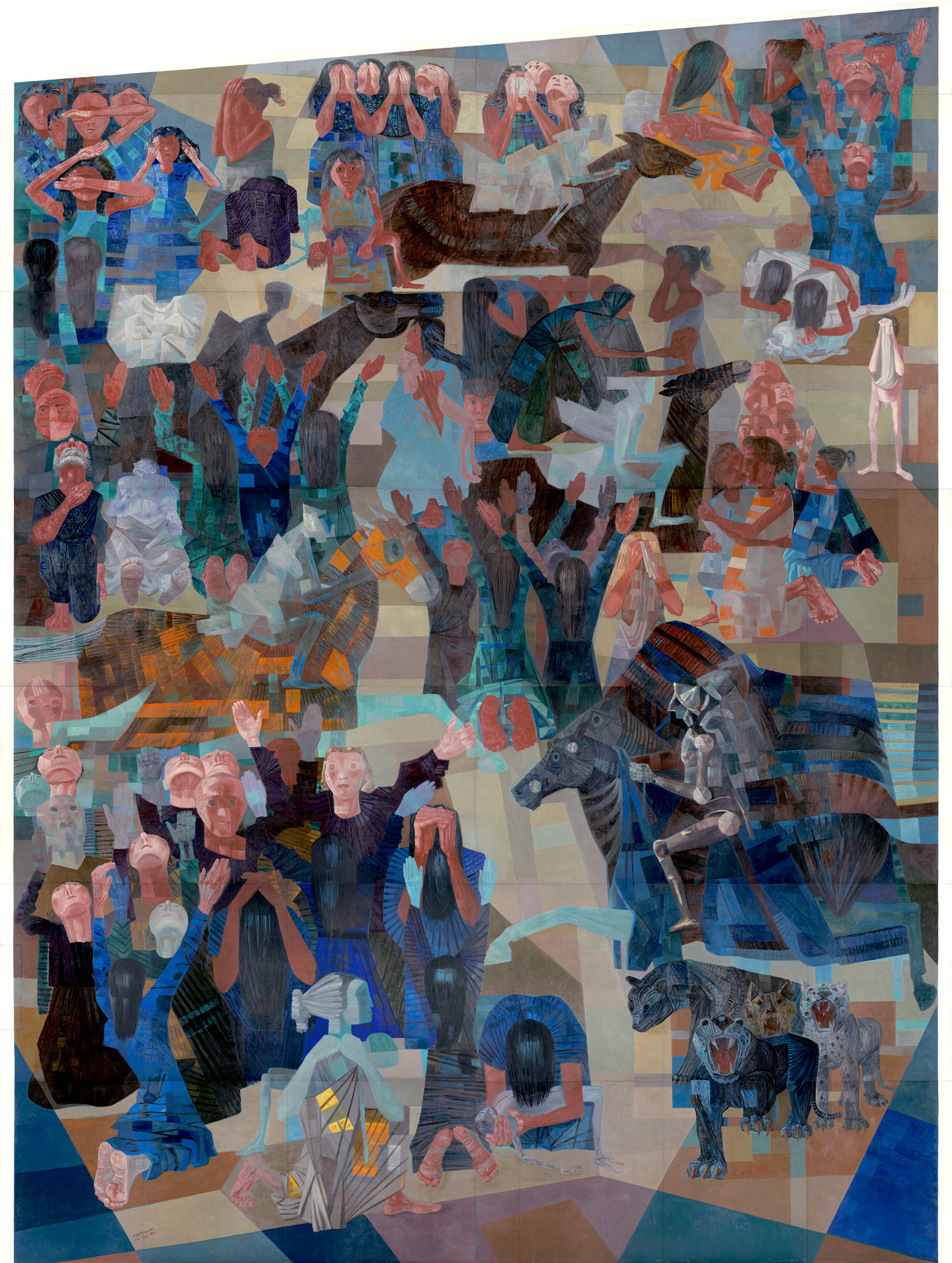
  • Del fin de los tiempos al tiempo del fin Sobre el colapso de las certezas modernas y los retoños de vida en medio de los escombrosCandido Portinari | UN War and Peace | Oil on wood panel | Brazil 1957

    From the end of times to the time of the end On the collapse of modern certainties and the sprouts of life amidst the rubble

    By Carlos Mendoza Álvarez

    The 81st UN General Assembly, which began last Tuesday in New York, has shown that the ship built by the world's governments after the collective trauma of World War II is adrift. Trump's cynicism in addressing the leaders of the international community with the arrogance of a declining emperor, threatening Iran with total destruction, and speaking of the American continent as if it were his own territory, foreshadows nothing but a delirious wave of military, financial, and media violence on a global scale. We also witnessed the perverse spectacle offered by Benjamin Netanyahu, amidst protests from many delegations who walked out of the main hall as an act of repudiation while the Israeli prime minister attempted to speak. This demonic figure, accused of war crimes by the International Criminal Court, addressed himself and his henchmen to justify the ongoing genocide against the Palestinian people, sustained by the complicity of companies in the military and digital warfare industries that now treat the world as their spoils.

    The voices of presidents who maintain a living sense of international law—such as those of Brazil, Jordan, Qatar, Turkey, and France, with the suspicious and unfortunate absence of the Mexican president—revealed the decline of this international forum, incapable of upholding the commitments of modern international law. This ethical and political ideal laid its foundations at the beginning of modern colonialism, with the cry of the Dominican friar Antón de Montesinos in 1511 on the island of Ayiti, named La Española by the colonizers: “Are these not men?” referring to the conquered indigenous peoples. This outcry was later promoted by the School of Salamanca as the Law of Nations, a precursor to modern international law, through the thinking of another Dominican, Friar Francisco de Vitoria, and other professors at the University of Salamanca.

    But what has happened to cause humanity's modern attempts to collapse? Several voices in investigative journalism and the economic and social sciences attribute the current civilizational crisis to the devastating power of modern industrial capitalism, later transformed into financial capitalism and now disguised as digital extractive capitalism, which, with the global war industry and the unprecedented apparatus of Artificial Intelligence, already controls the entire world. Other voices in the humanities attribute the cause to the colonial model undertaken by the West from the end of the 15th century as an expansionist enterprise of settlements, controlling lands, knowledge, and "souls," as the Afro-Brazilian theologian Silvia Regina de Lima Silba puts it, by the modern conquering subject who acted according to the maxim of colonial politics: "conquiro ergo sum" or "I conquer, therefore I am," which Enrique Dussel proposed as an axiom of modern coloniality.

    From our perspective, without denying all the factors that have produced the civilizational crisis we face today, following the thread gleaned by Ivan Illich in the tangle of machine society—unraveled in the Mexican context by Jean Robert, Sylvia Marcos, and Gustavo Esteva—there is a fundamental cause of the crisis that we can call “spiritual,” as Javier Sicilia emphasizes in his writings, following Illich the theologian. It is a matter of understanding the global crisis as a “crisis of theological meaning” because modern societies, including religions and Christian churches, have lost sight of the incarnation of the divine Word as the source of humanity, that is, of closeness to human beings and to the creatures of the cosmos. “From the corruption of the best, the worst was born,” according to the medieval maxim taken up by Illich.

    Indeed, technoscientific modernity created mechanisms of governance to control subjectivities and populations, transforming us into subsystems of a larger system: the welfare state. This system, with its tools such as schools, hospitals, prisons, and religion, subjugates peoples for the sake of the power of extractive control elites. Therefore, "proximity" to others became subordinated to vicarious powers, to which we all delegated charity as the supreme act of human virtue to mediating institutions like sacrificial religion and the welfare state.

    It is therefore important to remember here that the return to the “mystical” or spiritual refuge of the individual and of peoples – with its expressions of historical strength that animates the victims and as the power of the poor and excluded who rebel against systemic violence – is the only ethical and political compass we have as humanity in this time of global uncertainty.

    The collapse of the modern international system is giving way to global barbarism, with the unprecedented power of the “warlord” elites, as Pope Leo XIV called them, who govern the world. The Silicon Valley magnates, funding the greedy governments of the North and South—as Naomi Klein and Astra Taylor detail in their recent book, “End-Times Fascism and the Fight for the Living World,” which we discussed in the previous post—will continue buying territories, devastating ecosystems, corrupting governments, and eliminating peoples who resist the genocides and ecocides perpetrated by their complicit governments for the benefit of the digital military industry.

    But the resistance in the cracks of those walls—the resistance that preserves, reinvents, and creates other ways of life in every liberated body, inhabited place, and autonomous territory—is what will keep us standing as humanity. In these experiences of other ways of life beats “the time of the end,” that is, the spark of life that confronts death and connects us to the source of Life. In the midst of the “end times” imposed by today’s powerful, people and communities in re-existence sow life like seeds of messianic time, in which the new world come from God beats.

    ∂

    In the coming days, in Arequipa, Peru, thanks to the hospitality of Belissa and her community in resistance, we will share seeds of those other worlds born from mutual spiritual and theological accompaniment. This is the journey that, for the past eleven years, a group of us who find ourselves at the crossroads of spirituality and social activism have undertaken, drawing nourishment from the power of the Ruah that animates diverse rebellions against necropower, and that illuminates the combative hope of those who say “no more” to the logic of death, beginning to live, in the here and now, “the end times.”.

    Lima, September 26, 2026

English