Category: Mutual support

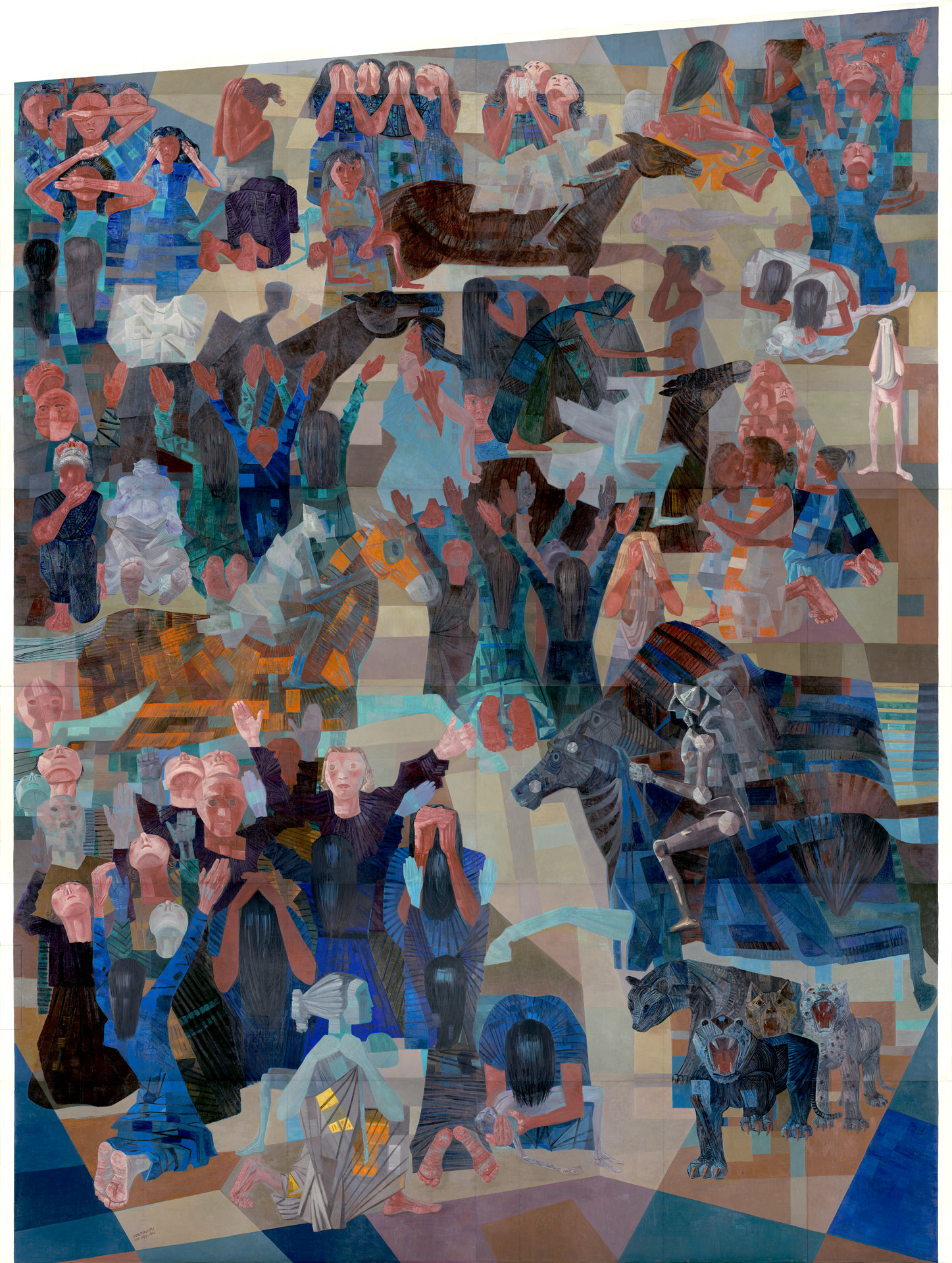
  • Semillero en gestación sobre teologías descoloniales en Cholula Subjetividades, cuerpos y territorios como lugares teológicos de resistenciaAmira Rahim | Cholula | 2017

    Seedbed in gestation on decolonial theologies in Cholula Subjectivities, bodies and territories as theological sites of resistance

    By Carlos Mendoza Álvarez

    During a lunch with Kochurani in Cotonou, the capital of Benin, a few weeks ago on the occasion of the World Forum on Theology and Liberation, we shared a common desire to create “cosmic homes” where we can meet, rooted in our land, to cultivate seeds of diverse theologies, with a shared yearning to flourish as individuals and collectives in resistance. Between Kerala and Cholula, a nascent connection was thus established to illuminate these homes, learning from our life stories, where it is possible to listen to the poignant questions arising from the survivors we accompany, while also allowing ourselves to be surprised by their unwavering hope. Places where it is also possible to share the poetic inspirations and intuitions of thought through which the Divine spells out for us in languages as diverse as the colors of the earth.

    For at least a decade, in my case, the dream of that homeland had been taking shape, thanks to "mother experiences" where I grasped that something new was happening, often in seemingly insignificant times and places, but where the strength of the Ruah was clear and powerful.

    Juan Carlos told me with emotion years ago, during a hike in Mount Hood—the ancient Wyeast of the Chinook people in Wuaregan land, now Oregon—how deeply moved he was by visiting Raimon Panikkar's little house in Catalonia, where the Christian-Hindu-Buddhist mystic and theologian liked to receive his close friends. Located on the outskirts of a small mountain village, his home was a space of hospitality that fostered dialogue among people of diverse faiths who drew from the same source of "cosmotheandric mystery," as the great mystic of our time liked to describe the reality of the interwoven world of life.

    The Jesuits' cabin in Mapuche territory, with its wooden chapel adorned with woolen textiles and a small oil lamp, was another of those microcosms where infinity seemed to converge beneath a starry sky. I cherish that moment in my memory like a flame of sincere and generous hospitality from three fellow travelers who had chosen to allow themselves to be inhabited by the people of Wallmapu, thus opening themselves to the God of life who never ceases to call to us and surprise us as a source of fulfillment for all peoples.

    A similar “place” – with all the Illichian echo of this noun – we seek to create a group of friends in a territory of Chollollan – or “falling water” in Nahuatl – the oldest inhabited city in America that blooms every year with its fruit trees in August and its cempasúchitl flowers in November, at the foot of the Popocatépetl and Iztaccíhuatl volcanoes, near Puebla, my hometown of New Spain origin.

    Pending the opportunity to be received by that fertile land at a propitious time to plant the trees that will shelter the cabin-home in the years to come, we will hold a workshop on decolonial theologies in March of next year, with dear colleagues who were my university students years ago and are now companions on the path of theological work animated by spiritualities of life that resists and re-exists in the cracks of power that kills.

    With Juan Jesús and Juan Carlos, I have explored for decades what theology with the Dominican stamp means in times of late modernity. Juan Jesús's questions about the conditioning of subjectivity, whether in its psychological dimension or in its powers of knowledge and action, helped me understand the emotional and practical foundation of the thought that we urgently need to weave in a society wounded by the libido dominandi. With Juan Carlos, I learned, from the time we shared the studium As part of our community work at the Pedro de Córdoba Institute in Santiago, Chile, we began to explore the mystique that sustains human rights defenders, inspired by liberation theology in their commitment to the poor and victims, while honestly examining the depths and power of our own shared histories of vulnerability. The path of mutual spiritual and theological accompaniment was born there, at the foot of the Andes, like a river with its own course that has irrigated other valleys in various parts of the world.

    Cleusa and Pedro Igor, with the power of Afro-Brazilian knowledge in dialogue with liberation theologies, have taught me to value the memory of the African diaspora on our continent, undoubtedly marked by the tragedy of centuries of slavery, but above all by the strength and beauty of its peoples in resistance throughout five centuries. The new epistemologies of Blackness, the wisdom of living ancestral religions, and the power of Afro-diasporic feminisms are all ways of exploring the subjectivities denied by colonial modernity, which I began to explore in my doctoral dissertation and which I now discover with new nuances and depths thanks to these friends of the Afro-Brazilian diaspora.

    For the past six years, I've walked alongside Laurel, Sole, Martín, and Francis in Massachusetts—having come to Boston College from Chile and Ohio—to discover the strength of new generations of theologians feeling and thinking from their bodies, subjectivities, and territories, with their wounds and the power of their experiences that subvert systemic violence. Whether through the liberating emphasis of grassroots ecclesial communities in El Salvador and Chile, or through the feminist and queer zeal to incorporate these contested territories of gender, or through thinking about politics from the margins of empire in times of escalating techno-fascism, these new voices of feminist, liberation, and decolonial theology are nourishing my life and thought in astonishing ways.

    Next March, we will experience the thrill of meeting again, as we did a year ago in Rio de Janeiro, to reflect on what we have learned together, to continue “conspiring,” as Ivan Illich said and as Javier Sicilia likes to think—that is, sharing the promptings of the divine Ruah that animates, challenges, seduces, and encourages us to “give a reason for the hope that is in us to anyone who asks us,” according to the biblical author's vision in 1 Peter 3:15. For our generation, living in dark times on a global scale, this prompting certainly means glimpsing the glimmers of hope that emerge from the cracks and rubble of Gaza, from the mass graves, from the refugee camps in South Sudan, and from so many other places of death transformed into places of life by survivors and collective resistance movements. During those days, we will also present the collective book that is the fruit of that Rio colloquium, like a seed we wish to plant in that sacred ground. We will tell you more about the details of the seedbed in gestation later.

    Chollollan will welcome us as a territory of ancient and new wisdom where we want to "sow seeds and light fires," as the native peoples of Our America say, and prepare the hearth of the cabin-home that awaits us.

    Huitepec, Chiapas, August 29, 2026

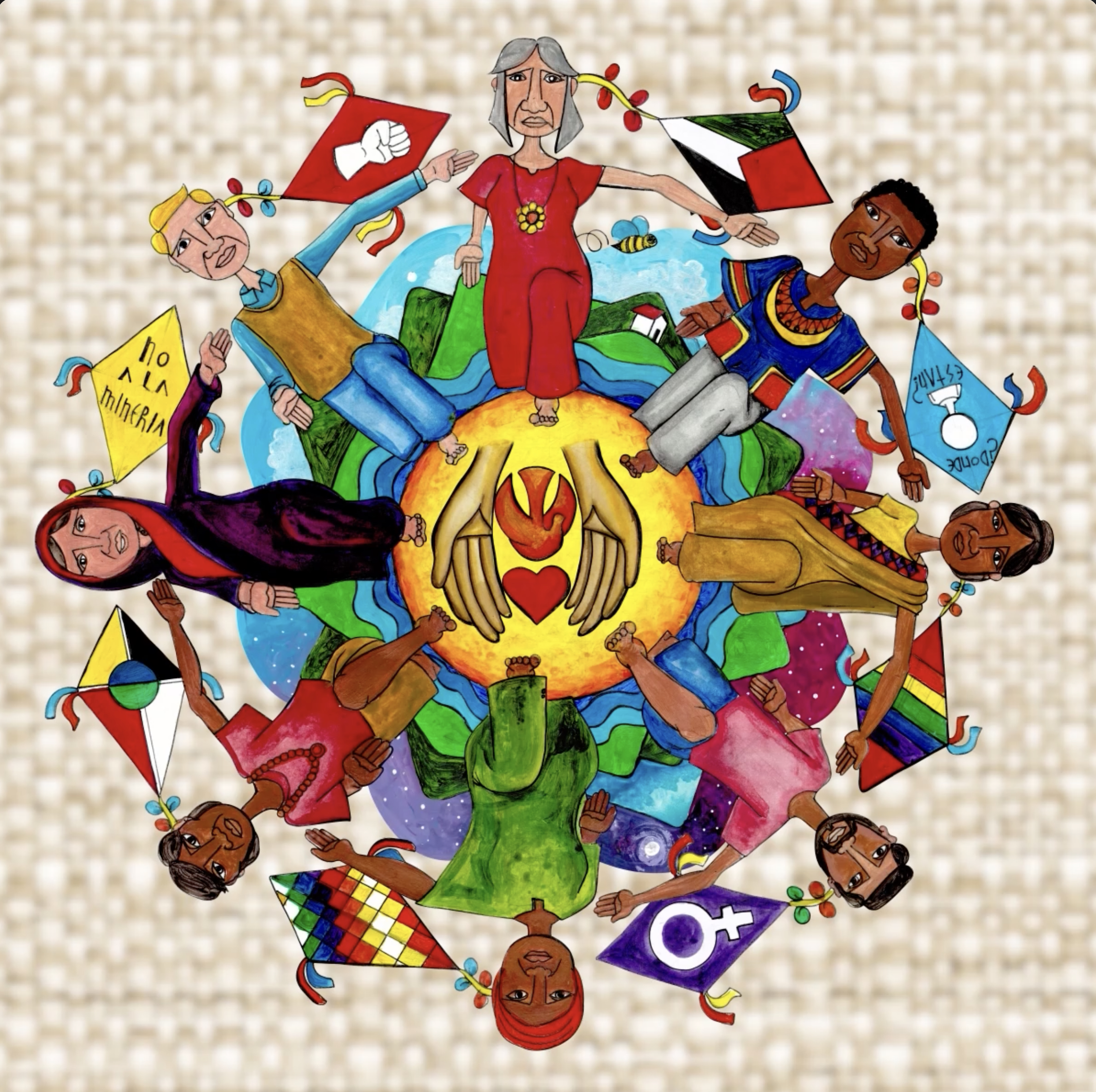
  • La paz como caminos de insurrección mesiánica Sobre la Agenda Frayba 2026 Memorias subterráneasGabriela Soriano | Underground Memories | San Cristóbal de las Casas, Chiapas | 2026

    Peace as a path to messianic insurrection About the Frayba Agenda 2026 Underground Memories

    By Carlos Mendoza Álvarez

    Last Wednesday, the presentation of the fifteenth edition of the Frayba Agenda Titled “Underground Memories,” it was prepared by the Fray Bartolomé de Las Casas Human Rights Center in Chiapas. This annual publication, since 2011, preserves the living memory of the actions carried out in the promotion and defense of the human rights of the indigenous peoples of Chiapas, as well as of people in forced migration and refugees, who have been supported by this civil society organization over several decades. Frayba -as this organization is affectionately called- was born inspired by the winds of conciliar renewal of the diocese of San Cristóbal de Las Casas and the social processes that emerged as an expression of the indigenous movement of the second half of the twentieth century.

    Three articles reflecting on the local, regional, and national context—by Jorge Santiago, founder of several ecclesial and civil organizations, Susana Montes de la Commission for Support of Community Reconciliation (Coreco) and an interview with Carlos González, a member of the Coordination of National Indigenous Congress of Government Created by Pedro Faro, these are accompanied by a valuable graphic record of the key moments of three decades of peacebuilding in Chiapas. The editorial design and illustrations by Gabriela Soriano Segoviano reflect, with beautiful strokes of contemporary folk art, the connections of the underground memories of resistance that inspire the indigenous peoples of today, as well as civil society and the churches that walk with them.

    Below, I transcribe my participation in the round table discussion, on that rainy afternoon in San Cristóbal de Las Casas.

    “There is no path to peace, peace is the path”

    Mahatma Gandhi

    This year we are commemorating three decades of peacebuilding in Chiapas: Frayba, Coreco, Sipaz, the National Indigenous Congress, the Zapatista Movement, the San Andrés Accords, and many other initiatives of civil society, churches, and social movements. These networks emerged from the fertile soil of Chiapas, prepared more than six decades ago by the pastoral plan of the Diocese of San Cristóbal with the arrival of Bishop [name missing]. jTatik Samuel Ruiz, who, after an arduous and patient conversation and journey with the native peoples, led to the birth of an indigenous Church.

    A decade later, the Indigenous Congress of 1974 fostered the emergence of a collective consciousness among Indigenous peoples as historical subjects. And finally, the rise of the Zapatista movement, with its support bases and militias, proposed a different way of living and creating the political sphere as a shared endeavor. All these processes were accompanied by a vibrant and creative current of critical thought, which arose in the Highlands of Chiapas and the canyons of the Lacandon Jungle throughout the second half of the 20th century.

    The San Cristóbal School, so named by Pablo Romo, along with the Cuernavaca School, analyzed by Humberto Bech, have been, in my opinion, the two main Mexican contributions to critical thought in the second half of the 20th century. Both provide us today with a precise direction for confronting with clarity the growing spiral of systemic violence that, with the Puerto Rican decolonial thinker Nelson Maldonado-Torres, we call here the Great Catastropheand.

    Jorge Santiago's reflection on the Frayba Agenda 2026. Underground Memories The work we present today rightly underscores the centrality of the San Andrés Accords as a crucible of decades of struggle for peace with justice and dignity. The thinker from San Cristóbal points out that the historical demands of Indigenous peoples remain relevant, and that the Mexican state still owes a debt for honoring these historic accords.

    Two pastoral letters from jTatik Samuel Ruiz and Don Raúl Vera prepared the celebration of the Third Diocesan Synod, which took place from 1995 to 1999. This process allowed the diocese to reap the harvest of half a century of pastoral life and thus give a clear path of synodality to the life and commitments of this diocese. Both letters arose in a context of uncertainty due to the animosity and conflict on the part of Vatican authorities of that time, fueled by the Club of Rome, or a group of Mexican bishops who were declared enemies of liberation theology in Mexico and Latin America.

    The first pastoral letter So that justice and peace may meet (1996) is an ecclesial response to the armed uprising of 1994. It reflects the struggle for land by indigenous peoples, as well as the commitment to justice and peace made by this diocese, following the impetus of the Second Vatican Council and the Second General Conference of Latin American Bishops in Medellín. The second pastoral letter From pain to hope, The agreement, signed by both bishops in 1998, after the Acteal massacre, is a commitment to hope amid the pain of the survivors and a pledge to continue seeking peace with justice and dignity.

    The Vatican's violence against this pastoral project would later be unleashed against Don Raúl Vera, who was transferred to the Diocese of Saltillo on December 30, 1999, in a failed attempt to dismantle the synodal process. What his detractors never imagined was that this perverse decision would become the opportunity to sow the seeds of a liberating Church, now in lands of mining extraction and gender violence, which Don Raúl would embrace with fidelity to his mission as a pastor in those desert lands of northern Mexico.

    Finally, I would like to make two final comments to continue the conversation.

    The challenges of moving forward, after three decades of peacebuilding, are now unprecedented, as we find ourselves in the uncertain moment of civilizational collapse. A commitment to justice for Indigenous peoples is no longer enough; it is essential to integrate other forms of justice, such as gender justice (sexual diversity) and ecological justice, to understand the rebellions. transmodern that build individuals and collectives of survivors in contexts of global violence. The historical strength of the poor, which the first generation of liberation theology envisioned, is giving way to the unsubmissive reason of social and ecclesial movements that are already weaving networks of mutual support, dignity, resistance and diverse re-existences.

    It is also time to reformulate the theoretical framework for thinking about systemic violence. Liberation theology requires a radicalization that arises from dialogue with decolonial thought and theory. queer/cuir /queer and intersectionality to continue supporting peace processes, transitional justice, and diverse spiritualities of life that face the ongoing Great Catastrophe.

    Let us not forget that it is our task to honor the legacy of the ancestors of the liberating Church, but from the new subjectivities, bodies and territories in resistance, with the fruits of thought, art and spirituality that emerge as messianic insurrections anticipating other worlds, of dignity and life for everyone.

    The spirituality of messianic time is an interruption of the linear time of that Chronos that devours its children on altars of bloody sacrifices. Such a messianic force arises as an insurrection. peaceful In the face of systemic violence, that is, as a break from the vicious cycle of rivalry and violence, to establish processes of mutual recognition, beyond the violence that produces poverty, exclusion, and subjugation to hegemonic powers. It is a spirituality of life in the midst of death. Another time that (in)emerges as an anticipation of other possible worlds from the survivors of yesterday and today.

    Next Wednesday, March 25, at 6 p.m., we will continue our discussion on critical thinking emerging from Chiapas, with reflections by Pablo Romo on the San Cristóbal School and experiences of a spirituality of mutual support amidst violence, presented by our friend and Peruvian colleague Juan Carlos La Puente. Both reflections will be followed by a dance performance by Martha Elena Welsh.

    See you at the restaurant Belil, in the historic center of San Cristóbal de Las Casas, where with Ricardo and Carmen as hosts, along with Angélica and Abraham, we will continue opening dining spaces, where resistances and spiritualities emerge as a commitment to permanent dialogue and mutual support in the care of life.

    San Cristóbal de Las Casas, March 7, 2026

English