
Category: Heteronomies

  • Dios ya no es redondo Sobre las asimetrías creadas por el afán de poderGermán Pose | Ball with a Nimbus | 2016

    God is no longer round On the asymmetries created by the desire for power

    By Carlos Mendoza Álvarez

    When God was round

    A couple of decades ago, Juan Villoro described in his book "God is Round" the utopia of football, born as a sport of the plains and streets of the world, in terms of an urban party ritual that brought together children and young people around a plastic sphere, sometimes made of leather, as a celebration of the joy of dodging the opponent until scoring the goal that would be celebrated with cheers, jumps and hugs on the field and in the stands.

    Nicholas of Cusa wrote his book "De ludo Globi" in 1462, a philosophical work that used the game of bowls of the time to describe the round cosmos with its world of planetary spheres as a metaphor for the perfection of divine creation and its imprint on human intelligence. Centuries later, in the collective imagination of our time, a round ball embodies that yearning for a world of equidistant extremes, a symbol that also sets people in motion on a field of dirt or grass.

    The ancient Mesoamerican peoples had also ritualized this perfection of the sphere in the ball game, sacralizing - according to modern archaeology - the struggle between light and cosmic darkness in a ritual game that passed the rubber ball through a stone hoop, in a back-and-forth of blows with the hip, elbows and shoulders, where the joints of the human body mirrored the cosmos.

    In modern times, FIFA has transformed the art of football into a business created by a television-driven industrial machine to voraciously manage the sport from the streets and pitches of the working-class neighborhoods of Buenos Aires, Rio de Janeiro, Mexico City, Barcelona, Seoul, and Lagos. We proudly say that Mexico has hosted the World Cup three times, but from 1970 to the present, the television industry, colluding with corrupt governments—first the PRI and now its perverse clone, Morena—has corrupted the beautiful game, turning it into a multi-billion dollar business. It is astonishing to see the media propaganda that FIFA has deployed to justify its greed in the three host countries. And even more shameful is the subservience of the Mexican government, kneeling before this oligarchy that enjoys unprecedented tax privileges in our country and that has seized control of stadiums and public spaces like the Campo Marte of the Mexican Army and Chapultepec Castle to celebrate its avarice.

    Fortunately, the magic of the Mesoamerican ball game, or the Italian Renaissance bowling game, and modern football persists wherever two teams display the fantasy of moving a sphere and the aim of achieving a goal to celebrate life.

    A transcultural Pope

    Pope Leo XIV has surprised the world with his fourth apostolic journey, now through Madrid, Barcelona and Gran Canaria, by summoning the people who live there - Castilians, Catalans and Latin Americans - to a celebration of life and human dignity.

    I have been surprised by the clarity and courage with which the first transcultural Pope - an American son of migrants and Peruvian by choice, today a universal citizen by vocation - has encouraged people to care for the dignity of people and nature, especially migrants in forced mobility.

    His speech in Tenerife was a direct attack on the human trafficking mafias, reminding them that they will have to answer to God for their criminal acts, and calling them to conversion and to stop enriching themselves at the expense of the suffering of the most vulnerable. Also memorable was his criticism of the “warlords” in his address to the Spanish Parliament, denouncing the use of God’s name in vain to justify wars that destroy peoples and cultures.

    The inalienable dignity of migrants, the dignity of human life from its beginning to its end, the building of peace and the dismantling of the war industry, humanization in times of artificial intelligence as an instrument in the control of a handful of oligarchs, are the principles of an ethics for times of systemic violence that wave like flags in the speeches and gestures of Pope Leo.

    It remains for us now, those of us who are part of the Church in its Roman Catholic tradition, to unite with the other spiritual traditions of humanity to resume the path of reconciled humanity in times of a growing spiral of violence.

    Israelis in Chiapas

    Chiapas civil society has raised concerns in recent weeks about the presence of Israeli veterans and soldiers on a “humanitarian” campaign in schools in Zinacantán.

    In a brief survey of residents of that municipality, I was able to verify that in recent weeks, "foreign groups speaking English" have been offering painting and English workshops in primary schools in Nachig, Zinacantán, and Jech-Chentic. Some journalists warn of the danger that this group is Warriors Without Borders, presenting itself as the humanitarian organization Heroes of Life, thus whitewashing the image of the Israeli army worldwide, which is currently embroiled in the genocide of the Palestinian people with its Zionist ideology.

    This presence is compounded by the recent visit of the Israeli consul and “security experts” to authorities in the state of Chiapas, ostensibly to exchange security experiences and to reassure them that this southeastern Mexican state is a safe place for Israeli visitors. The state secretary of security seems unaware that his visitors come from a genocidal state, implementing strategies and mechanisms of war against the Palestinian civilian population—acts considered war crimes by the International Criminal Court.

    It is urgent to demand that the Chiapas state government make public any existing collaboration agreements with the Israeli government, its companies, and its organizations. And we, as part of civil society, must be vigilant and responsibly monitor the activities of Israeli organizations in Chiapas, especially those of its veterans, ex-combatants, and military personnel. For their part, the indigenous communities—which have thus far been the primary target of their “humanitarian” actions—have a responsibility to safeguard the common good at stake in their communities, particularly their schools and educational and recreational groups, to prevent the manipulation of children and youth by ideologies of death that threaten their territories.

    God is no longer round because the masters of global war, genocidal states, and criminal mafias have created the dystopia in which we live today on a planetary scale, perverting the festival of football as a business and domination of peoples in their national teams that were trapped in the FIFA industry.

    Fortunately, the playful sense of existence is preserved by communities, especially those that confront systemic violence and yet celebrate life amidst death. In these communities beats the stubborn hope that the world can be harmonious by embracing the differences of peoples, cultures, and spiritualities as a numinous polyhedron.

    San Cristóbal de Las Casas, June 13, 2026
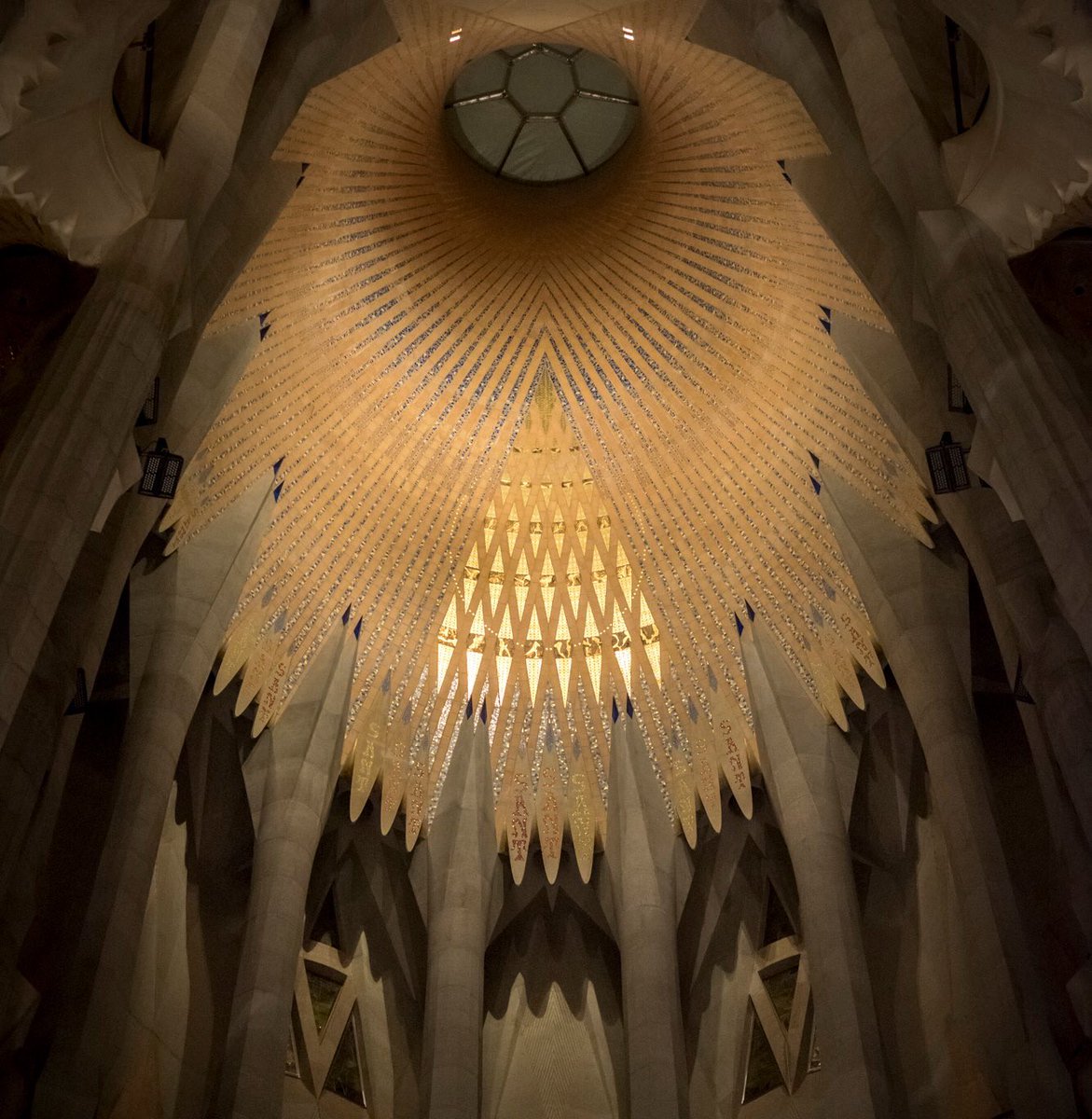
  • De pirámides y autonomías Sobre la geometría política de “el Común” para el año que comienzaGaudí | Sagrada Familia, Barcelona | Hyperboloid, 2025

    Of pyramids and autonomies On the political geometry of “the Commons” for the coming year

    By Carlos Mendoza-Álvarez

    The pyramids above and below

    A few days ago, Cideci-Unitierra was the epicenter of the seedbed Of pyramids, of stories, of love and, of course, heartbreak, dedicated to discussing, in my opinion, the old topic of the libido dominandi Or the desire for power that has resided in the human heart since the dawn of recorded history. Although, in reality, the reflections revolved around the recent history of the Mayan peoples of the Chiapas Highlands, who four decades ago decided to put an end to the power of local strongmen, landowners, and the corrupt mestizo government that imposed its rule upon them in modern times.

    On the occasion of the 32nd anniversary of the Zapatista Army of National Liberation's armed uprising, more than 1,300 participants—first at the Jacinto Canek Caracol, located in a working-class neighborhood in the northern part of the city of Jobel, and later at the Oventik Caracol—gathered to hear trusted figures from the rebel movement speak about the lust for power that opposes "the common good" by constructing pyramids of privilege and domination. The discussions focused, for example, on analyzing with Barbara Zamora The legal strategies of the Mexican state to consolidate private land ownership, dispossessing indigenous peoples of their territories with legal tricks, including the mega-projects of the Fourth Transformation.

    But there was also courageous discussion about the small and large pyramids of power built by left-wing revolutionary movements from the second half of the 20th century to the present to protect their privileges once they had seized political power. The persistence of these power pyramids in modern governments and state administrations seems to be a constant, unfolding on different scales in right-wing and left-wing political models, always at the mercy of the tyrannies in power.

    The self-criticism that the EZLN has shown regarding its own control and decision-making practices is, in the opinion of Raúl Zibechi, This is unprecedented in modern leftist movements. In a fascinating presentation dedicated to tracing the uses and abuses of power in the Latin American left that won political power—especially in Nicaragua, El Salvador, and Bolivia—the Uruguayan sociologist, who has worked alongside guerrilla movements first and social movements later for half a century, posed a crucial question to the Zapatista comrades, as well as to those of us who are attentive to the path they are forging: Are pyramids of power necessary and inevitable? What are their organizational and temporal limits to prevent them from becoming new strongman regimes and tyrannies?

    Between avant-gardes and rearguards

    I was surprised that this think tank didn't emphasize critical thinking, which half a century ago had already warned us about the risks of leftist revolutions becoming new tyrannies. Specifically, decolonial thought has for years been proposing the urgent need to overcome the complex of the vanguards typical of the left in the last century, who lost their way in the whim of speaking on behalf of the masses. corset Marxist class struggle, with its organic intellectuals, especially in its version of proletarian revolution to overthrow the bourgeois state, has been challenged and surpassed by the voices and practices of subaltern groups who no longer need a privileged caste to speak on their behalf. Indigenous peoples, women's collectives, and LGBTQ+ communities, among other subjectivities in resistance, construct their own thought through their ways of life and organization based on mutual care, imbued with ethical, political, and spiritual strength. Today, it is impossible to deny their knowledge and their forms of communal organization, through which they have resisted diverse forms of oppression for centuries.

    It is necessary to dismantle this will to dominate on all fronts where it manifests itself by building pyramids at the top and bottom. It is about going “to the rearguard of social movements,” as Boaventura de Sousa Santos said, to learn from them as experts in the resistance they have faced for centuries, especially Indigenous peoples. Feminisms community like the one from Lorena Cabnal In Guatemala, they emerge as a critical voice against the prominence of academia. extractivist Made by white, urban, and privileged women. These feminisms are linked as an instance of critical reflection alongside women's collectives confronting patriarchy, now opening their networks of care and thought to the mothers of disappeared persons searching for their loved ones, as well as to indigenous women in resistance.

    I was surprised that the "Of Pyramids, of Stories, of Loves and, of course, Heartbreaks" seedbed didn't put at the center these voices that have been clamoring for other ways of for decades. horizontality of power.

    The inevitable shift: from the pyramids of autonomies to the hyperbolic dimension of heteronomies

    A significant change in the perception of the construction of "the common" that Commander Moisés put on the table was that of the generational changes that the Zapatista bases experience in their youth.

    The insurgent-militiaman-Zapatista base triad that shaped the Zapatista movement four decades ago no longer accounts for the other forms of belonging expressed by the generations born in the Caracoles of the autonomous territories. Now, young Zapatista subjectivities are discovering new ways of building resistance and rebellions of righteous anger in the arts, health, and communications, among other fields. Radiologists, theater artists, dentists, and documentary filmmakers are already actively participating as voices of resistance in the autonomous territories, now surrounded not by the federal army but by other ways of life offered by the government and criminal mafias, each in their own way, to win over and buy the attention of Indigenous youth, including the Zapatistas.

    The narrative of the autonomous communities It was of paramount importance in confronting the capitalist hydra thirty-two years ago to underscore the strategy of resistance, creating other processes of caring for life such as eat, learn and live, Following the narrative of Gustavo Esteva's "revolutionary verbs," the Zapatistas are now identifying pyramids at the bottom that require a radical change in narrative.

    Within this same framework, critical thinking is currently moving towards... heteronomies, such as the proposal of Silvana Rabinovich Rooted in the Hebrew philosophy of Emmanuel Levinas in fruitful dialogue with Enrique Dussel, this approach seeks to understand "the commons" in its genesis, from the asymmetry of intersubjective relations—that is, from the difference of each subjectivity and collective. It is not to deny autonomies but to explain their conditions of possibility. It is a commitment to preventing the dominance of power pyramids in order to give way to relations of diversity where [the concept of "commons" persists]. a surplus of the difference that sustains life.

    It is a philosophical concept that has some relation to the scientific theory of baryogenesis that particle physics, along with the Big Bang theory, proposes to explain the asymmetric origin of the universe between matter and antimatter. One of the spatial figures of this primordial cosmological phenomenon would be hyperboloid, like a saddle, where the asymmetry of the expanding universe prevails.

    In its philosophical sense, heteronomy is the ethics of otherness. The face of the other is the source of heteronomous ethics, that is, a way of being that has its own nomos or law in the other, especially, the other vulnerable. This relationship of openness to otherness brings with it a critical principle for power relations where the “autonomous” subject, individual or collective, is decentered and the possibility of “the common” as a source of “the political” is opened thanks to the recognition of that otherness which is a clamor or a caress.

    Christian theology has since anciently quenched its thirst for mystery in a loving divine communion with the divinity. triuna. Community in difference It is the oxymoron (or apparent contradiction) of faith in a child messiah who will defy the pyramids of his time, both those of the Roman Empire and those of the sacrificial religion of the Temple of Jerusalem. Perhaps it was not by chance that Gaudí designed the basilica of the Holy Family In Barcelona, his emblematic work, following the hyperboloid shape of the asymmetry in motion, generating a powerful sacred space that brings us into communion in diversity.

    Perhaps the new Zapatista subjectivities, born of the autonomies, are now opening up to the horizon of affirming the differences that unite us in the common responsibility of creating those other worlds., where other worlds fit. An alternative space with smaller, provisional pyramids, but with hyperbolic worlds that preserve and enhance "the common good" amidst diverse lifestyles. These young people will also create their own spiritualities to symbolize and celebrate the source of "the common good" that fuels the fire of rebellion and righteous anger.

    Many other subjectivities in resistance thus open paths of hope for us from their struggle for "the common" that includes diversity as a route to travel in the year that begins.

    The Highlands of Chiapas, January 3, 2026

    Note: What do you think about the autonomies and heteronomies to be built in our time?

English