Category: War

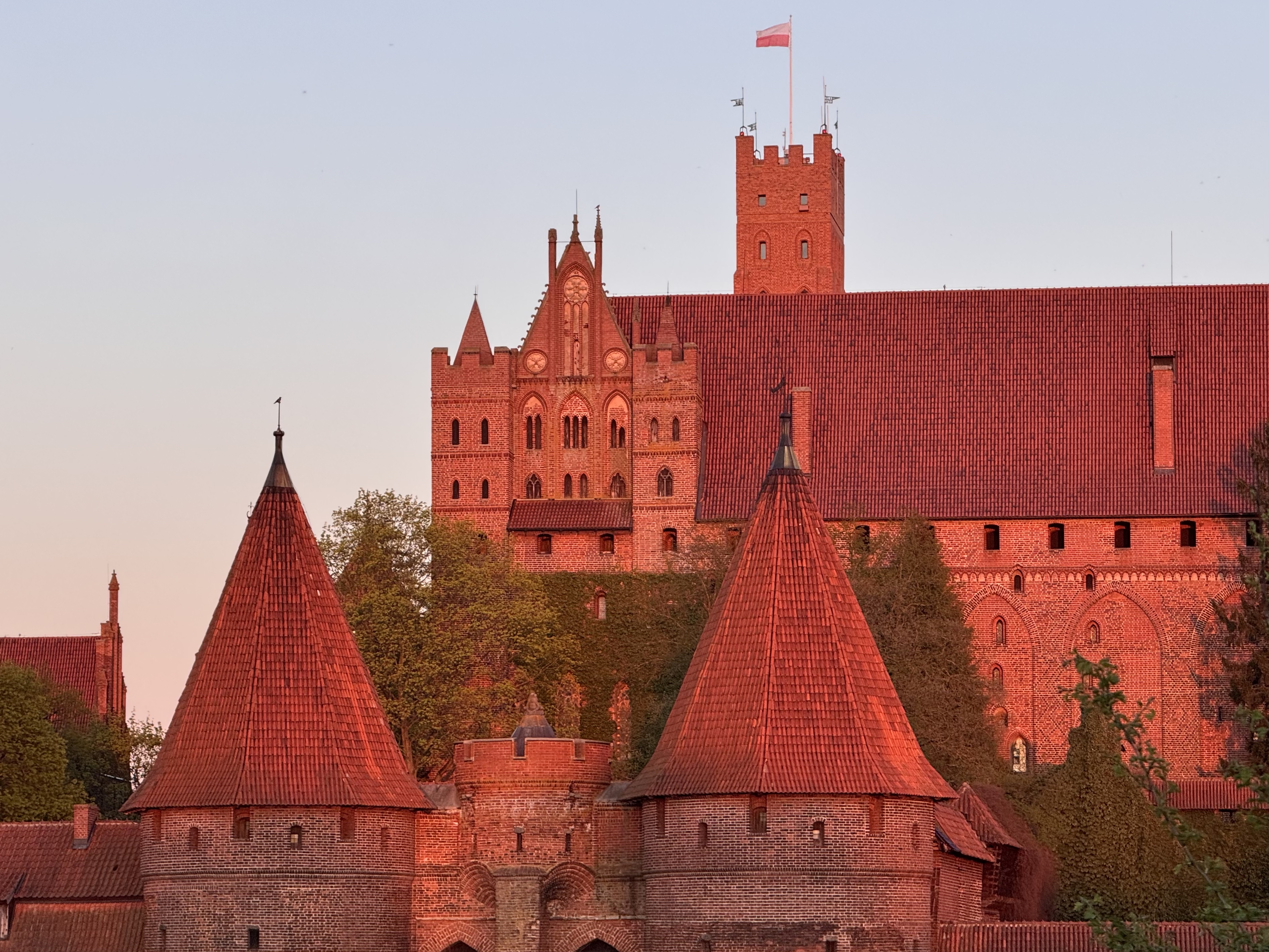
  • La otra Europa Relatos entre Baviera y la costa del mar BálticoCarlos Mendoza | Malbork Castle, Pomerania, Poland | 2026

    The other Europe Stories between Bavaria and the Baltic Sea coast

    By Carlos Mendoza-Álvarez

    I am in Europe for a few weeks, enjoying time to read and write, fundamental acts of culture, so sorely missed in Boston and now in Chiapas. I am able to enjoy this time thanks to the hospitality of a good colleague and friend, Professor Martin Kirschner, and this space of studium, which offers me the opportunity to give some classes and lectures at this university in the interior of Bavaria.

    For years, my friend Piotr, originally from Silesia in southern Poland, had invited me to visit him and his family in Pomerania. I had no idea where this place was, with a name that reminded me of the novel The Lord of the Rings, until a few weeks ago when I was preparing my trip from Eichstätt.

    A long weekend during the German stay provided the perfect opportunity to travel to the Baltic Sea coast, landing in Gdansk, a port that symbolizes the modern-day labor movement. Solidarność led by Lech Walesa, which initiated the collapse of the Iron Curtain, with the manipulation of the famous Wojtyla-Regan-Thatcher trinity, which took advantage of that historical juncture of the crack opened by the Polish working class to advance its geopolitical agenda.

    Having just arrived in this coastal land, a stroll through the historic center was a must. Piotr took great care in recounting the history of the Teutonic Knights who ruled and administered these lands from the 13th century, as a precursor to the Prussian Empire which, later, in modern times, would command its armies to extend its power over all the Slavic nations, from Poland and the Czech Republic to Hungary. After the failure of their mission to guard the Holy Land, this militia of medieval and early modern Christendom transitioned to a far-reaching territorial power until the beginning of the 15th century, when it moved to Königsberg and then to Austria during the Prussian era. Europe's largest castle is located in Pomerania, in the city of Malbork, with its red bricks typical of Baltic Gothic architecture that, at sunset in spring, shine like fire on the banks of the Nogat River, a tributary of the Vistula, which runs from south to north through all of Poland, from Silesia to the Baltic.

    For Poles today, those Gothic roots are part of their cultural identity, although they maintain a distance from neighboring and wealthy Germany, as well as from Imperial Russia, which is once again a real threat of war and invasion in the region.

    I also sensed that fear of war in my conversations with colleagues in Eichstätt, both because of the Russian threat and Trump's unbridled power. The complicit silence of the European Union and NATO in supporting the US and Israeli arms industries during this time of genocide in Gaza and the West Bank, the invasion of Lebanon, and the war with Iran will soon bear bitter fruit for Europe. What worries those most aware of the current civilizational crisis is the dismantling of international law being carried out by that "handful of tyrants," as Pope Leo XIV called them, who control the world through global war.

    Once in Pomerania, I had the opportunity to visit some inland villages which, according to my hosts Piotr and Aga, are in the poorest region of present-day Poland. Peasant farms are scattered across rolling hills, where grains, potatoes, and fodder for livestock are grown in spring and summer. There are also small towns with good roads and urban planning. A strong agricultural culture is evident, blended with a rural atmosphere, where the arts and sports are integral to the daily lives of families.

    Aga is a painter who has opened her studio-gallery, Ligo, in the barn of the old farmhouse, where she presents exhibitions of her paintings once a year. These exhibitions primarily feature nudes and portraits with a somewhat Impressionist, colorful, and naive style. When we visited the beach in the famous resort town of Sopot, on the shores of the Baltic Sea, I could see how much the whole family, including her three intelligent and beautiful daughters, enjoyed the sea in springtime. I sensed there a kind of poetic recreation that springs from the Baltic soul.

    During a conversation with friends of Piotr and Aga, particularly with a psychotherapist from Gdansk, the topic arose of the vulnerability of rural Polish youth to the uncertainty of work and war, which contributes to a growing social isolation, with the inability to form personal bonds beyond their virtual circle.

    I perceived other faces of Europe in Pomerania, today marked by uncertainty and the still-present trauma of the war.

    I've been discussing this other Europe with my friend Martin for at least five years, ever since he first invited me to Eichstätt in 2021 to talk about political theology for Europe in times of increasing polarization. In that discussion, at the beginning of the COVID-19 pandemic, the conversation revolved around how to improve the conditions for democratic life in this region of the world, with the unquestionable value, at that time, of international law and human rights as a universal framework for coexistence among nations. Five years later, politics seems to be playing out on an even more fundamental level: that of survival in a context of global war, facing lethal transnational networks.

    Next week I will participate, together with my German friend, in an international colloquium organized by my Austrian colleague Isabella Bruckner, at the Anselmian Athenaeum of the Benedictines in Rome, on the theological legacy of Ivan Illich, on the centenary of his birth.

    As in many places around the world, people from academia and social movements are now rereading his work to find light in the darkness of this civilizational crisis that we are going through as humanity.

    I became acquainted with Illich's work thanks to Javier Sicilia and Jean Robert, who, since 1996 in the Bajo el Volcán bookstore, were discussing my doctoral thesis Deus Liberans —where I traced a genealogy of modernity as a denial of the other, the Indian, following Las Casas and Dussel in discussion with Levinas and Ricoeur—both mentioned the urgency of returning to Illich because of his devastating critique of the era of systems. Since then, I have continued reading the Austrian thinker, participated in colloquia in Cuernavaca, and organized roundtables on his legacy, first at the Universidad Iberoamericana in Mexico City and later at Boston College.

    Illich is almost always read as a critical thinker of instrumental reason, but without considering his theological background. This was the astute approach of Gustavo Esteva, for whom Illich's contribution stood on its own as a philosophy of proximity and critique of systems, but without its connection to Christianity. Gustavo disagreed with this approach during our conversations in Santa Fe.

    That is why the Rome colloquium seems so relevant to me today, because it is about seeking the source. theological From Illich's critique of modernity, to enrich the analysis arising from secularized thought. In this way, it will be possible, in my view, to contribute to making visible and promoting the spiritualities of resistance, those woven by the victims of the systems age as survivors of the logic of the machine and the algorithm. We will discuss experiences of conviviality in Germany during COVID-19, resistances of autonomy of bodies and territories in Mexico, as well as forms of proximity, the recovery of the vernacular, and the radical nature of care as clues to confronting the systemic violence that often overwhelms us.

    In the next post I will tell you my impressions about that meeting that will take place on the Aventine Hill in Rome.

    Koślinka and Eichstätt, May 8, 2026

  • Tiempo de guerra y tiempo de pazRutger van der Tas | Absolution | 2023

    Time of war and time of peace

    By Carlos Mendoza-Álvarez

    We began the new year 2026 with the deployment of US military might very close to us in the Caribbean Sea. This was the setup for the extraction in Caracas of the illegitimate president Nicolás Maduro and his wife, kidnapped in the name of foreign justice to be taken to a court in New York where they are accused of criminal conspiracy related to drug trafficking.

    This new expression of warfare in today's tripolar world, created after the pandemic by the United States, China, and Russia, was already foreseeable. Russia's invasion of Ukraine, China's threat to Taiwan, and the genocide of the Palestinian people by the state of Israel with the tactical support of the United States are all part of this new geopolitical strategy.

    But we ignored these signs in the Western Hemisphere. We thought that Latin America and the Caribbean would be safe from Uncle Sam's neocolonialism because they had overcome his political and military interventionism during the era of the military dictatorships of the last century. We believed in party-based democracies, which took the reins of left-wing and right-wing governments throughout the region. Under the illusion of these party-based systems, we were unable to see how networks of corruption were being woven between political parties, business groups, governments in power, increasingly sophisticated criminal organizations, and transnational corporations, forming the very fabric of the extractive society of which we are part as unrestrained consumers of superfluous goods, indifferent to "the political" as everyone's task.

    Today it is necessary to recognize that we are also part of the problem of this neocolonial war with various fronts that has already reached our territories and entered our homes.

    On social media, hateful phrases are increasingly circulating, used to criticize anyone who comments on the corruption occurring in Mexico under the Fourth Transformation, or in Venezuela denouncing Chavismo, or in the United States pointing out the ICE executions in Minneapolis and Chicago as a mercenary power serving the ideology of [the regime/the regime]. Make America Great Again (Maga). It seems that it's all the same to insult someone with a single phrase on Facebook, Instagram, and TikTok, and then justify a deranged mercenary shooting a woman point-blank in the head for driving a car that failed to stop despite police threats on a street in her neighborhood, which was being raided by immigration police. Even in our closest digital conversations, this practice of resolving differences with a single phrase and a click, blocking those who disagree with us as if it were a virtual gunshot, is growing.

    Differences worth confronting in a face-to-face dialogue, which we avoid as much as possible because it makes us uncomfortable. Why does this proximity frighten us so much? It seems as if the world of war has been encapsulated within the screens of our cell phones, tablets, or computers, only to then spill out onto the streets with the same necrophilic clinical precision, using pepper spray or an AK-47 rifle. The time of war has already entered those "black mirrors" that devour us mercilessly, shifting from praise to insult with the same speed with which our thumb swipes wildly across the screen. scrolling or swiping on the cell phone screen.

    Time of territorial and digital warfare.

    “Everything has its time,” says the book of Ecclesiastes. This beautiful biblical wisdom text is a contemplative meditation on war and peace, addressed to a people seeking their place in the Hellenistic world of their time. “A time to throw stones into the river, and a time to gather them up.” Thus the Qohelet, or Hebrew sage, expresses the inexorable law of life, lived in the ebb and flow of love and hate, a law celebrated by poets of so many cultures. “A time to embrace and a time to refrain from embracing,” he continues, in a more personal tone, speaking of love and heartbreak. And to complete this realism, bordering on self-denial in the face of the inevitable, he concludes with a laconic ending: “A time for war and a time for peace.”.

    Will we have to resign ourselves to the imperial military violence that stunned us a few days ago, and at the same time be trapped in the solitude of social media, which exalts and lynches with a click those who dare to dissent in a chat with friends, family, or a digital community? Times of war.

    The realism of face-to-face confrontation is perhaps the opportunity to “stop the virtual and territorial war” by recovering the intimate space from the encounter of vulnerable body with vulnerable body, as masterfully presented Emmanuel Levinas. This vital opening immediately places us in a different perspective: the range of the voice with its intonations and accents, movements and pauses, emphasis and irony, glances and silences. It opens another door for us. Perhaps the refuge of peace lies precisely there. In that realm of pause, silence, shadow, the waiting period. A time of peace.

    Could that be the narrow gate through which the messiah passes?

    These past few weeks I've been discovering new facets of the urban indigenous culture of the Chiapas Highlands, very different from what I knew in past decades. I've had to learn to pause, for example, to interpret a look when a woman addresses me in Tsotsil, a Mayan language I don't understand, during a prayer and reconciliation meeting. But she and I managed to connect by looking into each other's eyes: hers bathed in tears that flowed accompanied by the whisper of her voice, imploring a heavenly blessing to ease her pain. Mine, responding to her gaze with tears that mirrored hers. Even though we don't "understand" each other in terms of phonemes and the signifiers of language, a communication of sense Through gestures and symbols, when we both bow our heads and my hands brush against her hair to communicate human and divine energy, and her hands embrace mine in gratitude and bless me. In that silence that gives way to the wordless embrace, a spark of eternity arises, enveloping us both.

    Is that the peace he speaks of? Qohelet in the times of the dominant Hellenism of his era?

    Times of peace in the face-to-face experience.

    The first week of the year leaves me with a very clear challenge: to learn to break free from the times of war in a world driven mad by threatening empires, as a gift of times of peace lived in face-to-face encounters. proximity, so dear to Jesus of Nazareth, recovered by Gustavo Gutiérrez e Ivan Illich in our time.

    In this way we can move from resignation to the overwhelming military power of our times, reinforced by self-denial in the face of the digital lynchings we experience in a frenzied way, towards the peace of face-to-face encounters, in the discreet but real meeting with the face, body, and soul of the other, however different they may be, when we experience them as a gift.

    There is always the possibility of a haven of peace that arises like a spark when we allow our vulnerable condition to touch and be touched by the other person, with their own ways of life.

    And indeed, our violent world is in need of that peace more than ever.

    Jobel, January 10, 2026

English