Category: Geopolitics and spirituality

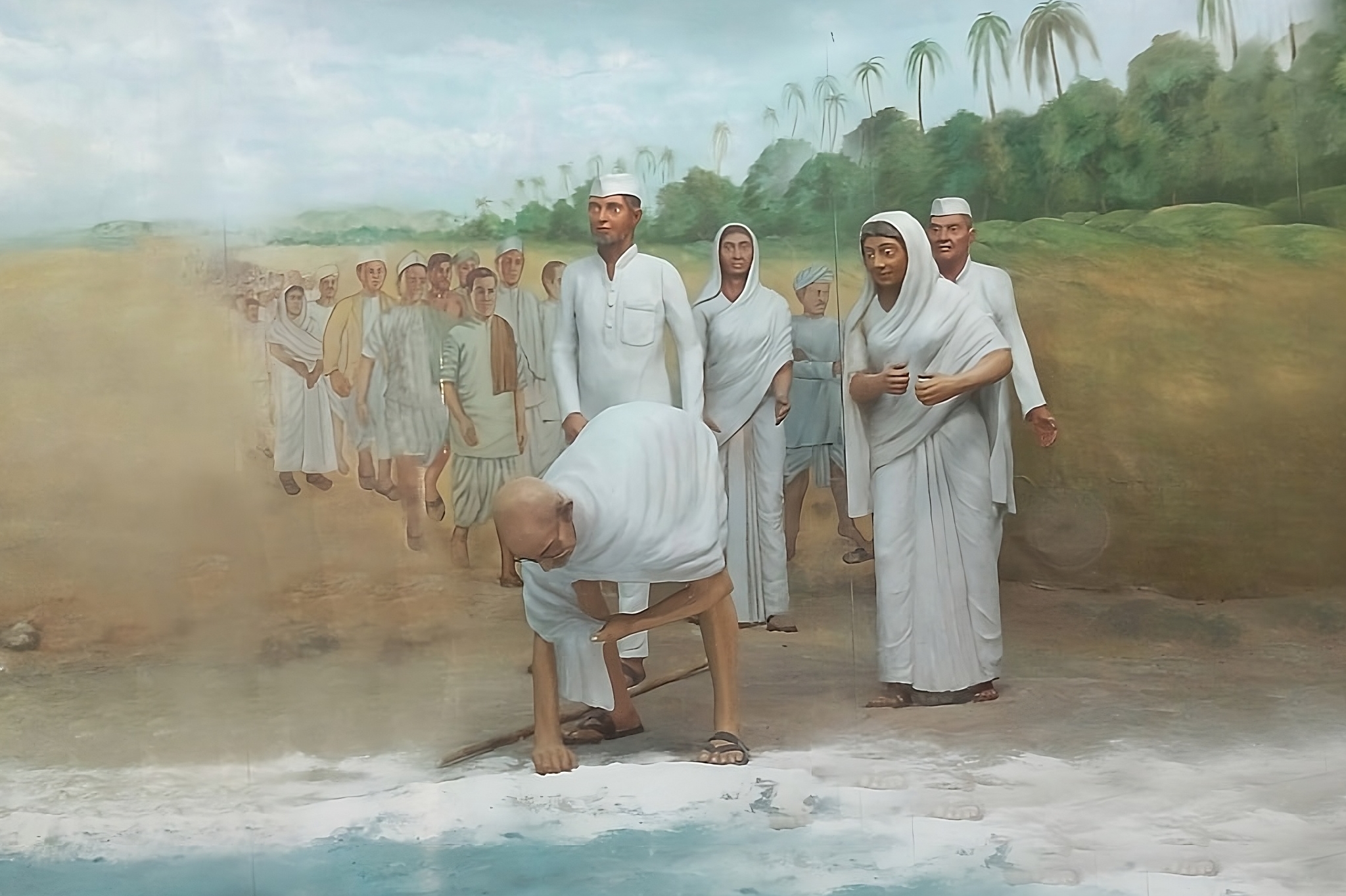
  • Marchar o no marchar, esa es la cuestiónGhandi's Dandi (Salt) March, 2012

    To march or not to march, that is the question

    By Carlos Mendoza-Álvarez

    In recent weeks, Mexico has been the scene of social unrest stemming from the population's weariness with the violence of drug cartels that increasingly control more and more territory. The state of Michoacán has become the epicenter of this violence against the population, particularly against avocado and lime producers who hold that cursed "green gold" in their hands.The less glamorous side of Mexico's new 'green gold'This is devastating environmental and social systems. It is an expression of the predatory economy that is part of the extractive society in which we have been trapped for decades worldwide. The political class tries in vain to promote regional development plans with great media impact, but with few results for the victims and many alliances that maintain "stability" in the region to consolidate the privileges of criminal mafias.

    As analysts of similar cases of narco-economies, such as Colombia decades ago and now Mexico, had already predicted (Terrorism and organized crimeWhat is happening is an escalation of violence perpetrated by criminal networks, which first affects local populations and then rises to reach the political and business classes in order to increase profits, political power, and control over territories. Even the United States government is intimately familiar with these criminal networks and manipulates them as it benefits its role as guarantor of democracy in the world within a new "multipolar order" (Trump is making a grave strategic error if he thinks he can divide the world with authoritarian powers and achieve peace.) negotiated with the authoritarian regimes of China and Russia.

    Ordinary citizens—an expression often applied today to the most dangerous professions, such as journalism and, unfortunately, academic life in universities subject to censorship—are left bewildered, defenseless, and astonished by this avalanche of insecurity, crimes in public squares, and false promises from the authorities. The churches, for their part, attempt, without much success, to promote "peace plans," or better yet, "pacification" plans, to restore the broken social fabric. As I mentioned in my previous post a few days ago... National Dialogue for Peace which the Catholic Church has been promoting for three years in an unusual alliance between the Mexican episcopate, religious orders and Christian-inspired civil organizations.

    The problem that arises in initiatives coming from the political, business, and religious spheres is the subject. That is, the communities in their own places of life seem to be absent as actors in the proposals. Because what is urgent is "the refounding of Mexico from the perspective of the victims," as Javier Sicilia has insisted for the last fifteen years.Open letter from Javier Sicilia to López Obrador).

    Today, perhaps, heeding the many voices that have emerged from the tragedies caused by systemic violence, we could say that it is a matter of embracing the diversity of autonomies (subjective, territorial, political, and even religious) to reclaim "the political" from below. This is the central theme of the collective book in preparation for the American publisher Orbis Books, which I am coordinating with the splendid editorial support of Nathan Wood-House and Francis Boccuzzi.

    Last Sunday I attended the march called by the Hat Movement from Michoacán, founded by the assassinated mayor Carlos Manzo. Some groups joined these protests, which took place in thirty-five cities across the country. Generation Z which represents the digital nomadic youth who have already shaken centers of power around the world, such as in Nepal and Peru. Some twenty thousand people attended in Mexico City, with a toll of more than one hundred injured (Generation Z will decide the next elections in Mexico), where there were violent disturbances at the end of the march in the Zócalo, caused by hooded people trying to enter the National Palace, where they were repelled by riot police, after they knocked down one of the immense metal fences with which the authorities had "protected" the emblematic building of the central power of the country. Eighteen people were arrested  And eight of them are in pretrial detention facing charges for threatening the lives of some guards who were beaten and injured, like many other people at the march that no one talks about, some of them without having been involved in any violent action.

    Although the facts and the legal procedures still need to be clarified, this growing social unrest remains, turning into indignation and peaceful, sometimes violent, protest against a government that is paralyzed, if not colluding, with the aforementioned mafias.

    Last Thursday, November 20, the national anniversary of the Mexican Revolution, the protests of the Generation Z They were held again in several cities across the country, with particular anger expressed once more in the main public square of the nation's capital.

    To march or not to march, that is the question that citizens in Mexico and the world are asking themselves today as an existential, ethical, political and spiritual question to express their weariness with the multiple heads of the hydra of necropower that have taken over the world.

    Political parties and churches claim to "represent" the people, but they have lost credibility. Civil society organizations have been overwhelmed by the tides of insecurity, impunity, and terror.

    What is left to do amidst the ruins of a nation-state overwhelmed by the powers of today's extractive capitalism?

    Marching in public squares as citizens in peaceful resistance is the path that many peoples in modern times have followed as a form of profound social transformation.

    A symbol of this social journey—still alive in modern memory—is the famous Salt March Gandhi began this journey almost a century ago, in 1930, starting with a handful of eighty people, marching from Ahmedabad to the Guarat coast, gathering more people along three hundred kilometers to protest against the British Empire in a centuries-old site of oppression for India's poor. By the end of that year, sixty thousand people had joined the protest, which became the turning point that paved the way for India's independence.

    In Mexico, Pietro Ameglio (Civil disobedience and other texts ) has kept alive the memory and reflection on that ethical and political act of civil disobedience, in the context of the March for Peace with Justice and Dignity initiated in April 2011. Some will say that —almost fifteen years after that outcry— Mexico is still lost, falling into the chaos of a failed state produced by necropower.

    Others of us today advocate returning to the source of the "autonomies" that arise in liberated subjectivities, bodies, and territories, where human beings take root, flourish, and die to endure; this is the clue proposed by the anti-systemic thinking of the Cuernavaca School.

    At its mystical core, the only way to halt the spiral of hatred is by exposing one's own body. This is how Saint Paul described it when referring to Christ: "He broke down the wall of hatred in his own body" (Ephesians 2:14). This is the quintessential messianic gesture, pristinely experienced by Jesus of Nazareth on a horrific cross imposed by the Roman Empire with the complicity of the religious authorities of the Temple in Jerusalem. A tragic destiny, but not a final one, because that offered life was transformed by his heavenly Abba and by his community of survivors into a seed of new life.

    Ultimately, these are autonomous regions with a mystique of a fulfilling life, born from the excluded of all times. That is the march of dignity that never ends.

    To march or not to march.

    The question remains open for us today.

    Oaxaca, November 22, 2025

    Note: I would appreciate your feedback at the end of this page.

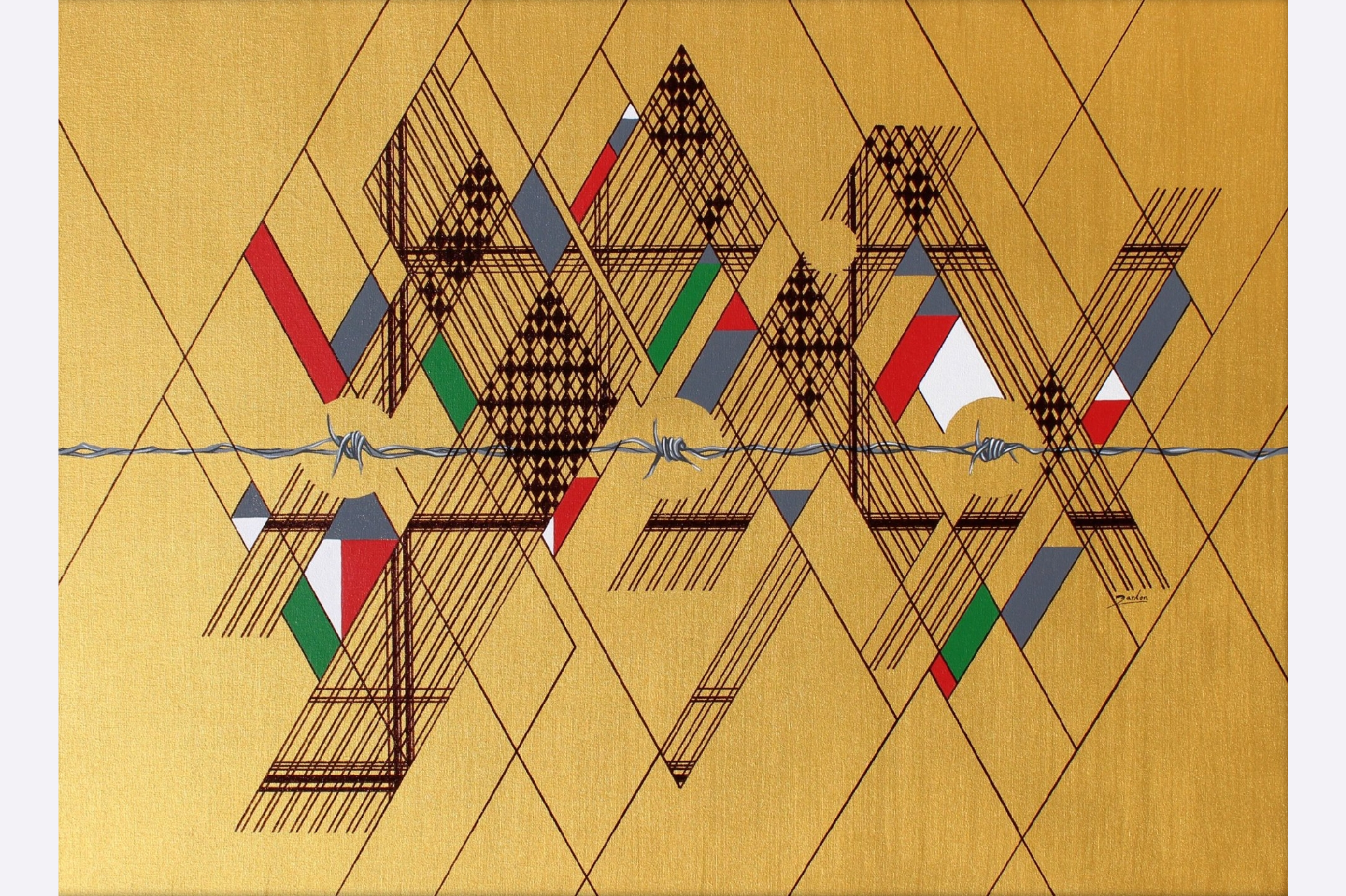
  • Cuando la verdad sí importaMarlon Puac | Decolonial Weaving | Sololá, Guatemala, 2022

    When the truth does matter

    By Carlos Mendoza-Álvarez

    The assassination of the mayor of Uruapan, Carlos Manzo, in the Mexican state of Michoacán, on November 1st, is an atrocious example of the “pedagogy of terror” whose objective, according to Rita Segato, is to “show that there are powers that are sovereign in the most absolute impunity, as a pedagogy of territorial control of sovereignty” (Counter-pedagogies of crueltyThis is a strategy used by criminal organizations to paralyze the population, eliminate politicians who disobey them, and control their territories. The crime was committed in a public square on the eve of the Day of the Dead, when the community was celebrating, according to the tradition of candles, the passage of the souls of the departed. Accompanied by his wife Grecia and their two young children, the founder of the “Hat Movement” was gunned down by a minor, apparently in collusion with two other individuals, entangled in the machinery of drug cartels that are destroying the lives of young people worldwide with the mirage of power and money that they kill.

    Just five days later, Carlos Manzo's widow took office as mayor of the city with a speech punctuated by anger, desolation and indignation that now places her at the epicenter of a seismic movement shaking Mexican society. Grecia Quiroz in her first speech As mayor, she said something that has resonated in my memory: “Today, Carlos Manzo is stronger than ever. This legacy, this Hat Movement, they did not silence. And they will not silence it because I remain here, firm with the unwavering conviction he taught me […] Let it be heard loud and clear: Carlos Manzo’s legacy will continue. Even though they have silenced his voice. Even though [to] those who gave the order to take his life in the cruellest way, [I say] this will continue, this will go on. The Hat Movement will not stop.” As an independent candidate, her husband defeated the candidate of the ruling party in the last election. After seven years, the ruling party has not only failed to pacify the country, but on the contrary, has been losing more and more control over the national territory. And now Grecia takes up the banner of citizens fed up with the failed state that continues to produce more and more wasteful living conditions.

    President Sheinbaum's initial statements were regrettable, as well as belated, blaming "the right wing" for the violence in Michoacán stemming from the war on drugs launched in 2006, almost twenty years ago, by then-President Felipe Calderón, of the right-wing party that governed the country for two six-year terms with disastrous results. But Mexico's path as a sovereign nation remains adrift. The seven years that the current "left-wing" party has governed Mexico represent the failure of the Fourth Transformation initiated by leader López Obrador. The president's pacification plan is late, does not originate from the communities themselves, and fails to address the systemic causes of this spiral of violence. The truth doesn't matter to her or her party. What matters is controlling the narrative in the media to keep pushing forward with the "second tier" of this ill-fated Fourth Transformation.

    In this atmosphere of national unrest, organized civil society has an urgent role to play in saving the country from collapse. Initiatives such as Reinsert To rescue children living in precarious conditions caused by violence in the country, there are clues to the projects that can be imagined and created in each region, although many of them depend on the whims of the companies or governments that fund them. Therefore, only the creativity of collectives, communities, and peoples will have the necessary strength to persist in this life-or-death struggle.

    Universities are also being called upon by a wounded society to understand the intricacies of the systemic violence that afflicts us. Churches have begun to emerge from their lethargy to participate in collective healing processes, drawing on their spiritual heritage. In recent years, the initiative of [unclear] was born within church circles. National Dialogue for Peace following the murder of the Jesuits of Cerocahui in the Sierra Tarahumara three years ago, and prepares for its second meeting in January 2026 in Guadalajara. It represents an attempt by the Roman Catholic Church to take up the mantle of the Movement for Peace with Justice and Dignity, initiated by Javier Sicilia and the victims of violence in Mexico in 2011 (“The peace movement is a moral reference point”: Sicilia), which was first co-opted by the governments of Felipe Calderón of the PAN and Enrique Peña Nieto of the PRI, then scorned by the government of Andrés Manuel López Obrador of Morena.

    What is the truth of the victims? How is that truth heard and acknowledged in the narrative of society and the current government? What does Grecia Quiroz's outrage in Uruapan tell us as Mexican citizens? How does the monstrosity of Víctor Manuel Ubaldo, the underage hitman killed after committing the crime, challenge us? How can we dismantle the network of necropolitical criminality that controls Mexico today? How did we reach this point of corruption within our nation's social fabric, and what collective processes can we promote in each place to escape this barbarity that is leading us to the abyss?

    While watching the videos in amazement and reading the news about the tragic events in Michoacán, I was able to attend the congress “Heteronomies of Justice” (3rd International Colloquium: Justice of the Other), organized at the Institute of Philological Research of the UNAM by our dear colleague Silvana Rabinovich. The presentations by young researchers revolved around the question of how to decolonize discourse and praxis for justice, based on conversations between diverse cultures, for example, between the Jewish philosophy of Herman Cohen and Emmanuel Levinas in the 20th century with the philosophy of liberation of Enrique Dussel in Latin America and the Caribbean; or between the feminist thought of María Isasi Díaz, a womanist author in the United States, and the historical realism of Ignacio Ellacuría in El Salvador, committed as rector of the UCA to the poor and justice in times of military power.

    The university also opened a dialogue to consider the connections and differences between Ernst Bloch's philosophy of hope in Germany during the Nazi regime and the thought of Enrique Dussel in Argentina and Mexico during times of dictatorship and resistance. These exchanges took place on the occasion of the second anniversary of the death of the great Argentine-Mexican thinker.

    A tasty outcome of this colloquium was focusing on the problem of messianic core of history, where the resistance of the people generates changes in the history of oppression, sowing stories of liberation and ethical and political redemption, with a mystical wellspring. Following the intuitions of Professor Dussel, ethics reveals itself as the primary politics, open to messianic anticipations of transcendence. All these deliberations were not unrelated to the question of hope that arises from the victims in Gaza, or from the Searching Mothers in Mexico, as our hostess reminded us time and again.

    We closed the day with the pre-premiere of the documentary “Dussel: Philosophy Is a Gift for a Meaningless World,” by Argentine filmmaker Cecilia Fiel. For over an hour and a half, the documentary explores the life of Dussel, his story of exile, his library, his students, and his vision of the history of colonialism inherent in Eurocentric modernity and the resistance it faced. It highlights the narrative beauty of scenes of the lucid old man, Dussel, walking through emblematic sites of Mexico-Tenochtitlan, such as the Zócalo in the heart of Mexico City and the Plaza de las Tres Culturas in Tlatelolco, where the liberation theorist, in the twilight of his life, delivers a masterclass on the role of philosophy in the search for meaning. sense of history.

    Those exchanges at UNAM made me think about another version of the truth. When the truth truly matters, it's possible to dismantle the fallacies created by the powerful, whether they be the governments in power, corrupt religions, or criminal organizations.

    How can we break free from this growing spiral of hatred in Mexico, Palestine, and Mexico? A first step is to return to the importance of truth. Not as a weapon of war to tell the version of the powerful or the perpetrators, but to listen to the victims and survivors.

    Daring to converse with others in order to search together for the meaning of life in the utopia of a “we-others” as the seed of redemption is the beginning of an (im)possible hope.

    Because the truth does matter when we want to heal wounded humanity so that one day we can all enjoy Life.

    Mexico City, November 8, 2025

    Note: I look forward to your comments at the end of this page.

  • Noticias de WallmapuGabriel Pozo Menares | Mapuche Calendar | Wallmapu, 2011

    Wallmapu News

    By Carlos Mendoza Álvarez

    p

    The light of dusk reaches Tirúa, in Mapuche lands, while Carlos, my Jesuit host who has been here for more than fifteen years (HistoriActiva Jesuit community of Tirúa), drives along the dirt road to visit friends who have opened their homes to share life in the area for years. We arrive and are greeted by the oldest daughter, along with her cats and dogs. She briefly interrupts the work she's preparing for her last semester of high school, as after graduation she plans to enroll in university to study teaching. Life goes on simply among the families who live here. Her father spent the day growing potatoes and then dedicated the afternoon to laying the floor of a new room in the house. They offer us mate as a ritual to accompany their conversation. Before leaving, the friends exchange bird food and make plans to recycle an old wooden door that will be installed in a budding eco-spirituality center.

    Wallmapu (Declaration of the Department of History on the term Wallmapu) is the term that refers to the ancestral lands of the Mapuche people (The Indigenous World 2025: Chile). Today, they are dominated by the forestry industry, which has contaminated the territory with invasive species such as eucalyptus and pine to mass-produce cellulose for export to the global packaging market.

    The Mapuche people today are divided between the frantic integration into the modern world of consumption on the one hand and, on the other, the defense of their territory, language, and traditional medicine under the leadership of Machi women, healers and spiritual ancestors.

    On both sides of the mountain range, divided between Chile and Argentina, the Mapuche people fight for their territorial and cultural survival, in the face of the overwhelming inertia of the modern world (Chile: Resistance to the forestry model in Wallmapu, Mapuche territory). For communities assimilated into today's modern model, it seems better to eat processed foods than seaweed and shellfish as the ancients did; or to drink Coca-Cola instead of herbal teas because it gives them greater status; they prefer to be evangelical Christians or Roman Catholics rather than follow the spirituality and language of their ancestors. Ultimately, it is a matter of "integration" into the modern world, even at the price of cultural assimilation and environmental depredation, which, in its symbolic undertone, is violence against the ancestors and against Mother Earth.

    Civil society networks such as “Churches and Mining”, or the initiatives for intercultural dialogue on ancient and modern astronomy promoted by some universities in the region, are modest attempts to accompany a people torn apart by internal contradictions between modernity and tradition.

    Perhaps eco-spirituality is being an "articulation," among others of a more social and political nature, that allows for these intersections. Carlos told me the anecdote of a grandmother who, attending a workshop on traditional medicine and eco-spirituality, said she didn't understand anything about the intersections of the three bodies (personal, communal, and territorial) that the workshop presented, because she had been thinking throughout the entire meeting about the meaning of that strange word written on the invitation: "articulation." A term that the grandmother kept thinking about until she finally realized that it surely referred to the articulations of bones, when she felt something in her body was out of alignment, impeding her mobility and causing pain. So she concluded that the workshop was a path to healing her joints. And ultimately, that was the objective of the workshop! That grandmother had followed it in her own way, even though she was absent from the rest of the talks.

    p

    p

    Before arriving in Mapuche lands, I was able to speak with university students at two forums in Santiago, Chile. The first was about the work of Gustavo Gutiérrez, one of the fathers of liberation theology, on the occasion of the first anniversary of his death (Gustavo Gutiérrez International Congress). In a traditional academic format with keynote lectures and presentations, over the course of a couple of days a clearer awareness emerged among attendees about the importance of style Latin American to speak of God, intimately connected to the experience of the poor and oppressed. A wisdom that is already part of the way some Roman Catholic and Protestant Christian communities understand their faith in a liberating God and promote the transformative role of victims in their own liberation processes, leaving behind lands of slavery and embarking on paths of new life.

    But we also began to see, not without some attendees' surprise, that it is necessary to open our hearts and our eyes to other exclusions, such as those experienced by women, queer/cuir people, undocumented migrants, relatives of missing persons, Afro-diasporic peoples, and indigenous peoples, to mention those who represent today's resistance to the violence that afflicts us in so many ways, with the Palestinian people today facing the genocide perpetrated by the Israeli government and its accomplices at heart.

    During the colloquium, several initiatives emerged to keep the memory of the great Peruvian theologian's work alive, through the work of the archives that house the recordings of the summer courses Gutiérrez offered in Lima for several years, a valuable resource that will reveal another angle of the author's thinking. Likewise, some of us proposed to investigate the relationship between Gustavo's thought and the work of Aníbal Quijano, his compatriot, who represents one of the most important sources of decolonial thought today, along with Frantz Fanon. The confluence of both thought styles, along with Black, feminist, queer/cuir and Palestinian liberation theology, will provide us with a more pertinent theoretical framework for understanding the intersectionality of violence and ongoing resistance in order to create alternative ways of life, governance, and spirituality that inspire communities located at the fractures of humanity.

    p

    p

    The other meeting, held with colleagues from the Chilean Society of Theology (UCSC hosted the Annual Conference of the Chilean Theological Society), was an opportunity to think together about possible paths to hope for communities facing systemic violence.

    My contribution to that annual event brought to the table the question of thinking about hope from a perspective of "combative decoloniality," like the dignified rage practiced by the Zapatista communities, or the indignation of women who face sexual or spiritual abuse in their respective religions. Because, from my perspective, it's about dismantling a vision of hope as a flight from the world in anticipation of consolation in the afterlife of eternal life.

    Rather, it's about discovering and strengthening the hope that "emerges" from the fractures of humanity. It's where survivors paddle against the current of the history of oppression and privilege, inhabiting the world with practices of mutual care, in the pedagogy of embodiment, and collective healing with memory, truth, and justice, as we explored at the recent Re-existe 2025 gathering.

    p

    p

    The sky of Wallmapu, with the crescent moon shining brightly, is today a living metaphor for the hope that surrounds us when we hear the heartbeat of the lands and stars of the South.

    p

    Tirúa, October 25, 2025

English