Category: Otherness

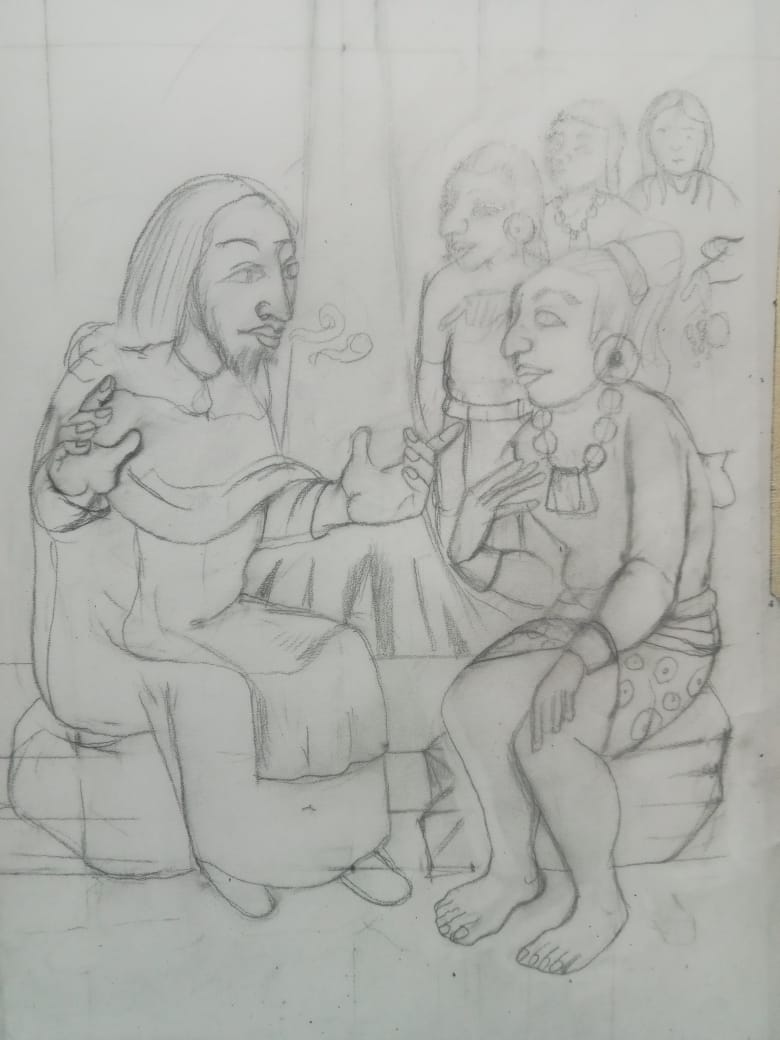
  • La fiesta de la Ruah divina Reflexiones sobre la memoria viva de los pueblos en movimientoAntún Kojtom | Mural 500 OP Chiapas | Detail: sketch of Friar Pedro Lorenzo de la Nada with Lacandon Sage | Sots´leb, 2026

    The Feast of the Divine Ruah Reflections on the living memory of peoples on the move

    By Carlos Mendoza-Álvarez

    Fifty days after Easter, Christian communities around the world celebrate the overabundance of divine love, reaping the fruits of the messianic age, gathered with joy in the midst of suffering, as the Hebrew poet says: “Those who sow in tears will reap with songs of joy” (Psalm 126:5).

    Two thousand years ago, after mourning the brutal execution of Jesus, the Galilean, by the Roman Empire—in collusion with the Temple authorities of Jerusalem and the enraged mob as part of the infernal mimetic cycle—a period of mourning was necessary for his community of friends and companions to grasp the senselessness of the innocent's death. This question still arises today in the grieving hearts of those who have survived lynchings, both ancient and modern. It is a questioning of the meaning of absence that also beats in the hearts of the Mothers Searching for their disappeared children in Mexico today, a cry that becomes a plea to find their offspring and help them "come home.".

    Celebrate that Love is as strong as death and, even more, that Love conquers hate or that Life resists and re-exists At first glance, it seems like an evasion that ignores the suffering of the victims and the urgency of justice. On the contrary, it seems to me that precisely in that hopeful suffering The heart beats with the ethical, political, and spiritual indignation of survivors of so much violence. A cry that is expressed in the public squares of Gaza and Tehran, Beirut and Mexico, Kakuma and Dadaab in Kenya, by those who dedicate their bodies, hearts, and minds to the service of life in the midst of death.

    The celebration of Pentecost is rooted in the joy of peoples who, after confronting horror, are able to go further in healing from trauma and quietly cultivating hope. Without denying the painful past, nor the undeniable need to hold the perpetrators accountable, what matters to those who survived is to stand up and live again with hope. This is what I have been learning, step by step, from the collectives queer/cuir  who face gender phobias of various kinds, women facing abuse and femicide, as well as indigenous peoples who strengthen their resistance through processes of autonomy of bodies and territories, from the Inuit in Canada to the Mapuche in the far south of our continent.

    How can we celebrate the harvest of the divine Ruah in these times of such profound uncertainty? We are witnessing alarming signs of a return to barbarism at the hands of genocidal governments in the Middle East and Africa, as well as in failed states trapped by the complicity of their rulers with transnational criminal organizations, as is the case in Mexico, El Salvador, and Nicaragua. This spiral of genocidal hatred is being transmitted in real time through the attacks of the Israeli Zionist state, which is committing crimes against humanity with the complicity of the United States and the European Union, and the indifference of the international community, against entire populations that stand in the way of its geopolitical power.

    Strengthening resistance movements must also confront fundamental debates to find the path to utopia in times of dystopia. Collective memory, which lies at the heart of these processes, is now a battleground. Who tells the story and how they tell it are questions the Zapatistas in Chiapas, like the Sumud Global Flotilla, are asking themselves, attempting to give visibility to those who always remain in the shadows of the power that kills.

    We Dominicans are not exempt from these debates, especially now that we commemorate 500 years since the arrival of the friars to what we now call Veracruz in Mexico, on July 25, 1526. The great feat of evangelization—which undoubtedly brought missionaries inspired by Renaissance utopia and by the zeal for reform of the religious orders to return to their origins of following Christ—was also marked by the libido dominandi of the conquerors who followed that maxim of Western modernity so forcefully expressed by Enrique Dussel: conquiro, ergo sum, that is, "I conquer, therefore I am".

    When recounting the history of the Dominican presence in this region of the continent—called Tierra Firme by Western navigators and Mesoamerica by later geographers—we cannot forget that a fundamental contradiction marked the evangelizing work of the Dominican friars in the 16th century, as rigorously studied by Friar Daniel Ulloa Herrero in his doctoral dissertation at El Colegio de México: an observant current led by Friar Domingo de Betanzos, and a prophetic tendency championed by Friar Bartolomé de Las Casas. Undoubtedly, there were many nuances between these two tendencies when it came to evangelizing the colonized lands that later gave rise to the golden age of New Spain, the era of the Baroque churches along the Dominican route from Mexico City to Guatemala, traversing the entire central and southern regions of the Viceroyalty of New Spain.

    The splendor of the Baroque art of the convent churches of Puebla, Oaxaca, and Chiapas has shaped a worldview in which Mexico was the axis mundi From that early era of modernity, a meeting point between Asia and Europe, Mexico City was also a laboratory for cosmopolitan culture, as Friar Julián Pablo Fernández liked to say when he was prior of the ruins of the Imperial Convent of Santo Domingo in Mexico City. This era gave birth to a Creole and mestizo culture of universal value, as UNAM historian José Rubén Romero Galván recounts. However, we cannot forget that this Creole culture subjugated and rendered invisible the Indigenous peoples, as contemporary decolonial readings emphasize.

    These reflections come to mind when accompanying a great Tseltal Maya painter, the master Antún Kojtom, who is currently creating a mural commemorating the arrival of the Dominicans in Chiapas, on a wall located in the main square of Sots'leb, between the temple and the market, in the municipal capital of Zinacantán.

    For the past six months we have been discussing the narrative of the emerging mural, emphasizing what we now call a "dialogue of knowledge" between the Mayan peoples of Chiapas and the Dominican friars.

    We chose a tone conversational The mural depicts scenes that highlight the ancestral religion of the Tsotsil people, particularly their religious roles such as grandmothers, seers, and stewards, with their ritual prayers on the hills, ancestral blessings, and community responsibilities. Through this narrative, we seek to underscore the centuries-old legacy that remains alive today in the pastoral life of the parish of San Lorenzo Mártir in Zinacantán.

    In the center of the mural appears the meeting between a Tsotsil steward and a Dominican friar, Fray Bartolomé de Las Casas, both standing with the same dignity, exchanging words, each with his symbol of authority, the staff of command for the first, the Bible for the second.

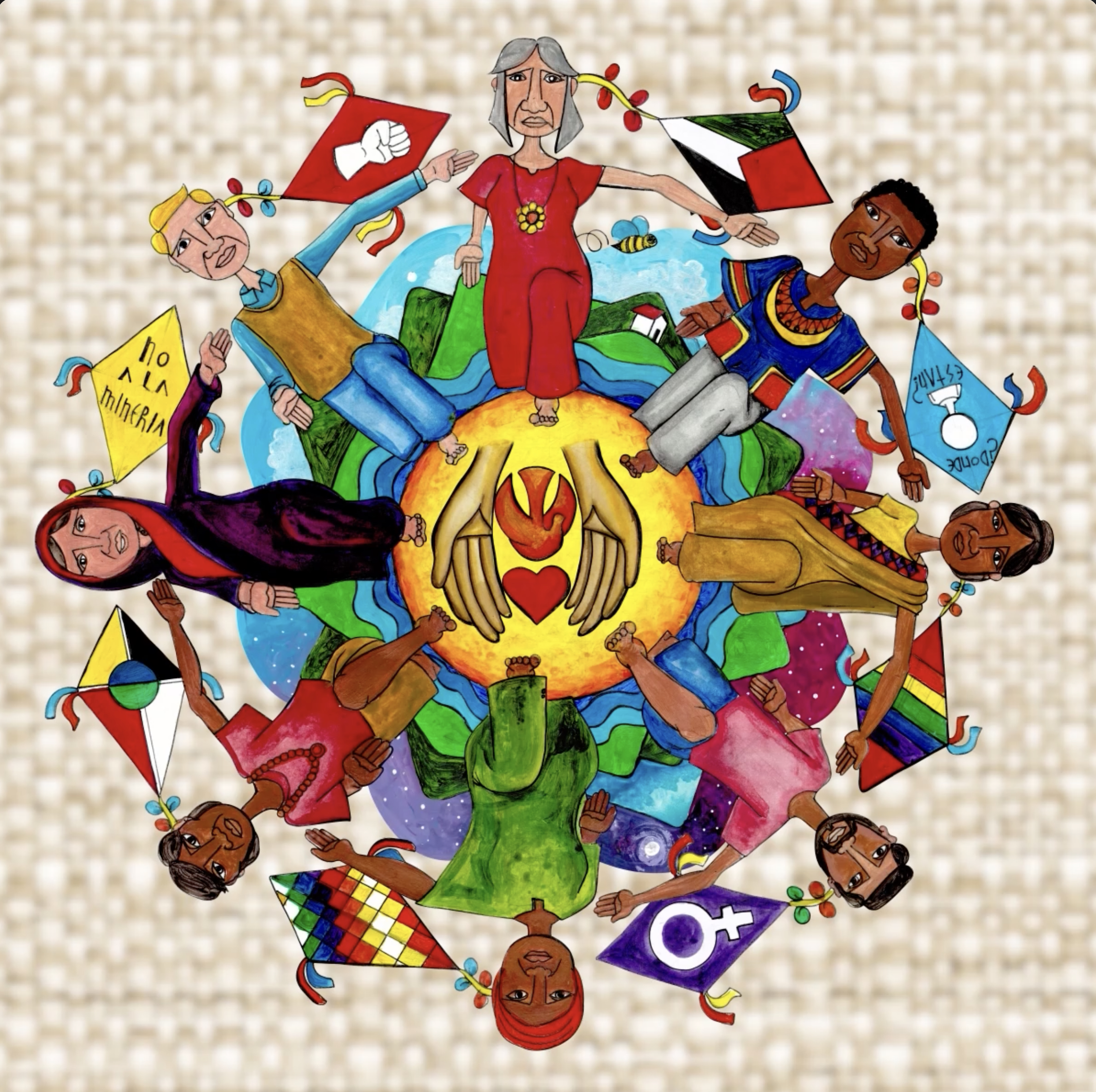
    On the right, a third scene brings together the prophetic Church that has flourished in the Highlands of Chiapas and the Lacandon Jungle from the 16th century to the present day: a group of friars, with Friar Matías de Córdoba who promoted the independence of Chiapas in the 19th century and Friar Raúl Vera with jTotik Samuel beside him, bishops of the Church of the poor and excluded in the 20th century. Above their heads, like kites moved by the wind of the divine Ruah, are the martyrs of the San Cristóbal Church of recent decades: Ignacio Pérez López, pre-deacon of Chicomuselo, Father Marcelo Pérez, parish priest of Guadalupe in Jobel, Simón Pedro Pérez López, member of Las Abejas de Acteal, and Guadalupe Vázquez Luna, survivor of the Acteal massacre.

    On the far right appears a highly symbolic scene for the recreation of the historical memory of the Dominican friars in Chiapas, recounting stories of creative rebellion: Friar Pedro Lorenzo de la Nada conversing with a Lacandon sage, both seated on rocks in the shade of a large ceiba tree, the sacred tree of the Maya, with the glyphs of the flowery word emerging from their mouths. The friar moves his hands, signifying eloquence, as he listens. The Lacandon sage touches his heart with one hand and points to Mother Earth with the other. One is dressed in his white habit and black cape; the other, adorned with a jade necklace and white loincloth. They are accompanied by a group of Lacandon women, young people, and children, attentive to the dialogue. This scene seeks to represent the apostolic adventure undertaken by a friar who wanted to go beyond the limits of Christian norms, as Jan de Vos masterfully recounts in his biography of Friar Pedro Lorenzo. What we felt was most important to highlight about the founder of modern Palenque was the audacity of the rebellious friar who "went into nowhere," as the prior of the Santo Domingo de San Cristóbal convent told him when Friar Pedro Lorenzo insisted on going into the jungle to find its inhabitants and announce the Good News. Escaping from the convent, he was lost for several years, later reappearing in the land of the Tsendal people, where he founded Palenque. During his apostolic journey, he reached Pochutla and Lake Lacam-Tum, now known as Miramar, a sacred center for the Lacandon people. From that time, some baptismal records are preserved in the diocesan archives, bearing his new name: Friar Pedro Lorenzo de la Nada (Friar Pedro Lorenzo of Nothingness).

    When sharing the sketches of the mural in progress with friends, there has been no shortage of praise for the initiative, especially since it was the result of a long dialogue with civil and religious authorities in Zinacantán. Others have appreciated that the invited artist is a renowned master of contemporary Mayan art. Some critical voices have pointed out the underrepresentation of women, or the prominence of the friars in the images. For my part, once I had agreed with Maestro Antún on the tone From the narrative with the importance of the symbols of the two traditions to be represented in the mural, I received with respect and great admiration the visual proposal of the artist who, with his own genius, will undoubtedly leave us a pictorial legacy that is the gift of the Dominican friars to the people of Zinacantán in this commemoration.

    In a couple of weeks we will be celebrating this event in San Cristóbal de Las Casas and Zinacantán.

    I'll tell you about the new seeds being sown on this path of living memory.

    Jobel, May 22, 2026

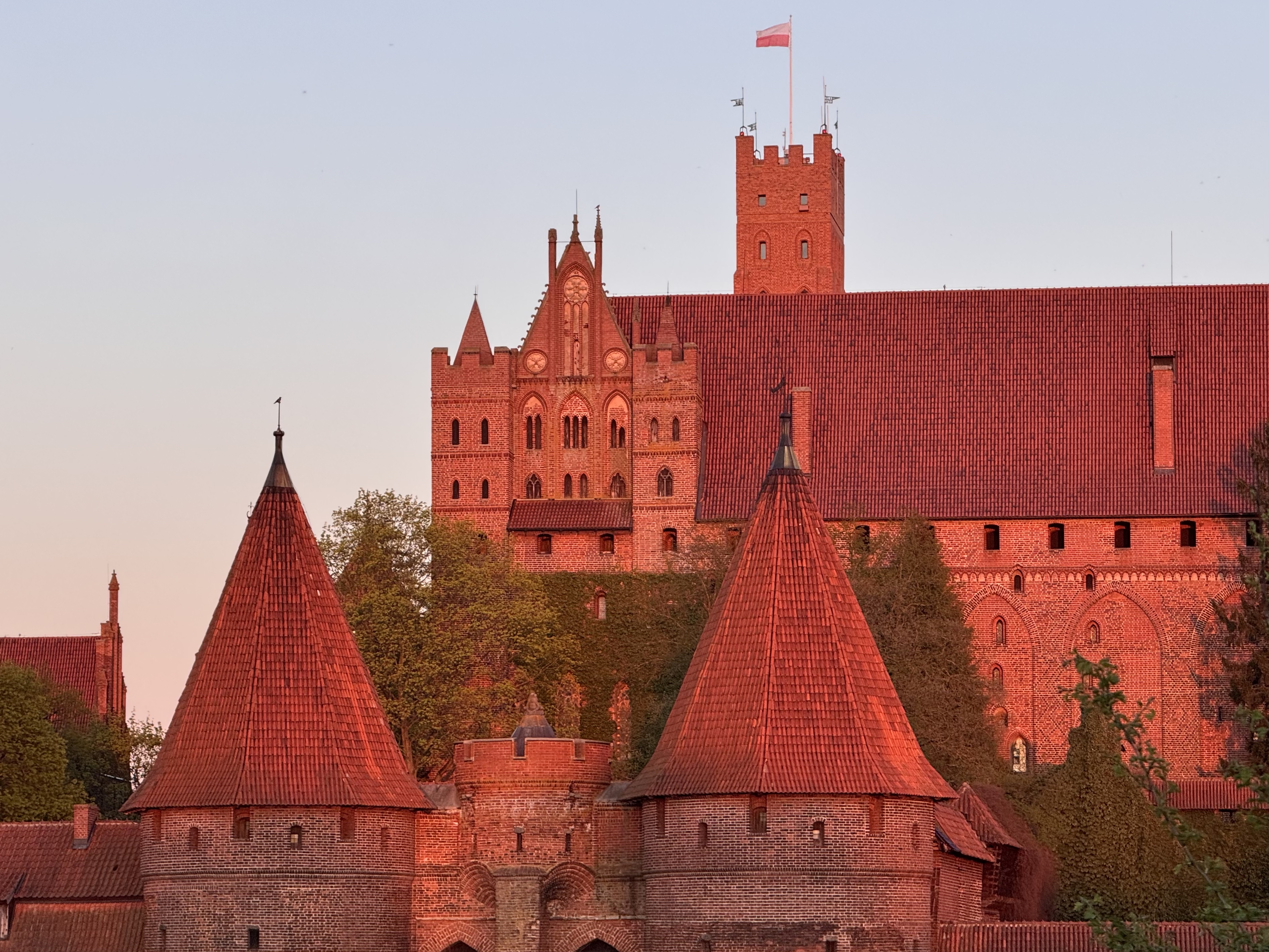
  • La otra Europa Relatos entre Baviera y la costa del mar BálticoCarlos Mendoza | Malbork Castle, Pomerania, Poland | 2026

    The other Europe Stories between Bavaria and the Baltic Sea coast

    By Carlos Mendoza-Álvarez

    I am in Europe for a few weeks, enjoying time to read and write, fundamental acts of culture, so sorely missed in Boston and now in Chiapas. I am able to enjoy this time thanks to the hospitality of a good colleague and friend, Professor Martin Kirschner, and this space of studium, which offers me the opportunity to give some classes and lectures at this university in the interior of Bavaria.

    For years, my friend Piotr, originally from Silesia in southern Poland, had invited me to visit him and his family in Pomerania. I had no idea where this place was, with a name that reminded me of the novel The Lord of the Rings, until a few weeks ago when I was preparing my trip from Eichstätt.

    A long weekend during the German stay provided the perfect opportunity to travel to the Baltic Sea coast, landing in Gdansk, a port that symbolizes the modern-day labor movement. Solidarność led by Lech Walesa, which initiated the collapse of the Iron Curtain, with the manipulation of the famous Wojtyla-Regan-Thatcher trinity, which took advantage of that historical juncture of the crack opened by the Polish working class to advance its geopolitical agenda.

    Having just arrived in this coastal land, a stroll through the historic center was a must. Piotr took great care in recounting the history of the Teutonic Knights who ruled and administered these lands from the 13th century, as a precursor to the Prussian Empire which, later, in modern times, would command its armies to extend its power over all the Slavic nations, from Poland and the Czech Republic to Hungary. After the failure of their mission to guard the Holy Land, this militia of medieval and early modern Christendom transitioned to a far-reaching territorial power until the beginning of the 15th century, when it moved to Königsberg and then to Austria during the Prussian era. Europe's largest castle is located in Pomerania, in the city of Malbork, with its red bricks typical of Baltic Gothic architecture that, at sunset in spring, shine like fire on the banks of the Nogat River, a tributary of the Vistula, which runs from south to north through all of Poland, from Silesia to the Baltic.

    For Poles today, those Gothic roots are part of their cultural identity, although they maintain a distance from neighboring and wealthy Germany, as well as from Imperial Russia, which is once again a real threat of war and invasion in the region.

    I also sensed that fear of war in my conversations with colleagues in Eichstätt, both because of the Russian threat and Trump's unbridled power. The complicit silence of the European Union and NATO in supporting the US and Israeli arms industries during this time of genocide in Gaza and the West Bank, the invasion of Lebanon, and the war with Iran will soon bear bitter fruit for Europe. What worries those most aware of the current civilizational crisis is the dismantling of international law being carried out by that "handful of tyrants," as Pope Leo XIV called them, who control the world through global war.

    Once in Pomerania, I had the opportunity to visit some inland villages which, according to my hosts Piotr and Aga, are in the poorest region of present-day Poland. Peasant farms are scattered across rolling hills, where grains, potatoes, and fodder for livestock are grown in spring and summer. There are also small towns with good roads and urban planning. A strong agricultural culture is evident, blended with a rural atmosphere, where the arts and sports are integral to the daily lives of families.

    Aga is a painter who has opened her studio-gallery, Ligo, in the barn of the old farmhouse, where she presents exhibitions of her paintings once a year. These exhibitions primarily feature nudes and portraits with a somewhat Impressionist, colorful, and naive style. When we visited the beach in the famous resort town of Sopot, on the shores of the Baltic Sea, I could see how much the whole family, including her three intelligent and beautiful daughters, enjoyed the sea in springtime. I sensed there a kind of poetic recreation that springs from the Baltic soul.

    During a conversation with friends of Piotr and Aga, particularly with a psychotherapist from Gdansk, the topic arose of the vulnerability of rural Polish youth to the uncertainty of work and war, which contributes to a growing social isolation, with the inability to form personal bonds beyond their virtual circle.

    I perceived other faces of Europe in Pomerania, today marked by uncertainty and the still-present trauma of the war.

    I've been discussing this other Europe with my friend Martin for at least five years, ever since he first invited me to Eichstätt in 2021 to talk about political theology for Europe in times of increasing polarization. In that discussion, at the beginning of the COVID-19 pandemic, the conversation revolved around how to improve the conditions for democratic life in this region of the world, with the unquestionable value, at that time, of international law and human rights as a universal framework for coexistence among nations. Five years later, politics seems to be playing out on an even more fundamental level: that of survival in a context of global war, facing lethal transnational networks.

    Next week I will participate, together with my German friend, in an international colloquium organized by my Austrian colleague Isabella Bruckner, at the Anselmian Athenaeum of the Benedictines in Rome, on the theological legacy of Ivan Illich, on the centenary of his birth.

    As in many places around the world, people from academia and social movements are now rereading his work to find light in the darkness of this civilizational crisis that we are going through as humanity.

    I became acquainted with Illich's work thanks to Javier Sicilia and Jean Robert, who, since 1996 in the Bajo el Volcán bookstore, were discussing my doctoral thesis Deus Liberans —where I traced a genealogy of modernity as a denial of the other, the Indian, following Las Casas and Dussel in discussion with Levinas and Ricoeur—both mentioned the urgency of returning to Illich because of his devastating critique of the era of systems. Since then, I have continued reading the Austrian thinker, participated in colloquia in Cuernavaca, and organized roundtables on his legacy, first at the Universidad Iberoamericana in Mexico City and later at Boston College.

    Illich is almost always read as a critical thinker of instrumental reason, but without considering his theological background. This was the astute approach of Gustavo Esteva, for whom Illich's contribution stood on its own as a philosophy of proximity and critique of systems, but without its connection to Christianity. Gustavo disagreed with this approach during our conversations in Santa Fe.

    That is why the Rome colloquium seems so relevant to me today, because it is about seeking the source. theological From Illich's critique of modernity, to enrich the analysis arising from secularized thought. In this way, it will be possible, in my view, to contribute to making visible and promoting the spiritualities of resistance, those woven by the victims of the systems age as survivors of the logic of the machine and the algorithm. We will discuss experiences of conviviality in Germany during COVID-19, resistances of autonomy of bodies and territories in Mexico, as well as forms of proximity, the recovery of the vernacular, and the radical nature of care as clues to confronting the systemic violence that often overwhelms us.

    In the next post I will tell you my impressions about that meeting that will take place on the Aventine Hill in Rome.

    Koślinka and Eichstätt, May 8, 2026

  • De pirámides y autonomías Sobre la geometría política de “el Común” para el año que comienzaGaudí | Sagrada Familia, Barcelona | Hyperboloid, 2025

    Of pyramids and autonomies On the political geometry of “the Commons” for the coming year

    By Carlos Mendoza-Álvarez

    The pyramids above and below

    A few days ago, Cideci-Unitierra was the epicenter of the seedbed Of pyramids, of stories, of love and, of course, heartbreak, dedicated to discussing, in my opinion, the old topic of the libido dominandi Or the desire for power that has resided in the human heart since the dawn of recorded history. Although, in reality, the reflections revolved around the recent history of the Mayan peoples of the Chiapas Highlands, who four decades ago decided to put an end to the power of local strongmen, landowners, and the corrupt mestizo government that imposed its rule upon them in modern times.

    On the occasion of the 32nd anniversary of the Zapatista Army of National Liberation's armed uprising, more than 1,300 participants—first at the Jacinto Canek Caracol, located in a working-class neighborhood in the northern part of the city of Jobel, and later at the Oventik Caracol—gathered to hear trusted figures from the rebel movement speak about the lust for power that opposes "the common good" by constructing pyramids of privilege and domination. The discussions focused, for example, on analyzing with Barbara Zamora The legal strategies of the Mexican state to consolidate private land ownership, dispossessing indigenous peoples of their territories with legal tricks, including the mega-projects of the Fourth Transformation.

    But there was also courageous discussion about the small and large pyramids of power built by left-wing revolutionary movements from the second half of the 20th century to the present to protect their privileges once they had seized political power. The persistence of these power pyramids in modern governments and state administrations seems to be a constant, unfolding on different scales in right-wing and left-wing political models, always at the mercy of the tyrannies in power.

    The self-criticism that the EZLN has shown regarding its own control and decision-making practices is, in the opinion of Raúl Zibechi, This is unprecedented in modern leftist movements. In a fascinating presentation dedicated to tracing the uses and abuses of power in the Latin American left that won political power—especially in Nicaragua, El Salvador, and Bolivia—the Uruguayan sociologist, who has worked alongside guerrilla movements first and social movements later for half a century, posed a crucial question to the Zapatista comrades, as well as to those of us who are attentive to the path they are forging: Are pyramids of power necessary and inevitable? What are their organizational and temporal limits to prevent them from becoming new strongman regimes and tyrannies?

    Between avant-gardes and rearguards

    I was surprised that this think tank didn't emphasize critical thinking, which half a century ago had already warned us about the risks of leftist revolutions becoming new tyrannies. Specifically, decolonial thought has for years been proposing the urgent need to overcome the complex of the vanguards typical of the left in the last century, who lost their way in the whim of speaking on behalf of the masses. corset Marxist class struggle, with its organic intellectuals, especially in its version of proletarian revolution to overthrow the bourgeois state, has been challenged and surpassed by the voices and practices of subaltern groups who no longer need a privileged caste to speak on their behalf. Indigenous peoples, women's collectives, and LGBTQ+ communities, among other subjectivities in resistance, construct their own thought through their ways of life and organization based on mutual care, imbued with ethical, political, and spiritual strength. Today, it is impossible to deny their knowledge and their forms of communal organization, through which they have resisted diverse forms of oppression for centuries.

    It is necessary to dismantle this will to dominate on all fronts where it manifests itself by building pyramids at the top and bottom. It is about going “to the rearguard of social movements,” as Boaventura de Sousa Santos said, to learn from them as experts in the resistance they have faced for centuries, especially Indigenous peoples. Feminisms community like the one from Lorena Cabnal In Guatemala, they emerge as a critical voice against the prominence of academia. extractivist Made by white, urban, and privileged women. These feminisms are linked as an instance of critical reflection alongside women's collectives confronting patriarchy, now opening their networks of care and thought to the mothers of disappeared persons searching for their loved ones, as well as to indigenous women in resistance.

    I was surprised that the "Of Pyramids, of Stories, of Loves and, of course, Heartbreaks" seedbed didn't put at the center these voices that have been clamoring for other ways of for decades. horizontality of power.

    The inevitable shift: from the pyramids of autonomies to the hyperbolic dimension of heteronomies

    A significant change in the perception of the construction of "the common" that Commander Moisés put on the table was that of the generational changes that the Zapatista bases experience in their youth.

    The insurgent-militiaman-Zapatista base triad that shaped the Zapatista movement four decades ago no longer accounts for the other forms of belonging expressed by the generations born in the Caracoles of the autonomous territories. Now, young Zapatista subjectivities are discovering new ways of building resistance and rebellions of righteous anger in the arts, health, and communications, among other fields. Radiologists, theater artists, dentists, and documentary filmmakers are already actively participating as voices of resistance in the autonomous territories, now surrounded not by the federal army but by other ways of life offered by the government and criminal mafias, each in their own way, to win over and buy the attention of Indigenous youth, including the Zapatistas.

    The narrative of the autonomous communities It was of paramount importance in confronting the capitalist hydra thirty-two years ago to underscore the strategy of resistance, creating other processes of caring for life such as eat, learn and live, Following the narrative of Gustavo Esteva's "revolutionary verbs," the Zapatistas are now identifying pyramids at the bottom that require a radical change in narrative.

    Within this same framework, critical thinking is currently moving towards... heteronomies, such as the proposal of Silvana Rabinovich Rooted in the Hebrew philosophy of Emmanuel Levinas in fruitful dialogue with Enrique Dussel, this approach seeks to understand "the commons" in its genesis, from the asymmetry of intersubjective relations—that is, from the difference of each subjectivity and collective. It is not to deny autonomies but to explain their conditions of possibility. It is a commitment to preventing the dominance of power pyramids in order to give way to relations of diversity where [the concept of "commons" persists]. a surplus of the difference that sustains life.

    It is a philosophical concept that has some relation to the scientific theory of baryogenesis that particle physics, along with the Big Bang theory, proposes to explain the asymmetric origin of the universe between matter and antimatter. One of the spatial figures of this primordial cosmological phenomenon would be hyperboloid, like a saddle, where the asymmetry of the expanding universe prevails.

    In its philosophical sense, heteronomy is the ethics of otherness. The face of the other is the source of heteronomous ethics, that is, a way of being that has its own nomos or law in the other, especially, the other vulnerable. This relationship of openness to otherness brings with it a critical principle for power relations where the “autonomous” subject, individual or collective, is decentered and the possibility of “the common” as a source of “the political” is opened thanks to the recognition of that otherness which is a clamor or a caress.

    Christian theology has since anciently quenched its thirst for mystery in a loving divine communion with the divinity. triuna. Community in difference It is the oxymoron (or apparent contradiction) of faith in a child messiah who will defy the pyramids of his time, both those of the Roman Empire and those of the sacrificial religion of the Temple of Jerusalem. Perhaps it was not by chance that Gaudí designed the basilica of the Holy Family In Barcelona, his emblematic work, following the hyperboloid shape of the asymmetry in motion, generating a powerful sacred space that brings us into communion in diversity.

    Perhaps the new Zapatista subjectivities, born of the autonomies, are now opening up to the horizon of affirming the differences that unite us in the common responsibility of creating those other worlds., where other worlds fit. An alternative space with smaller, provisional pyramids, but with hyperbolic worlds that preserve and enhance "the common good" amidst diverse lifestyles. These young people will also create their own spiritualities to symbolize and celebrate the source of "the common good" that fuels the fire of rebellion and righteous anger.

    Many other subjectivities in resistance thus open paths of hope for us from their struggle for "the common" that includes diversity as a route to travel in the year that begins.

    The Highlands of Chiapas, January 3, 2026

    Note: What do you think about the autonomies and heteronomies to be built in our time?

English